

Complete your selection
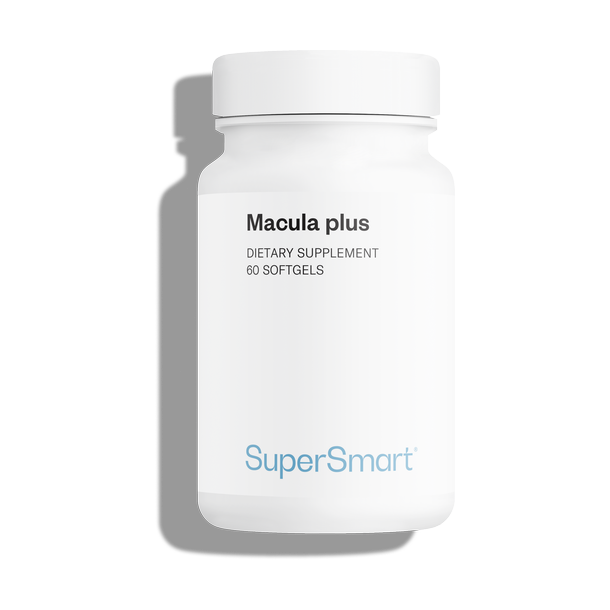
Macula Plus is an exceptional supplement containing lutein, zeaxanthin and astaxanthin in ideal amounts. It is developed from Tagetes erecta, a plant that supports eye health.
What is in Macula Plus?
The formulation Macula Plus contains four different antioxidants:
-
Lutein is a carotenoid pigment not produced by the body, but provided solely by the diet. It’s found in eggs, but primarily in dark green vegetables - kale (24 mg par portion), spinach (20 mg), marrow (3 à 4 mg), broccoli (2 mg), peas (2 mg) – as well as in corn (2 mg)…
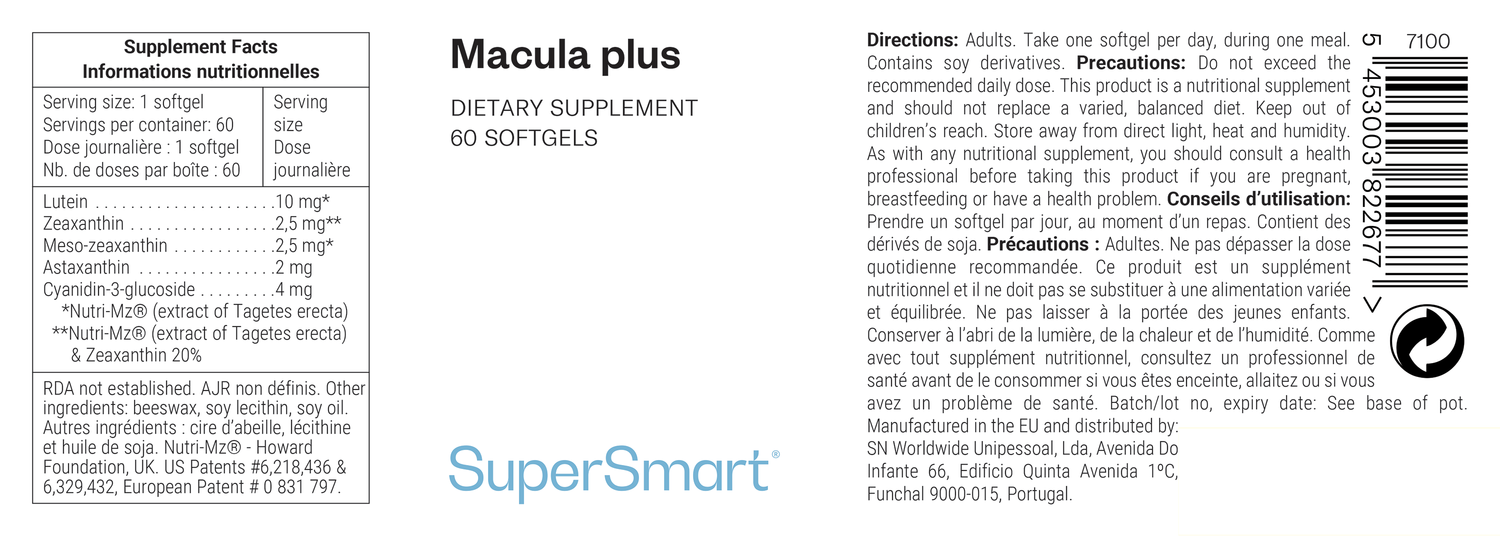
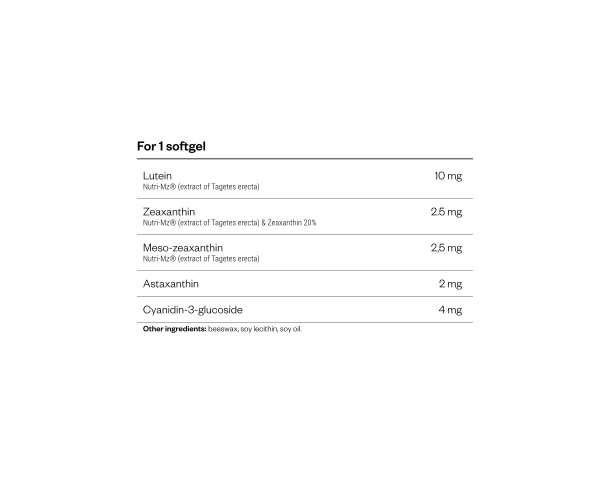
By way of comparison, the supplement Macula Plus contains 10 mg per daily dose (1 softgel).
Research shows that Western populations consume just 1g-2g a day on average (1). Smokers and regular drinkers are likely to have increased requirements for lutein. -
Astaxanthin is a pink-to-red coloured molecule with strong antioxidant potency, also from the carotenoid family. It is mainly found in seafood : red algae, salmon (2mg-3mg per portion of Atlantic salmon), trout, crab, shrimps, lobster, crayfish … Wild species are thought to have a higher astaxanthin content than their farmed equivalents.
Astaxanthin’s fragility and sensitivity to light and heat, coupled with its low solubility, make it a particularly precious compound. Even more so as astaxanthin-containing foods are eaten less and less by Western populations, and are increasingly contaminated by heavy metals.
The formulation Macula Plus contains 2mg per daily dose . - Zeaxanthin, again not produced by the body, is the pigment responsible for the colour of paprika, corn and saffron. It’s primarily found in plant leaves, so in cabbages, Swiss chard, mustard greens, spinach, Romaine lettuce, dandelion leaves, watercress, and also spirulina.
Macula Plus contains 5mg per daily dose (2.5 mg of zeaxanthin + 2.5 mg of meso-zeaxanthin, its stereoisomer). - Cyanidine-3-glucoside is a relatively unstable pigment found mainly in red fruits and the petals of brightly-coloured flowers. Raspberries (0.5mg per 100g), blackcurrants (25mg), cherries (18mg), cranberries (8mg) and pomegranate juice (3mg) are the main dietary sources but they’re unfortunately very seasonal …
Macula Plus provides around 4mg per softgel.
How does Macula Plus differ from other supplements of this kind?
- Many supplements contain pathetically-low levels of lutein (0.25mg-2mg), which are much too low to have a significant effect.
- Taking several carotenoids at the same time is thought to boost their action (synergistic effect). There are very few formulations offering lutein, astaxanthin and zeaxanthin in a single softgel.
- Macula plus contains healthy fatty acids which promote the absorption of the liposoluble carotenoids.
What is in it Macula Plus
Any questions?
Macula Plus combines very well with Eye Pressure Control, a formulation rich in anthocyanins which supports vascular eye health, and Smart Eyes™, a supplement containing N-acetyl L-carnosine.
Two micronutrients and a trace element are also involved in visual function:
- DHA (an omega-3 fatty acid concentrate in Super Omega-3) helps to maintain normal vision.
- Vitamin B2 (found in liver, eggs, dairy products and fish) helps to optimise vision.
- Zinc (L-OptiZinc® 30 mg) supports healthy visual function.
The macula is the area of the retina responsible for visual acuity, characterised by a high concentration of photoreceptors and pigments (2) (the role of which is to reduce chromatic aberration and glare (3)). It’s in the macular that light rays converge before being converted into nerve signals.
Like all carotenoids, lutein is best absorbed with some fat, because it is liposoluble. It’s therefore best to take the softgel with a meal, even though the supplement already contains natural-source fatty acids (beeswax, soya lecithin, soya oil).
The recommended dose is 1 softgel a day.
september 27 2020
Excellent product!!!!!
april 8 2024
Excellent pour la santé des yeux
april 7 2024
De momento mi macula esta estabilizada hace un año me detectaron que la tenia algo deteriorada por edad. Pero encuentro.el precio bastante cero no obstante lo seguire tomando
april 2 2024
très bien bon produit
march 2 2024
Nos lo recomendaron y le va bien
Need help?
You may also like