
Chocolate: good or bad for the prostate?
Chocolate’s effects on the prostate remain the subject of debate, with some people extolling its virtues and others taking the opposite view. So what does science have to say on the subject?


Reminder: what exactly is the prostate?
Part of the male reproductive system, the prostate is a small gland located just below the bladder, in front of the rectum. Its main function is to produce sperm-containing semen at the moment of ejaculation (1).
In a young man, the prostate is the size of a walnut, but tends to gradually expand from the age of 40 onwards … potentially reaching the size of a kiwi fruit. When it enlarges to the point of causing problems with urination, it is referred to as benign prostatic hyperplasia (BPH) (2).
This functional disorder is very common with advancing age, affecting around 60% of men over 60 and 80%-90% of men over 70 (3). It may be accompanied by nocturia (frequent waking in the night to pass urine) and a higher risk of bladder stones (4).
It is distinct from prostate cancer, in which tumour cells proliferate in glandular tissue. It produces few symptoms in its early stages. Though rare before the age of 50, ageing, a family history, ethnic origin, excess weight and tall height in adulthood (a sign of increased exposure to growth factors during childhood) are all known risk factors (5).
Chocolate and prostate: what does the research say?
Potentially protective antioxidants
Cocoa beans contain a synergy of polyphenols (flavonoids, catechins, epicatechins, proanthocyanidins...) with established benefits for human health (6).
In terms of the prostate, an in vitro study on human prostate cells demonstrated inhibited growth of cancer cell lines following treatment with cocoa polyphenol extracts (7). However, since this anti-proliferative effect was not confirmed in healthy cell lines, uncertainty remains over the question of any preventive benefit.
Another study, this time in rats, suggests these same polyphenols may be able to combat prostatic hyperplasia induced by testosterone propionate (8).
The problem of methylxanthines
On the other hand, chocolate contains caffeine and theobromine, molecules from the methylxanthine family responsible for its stimulant effects (9). A number of studies suggest that when consumed in excess, these substances could alter the morphology and physiology of the prostate. High intake of theobromine may thus increase the risk of prostate cancer.
By way of example, a study of 5-week old rats showed increases in testosterone and dihydrotestosterone plasma levels, prostate weight, proliferation of epithelial tissue and expression of androgen receptors in caffeine-treated animals (10). In this respect, the study’s authors suggest a correlation between chronic caffeine consumption (from puberty) and development of benign prostatic hyperplasia. Vidal, the famous French medical reference, also states that “chocolate aggravates symptoms of benign prostatic hyperplasia”.
Chocolate and prostate health: what’s the verdict?
Given the contradictions raised by chocolate’s composition, it seems wise to play it safe by moderating your daily consumption if you have risk factors and diagnosed prostate problems. Note too, that exactly the same basic questions apply to coffee and the prostate.
Forbidden foods for prostate health
While the ‘jury is still out’ on the relationship between chocolate and the prostate, there seems to be more of a consensus when it comes to some other foods.
Yogurt and the prostate
According to several epidemiological studies, frequent consumption of dairy products may increase prostate cancer risk (11). This may be due both to their saturated fat and calcium content, as well as the increase in IGF-1 growth factor induced by their ingestion.
Charred red meat
While red meat and deli meats are respectively classed as probable and proven carcinogens for humans, it seems that cooking at high temperatures, which generates heterocyclic amines, precipitates the onset of prostate tumours (12). So if you’re a big meat-lover, it’s best to opt for gentler cooking methods (steaming, simmering ...).
To maintain a healthy prostate, men are strongly recommended to adopt a Mediterranean type diet containing fresh fruit and vegetables (garlic, onions, cruciferous vegetables...), fibre (pulses, whole grains...) and a good amount of healthy fats (olive or rapeseed oil, avocados, walnuts, oily fish...) (13-14).
Take care with omega-6
Excessive consumption of omega-6 fatty acids may maintain inflammation of the prostate (15). It’s therefore important to limit your intake of seeds, oilseeds and vegetable oils containing high levels of omega-6: sunflower, grapeseed, corn...
Supplements to support prostate health
Alongside a balanced diet and healthy lifestyle, you can also support your prostate function with targeted supplements.
Among the most widely-studied plants in this respect are saw palmetto, which supports urinary function in those with an enlarged prostate, and pygeum africanum, which plays a role in the health of theprostate, bladder and lower urinary tract (both can be found in synergy in the optimised formulation ProstaNatural Formula, which also contains zinc and beta-sitosterol) (16-17).
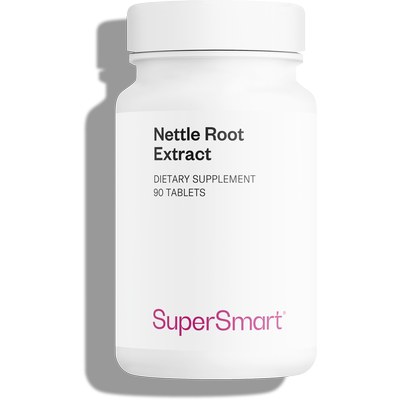
Recommended by ESCOP, nettle root (the star ingredient in Nettle Root Formula) also supports a healthy prostate, especially through its ability to inhibit the conversion of testosterone into dihydrotestosterone, a key mechanism in the onset of prostatic hyperplasia (18).
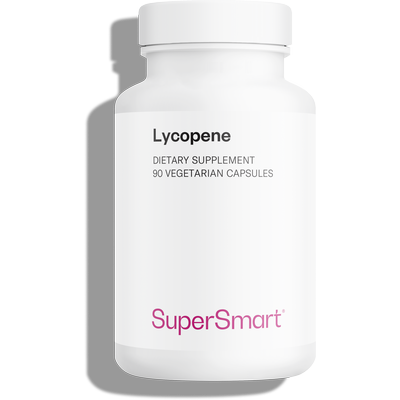
The prostate is particularly vulnerable to oxidative stress. Lycopene, a carotenoid found in abundance in cooked tomatoes, watermelon, grapefruit and pomegranate seeds, is thought to confer a a protective action at a cellular level (the supplement Lycopene standardised to 10% benefits from a patented microencapsulation process to maximise its bioavailability) (19).
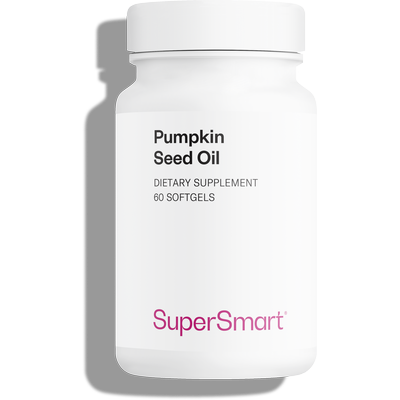
And finally, we mustn’t forget pumpkin seeds. A source of phytosterols and zinc (which helps maintain normal blood testosterone levels), they have been the subject of numerous studies related to prostate size, urinary discomfort and problematic micturition (the supplement Pumpkin Seed Oil also has added vitamin E for optimal preservation) (20).
SUPERSMART ADVICE
References
- Singh O, Bolla SR. Anatomy, Abdomen and Pelvis, Prostate. [Updated 2022 Jul 25]. In: StatPearls [Internet]. Treasure Island (FL): StatPearls Publishing; 2023 Jan-. Available from: https://www.ncbi.nlm.nih.gov/books/NBK540987/
- Ng M, Baradhi KM. Benign Prostatic Hyperplasia. [Updated 2022 Aug 8]. In: StatPearls [Internet]. Treasure Island (FL): StatPearls Publishing; 2023 Jan-. Available from: https://www.ncbi.nlm.nih.gov/books/NBK558920/
- Ng M, Baradhi KM. Benign Prostatic Hyperplasia. 2022 Aug 8. In: StatPearls [Internet]. Treasure Island (FL): StatPearls Publishing; 2023 Jan–. PMID: 32644346.
- Hyun JS. Clinical Significance of Prostatic Calculi: A Review. World J Mens Health. 2018 Jan;36(1):15-21. doi: 10.5534/wjmh.17018. Epub 2017 Sep 25. PMID: 29076299; PMCID: PMC5756803.
- Leslie SW, Soon-Sutton TL, R I A, et al. Prostate Cancer. [Updated 2023 May 30]. In: StatPearls [Internet]. Treasure Island (FL): StatPearls Publishing; 2023 Jan-. Available from: https://www.ncbi.nlm.nih.gov/books/NBK470550/
- Andújar I, Recio MC, Giner RM, Ríos JL. Cocoa polyphenols and their potential benefits for human health. Oxid Med Cell Longev. 2012;2012:906252. doi: 10.1155/2012/906252. Epub 2012 Oct 24. PMID: 23150750; PMCID: PMC3488419.
- Jourdain C, Tenca G, Deguercy A, Troplin P, Poelman D. In-vitro effects of polyphenols from cocoa and beta-sitosterol on the growth of human prostate cancer and normal cells. Eur J Cancer Prev. 2006 Aug;15(4):353-61. doi: 10.1097/00008469-200608000-00009. PMID: 16835506.
- Bisson JF, Hidalgo S, Rozan P, Messaoudi M. Therapeutic effect of ACTICOA powder, a cocoa polyphenolic extract, on experimentally induced prostate hyperplasia in Wistar-Unilever rats. J Med Food. 2007 Dec;10(4):628-35. doi: 10.1089/jmf.2006.242. PMID: 18158833.
- Martínez-Pinilla E, Oñatibia-Astibia A, Franco R. The relevance of theobromine for the beneficial effects of cocoa consumption. Front Pharmacol. 2015 Feb 20;6:30. doi: 10.3389/fphar.2015.00030. PMID: 25750625; PMCID: PMC4335269.
- Bisson JF, Hidalgo S, Rozan P, Messaoudi M. Therapeutic effect of ACTICOA powder, a cocoa polyphenolic extract, on experimentally induced prostate hyperplasia in Wistar-Unilever rats. J Med Food. 2007 Dec;10(4):628-35. doi: 10.1089/jmf.2006.242. PMID: 18158833.
- Sargsyan A, Dubasi HB. Milk Consumption and Prostate Cancer: A Systematic Review. World J Mens Health. 2021 Jul;39(3):419-428. doi: 10.5534/wjmh.200051. Epub 2020 Jul 27. PMID: 32777868; PMCID: PMC8255404.
- Sander A, Linseisen J, Rohrmann S. Intake of heterocyclic aromatic amines and the risk of prostate cancer in the EPIC-Heidelberg cohort. Cancer Causes Control. 2011 Jan;22(1):109-14. doi: 10.1007/s10552-010-9680-9. Epub 2010 Nov 20. PMID: 21103922.
- Castelló A, Boldo E, Amiano P, Castaño-Vinyals G, Aragonés N, Gómez-Acebo I, Peiró R, Jimenez-Moleón JJ, Alguacil J, Tardón A, Cecchini L, Lope V, Dierssen-Sotos T, Mengual L, Kogevinas M, Pollán M, Pérez-Gómez B; MCC-Spain Researchers. Mediterranean Dietary Pattern is Associated with Low Risk of Aggressive Prostate Cancer: MCC-Spain Study. J Urol. 2018 Feb;199(2):430-437. doi: 10.1016/j.juro.2017.08.087. Epub 2017 Aug 23. PMID: 28842246.
- Capurso C, Vendemiale G. The Mediterranean Diet Reduces the Risk and Mortality of the Prostate Cancer: A Narrative Review. Front Nutr. 2017 Aug 24;4:38. doi: 10.3389/fnut.2017.00038. PMID: 28884114; PMCID: PMC5573712.
- Kelavkar UP, Hutzley J, Dhir R, Kim P, Allen KG, McHugh K. Prostate tumor growth and recurrence can be modulated by the omega-6:omega-3 ratio in diet: athymic mouse xenograft model simulating radical prostatectomy. 2006 Feb;8(2):112-24. doi: 10.1593/neo.05637. PMID: 16611404; PMCID: PMC1578514.
- Kwon Y. Use of saw palmetto (Serenoa repens) extract for benign prostatic hyperplasia. Food Sci Biotechnol. 2019 Apr 17;28(6):1599-1606. doi: 10.1007/s10068-019-00605-9. PMID: 31807332; PMCID: PMC6859144.
- Wilt T, Ishani A, Mac Donald R, Rutks I, Stark G. Pygeum africanum for benign prostatic hyperplasia. Cochrane Database Syst Rev. 2002;1998(1):CD001044. doi: 10.1002/14651858.CD001044. PMID: 11869585; PMCID: PMC7032619.
- Ghorbanibirgani A, Khalili A, Zamani L. The efficacy of stinging nettle (urtica dioica) in patients with benign prostatic hyperplasia: a randomized double-blind study in 100 patients. Iran Red Crescent Med J. 2013 Jan;15(1):9-10. doi: 10.5812/ircmj.2386. Epub 2013 Jan 5. PMID: 23487561; PMCID: PMC3589769.
- Chen P, Zhang W, Wang X, Zhao K, Negi DS, Zhuo L, Qi M, Wang X, Zhang X. Lycopene and Risk of Prostate Cancer: A Systematic Review and Meta-Analysis. Medicine (Baltimore). 2015 Aug;94(33):e1260. doi: 10.1097/MD.0000000000001260. PMID: 26287411; PMCID: PMC4616444.
- Damiano R, Cai T, Fornara P, Franzese CA, Leonardi R, Mirone V. The role of Cucurbita pepo in the management of patients affected by lower urinary tract symptoms due to benign prostatic hyperplasia: A narrative review. Arch Ital Urol Androl. 2016 Jul 4;88(2):136-43. doi: 10.4081/aiua.2016.2.136. PMID: 27377091.




21 Hours
Arrives in just five days even to Japan…
Arrives in just five days even to Japan – that’s insanely fast! Amazing lineup of innovative products.
namio
3 Days
Quality and choice of supplements.
Quality and choice of supplements.
Maja
7 Days
perfect great
perfect great
igor janic
12 Days
Good products and speedy delivery
Good products and speedy delivery
Jim
16 Days
Very good
Very good, fast delivery
Paddy
16 Days
Excellent products
Excellent products. Excellent servce.
MIFSUD Joseph
17 Days
It was sent expediently
It was sent expediently, the tracking worked nicely!
Roger De Backer
18 Days
Everything okay
Quality products people can account on. Fast shipping.
Fred Laan
29 Days
Good products
Good products
Emmanuel
33 Days
Always great service coupled with the…
Always great service coupled with the best of products Olive and David
David Walsh
35 Days
Products with quality
Products truly help.
Sari
37 Days
Your delivery service in DK is not…
Your delivery service in DK is not giving option of pick up in package shop of my choice!
SZCZEPANSKI Christopher
37 Days
Always good products
Always good products. Thank you
Silke Wieczorek
39 Days
Swift delivery
Swift delivery - quality products
Trusted
39 Days
Incredible and quick service and…
Incredible and quick service and delivery. Thank you again for your assistance. Your products are really helpful!
Kazanti Kleopatra
of experience
your money back
##montant## purchase