
Protein after training: proven effect on recovery?
Consuming protein immediately after exercise is a reflex for many sportspeople. But is this precise timing really effective in improving muscle recovery, or is it mainly a myth? Let's explore what the science says.


Why does our body need protein (and amino acids) after exercise?
During physical training, muscle fibres undergo minor damage. This is particularly the case during intense or unusual exertion during a sports session.
This stress triggers a natural inflammatory response, which mobilises the cells responsible for cleaning and repairing the tissues.
At the same time, the body activates protein synthesis, a process that uses amino acids to rebuild and strengthen muscle proteins.
This is known as the metabolic window: a period when the body assimilates macro- and micronutrients in an optimal way.
Consuming protein after exercise, for example in the form of whey, provides the body with amino acids that will be useful for muscle recovery and development.
A 2015 study suggests that a sufficient intake of high-quality proteins, such as those found in whey, can support muscle mass and protein synthesis, particularly during a low-calorie diet or with training (1).
These proteins, rich in easily digestible essential amino acids, could also help to limit the natural decline in muscle mass associated with ageing.
The results of another study show that whey promotes a moderate but significant restoration of muscle function between 24 and 96 hours after exercise (2).
However, one question remains unanswered: does the timing of protein consumption really influence muscle recovery?
The importance of the 'right time' to consume proteins and carbohydrates after exercise
A recent study by Cheng et al (Frontiers in Nutrition, 2025, systematic review and meta-analysis) provides some answers. The authors show that consuming proteins and carbohydrates immediately after intense exercise promotes (3):
- the repair of damaged muscle fibres
- the replenishment of glycogen reserves
- the reduction of post-exercise fatigue
The results indicate that the effectiveness of this timing of supplementation is particularly marked in trained individuals and during demanding or repeated exercise.
The optimal time to consume protein is during the metabolic window, i.e. 30 to 60 minutes after training.
At this time, the body is particularly able to absorb nutrients, which promotes muscle recovery.
The amount of protein to ingest depends on the type and intensity of physical activity, but it is generally advisable to aim for around 20 to 30 grams after each session.
The researchers stress, however, that further studies are needed to refine these recommendations according to the profile of sportspeople (age, sex, type of activity, level of training) and to determine precisely the optimal amount of protein and carbohydrate to consume.
In all cases, it is advisable not to eat protein bars before training. Digesting them takes up energy that the body could be using for muscular activity.
What's more, before exercise, the muscle is not in the building phase, so it doesn't need protein to perform. For immediate energy, it's best to opt for rapidly assimilated carbohydrates.
The right reflexes for optimising physical recovery
To get the most out of training and encourage muscle building, it's not enough to concentrate on protein: adopting a healthy lifestyle is essential.
Basic steps for recovering after exercise
Getting a good night's sleep, staying hydrated, stretching after exercise and avoiding overtraining all contribute to effective recovery.
Diet also plays a central role: spreading protein throughout the day, choosing quality sources (animal or vegetable), and choosing digestible forms helps to support protein synthesis.
Types of protein after training
Several types of protein can be considered as supplements, depending on individual preferences and tolerances:
Animal proteins:
- casein: derived from milk, it is slower to digest than whey, and therefore releases amino acids progressively
- egg (white or powdered): rich in essential amino acids, this is a good alternative for those who want to avoid dairy products
- lean meat, chicken, fish: offering a complete supply of proteins and nutrients, these should be eaten if the post-exercise meal is not immediate
Vegetable proteins:
- peas, rice, soya, hemp: often presented as shaker powders, these sources are of interest to vegetarians or those with lactose intolerance
- plant blends: combining different sources, these provide a complete amino acid profile, such as a blend of legumes and cereals (e.g. lentils and rice), or seeds and nuts (e.g. sesame and almonds)
Whey: a protein often chosen by sportsmen and women
A real star among food supplements, whey protein is very popular with sportspeople. Perhaps you already use it?
This protein, derived from the whey in milk, is much talked about for its rapid digestion, which ensures that the amino acids are available to the body almost immediately.
It could therefore help provide the muscles with the elements they need to function on a daily basis.
Whey isolate is preferred for its higher protein content and very low lactose content, making it easier to digest and suitable for people sensitive to lactose.
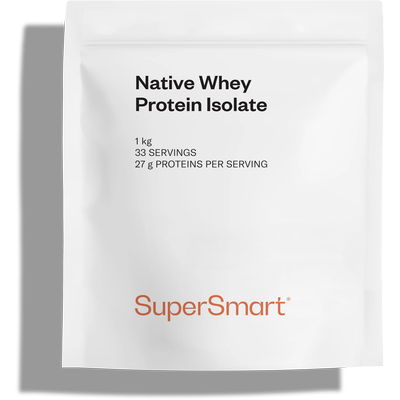
 Discover Native Whey Protein Isolate, which helps to rapidly release amino acids, essential for muscle recovery and development.
An interesting study compared the effect of pea protein and whey supplementation on recovery after intense eccentric exercise in non-athletic men.
The results showed that, while whey protein significantly reduced biomarkers of muscle damage, pea protein had an intermediate effect, with no noticeable impact on muscle soreness or physical performance (4).
This finding tends to show that not all protein sources act in the same way on recovery, and that whey remains more effective than vegetable proteins in this context.
As each person has different needs, it is essential to consult a health professional or sports nutritionist to help you calibrate your protein intake precisely and define the strategy best suited to your profile and objectives.
SUPERSMART ADVICE
References
- Devries MC, Phillips SM. Supplemental protein in support of muscle mass and health: advantage whey. J Food Sci. 2015 Mar;80 Suppl 1:A8-A15. doi: 10.1111/1750-3841.12802. PMID: 25757896.
- Davies RW, Carson BP, Jakeman PM. The Effect of Whey Protein Supplementation on the Temporal Recovery of Muscle Function Following Resistance Training: A Systematic Review and Meta-Analysis. Nutrients. 2018 Feb 16;10(2):221. doi: 10.3390/nu10020221. PMID: 29462923; PMCID: PMC5852797.
- Frontiers in Nutrition - An investigation into how the timing of nutritional supplements affects the recovery from post-exercise fatigue: a systematic review and meta-analysis
- Nieman DC, Zwetsloot KA, Simonson AJ, Hoyle AT, Wang X, Nelson HK, Lefranc-Millot C, Guérin-Deremaux L. Effects of Whey and Pea Protein Supplementation on Post-Eccentric Exercise Muscle Damage: A Randomized Trial. Nutrients. 2020 Aug 9;12(8):2382. doi: 10.3390/nu12082382. PMID: 32784847; PMCID: PMC7468723.



2 Days
Prodotti eccezionali
Prodotti eccezionali! Consegna rapida e precisa
paola
13 Days
Heldere info
Heldere info
HanS.
13 Days
Snelle levering
Snelle levering
harrie
18 Days
Adequate info en hoge kwaliteit
Adequate info en hoge kwaliteit
HanS.
28 Days
Supplementen zijn goed.
Supplementen zijn goed. Zachte prijzen. Website met problemen ( altijd ) niet goed voor nieuwe klanten.
Gino RJ
37 Days
Alles op tijd geleverd.
Alles op tijd geleverd. De producten worden alsmaar duurder, terwijl mijn pensioen niet meer stijgt. Vandaar kan ik alsmaar minder vaak bestellen.
Wouters
1108 Days
Great service
Great service
Ryszard
1120 Days
Profesjonalna obsługa
Bardzo dobre i rzeczowe opisy. Profesjonalna obsługa.
PIEKOSZEWSKI Chris
1788 Days
Wszystko OK!
Wszystko poszło jak powinno 🙂
SITKIEWICZ Pawel
2575 Days
Szybko sprawnie bez problemów
Szybko sprawnie bez problemów
Marek
of experience
your money back
##montant## purchase