Limited quantity
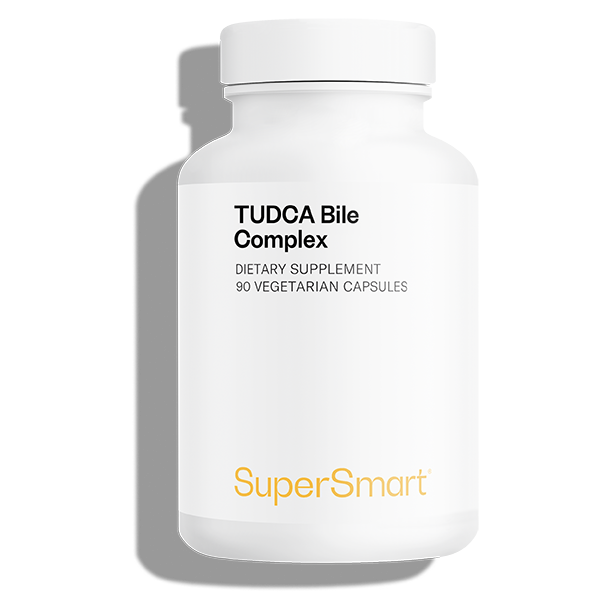
TUDCA Bile Complex
TUDCA dietary supplement: a compound naturally found in the liver and bile


Complete your selection
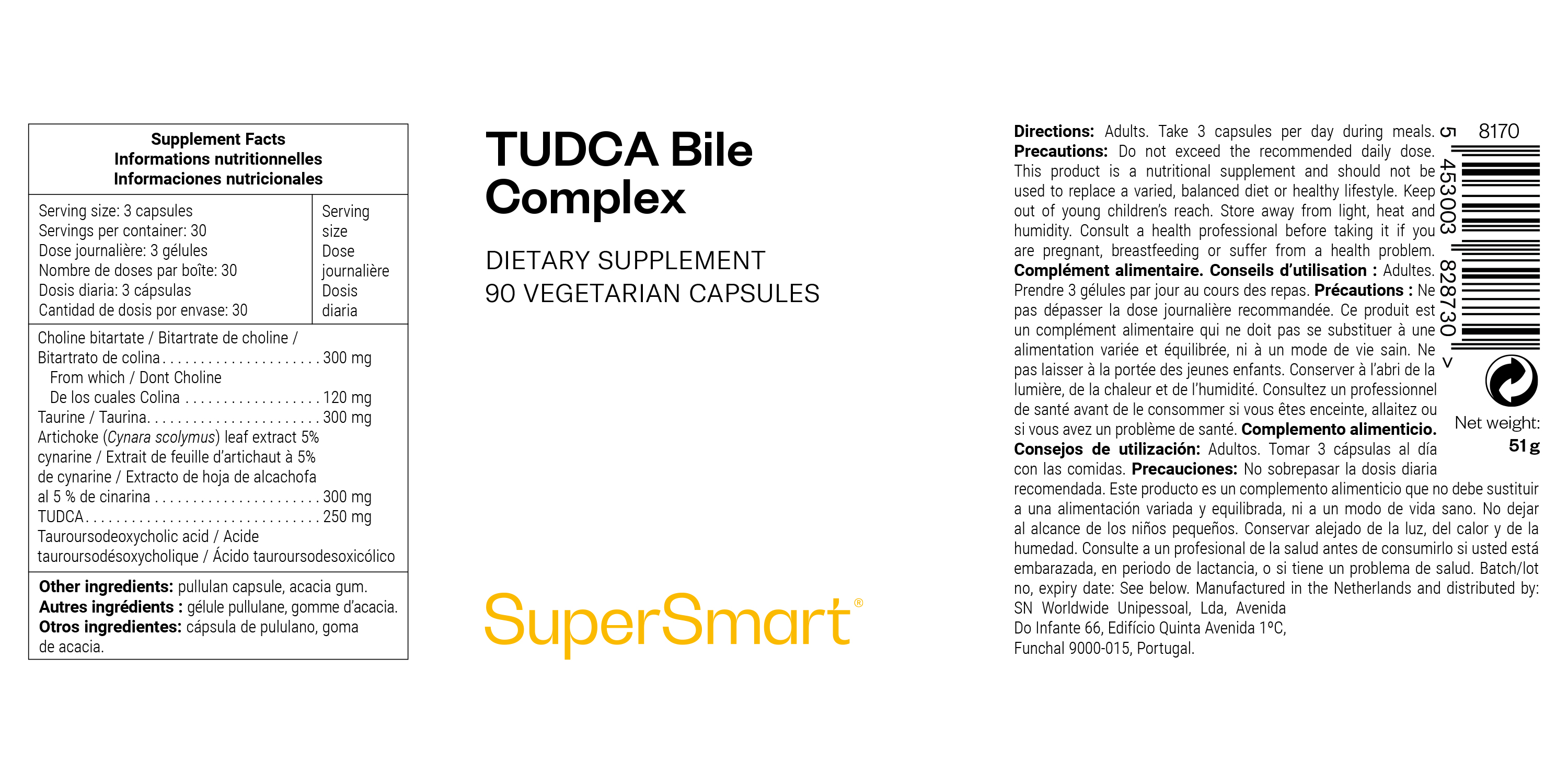
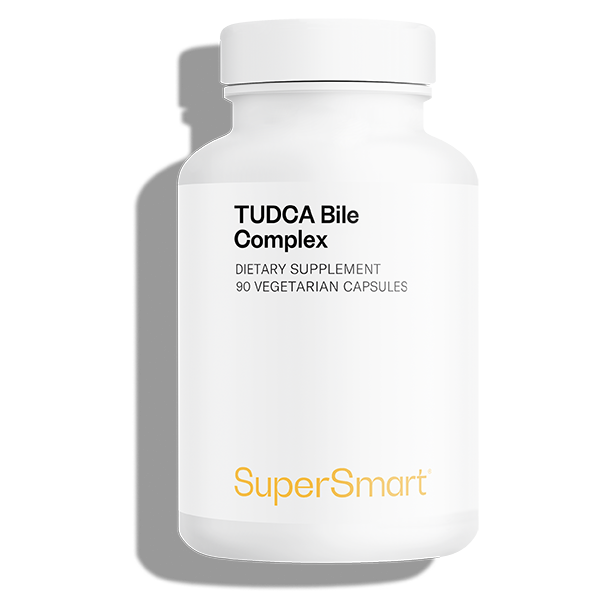
TUDCA Bile Complex is a dietary supplement rich in TUDCA, a bile acid produced by the body and a vital component of human bile.
This synergistic formula, which combines TUDCA with other key compounds for liver and digestive health, is particularly relevant for people with sluggish bile and/or difficulty digesting fats.
The supplement is therefore included in our liver and detox category.
Composition and benefits of this TUDCA liver and bile supplement
What is bile?
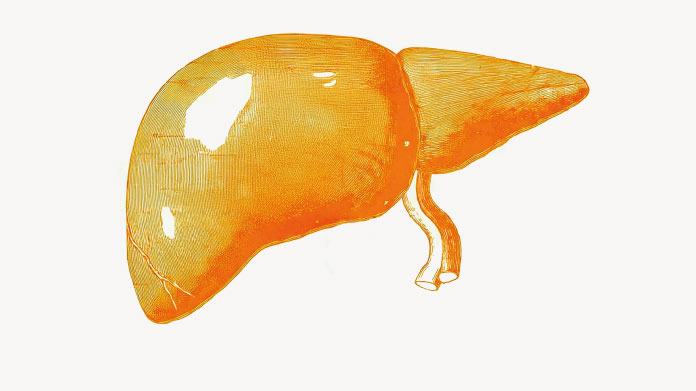
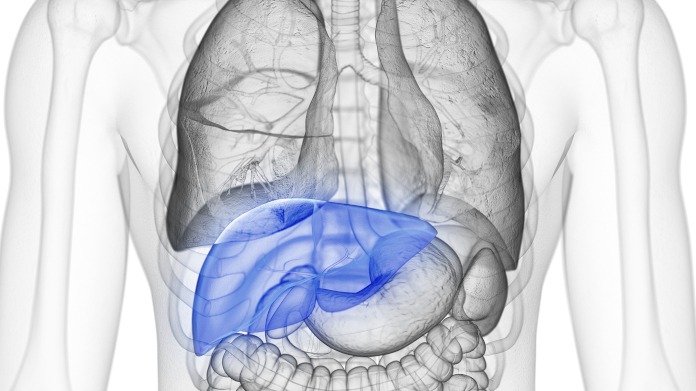
Bile is a viscous biological liquid produced by the liver and stored in the gallbladder, before being released into the intestine at mealtimes.
It is composed mainly of bile acids, phospholipids (including phosphatidylcholine) and cholesterol.
Its essential role is to facilitate the digestion and absorption of fats by forming micelles that enable lipids and fat-soluble vitamins (A, D, E, K) to be assimilated.
It also plays a part in eliminating excess cholesterol, bilirubin and some compounds transformed by the liver, notably from hormones or medicines.
Finally, certain bile acids act as signalling molecules by activating specific receptors such as FXR and TGR5, which are involved in regulating cholesterol synthesis and hepatic glucose production, and also influence the composition of the intestinal microbiota.
4 ingredients with studied effects on liver and biliary function
Our formula combines the 4 most effective ingredients tested for their benefits on liver and biliary function:
- TUDCA: TUDCA (tauroursodeoxycholic acid) is a conjugated bile acid produced in small quantities by the liver. It is formed through the combination of taurine and another bile acid, ursodeoxycholic acid (UDCA). As a hydrophilic bile acid, TUDCA limits the cytotoxicity of more hydrophobic bile acids by stabilising cell membranes. This, in turn, reduces apoptosis (cell death) in hepatocytes, the primary liver cells. It also acts at an intracellular level by modulating the stress response of the endoplasmic reticulum (ER) and maintaining mitochondrial integrity, further shielding the liver cells from damage. Finally, it promotes choleresis (bile production), notably via the expression and insertion of bile salt transporters such as BSEP on the canalicular membrane of liver cells, facilitating their excretion. These properties make the intake of TUDCA particularly relevant in supporting hepatobiliary function. This compound is also being investigated in other areas of research, such as neurodegenerative disorders, retinal disorders, stress, obesity, etc. (1-4);
- taurine: taurine is a sulphur-containing amino acid derivative, also produced mainly by the liver. It is involved in the conjugation of bile acids, a process that improves their solubility and promotes smooth bile flow. Studies suggest that taurine supplementation can significantly increase bile production, expand the pool of bile acids and reduce cholesterol saturation in bile. Preclinical animal studies have also shown that taurine intake can increase bile flow by more than 5-fold by stimulating the secretion of taurocholic acid conjugates, particularly in the event of stress or exposure to toxins (5-6);
- choline bitartrate: choline is an organic compound related to the B group vitamins, partly synthesised by the liver but also needing to be supplied in the diet to meet the body's needs. Choline is essential for the synthesis of phosphatidylcholine, a phospholipid that stabilises bile micelles and helps protect the biliary epithelium from toxic bile salts. Insufficient choline intake is associated with liver disorders and altered bile composition. Mechanistic and hepatic data suggest that choline intake helps to maintain bile fluidity and limit the formation of bile sludge, particularly in people with metabolic imbalances. Specifically, we opted for choline bitartrate, a stabilised and highly assimilable form (8-10);
- artichoke extract standardised to 5% cynarin: artichoke is a perennial plant in the Asteraceae family, well known for supporting digestion and intestinal comfort. In particular, its leaf extract possesses potential choleretic properties, the ability to stimulate bile secretion. Clinical trials conducted with standardised extracts (2–5% cynarin) suggest an improvement in bile secretion and a significant reduction in postprandial disorders, bloating and mild fat intolerance. Animal studies have also found a marked increase in bile production under the effect of artichoke extract, of up to 127% compared with controls. The possible hepatoprotective and lipid-lowering effects of artichoke extract reinforce its usefulness in formulations dedicated to the hepato-biliary and digestive spheres (11-12).
4 key points and reasons to buy our TUDCA for liver, gall bladder and digestive health
TUDCA Bile Complex has 4 key strengths:
- a complete synergistic formula, going beyond TUDCA alone: unlike many supplements that provide only TUDCA, our formula combines TUDCA with cofactors designed for liver and bile health and for digestion (taurine, choline and artichoke extract), to act in a complementary way on the quality, availability and effectiveness of bile;
- powerful, relevant doses based on science: each daily dose provides you with no less than 250 mg of TUDCA, 300 mg of taurine, 300 mg of choline bitartrate (including 120 mg of choline) and 300 mg of artichoke extract standardised to 5% cynarine, quantities aligned with the latest scientific literature;
- both general and targeted support: TUDCA Bile Complex is specially designed as a natural solution for biliary dysfunction (e.g. sluggish bile). It is also relevant for more common needs relating to bile and fat digestion, particularly those which may arise with age or when digestive function becomes slower;
- a purified, vegan formula: our product contains no ingredients of animal origin, is encapsulated in plant-based pullulan capsules and formulated with a single natural excipient: acacia gum.
What is in TUDCA Bile Complex
Any questions?
Our team of nutrition experts and scientists has the answers.
TUDCA or tauroursodeoxycholic acid is a conjugated bile acid produced by the body from the combination of 2 elements:
- UDCA or ursodeoxycholic acid, another endogenously produced bile acid
- taurine, a sulphur-containing amino acid derivative involved in numerous physiological processes, particularly in the biliary system
Formerly isolated from animal sources (notably bear bile in traditional Chinese medicine), the TUDCA used today in food supplements is obtained by controlled chemical synthesis, in order to faithfully reproduce the molecule naturally present in the body.
TUDCA is generally well tolerated at the recommended doses.
In rare cases, slight digestive discomfort may be observed at the very start of treatment.
TUDCA is best taken with meals, especially those containing fat, to help digestion.
TUDCA may be useful in cases of sluggish bile or when fat is less easily managed, particularly with age.
A more efficient bile function provides better support for the liver in managing dietary fats and contributes to improved digestive comfort.
Looking to support your digestive health? Discover the essential role of digestive enzymes in breaking down food. These enzymes (proteases, lactase, amylase, etc.) can be supplied in large quantities via certain food supplements (buy Digestive Enzymes, for example, which combines 15 enzymes and relevant plant extracts).
If you want to look after your liver, you'll need to consider the role of glutathione, a small antioxidant peptide produced by the body. Particularly concentrated in the liver, glutathione protects liver cells from oxidative stress and assists in detoxification by facilitating the neutralisation and elimination of certain substances. Glutathione levels can also be supported through supplementation (you can buy Perlingual Glutathione, presented in the form of tablets to be sucked; this allows for direct absorption into the bloodstream via the oral mucosa).
In terms of liver support, several studies have also explored the potential of a rare mushroom from Taiwan, Antrodia camphorata, in protecting liver cells. ProAntro® fermented mycelium extract, in particular, has been validated by two proprietary efficacy studies and one proprietary safety study (it is the extract used in the innovative Antrodia Liver Health formula).
Need help?
You may also like
of experience
your money back
##montant## purchase