
5 helpful tips for combatting acid reflux naturally
GERD is a relatively common problem, made worse by eating certain foods or by gaining weight. Here are some tips on how to relieve it and even get rid of it.


GERD, a problem that needs to be monitored
France’s National Society for Gastroenterology (SNGFE), a medical specialty society for diseases of the digestive tract, estimates that 10% of the French population regularly suffers from acid reflux.
As a rule, acid reflux occurs when acidic gastric juices in the stomach travel up into the oesophagus.
This digestive disorder is exacerbated by dysfunction of the lower part of the oesophagus, particularly in the diaphragm and lower oesophageal sphincter, a small ring-shaped muscle the function of which is precisely to prevent this reflux.
According to the SNFGE, everybody experiences reflux of this sort at some point. But when it results in damage or symptoms in the oesophagus, it is considered to be pathological.
Acid reflux can cause a number of symptoms such as a burning sensation or discomfort in the lower chest area or oesophageal mucosa, etc. It can also be responsible for more serious problems such as the proliferation of corrupted cells.
That’s why acid reflux needs to be monitored and treated.
What causes acid reflux?
The SNFGE states categorically that “weight gain is a key factor in the development of acid reflux, even if an individual is not actually overweight”. This is because abdominal ‘obesity’ puts excess pressure on the stomach and sphincter, weakening the natural barrier and promoting reflux.
What’s more, acid reflux can be aggravated by external factors such as eating highly-acidic and poorly-tolerated foods, and excessive consumption of fermentable foods, etc.
Symptoms of acid reflux
Heartburn, acid regurgitation, discomfort in the chest region, feeling as if there’s a lump in your throat ... these are all symptoms of acid reflux.
How can you relieve acid reflux?
As a first step, gastroenterologists always recommend following a few simple diet and lifestyle guidelines (3) before starting down the road of medication.
1) Eat smaller, and more frequently
Heavy meals overfill the stomach, putting too much pressure on the sphincter which, unable to seal tightly, allows gastric juices to pass through.
The answer is to eat lighter meals plus a couple of snacks during the day to maintain your blood sugar levels.
2) Don’t go to bed on a full stomach
The process of digestion takes a while (8 hours on average). It’s therefore best to allow time for the stomach to empty before going to bed. In addition, gravity means that lying down puts pressure on the stomach, and thus the sphincter, which promotes acid reflux. So by avoiding lying down (whether when going to bed for the night or having a nap) within two hours of eating a meal, you reduce the risk of suffering acid reflux.
3) Start a weight-loss diet
Weight being a key factor in GERD, to tackle it effectively it’s important to follow a weight-loss diet. Physical activity, consuming fewer calories, and eating food high in soluble fibre and lean protein will help you lose weight. Make sure you chew your food properly so that you don’t overload your stomach too quickly and your brain has time to trigger the sensation of satiety.
4) Identify and eliminate foods which exacerbate your acid reflux
Generally speaking, the the foods to avoid are spicy dishes or those with rich sauces, fatty cuts of meat (pork chops, lamb cutlets …), charcuterie, camembert, butter, jam, cakes, chocolate, fizzy drinks, alcohol ... High-fat meals, in particular, take longer to digest: fats stay in the stomach for a long time, weakening the sphincter and promoting reflux.
Instead, you need to focus on cooked vegetables, fruit, (ideally eaten in between meals), lean meat (chicken, rabbit …), rice, still water...
Having said that, it’s hard to say definitively which foods will or won’t cause acid reflux as the triggers vary from one person to another. If you suffer from acid reflux, you’ll need to identify the foods which you personally find problematic, so that you know which to prioritise and which to avoid.
5) Discover the most effective natural substances
Let’s now look at substances that can help to relieve this gastroesophageal discomfort. First and foremost, sodium alginate forms a kind of protective gel which floats on the surface of gastric juices, helping to neutralise their adverse effects on mucosa (4).
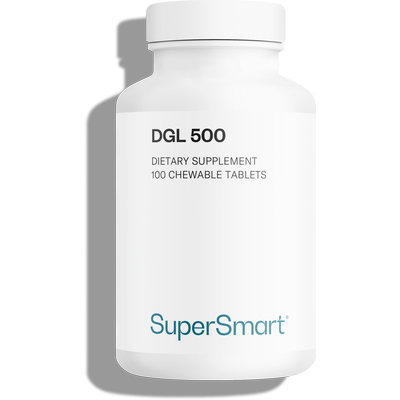
In addition, bicarbonate of soda and calcium carbonate help to reduce the acidity of gastric juices (being compounds with an alkaline pH). Certain plant extracts, too, may support good digestive health, such as slippery elm or liquorice (available in our supplement DGL for protecting the stomach) (5-6).
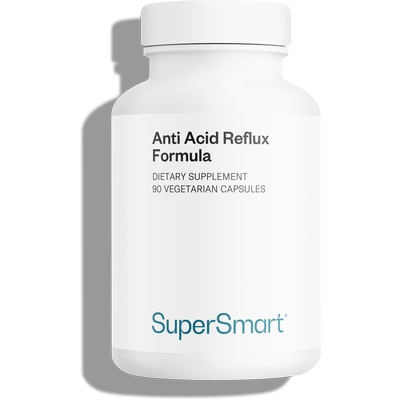
The majority of these substances have been combined in a unique supplement called Anti-Acid Reflux Formula.
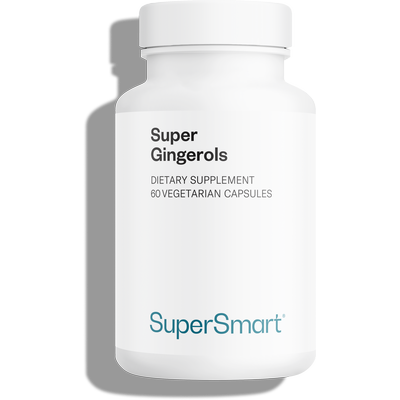
Ginger, too, is traditionally used to help maintain good digestive health (Super Gingerols) (7).
To conclude then, acid reflux can be effectively tackled by following a few simple diet and lifestyle guidelines, and taking specific supplements recognised for promoting good digestive health.
SUPERSMART ADVICE
References
- https://www.snfge.org/content/reflux-gastro-oesophagien-rgo
- https://www.snfge.org/sites/default/files/SNFGE/Bibliotheque_scientifique/traitement_du_rgo.pdf
- https://www.nejm.org/doi/full/10.1056/nejm199903183401101
- https://eurekasante.vidal.fr/medicaments/vidal-famille/medicament-gp5743-ALGINATE-DE-SODIUM-BICARBONATE-DE-SODIUM-SANDOZ-CONSEIL.html
- http://registerofquestions.efsa.europa.eu/
- http://registerofquestions.efsa.europa.eu/
- http://registerofquestions.efsa.europa.eu/
Keywords



1083 Days
Great service
Great service
Ryszard
1096 Days
Profesjonalna obsługa
Bardzo dobre i rzeczowe opisy. Profesjonalna obsługa.
PIEKOSZEWSKI Chris
1764 Days
Wszystko OK!
Wszystko poszło jak powinno 🙂
SITKIEWICZ Pawel
2551 Days
Szybko sprawnie bez problemów
Szybko sprawnie bez problemów
Marek
of experience
your money back
##montant## purchase