
How hearing loss may contribute to cognitive decline
What if a gradual decline in hearing could silently accelerate cognitive decline? Recent studies reveal an unexpected link between the ear and the brain, paving the way for new prevention strategies.


Why do we lose our hearing?
Hearing loss does not happen overnight. It is a slow and progressive phenomenon, influenced by a variety of factors.
While some factors are genetic, which can predispose individuals to dysfunction of the hair cells in the cochlea, others are linked to the environment, lifestyle or medical events.
Factors that may explain the progressive loss of hearing include:
- chronic exposure to loud noise, which gradually damages the internal structures of the ear
- medical causes: chronic ear infections, perforation of the eardrum, inner ear diseases, ototoxic drugs (toxic to the ear), head trauma, etc.
- vascular or metabolic disorders, which can affect the microcirculation of the inner ear: hypertension, diabetes, high cholesterol, etc.
But one of the most significant factors in hearing problems remains natural ageing, known as presbycusis.
Over time:
- the hair cells in the cochlea wear out and fail to regenerate, reducing the ear's ability to convert sound vibrations into nerve signals
- the auditory nerve pathways become less efficient, which slows down the transmission and processing of sound information
- the precision of the signal transmitted to the brain decreases, affecting in particular the ability to discriminate between close or complex sounds
As a result, high-pitched sounds are the first to disappear, and conversations become more difficult to understand, particularly in noisy environments where the brain has to filter out a lot of information at the same time.
Finally, it's important to remember that hearing loss with age is not just a sensory discomfort: it's also a major factor in social isolation.
Difficulty following a conversation, increased cognitive fatigue in 'decoding' speech, feelings of withdrawal in interactions... Many people affected withdraw into themselves, limiting their daily outings and avoiding group discussions.
And we now know that this isolation can become a risk factor for cognitive decline, by depriving the brain of essential social, auditory and emotional stimulation (1).
A potential link between age-related hearing loss and cognitive impairment
For several years, researchers have been looking closely at the link between hearing loss and the risk of cognitive decline or dementia.
Recent research includes a Polish study published in 2024, looking specifically at age-related hearing loss and its impact on brain performance (2).
The study, which involved 891 participants aged between 39 and 81, compared the cognitive performance of two groups:
- people with age-related hearing loss
- people of the same age but with no hearing loss
The researchers used various tests to assess memory, attention, processing speed, executive function and language.
The results were clear: individuals suffering from age-related hearing loss had lower scores on cognitive tests, particularly in the areas of processing speed and executive function.
According to the researchers, several mechanisms could explain this phenomenon:
- reduced brain stimulation: when hearing declines, certain areas of the brain receive less information and become less active
- cognitive overload: people with hearing loss use more mental energy to understand sounds, to the detriment of memory and concentration
- increased social isolation: a major factor in cognitive decline
- neurobiological changes: affecting both auditory and cognitive functions, including altered microcirculation and chronic low-grade inflammation
But the good news is that even when hearing loss is linked to age, it is not inevitable!
Early action on certain factors (lifestyle habits, screening, nutritional support) could help to preserve both hearing and cognitive function...
How can age-related hearing loss be reduced?
There are a number of levers and practical strategies that can help preserve your hearing and, potentially, protect your cognitive abilities.
Protect your ears from noise
Hearing prevention doesn't start at 60, it starts now!
Once destroyed, hair cells cannot regenerate, making hearing damage irreversible.
To protect your ears from noise, you can:
- limit prolonged use of headphones, especially at high volume
- avoid or reduce exposure to noisy environments (concerts, industrial machinery)
- wear suitable ear protection during loud activities
- give your hearing a ‘rest’ after heavy exposure to noise
Consult an ENT specialist from the age of 50
Early detection of hearing loss means that treatment can be adapted quickly, preventing the sensory deficit from taking hold.
This is why it is advisable to consult an ENT specialist from the age of 50, or at the first signs of hearing loss (increasing the volume of the TV, difficulty following a noisy discussion, the impression that people are ‘mumbling’, etc.).
Fitting a hearing aid, when necessary, is one of the most effective ways of limiting the impact of hearing loss on brain function and preserving neuronal stimulation (3-4).
Monitor your general health: diabetes, cholesterol, hypertension
The auditory system is extremely dependent on blood circulation and tissue oxygenation.
Several factors can therefore influence the quality of hearing:
- high blood pressure, which weakens the small vessels in the cochlea
- high cholesterol levels, which stiffen cell membranes and can disrupt microcirculation
- diabetes, which affects the peripheral nerves and the fine blood supply to the inner ear
- smoking and alcohol, which promote oxidative stress and accelerate the degradation of hearing cells (5-6)
Adopting a healthy lifestyle, maintaining a stable weight, getting regular exercise and following medical advice all help to reduce these risks, and therefore preserve the health of your ears!
Focus on certain nutrients
A number of nutrients play an essential role in microcirculation, cell protection and nerve function, three key factors in preserving hearing and, indirectly, supporting cognitive function.
Ginkgo biloba, for example, is traditionally used to support peripheral circulation and has been the subject of numerous studies into its effects on the brain. It is reputed to help oxygenate sensitive tissues, particularly in the eyes and ears.
Zinc contributes to the normal functioning of the immune system, normal cognitive function and protection of cells against oxidative stress, a mechanism involved in the ageing of hearing cells.
Vitamin B3 (niacinamide) and magnesium both contribute to normal energy metabolism and normal functioning of the nervous system, both of which are essential for the transmission of auditory signals.
As for quercetin, this natural flavonoid with antioxidant properties is being studied for its potential protective role against oxidative stress, which can affect hearing cells.
 Discover OptiHear, a natural food supplement for hearing health, which combines Ginkgo biloba, zinc, quercetin, vitamin B3 and magnesium.
Other substances studied for their potential impact on hearing and cell ageing include:
- alpha-lipoic acid: a natural antioxidant present in the body, studied for its role in cell protection
- vitamin E: helps protect cells against oxidative stress
- vitamin D: plays a role in the normal functioning of the immune system and a wide range of cellular functions
- vitamins B9 and B12: contribute to the normal functioning of the immune and nervous systems
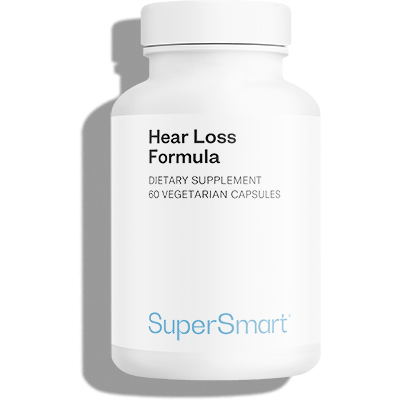
Discover Hear Loss Formula, a synergy of antioxidants and micronutrients designed to support hearing.
Several plants and nutrients have also been studied for their overall support of brain function:
- Ginkgo biloba: a plant widely studied for its involvement in cerebral circulation
- Bacopa monnieri: a plant traditionally used to support memory and cognitive functions
- curcumin: recognised for its antioxidant properties
- huperzine A: studied for its potential neuroprotective effects
- B group vitamins: contribute to the normal functioning of the nervous system
Discover Neurex, a complete formula combining high-quality natural extracts for cognitive function and brain health.
SUPERSMART ADVICE


References
- Ren Y, Savadlou A, Park S, Siska P, Epp JR, Sargin D. The impact of loneliness and social isolation on the development of cognitive decline and Alzheimer's Disease. Front Neuroendocrinol. 2023 Apr;69:101061. doi: 10.1016/j.yfrne.2023.101061. Epub 2023 Feb 8. PMID: 36758770.
- Połtyn-Zaradna K, Pazdro-Zastawny K, Szcześniak D, Basiak-Rasała A, Wołyniec M, Zatońska K, Zatoński T. Age-related hearing loss associated with cognitive impairment in the Polish cohort of the PURE study. Front Aging Neurosci. 2025 Mar 28;17:1540803. doi: 10.3389/fnagi.2025.1540803. PMID: 40224961; PMCID: PMC11985806.
- Sanders ME, Kant E, Smit AL, Stegeman I. The effect of hearing aids on cognitive function: A systematic review. PLoS One. 2021 Dec 31;16(12):e0261207. doi: 10.1371/journal.pone.0261207. PMID: 34972121; PMCID: PMC8719768.
- Yeo BSY, Song HJJMD, Toh EMS, Ng LS, Ho CSH, Ho R, Merchant RA, Tan BKJ, Loh WS. Association of Hearing Aids and Cochlear Implants With Cognitive Decline and Dementia: A Systematic Review and Meta-analysis. JAMA Neurol. 2023 Feb 1;80(2):134-141. doi: 10.1001/jamaneurol.2022.4427. PMID: 36469314; PMCID: PMC9856596.
- Gaur K, Kasliwal N, Gupta R. Association of smoking or tobacco use with ear diseases among men: a retrospective study. Tob Induc Dis. 2012 Apr 3;10(1):4. doi: 10.1186/1617-9625-10-4. PMID: 22471960; PMCID: PMC3366886.
- Dawes P, Cruickshanks KJ, Moore DR, Edmondson-Jones M, McCormack A, Fortnum H, Munro KJ. Cigarette smoking, passive smoking, alcohol consumption, and hearing loss. J Assoc Res Otolaryngol. 2014 Aug;15(4):663-74. doi: 10.1007/s10162-014-0461-0. Epub 2014 May 28. PMID: 24899378; PMCID: PMC4141428.
Keywords



10 Days
Heldere info
Heldere info
HanS.
10 Days
Snelle levering
Snelle levering
harrie
15 Days
Adequate info en hoge kwaliteit
Adequate info en hoge kwaliteit
HanS.
25 Days
Supplementen zijn goed.
Supplementen zijn goed. Zachte prijzen. Website met problemen ( altijd ) niet goed voor nieuwe klanten.
Gino RJ
34 Days
Alles op tijd geleverd.
Alles op tijd geleverd. De producten worden alsmaar duurder, terwijl mijn pensioen niet meer stijgt. Vandaar kan ik alsmaar minder vaak bestellen.
Wouters
1105 Days
Great service
Great service
Ryszard
1117 Days
Profesjonalna obsługa
Bardzo dobre i rzeczowe opisy. Profesjonalna obsługa.
PIEKOSZEWSKI Chris
1785 Days
Wszystko OK!
Wszystko poszło jak powinno 🙂
SITKIEWICZ Pawel
2572 Days
Szybko sprawnie bez problemów
Szybko sprawnie bez problemów
Marek
of experience
your money back
##montant## purchase