
‘Cleansing’ the liver: myth or a genuine need for the body?
Detox cures, lemon juice on an empty stomach, cleansing herbs… There is no shortage of methods for ‘cleansing’ the liver. Yet, how this organ works is often poorly understood. Does the liver really need to be detoxified? Let’s take a closer look.


The liver: a key organ with multiple functions
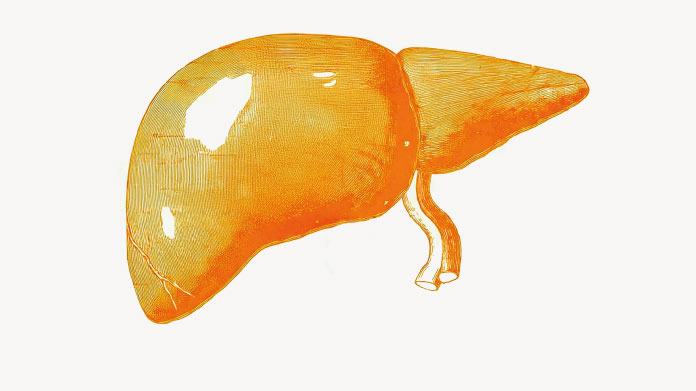
The liver is one of the body’s most active organs. It is involved in numerous metabolic functions.
It constantly filters blood from the digestive system, processes nutrients absorbed by the intestine and synthesises essential proteins.
It also ensures the elimination of unwanted substances: medicines, alcohol, pollutants, toxins… (1).
The liver is thus naturally capable of ensuring the detoxify the body, but certain lifestyles can overburden it.
Talking about ‘cleansing the liver’ is therefore a misnomer: it is not a matter of ‘cleaning it out’, but rather of supporting its natural detoxification functions.
How can you naturally support the liver’s detoxification functions?
Rather than trying to ‘cleanse the liver’, it is better to understand and support this vital organ, which plays a direct role in metabolism.
Providing the nutrients needed for the detoxification phases
Liver detoxification is a metabolic process based on two main enzymatic phases.
- During phase 1, the liver converts unwanted substances into intermediate compounds.
- During phase 2, it makes these compounds water-soluble so that they can be eliminated from the stools or urine.
This process requires specific nutrients that the liver needs to function effectively, including:
- amino acids such as glycine, taurine and cysteine, which help neutralise the intermediate compounds produced in phase 1 and play a role in phase 2 by binding to them to facilitate their elimination;
- B vitamins (B2, B5, B6, B9, B12), which are involved both in the activation of phase 1 enzymes and in several phase 2 conjugation reactions;
- minerals such as magnesium, zinc and selenium, which act as essential cofactors for the enzymes in both phases (2).
When the diet does not meet these requirements, the liver lacks all the nutrients necessary to perform its functions.
Supplementation can then help to address these deficiencies in a targeted manner.
Take glutathione, for example, which plays a central role in these mechanisms.
It is synthesised by the liver from three amino acids… provided the body has a sufficient supply of these, particularly cysteine.
However, this amino acid is difficult to obtain directly from the diet.
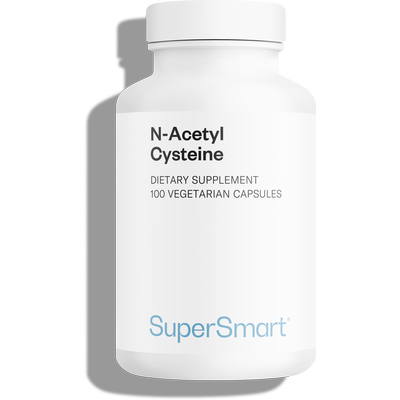
This is why N-acetylcysteine (NAC), a modified form of cysteine that is stable and well-tolerated, is of interest, as it provides elements that serve as direct precursors to glutathione (3).
 Discover N-Acetyl Cysteine, a high-dose NAC supplement to support the body’s natural production of glutathione.
Supporting the balance between phase 1 and phase 2
During phase 1, known as the activation phase, fat-soluble toxins are converted into oxidised derivatives.
These must be rapidly neutralised by phase 2 to prevent an increase in oxidative stress in the body.
To maintain the balance between Phase 1 and Phase 2, the body mobilises antioxidant defence systems as early as Phase 1, with glutathione playing the leading role.
Essential cofactors such as B vitamins and certain trace elements (magnesium, zinc, manganese, etc.) also play a part (4).
At the same time, research is being conducted into certain natural active ingredients for their potential contribution to this balance between the two phases.
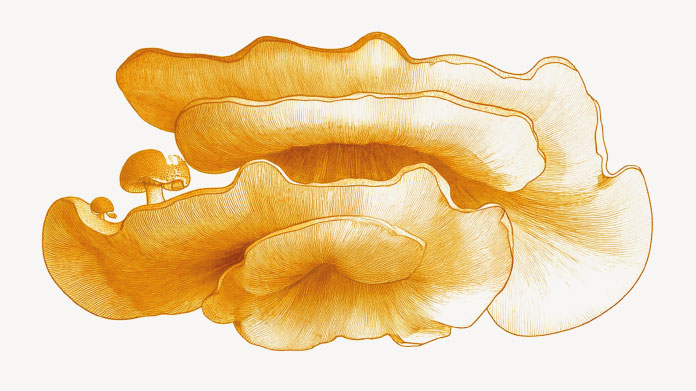
This is the case with Antrodia camphorata, a rare mushroom traditionally used in Chinese medicine to purify, protect and regenerate the liver.
In vitro and in vivo studies suggest that it acts on several mechanisms involved in liver protection: stimulation of the liver’s antioxidant enzymes, modulation of certain inflammatory mediators, support for hepatic lipid metabolism, and activation of the liver’s natural cell repair processes (5–6).
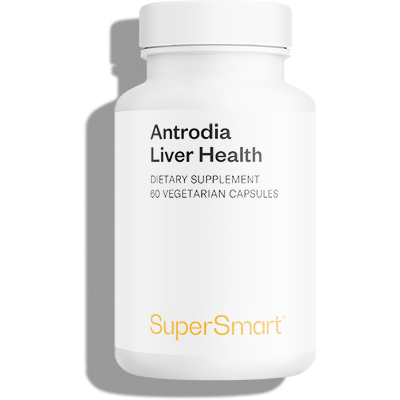
Discover Antrodia Liver Health, our supplement based on ProAntro®, a unique and innovative fermented extract of Antrodia camphorata, with a dosage of 300 mg/day that exactly matches that used in the clinical studies demonstrating its efficacy.
Supporting and protecting liver cells
As we have seen, the liver is constantly exposed to intermediate compounds and free radicals that can weaken hepatocytes (liver cells).
There are plants traditionally used to support their protection and regeneration.
This is the case with milk thistle (Silybum marianum), which supports liver health and thus helps maintain normal liver function.
This effect is mainly attributed to silymarin, a complex of flavonolignans found in the plant.
Several studies have shown that silymarin exhibits antioxidant activity that helps protect liver cells.
It is also thought to act on cell membranes by limiting their permeability, thereby reducing the entry of certain potentially toxic substances.
Finally, silymarin is associated with the stimulation of protein synthesis in hepatocytes, a mechanism involved in cellular repair and renewal processes (7-8).
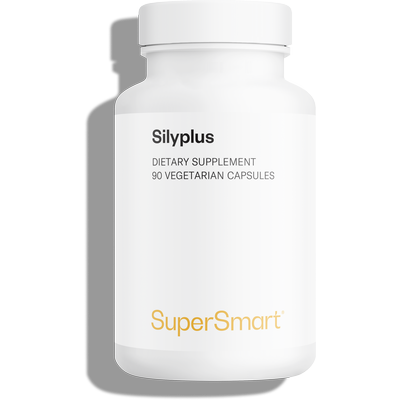
Discover Silyplus, a supplement containing a patented form of silymarin derived from milk thistle, which is 10 times more readily absorbed than ordinary silymarin.
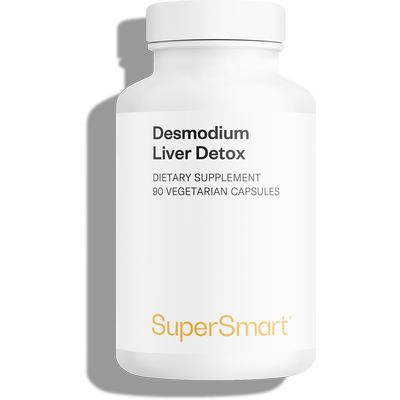
Desmodium, a plant from West Africa, has also long been used to support liver function. Several studies suggest that it may help protect liver cells, particularly by helping to regulate oxidative stress and certain inflammatory processes (9).
Discover Desmodium Liver Detox, a unique blend of active compounds beneficial for the liver (vitexin, isovitexin, saponins, etc.), with a high dosage of 400 mg per capsule.
Supporting the elimination of substances processed by the liver
After being processed by the liver, chemical substances still need to be eliminated by the body.
This excretion occurs mainly via two routes:
- the biliary route, via bile, which allows compounds to be passed into the stools;
- the renal pathway, via urine, which ensures the elimination of water-soluble substances.
These processes can be naturally supported by adequate hydration, which helps the kidneys function and promotes urinary excretion.
Similarly, an adequate intake of dietary fibre contributes to healthy bowel function and supports bile excretion via the stools.
And diet is not the only factor. Scientific data indicate that artichoke extract (Cynara scolymus) has an effect on bile secretion and bile flow, thereby helping to support hepatobiliary function (10).
It may also aid fat digestion, as bile plays a key role in its emulsification and absorption in the gut (11).
In terms of supplementation, certain formulations combine several plant extracts and nutrients with complementary actions into a single supplement, targeting bile production, cellular protection, glutathione stimulation and liver regeneration.
Chlorella (Chlorella vulgaris), for example, is a single-celled green microalga whose biological properties have been extensively studied in relation to liver health. Research suggests that it may indeed promotethe elimination of heavy metals by supporting natural cellular detoxification mechanisms (12).
Ginkgo biloba extract, derived from a tree renowned for its exceptional longevity, is thought to have hepatoprotective effects. According to several studies, it increases hepatic glutathione levels and reduces oxidative stress (13).
R-lipoic acid is a coenzyme that is the subject of extensive research for its antioxidant properties: neutralising free radicals in the liver, restoring intracellular glutathione levels and activating enzymatic pathways (14).
Finally, selenium helps protect the body’s cells against oxidative stress and, according to studies, is also thought to support glutathione peroxidase activity (15).
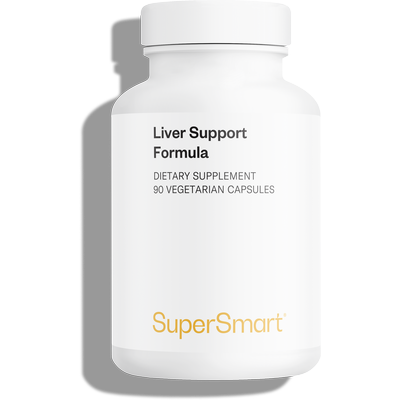
Discover Liver Support Formula, a comprehensive formula combining plant extracts, amino acids and key nutrients (milk thistle, artichoke, ginkgo biloba, desmodium, methionine, R-lipoic acid, selenium…) to support the liver’s natural functions as a whole.
Limiting factors that overload the liver
An unbalanced lifestyle can, of course, increase the liver’s workload:
- alcohol consumption;
- highly processed foods;
- excess sugar;
- exposure to pollutants;
- medication use.
Again, we are not talking about ‘clogging up’, but rather an increase in strain.
Reducing these harmful habits is a good way to relieve the strain on the liver.
Appropriate supplementation can also be beneficial, but cannot, on its own, compensate for a lifestyle that places excessive strain on the liver.
SUPERSMART ADVICE
References
- Kalra A, Yetiskul E, Wehrle CJ, et al. Physiologie hépatique, mai 2023
- Hodges RE, Minich DM. Modulation of Metabolic Detoxification Pathways Using Foods and Food-Derived Components: A Scientific Review with Clinical Application. J Nutr Metab. 2015;2015:760689. doi: 10.1155/2015/760689. Epub 2015 Jun 16. PMID: 26167297; PMCID: PMC4488002.
- Šalamon Š, Kramar B, Marolt TP, Poljšak B, Milisav I. Medical and Dietary Uses of N-Acetylcysteine. Antioxidants (Basel). 2019 Apr 28;8(5):111. doi: 10.3390/antiox8050111. PMID: 31035402; PMCID: PMC6562654.
- Esteves F, Rueff J, Kranendonk M. The Central Role of Cytochrome P450 in Xenobiotic Metabolism-A Brief Review on a Fascinating Enzyme Family. J Xenobiot. 2021 Jun 22;11(3):94-114. doi: 10.3390/jox11030007. PMID: 34206277; PMCID: PMC8293344.
- Cao C, Zhong H, Chen Z, Song Z, Hu B, Wang X. Triterpene acid from Antrodia camphorata alleviates inflammation in acute liver injury. Aging (Albany NY). 2023 May 26;15(10):4524-4532. doi: 10.18632/aging.204757. Epub 2023 May 26. PMID: 37244283; PMCID: PMC10258030.
- Kuo YH, Lin CH, Shih CC. Dehydroeburicoic Acid from Antrodia camphorata Prevents the Diabetic and Dyslipidemic State via Modulation of Glucose Transporter 4, Peroxisome Proliferator-Activated Receptor α Expression and AMP-Activated Protein Kinase Phosphorylation in High-Fat-Fed Mice. Int J Mol Sci. 2016 Jun 3;17(6):872. doi: 10.3390/ijms17060872. PMID: 27271603; PMCID: PMC4926406.
- Aghemo A, Alekseeva OP, Angelico F, Bakulin IG, Bakulina NV, Bordin D, Bueverov AO, Drapkina OM, Gillessen A, Kagarmanova EM, Korochanskaya NV, Kucheryavii UA, Lazebnik LB, Livzan MA, Maev IV, Martynov AI, Osipenko MF, Sas EI, Starodubova A, Uspensky YP, Vinnitskaya EV, Yakovenko EP, Yakovlev AA. Role of silymarin as antioxidant in clinical management of chronic liver diseases: a narrative review. Ann Med. 2022 Dec;54(1):1548-1560. doi: 10.1080/07853890.2022.2069854. PMID: 35635048; PMCID: PMC9186366.
- Burczynski FJ, Wang G, Nguyen D, Chen Y, Smith HJ, Gong Y. Silymarin and hepatoprotection. Zhong Nan Da Xue Xue Bao Yi Xue Ban. 2012 Jan;37(1):6-10. doi: 10.3969/j.issn.1672-7347.2012.01.002. PMID: 22349382.
- Kalyani GA, Ramesh CK, Krishna V. Hepatoprotective and Antioxidant Activities of Desmodium Triquetrum DC. Indian J Pharm Sci. 2011;73(4):463-466. doi:10.4103/0250-474X.95652
- Gebhardt R. Anticholestatic activity of flavonoids from artichoke (Cynara scolymus L.) and of their metabolites. Med Sci Monit. 2001 May;7 Suppl 1:316-20. PMID: 12211745.
- Mokhtari I, Shahat AA, Noman OM, Milenkovic D, Amrani S, Harnafi H. Effects of Cynara scolymus L. Bract Extract on Lipid Metabolism Disorders Through Modulation of HMG-CoA Reductase, Apo A-1, PCSK-9, p-AMPK, SREBP-2, and CYP2E1 Expression. Metabolites. 2024 Dec 23;14(12):728. doi: 10.3390/metabo14120728. PMID: 39728509; PMCID: PMC11678077.
- Służały P, Paśko P, Galanty A. Natural Products as Hepatoprotective Agents-A Comprehensive Review of Clinical Trials. Plants (Basel). 2024 Jul 20;13(14):1985. doi: 10.3390/plants13141985. PMID: 39065511; PMCID: PMC11280762.
- Naik SR, Panda VS. Antioxidant and hepatoprotective effects of Ginkgo biloba phytosomes in carbon tetrachloride-induced liver injury in rodents. Liver Int. 2007 Apr;27(3):393-9. doi: 10.1111/j.1478-3231.2007.01463.x. PMID: 17355462.
- Shay KP, Moreau RF, Smith EJ, Smith AR, Hagen TM. Alpha-lipoic acid as a dietary supplement: molecular mechanisms and therapeutic potential. Biochim Biophys Acta. 2009 Oct;1790(10):1149-60. doi: 10.1016/j.bbagen.2009.07.026. Epub 2009 Aug 4. PMID: 19664690; PMCID: PMC2756298.
- Shen Y, Huang H, Wang Y, Yang R, Ke X. Antioxidant effects of Se-glutathione peroxidase in alcoholic liver disease. J Trace Elem Med Biol. 2022 Dec;74:127048. doi: 10.1016/j.jtemb.2022.127048. Epub 2022 Jul 29. PMID: 35963055.
Keywords


2 Days
Todo perfecto envio rapido
Todo perfecto envio rapido
Maria Angels
14 Days
Prodotti eccezionali
Prodotti eccezionali! Consegna rapida e precisa
paola
25 Days
Heldere info
Heldere info
HanS.
25 Days
Snelle levering
Snelle levering
harrie
30 Days
Adequate info en hoge kwaliteit
Adequate info en hoge kwaliteit
HanS.
40 Days
Supplementen zijn goed.
Supplementen zijn goed. Zachte prijzen. Website met problemen ( altijd ) niet goed voor nieuwe klanten.
Gino RJ
49 Days
Alles op tijd geleverd.
Alles op tijd geleverd. De producten worden alsmaar duurder, terwijl mijn pensioen niet meer stijgt. Vandaar kan ik alsmaar minder vaak bestellen.
Wouters
1119 Days
Great service
Great service
Ryszard
1132 Days
Profesjonalna obsługa
Bardzo dobre i rzeczowe opisy. Profesjonalna obsługa.
PIEKOSZEWSKI Chris
1800 Days
Wszystko OK!
Wszystko poszło jak powinno 🙂
SITKIEWICZ Pawel
2587 Days
Szybko sprawnie bez problemów
Szybko sprawnie bez problemów
Marek
of experience
your money back
##montant## purchase