
A cholesterol-lowering diet: what to eat to lower LDL?
Diet plays a major role in balancing blood cholesterol. Properly chosen, it helps to limit excess LDL, protect the arteries and reduce cardiovascular risk in the long term.


Why is LDL referred to as a ‘bad’ cholesterol?
Cholesterol is essential to the body, as it is involved in the structure of cell membranes and the manufacture of certain hormones (1).
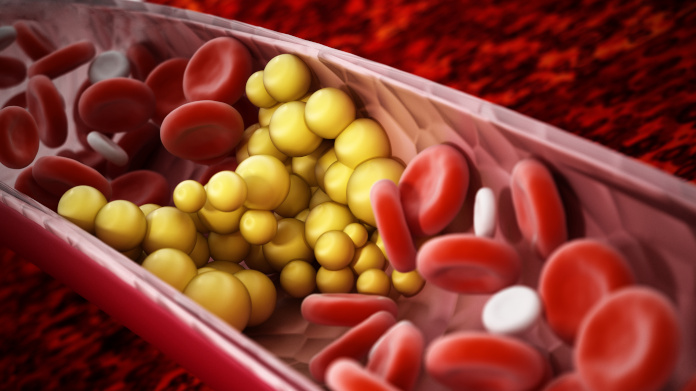
To circulate in the blood, it is transported by lipoproteins: LDL (Low-Density Lipoprotein) transports cholesterol from the liver to the tissues (2), but when present in excess, some of this cholesterol can accumulate on the artery walls.
By contrast, HDL (High Density Lipoprotein) collects excess cholesterol and returns it to the liver, where it is eliminated.
It is this difference that explains why LDL is referred to as 'bad' cholesterol. Over time, the accumulation of LDL can lead to the formation of plaques that thicken and stiffen the arteries: this is atherosclerosis (2).
This can impede blood flow and increase the risk of cardiovascular disease (heart disease, stroke, etc.).
How do you set up a cholesterol-lowering diet?
A cholesterol-lowering diet is the cornerstone of cardiovascular prevention. Its impact goes beyond simple eating habits, as it directly influences the way lipid metabolism works. Here are a few tips to help you adopt these new eating habits.
Prioritise soluble fibre
Soluble fibre plays a key role in cholesterol regulation. In the intestine, it forms a gel that captures some of the dietary cholesterol and bile acids (3).
As bile acids are manufactured from cholesterol, their elimination via the faeces forces the liver to consume more cholesterol to replenish them, which in turn limits the volume of cholesterol available in the bloodstream.
These fibres can be found in oats, barley, legumes, certain fruits (such as apples or citrus fruits) and flax or chia seeds.
Prioritise good fats
Mono- and polyunsaturated fatty acids are thought to have a favourable impact on the blood lipid profile (4). They are thought to contribute to a more balanced distribution of cholesterol between LDL and HDL, which supports cardiovascular balance.
These fats are mainly found in vegetable oils, such as olive, rapeseed or walnut oil, as well as in oily fish.
They are described as ‘protective’ fats, because they are harmoniously integrated into the lipid metabolism and replace other less beneficial fats (4).
Conversely, so-called 'harmful’ fats, in particular certain saturated or processed fats, tend to unbalance the lipid profile when consumed in excess (5).
Choosing the right sources of fat is therefore crucial to the long-term success of a cholesterol-lowering diet.
Reduce saturated and trans fats
As mentioned above, saturated fats, when consumed in excess, tend to stimulate LDL production in the liver.
They are found mainly in fatty animal products, certain cheeses, cooked meats and ultra-processed foods.
Trans-fatty acids, found in many ultra-processed foods, tend to further disrupt lipid metabolism (6).
Their effect is cumulative over time and can accentuate the imbalance in blood cholesterol.
Focus on natural antioxidants for a cholesterol-lowering diet
When LDL oxidises, it can become more harmful to the arteries. Oxidised LDL is more easily taken up by the vascular wall and contributes to local inflammatory reactions that can further weaken the vessels (7).
Dietary antioxidants help to limit this oxidative stress. They are found particularly in berries, green vegetables and foods rich in polyphenols, such as tea and cocoa.
By supporting the body's natural defences, they may indirectly help to protect blood vessels and reinforce the overall effectiveness of a cholesterol-lowering diet (8).
Limit consumption of sugar and ultra-processed foods
Excessive consumption of sugars, particularly in the form of fast sugars, tends to gradually upset the metabolic balance.
It can encourage insulin resistance and the onset of metabolic syndrome, two situations frequently associated with an unfavourable lipid profile, with an increase in LDL and a decrease in HDL(9).
Ultra-processed foods can reinforce these imbalances. Rich in hidden sugars and pro-inflammatory ingredients, they are suspected of helping maintain chronic low-grade inflammation, associated with unbalanced lipid metabolism.
Limiting their place in the diet would therefore help to support a more stable and balanced metabolism over the long term.
When and how should a cholesterol-lowering diet be supplemented?
In some situations, diet alone may not be enough. In such cases, certain food supplements can support an overall approach, without ever replacing medical supervision.
Some of the natural substances they contain have been studied for their beneficial effects on cholesterol balance.
This is the case, for example, with fermented red yeast rice (including statin-free versions), which could help support a balanced diet favourable to cholesterol metabolism. (10).
Artichoke extract and policosanols are also being studied for their potential role in supporting lipid metabolism (11).
 Cholesterol Complex Formula is a combination of targeted active ingredients (including red yeast rice), designed to complement an appropriate diet.
Black garlic, derived from the fermentation of classic garlic, may also support cardiovascular health and the maintenance of normal cholesterol levels (12).
Organic ABG10+® - Black Garlic makes it possible to incorporate this substance into a more structured nutritional approach.
Finally, berberine (extracted from plants of the Berberis genus) is being studied for its possible impact on maintaining normal cholesterol levels, thanks to its action on metabolism (13).
Berberine is a supplement developed from 97% pure berberine.
Berberine Max Bioactivity is composed of an improved berberine, 10 times more bioavailable, for better assimilation by the body.
A cholesterol-lowering diet: a comprehensive, long-term approach
A cholesterol-lowering diet is a long-term approach that delivers measurable benefits. Its effectiveness also depends on an overall lifestyle, combining regular physical activity, quality sleep and good stress management.
It is this coherent approach that enables it to support the prevention of cardiovascular risks, natural complementary care and long-term medical oversight.
SUPERSMART ADVICE
References
- M. Gaziano (2024) “Cholesterol and its essential roles in the body” https://pmc.ncbi.nlm.nih.gov/articles/PMC10893558/
- Rosenson et al. (2024) “Lipoprotein (a) integrates monocyte-mediated thrombosis and inflammation in atherosclerotic cardiovascular disease” https://pubmed.ncbi.nlm.nih.gov/40334781/
- Gunness et M.J. Gidley (2010) “Mechanisms underlying the cholesterol-lowering properties of soluble dietary fibre polysaccharides” https://www.researchgate.net/publication/51508989_Mechanisms_underlying_the_cholesterol-lowering_properties_of_soluble_dietary_fibre_polysaccharides
- M. Kris-Etherton et al. (1999) "Monounsaturated fatty acids and risk of cardiovascular disease" https://pubmed.ncbi.nlm.nih.gov/10584045/
- P. Mensink et al. (2003) "Effects of dietary fatty acids and carbohydrates on the ratio of serum total to HDL cholesterol and on serum lipids and apolipoproteins: a meta-analysis of 60 controlled trials" https://pubmed.ncbi.nlm.nih.gov/12716665/
- Mozaffarian et al. (2006) "Trans Fatty Acids and Cardiovascular Disease" https://pubmed.ncbi.nlm.nih.gov/16611951/
- Parthasarathy et al. (2010) “Oxidized Low-Density Lipoprotein” https://pubmed.ncbi.nlm.nih.gov/20013192/
- Serafini et I. Peluso (2016) “Functional Foods for Health: The Role of Marine and Terrestrial Bioactive Compounds in Cardiovascular Disease” https://pubmed.ncbi.nlm.nih.gov/27881064/
- L. Stanhope (2016) “Sugar consumption, metabolic disease and obesity: The state of the controversy” https://pmc.ncbi.nlm.nih.gov/articles/PMC4822166/
- F. Cicero et al. (2019) “Red Yeast Rice for Hypercholesterolemia” https://pmc.ncbi.nlm.nih.gov/articles/PMC6822657/
- Ben Salem et al. (2015) “Pharmacological Studies of Artichoke Leaf Extract and Their Health Benefits” https://pubmed.ncbi.nlm.nih.gov/26310198/
- M. Imaizumi et al. (2022) “Garlic: A systematic review of the effects on cardiovascular diseases” https://pubmed.ncbi.nlm.nih.gov/35193446/
- X. Hu et al. (2022) “Berberine is a potential therapeutic agent for metabolic syndrome via brown adipose tissue activation and metabolism regulation” https://pubmed.ncbi.nlm.nih.gov/30662589/
Keywords


16 Hours
Quality and choice of supplements.
Quality and choice of supplements.
Maja
4 Days
perfect great
perfect great
igor janic
9 Days
Good products and speedy delivery
Good products and speedy delivery
Jim
13 Days
Very good
Very good, fast delivery
Paddy
14 Days
Excellent products
Excellent products. Excellent servce.
MIFSUD Joseph
14 Days
It was sent expediently
It was sent expediently, the tracking worked nicely!
Roger De Backer
16 Days
Everything okay
Quality products people can account on. Fast shipping.
Fred Laan
26 Days
Good products
Good products
Emmanuel
30 Days
Always great service coupled with the…
Always great service coupled with the best of products Olive and David
David Walsh
32 Days
Products with quality
Products truly help.
Sari
34 Days
Your delivery service in DK is not…
Your delivery service in DK is not giving option of pick up in package shop of my choice!
SZCZEPANSKI Christopher
35 Days
Always good products
Always good products. Thank you
Silke Wieczorek
36 Days
Swift delivery
Swift delivery - quality products
Trusted
37 Days
Incredible and quick service and…
Incredible and quick service and delivery. Thank you again for your assistance. Your products are really helpful!
Kazanti Kleopatra
38 Days
this is probably not the last time i'll…
this is probably not the last time i'll buy noopept, however i'm really thankful to y'all, omberacetam helped me a lot getting out of the drug spiral, now i can finally enjoy again the scent of a flower with actual pleasure
DE ROSA Luca
of experience
your money back
##montant## purchase