
Food and pregnancy: which foods and supplements to choose?
Discover this reliable and well-documented summary of the ideal diet during pregnancy, with the basic rules, increased needs, forbidden foods and recommended food supplements, for a happy and risk-free pregnancy.


Basic dietary rules for pregnant women
Increased calorie requirements
It's no myth that a pregnant woman's energy requirements are higher than those of a non-pregnant woman. But not instantly!
During the first trimester, they remain the same. It's only from the second trimester onwards that they increase by an average of 340 kcal, then 450 kcal in the last trimester.
So continue to apply the 3 meal guideline, but increase the number of snacks between meals by one or two from the second trimester onwards, paying attention to your satiety signals.
Maintain a balanced and varied diet during pregnancy
As for non-pregnant women, a varied diet is essential, but even more so when the health of your future baby depends on it.
It provides the foetus with all the minerals, vitamins, trace elements and micronutrients it needs for a normal development (1).
Vary your recipes and enjoyment by giving priority, more than ever, to fresh produce, seasonal fruit and vegetables, wholegrain cereals and legumes, and by excluding high-risk foods (detailed in the second section of this article) and what you can no longer tolerate.
Hydration is also vital: fluid requirements increase by around 50% during pregnancy, due to the amniotic fluid and the development of blood volume. That's why we recommend drinking 2 to 3 litres of water a day.
Adjust your eating habits to limit nausea and constipation
Vomiting and constipation are two common discomforts of pregnancy, which can be relieved by diet, with varying degrees of success.
Here's some advice on how to limit nausea (which affects 80% of women and lasts throughout pregnancy for 5% of them) (2):
- Eat foods that are well tolerated and appreciated;
- Eat breakfast quickly after waking up to avoid having an empty stomach for too long;
- Choose water with a low mineral content;
- Avoid fatty, salty, fried or spicy foods.
Tips for relieving constipation (which affects 40% of pregnant women):
- Gradually increase your intake of dietary fibre, which will also help you control your weight gain;
- Drink and eat more frequently (5 to 6 small meals a day);
- Limit foods that cause constipation: refined cereal products, fatty meats, excessively sweet foods, excessively fatty foods, ready-made meals.
Foods and drinks to avoid during pregnancy
Alcohol is completely contraindicated for pregnant women
Today, there should be no doubt: alcohol is to be avoided during pregnancy, without exception.
It crosses the placental barrier, enters the foetus' bloodstream, increases the likelihood of malformations (teratogenic effect) and causes brain damage (neurotoxic effect) at all stages of pregnancy, whatever the alcoholic beverage and the type of consumption (occasional, regular, binge drinking, etc.).
The risks for the baby are proportional to the quantity consumed. So stop all alcohol consumption as soon as you are pregnant.
Avoid all foods that may be contaminated with listeria
Listeriosis is an illness caused by eating food contaminated with the bacterium Listeria monocytogenes.
It is generally not very serious for the health of pregnant women, but it is potentially fatal for the foetus: it can cause premature delivery or abortion.
To limit the risks of such a scenario, pregnant women are advised to avoid all foods with a higher probability of contamination:
- Meat, fish and shellfish eaten raw: tartar, sushi, sashimi, maki, etc.;
- Products made from raw or unpasteurised milk, such as certain cheeses and creams;
- Pre-packaged fresh products, such as salads and grated cheese;
- Uncooked sprouted seeds;
- Smoked fish;
- Packaged foods that may have been contaminated after cooking: cooked cured meats (bacon, sausage, ham, pâté, etc.), sliced foods, ready-to-eat products, etc.
Note: most of the time, eating any of these foods during pregnancy will have no impact. But the more you eat, the more you increase the risk of listeriosis and therefore the risk of serious consequences for the foetus.
All foods that could be contaminated by the toxoplasmosis parasite should also be avoided.
Unlike listeriosis, toxoplasmosis is a parasitic disease that is generally asymptomatic and leaves no after-effects. One adult in two is affected during his or her lifetime, usually without realising it.
However, as it can have dramatic consequences for the foetus (death in utero, premature delivery, neurological sequelae, ocular damage after birth), every effort must be made to limit the risks of contamination during pregnancy, particularly in the first few months: the later the parasite is transmitted to the foetus during pregnancy, the less serious the damage caused by congenital toxoplasmosis.
If the pregnant woman has been immunised against toxoplasmosis, there is no risk of infecting the foetus, but this only concerns a minority of pregnant women in Western countries.
To limit the risk of toxoplasmosis as much as possible, pregnant women are advised to avoid all foods with a greater likelihood of being contaminated:
- Raw vegetables that have not been washed properly or that cannot be washed (alfalfa sprouts for example);
- Raw eggs and unpasteurised dairy products;
- Undercooked meat and animal products (must be cooked above 70-75°C).
Various foods to limit during pregnancy
For different reasons, these foods should be limited by pregnant women (3):
- Foods containing caffeine: coffee, teas, energy drinks, soft drinks. For the foetus, it is recommended not to exceed 300 mg of caffeine per day, i.e. 3 to 4 cups of ground roasted coffee and 6 cans of cola;
- Industrial and ultra-processed products, because they contain harmful elements and do not provide as many essential elements for foetal development as other types of food;
- Food products containing harmful chemical substances (additives, pesticides, etc.) because their impact on the foetus is potentially greater;
- Foods and supplements naturally containing endocrine disruptors, such as supplements based on soya isoflavones;
- Wild game offal and liver, which are too rich in retinol, a form of vitamin A that increases the risk of foetal malformations when consumed in large quantities;
- Seaweed and certain fish that may be contaminated with mercury: swordfish, shark, lamprey, tuna (fresh or frozen), escolar, marlin, orange roughy and canned albacore tuna;
- There is however no problem with pineapple or papaya, contrary to popular belief.
Foods, nutrients and supplements particularly recommended for pregnant women
During pregnancy, certain nutrients are so essential to the development of the foetus and the health of the mother-to-be that food supplements are increasingly recommended to some of them, to anticipate and prevent any deficiencies.
Sources of calcium to form foetal bones
Calcium is essential for forming the future baby's skeleton, particularly during the third trimester when the baby's weight will increase on average from 1 to 3.5 kilos.
If calcium from food is insufficient, the body may draw from the pregnant woman's reserves or may slow down the development of the foetus.
Calcium requirements are estimated at 1,300 mg per day, compared to 1,000 mg for a non-pregnant woman.
Sources of calcium to support increased needs: certain dairy products (pasteurised milk and yoghurt, Parmesan cheese, Cheddar cheese, etc.), legumes, nuts, cereal products, certain leafy greens (cabbage, chard, spinach, etc.), certain seafood (such as cooked prawns) and certain waters that are very rich in calcium.
Sources of vitamin D, a key nutrient during pregnancy
Vitamin D plays an equally important role in foetal bone growth, as it controls the intestinal absorption of calcium.
The latest studies suggest an estimated minimum requirement of 1,200 IU per day from the start of the pregnancy, whereas for a long time a single supplement of 100,000 IU was recommended in the 3rd trimester on the basis of an estimated requirement of 1,000 IU per day (4).
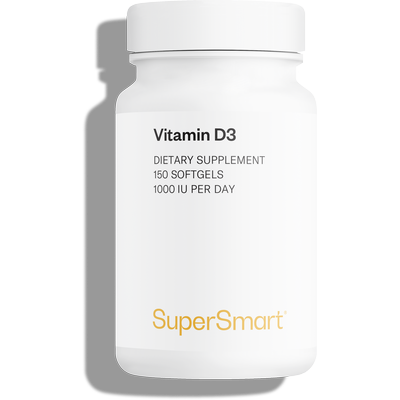
Sources of vitamin D to support increased needs: oily fish (such as herring, sardines, salmon and mackerel), egg yolks, pasteurised dairy products enriched with vitamin D, dark chocolate, and above all vitamin D food supplements (under medical supervision), to be taken daily preferably in capsule form (such as Vitamin D3 1000 IU), or as a single dose if you're worried about forgetting to take them.
Iron-rich foods for the mother's and baby's red blood cells
Pregnant women also need more iron, especially at the end of pregnancy. Iron is essential to create the amount of red blood cells that need to be produced. Firstly to cover the needs of the pregnant woman, whose blood volume is increasing, and secondly for those of the foetus, which will need to be self-sufficient after birth.
It is estimated that a pregnant woman needs 20 to 30 mg of iron per day.
Sources of iron to support increased needs: meat, fish and seafood (well-cooked), legumes, nuts, cereals, egg yolks and leafy greens.
Note: in the event of a proven deficiency, oral iron supplements and preparations are the first-line treatment, to be taken on a doctor's advice (5-6). They generally contain between 40 and 100 mg of elemental iron per daily dose, and should be taken with vitamin C to increase absorption. From the second trimester onwards, and depending on the severity of the deficiency, parenteral administration of iron (injection, infusion, etc.) may be considered.
Sources of vitamin B9 (folate) for the neural tube development
Vitamin B9 (also known as folic acid or folate) is particularly important in early pregnancy. A proven deficiency during pregnancy can lead to the baby's low birth weight, a premature baby, anaemia in the mother and neural tube defects.
It is estimated that a pregnant woman's folate requirements are doubled, from 400 µg to 800 µg per day.
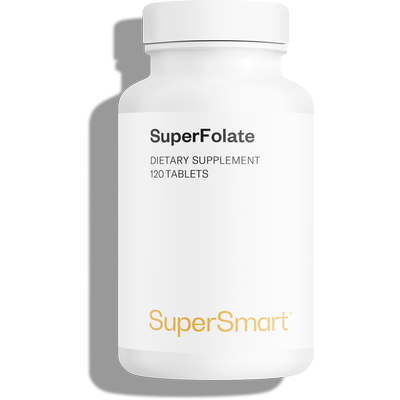
As food alone cannot meet these needs, supplementation has become widespread. Health professionals even recommend taking vitamin B9 supplements (such as SuperFolate) from preconception until the baby is born.
Foods containing vitamin B9 to support supplementation: poultry offal (in moderation, given its very high concentration of vitamin A), legumes, fresh fruit and vegetables.
Sources of omega-3 fatty acids for the foetus's brain and vision
Omega-3s are essential fatty acids that contribute to the development of normal brain function and vision in the foetus.
As the body cannot manufacture them itself, they must also be sourced from a healthy diet, which can be challenging.
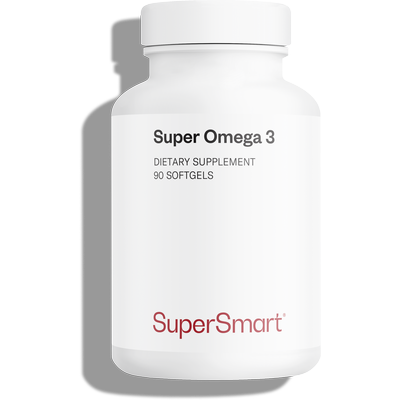
Sources of omega-3 to support foetal needs: oily fish, rapeseed, linseed and walnut oils, seeds, fortified products such as milk, and omega-3 food supplements (such as the well-known Super Omega 3). The value of the latter has recently been assessed in reducing the incidence of premature births (7). They can be considered, given the scarcity of food sources, but must be taken under the close supervision of a health professional.
SUPERSMART ADVICE
References
- Guggino A, Barbero S, Ponzo V, Viora E, Durazzo M, Bo S. Myths about nutrition in pregnancy. J Obstet Gynaecol. 2016 Oct;36(7):964-965. doi: 10.3109/01443615.2016.1168372. Epub 2016 May 5. PMID: 27147241.
- Holmgren C, M Aagaard-Tillery KM, Silver RM, et al: Hyperemesis in pregnancy: An evaluation of treatment strategies with maternal and neonatal outcomes. Am J Obstet Gynecol 198 (1):56.e1–4, 2008. doi: 10.1016/j.ajog.2007.06.004
- Tsakiridis I, Kasapidou E, Dagklis T, Leonida I, Leonida C, Bakaloudi DR, Chourdakis M. Nutrition in Pregnancy: A Comparative Review of Major Guidelines. Obstet Gynecol Surv. 2020 Nov;75(11):692-702. doi: 10.1097/OGX.0000000000000836. PMID: 33252699.
- Palacios C, Kostiuk LL, Cuthbert A, Weeks J. Vitamin D supplementation for women during pregnancy. Cochrane Database of Systematic Reviews 2024, Issue 7. Art. No.: CD008873. DOI: 10.1002/14651858.CD008873.pub5. Accessed 14 August 2024.
- Pavord S, Daru J, Prasannan N, et al.. UK guidelines on the management of iron deficiency in pregnancy. Br J Haematol 2020;188:819–30.
- Muñoz M, Pena-Rosas JP, Robinson S, et al.. Patient blood management in obstetrics: management of anaemia and haematinic deficiencies in pregnancy and in the post-partum period: NATA consensus statement. Transfus Med 2018;28: 22–39
- Middleton P, Gomersall JC, Gould JF, Shepherd E, Olsen SF, Makrides M. Omega‐3 fatty acid addition during pregnancy. Cochrane Database of Systematic Reviews 2018, Issue 11. Art. No.: CD003402. DOI: 10.1002/14651858.CD003402.pub3. Accessed 14 August 2024.
Keywords





1083 Days
Great service
Great service
Ryszard
1095 Days
Profesjonalna obsługa
Bardzo dobre i rzeczowe opisy. Profesjonalna obsługa.
PIEKOSZEWSKI Chris
1764 Days
Wszystko OK!
Wszystko poszło jak powinno 🙂
SITKIEWICZ Pawel
2550 Days
Szybko sprawnie bez problemów
Szybko sprawnie bez problemów
Marek
of experience
your money back
##montant## purchase