
According to a study, fermented foods could reduce anxiety
A recent study suggests that eating foods rich in 'good' bacteria that produce certain metabolites could improve psychological well-being by influencing the intestinal microbiota.


Fermentation: a process that enriches food with beneficial bacteria
A process that changes the characteristics of food
Fermentation is an age-old process that has been used for thousands of years to preserve food or improve digestibility.
It is based on the action of living microorganisms, such as lactic acid bacteria or yeast, which naturally transform the sugars and other organic compounds present in food.
This natural process changes not only the texture and flavour of the food, but also its nutritional composition and the availability of certain nutrients.
Among other benefits, when food undergoes fermentation, it is naturally enriched with active yeasts and probiotic bacteria (1).
Probiotics and the intestinal microbiota
Studied for many years, probiotics are living microorganisms that have the ability to support the balance of the intestinal microbiota.
Probiotics help to maintain bacterial diversity in the colon, which plays a role in the smooth functioning of digestion and other processes in the human body (2).
These microorganisms are found in a variety of fermented foods: yoghurt, cheese, kefir, miso, lacto-fermented vegetables (sauerkraut, kimchi, etc.) and many others.
They can also be taken as food supplements in powder or capsule form.
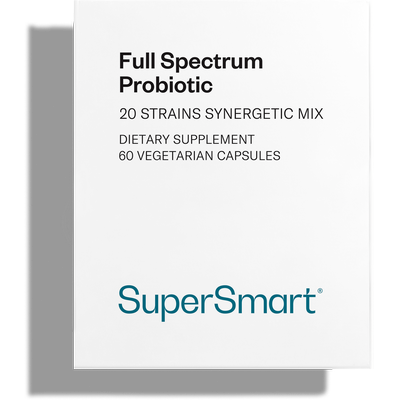
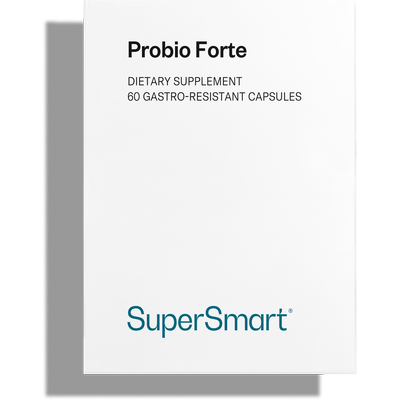
 Probio Forte and Full Spectrum Probiotic food supplements combine several strains of probiotics to give you maximum bacterial diversity.
Because of the influence of the digestive microbiota on the body in general, a great deal of research is now exploring the role of probiotics in various fields, including mental health.
A few years ago, researchers revealed the existence of the intestine-brain axis (3), a bidirectional communication network between the digestive system and the central nervous system.
Study shows potential link between indole-producing bacteria and modulation of anxiety
In February 2025, a team of researchers published a study in the journal EMBO Molecular Medicine on the links between gut microbiota and anxiety-related behaviour (4).
Their work was based on the observation of mice without intestinal microbiota and raised in a germ-free environment.
These mice showed more anxious behaviour. They also showed neuronal hyperactivity in a very specific region of the brain: the basolateral amygdala, involved in the management of emotions and stress.
These same mice were then exposed to live microorganisms in order to develop a normal microbiota. Others were supplemented with a metabolite produced by intestinal bacteria, indole.
In both cases, anxiety-related behaviour was significantly reduced.
The researchers explain this phenomenon by the fact that indole, derived from tryptophan (an amino acid found in many fermented foods), acts as a messenger molecule between the intestine and the brain.
By crossing the blood-brain barrier, it could regulate neuronal activity in areas involved in emotions, such as the amygdala.
These observations support the idea that metabolites from the intestinal microbiota directly influence certain brain functions linked to stress and anxiety.
So, according to this study, maintaining a balanced microbiota, through a diet that includes the consumption of fermented foods rich in indole-producing bacteria, could help maintain a healthy emotional balance.
Although these results are promising, they should be interpreted with caution, as they currently only concern animal models.
Further research is needed to confirm these mechanisms in humans.
The link between intestinal microbiota and mental health: a rapidly developing field of research
The study published in the journal EMBO is not the only one to have examined the interactions between the gut microbiota and the mental sphere.
This field, sometimes referred to as psychobiotics, explores the way in which gut microorganisms can influence behaviour, emotions and cognition.
A 2021 study showed that a diverse microbiota is associated with better emotional regulation and a reduction in depressive symptoms (5).
Similarly, researchers at the University of Cork have shown that certain strains of Lactobacillus and Bifidobacterium can modulate the response to stress in both animals and humans (6).
Some studies have also looked at the ability of probiotics to influence the production of neurotransmitters or to modulate brain activity.
These results reinforce the idea that mental health is not limited to the brain: it also depends in part on intestinal health.
This is why the medical community now recommends a balanced diet, for both physical and mental health.
Today, there are even probiotic formulas designed with carefully selected strains with a view to acting on the channels of communication between the intestine and the nervous system.
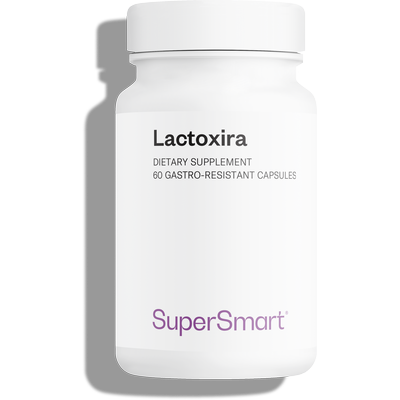
Discover Lactoxira food supplement, a complex of 8 probiotics specifically designed to help balance the intestinal microbiota and support overall well-being.
SUPERSMART ADVICE
References
- Dimidi E, Cox SR, Rossi M, Whelan K. Fermented Foods: Definitions and Characteristics, Impact on the Gut Microbiota and Effects on Gastrointestinal Health and Disease. Nutrients. 2019 Aug 5;11(8):1806. doi: 10.3390/nu11081806. PMID: 31387262; PMCID: PMC6723656.
- Chandrasekaran P, Weiskirchen S, Weiskirchen R. Effects of Probiotics on Gut Microbiota: An Overview. Int J Mol Sci. 2024 May 30;25(11) : 6022. doi: 10.3390/ijms25116022. PMID: 38892208; PMCID: PMC11172883.
- Appleton J. The Gut-Brain Axis: Influence of Microbiota on Mood and Mental Health. Integr Med (Encinitas). 2018 Aug;17(4):28-32. PMID: 31043907; PMCID: PMC6469458.
- Weonjin Yu, Yixin Xiao, Anusha Jayaraman, Yi-Chun Yen, Hae Ung Lee, Sven Pettersson, and H Shawn Microbial metabolites tune amygdala neuronal hyperexcitability and anxiety-linked behaviors EMBO Mol Med(2025) 17: 249 - 264
- Simpson CA, Diaz-Arteche C, Eliby D, Schwartz OS, Simmons JG, Cowan CSM. The gut microbiota in anxiety and depression - A systematic review. Clin Psychol Rev. 2021 Feb;83:101943. doi: 10.1016/j.cpr.2020.101943. Epub 2020 Oct 29. PMID: 33271426.
- Bravo JA, Forsythe P, Chew MV, Escaravage E, Savignac HM, Dinan TG, Bienenstock J, Cryan JF. Ingestion of Lactobacillus strain regulates emotional behavior and central GABA receptor expression in a mouse via the vagus nerve. Proc Natl Acad Sci U S A. 2011 Sep 20;108(38):16050-5. doi: 10.1073/pnas.1102999108. Epub 2011 Aug 29. PMID: 21876150; PMCID: PMC3179073.
Keywords



9 Days
Adequate info en hoge kwaliteit
Adequate info en hoge kwaliteit
HanS.
18 Days
Supplementen zijn goed.
Supplementen zijn goed. Zachte prijzen. Website met problemen ( altijd ) niet goed voor nieuwe klanten.
Gino RJ
28 Days
Alles op tijd geleverd.
Alles op tijd geleverd. De producten worden alsmaar duurder, terwijl mijn pensioen niet meer stijgt. Vandaar kan ik alsmaar minder vaak bestellen.
Wouters
1098 Days
Great service
Great service
Ryszard
1110 Days
Profesjonalna obsługa
Bardzo dobre i rzeczowe opisy. Profesjonalna obsługa.
PIEKOSZEWSKI Chris
1779 Days
Wszystko OK!
Wszystko poszło jak powinno 🙂
SITKIEWICZ Pawel
2566 Days
Szybko sprawnie bez problemów
Szybko sprawnie bez problemów
Marek
of experience
your money back
##montant## purchase