
Lactobacillus casei: Where can you find this probiotic?
Lactobacillus casei is a common probiotic strain that can be found in various foods and supplement products. But which ones? An overview of the food sources and presentations available for this beneficial bacterium.


Lactobacillus casei: what do we know about this probiotic?
Lactobacillus casei: a well-known lactic acid bacterium
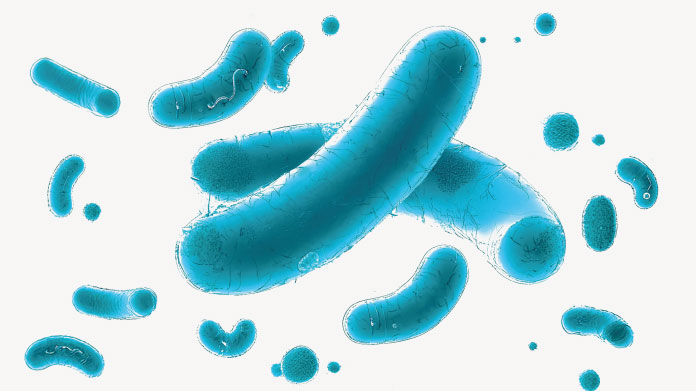
L. casei is a probiotic bacterium in the lactobacillus family, a group of microorganisms studied for their beneficial effects on the intestinal flora (1).
As its name suggests, Lactobacillus casei is a lactic acid bacterium (from the Latin caseus meaning cheese).
A probiotic present in the intestinal and vaginal microbiota
L. casei is naturally present in human microbiota. It inhabits the intestinal microbiota, which is itself involved in the functioning of the immune system.
It is also found in the vaginal microbiota, which is largely made up of lactic acid bacteria (2). These bacteria develop in the vagina at puberty to form the Döderlein flora, the other name for the intimate flora.
The role of the vaginal microbiota, like the intestinal microbiota, is to maintain a good balance between beneficial microorganisms and those that are potentially pathogenic.
Within this ecosystem, no one microorganism should be allowed to take over excessively, as this can lead to discomfort.
Gardnerella vaginalis, for example, is a bacterium naturally present in the vaginal flora, which becomes pathogenic when it proliferates beyond a certain limit.
L. casei: what are the benefits?
Generally speaking, probiotics help to maintain the balance of the intestinal microbiota. L. casei has been the subject of numerous studies highlighting very specific potential benefits.
By helping to balance the intestinal flora, L. casei is thought to help reduce inflammation of the digestive mucosa (3).
In patients suffering from irritable bowel syndrome, consumption of L. casei is thought to reduce the intensity of abdominal pain, reduce bloating and improve digestive comfort (4).
L. casei is also thought to help prevent and treat diarrhoea associated with antibiotics (5).
Meanwhile, an in vitro study has shown that, in the intimate microbiota, a subspecies of L. casei inhibits the formation of a biofilm by Gardnerella, a bacterium involved in bacterial vaginosis.
This biofilm, which facilitates the adhesion of the pathogenic bacteria to vaginal cells, even limits the effect of antibiotic treatments prescribed to treat the infection (6).
L. casei is also thought to help boost the immune system.
A study published in the Journal of Immunology Research shows that strains of lactobacilli, including L. casei, activate the body's defence cells and increase their capacity to eliminate infections (7).
Finally, recent studies have shown that several strains of L. casei are among the most active lactobacilli in producing enzymes that help break down sugars, proteins, starches and fermentable fibres, improving the bioavailability of nutrients (8).
The different food sources of L. casei
Where is L. casei found naturally?
L. casei is naturally present in many fermented foods from a variety of culinary traditions.
The bacterium develops depending on the fermentation conditions and the bacterial strains used.
It is found in dairy products:
- cheese
- yoghurt
- fermented milk
- probiotic-enriched milk drinks
But also in fermented preparations that have been eaten for centuries, such as:
- sauerkraut
- tempeh (a fermented Indonesian food made from soya)
- sourdough bread
- kimchi (a traditional Korean food made from fermented vegetables)
- miso (fermented soya-based paste)
It is also found in certain fermented drinks such as:
- milk or fruit kefir, which contains a range of lactic acid bacteria, including casei, depending on the grains used
- kombucha, which may contain them in certain preparations when the probiotic cultures or additions include lactobacilli such as casei
How can I optimise my intake of L. casei?
To take full advantage of this probiotic strain, it is advisable to opt for unpasteurised foods (where possible and safe) and to alternate between different types of fermented food to benefit from a wider range of microorganisms.
It should also be borne in mind that the L. casei content of these foods depends on a number of factors (manufacturing method, preservation method, storage conditions, etc.).
The actual proportion of live strains in food is therefore difficult to estimate, and varies greatly from one product to another.
This is why it may be wise to consume L. casei via supplementation, to ensure a sufficient, high-quality intake, as a complement to a varied, balanced diet.
Where can I find L. casei supplements?
L. casei is commonly included in probiotic food supplements, most often in probiotic synergies, i.e. in combination with other strains.
These concentrated formulations make it possible to provide standardised doses of bacteria, thus ensuring a sufficient and appropriate supply of active microorganisms.
It is essential to choose food supplements that guarantee that the strains ingested are alive and remain so as they pass through the stomach.
This means opting for gastro-resistant capsules that protect the bacteria from gastric acidity before they arrive and are released into the intestine.
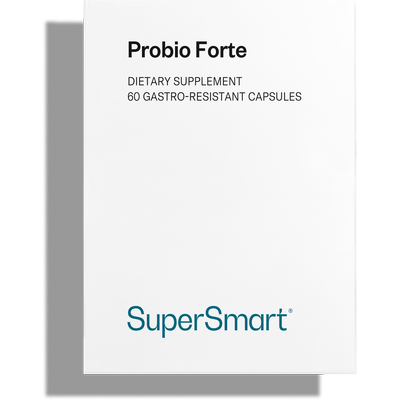
Discover Probio Forte, a multi-layer supplement containing 8 billion microorganisms per capsule and combining 5 different species to better support the balance of the intestinal microbiota, including L. casei.
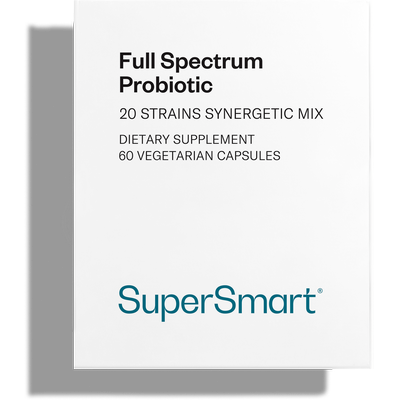
Also discover Full Spectrum Probiotic, a broad-spectrum multi-layer formula providing an extremely diverse supply of beneficial microorganisms.
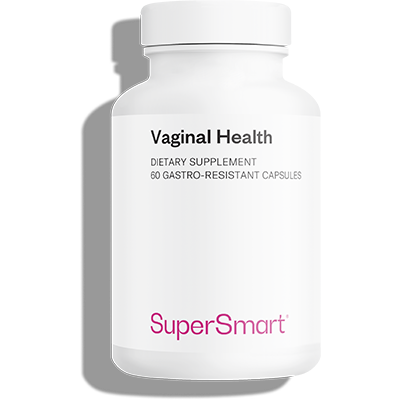
Discover Vaginal Health, which contains 5 billion microorganisms per capsule and combines 5 probiotics essential for intimate balance.
SUPERSMART ADVICE
References
- Seddik HA, Bendali F, Gancel F, Fliss I, Spano G, Drider D. Lactobacillus plantarum and Its Probiotic and Food Potentialities. Probiotics Antimicrob Proteins. 2017 Jun;9(2):111-122. doi: 10,100 7/s12602-017-9264-z. PMID: 28271469.
- Mei Z, Li D. The role of probiotics in vaginal health. Front Cell Infect Microbiol. 2022 Jul 28;12:963868. doi: 10.3389/fcimb.2022.963868. PMID: 35967876; PMCID: PMC9366906.
- Compare D, Rocco A, Coccoli P, Angrisani D, Sgamato C, Iovine B, Salvatore U, Nardone G. Lactobacillus casei DG and its postbiotic reduce the inflammatory mucosal response: an ex-vivo organ culture model of post-infectious irritable bowel syndrome. BMC Gastroenterol. 2017 Apr 14;17(1):53. doi: 10,118 6/s12876-017-0605-x. PMID: 28410580; PMCID: PMC5391611.
- Thijssen AY, Clemens CH, Vankerckhoven V, Goossens H, Jonkers DM, Masclee AA. Efficacy of Lactobacillus casei Shirota for patients with irritable bowel syndrome. Eur J Gastroenterol Hepatol. 2016 Jan;28 (1) : 8-14. doi: 10,109 7/MEG.0000000000000484. PMID : 26 469 356.
- Beausoleil M, Fortier N, Guénette S, L'ecuyer A, Savoie M, Franco M, Lachaine J, Weiss K. Effect of a fermented milk combining Lactobacillus acidophilus Cl1285 and Lactobacillus casei in the prevention of antibiotic-associated diarrhea: a randomized, double-blind, placebo-controlled trial. Can J Gastroenterol. 2007 Nov;21(11):732-6. doi: 10.1155/2007/720205. PMID: 18026577; PMCID: PMC2658588.
- He Y, Na R, Niu X, Xiao B, Yang H. Lactobacillus rhamnosus and Lactobacillus casei Affect Various Stages of Gardnerella Species Biofilm Formation. Front Cell Infect Microbiol. 2021 Feb 19;11:568178. doi: 10.3389/fcimb.2021.568178. PMID: 33680986; PMCID: PMC7933028.
- Rocha-Ramírez LM, Pérez-Solano RA, Castañón-Alonso SL, Moreno Guerrero SS, et al. Probiotic Lactobacillus strains stimulate the inflammatory response and activate human macrophages. J Immunol Res. 2017 ; 2017:4607491. doi:10.1155/2017/4607491
- Maske BL, de Melo Pereira GV, da S. Vale A, de Carvalho Neto DP, Karp SG, et al. A review on enzyme-producing Lactobacilli associated with the human digestive process: From metabolism to application. Enzyme Microb Technol. 2021 Sep ; 149:109836. doi:10.1016/j.enzmictec.2021.109836
Keywords




11 Days
Prodotti eccezionali
Prodotti eccezionali! Consegna rapida e precisa
paola
22 Days
Heldere info
Heldere info
HanS.
22 Days
Snelle levering
Snelle levering
harrie
27 Days
Adequate info en hoge kwaliteit
Adequate info en hoge kwaliteit
HanS.
37 Days
Supplementen zijn goed.
Supplementen zijn goed. Zachte prijzen. Website met problemen ( altijd ) niet goed voor nieuwe klanten.
Gino RJ
46 Days
Alles op tijd geleverd.
Alles op tijd geleverd. De producten worden alsmaar duurder, terwijl mijn pensioen niet meer stijgt. Vandaar kan ik alsmaar minder vaak bestellen.
Wouters
1117 Days
Great service
Great service
Ryszard
1129 Days
Profesjonalna obsługa
Bardzo dobre i rzeczowe opisy. Profesjonalna obsługa.
PIEKOSZEWSKI Chris
1797 Days
Wszystko OK!
Wszystko poszło jak powinno 🙂
SITKIEWICZ Pawel
2584 Days
Szybko sprawnie bez problemów
Szybko sprawnie bez problemów
Marek
of experience
your money back
##montant## purchase