
Prebiotics and probiotics: what's the difference, what's the benefit?
Prebiotics and probiotics are two complementary supports for intestinal health... but do you really know their differences and their respective roles in the body?


Prebiotics and probiotics: what's the difference?
What are probiotics?
Probiotics are living microorganisms, i.e. ‘good bacteria’, that thrive naturally in the gut.
When present in adequate quantities in the digestive system, they help to balance the intestinal microbiota, which is itself important for the health of the host (1).
What are prebiotics?
Prebiotics are not living microorganisms.
They are non-digestible fibres or substances that serve as 'food' for the good intestinal bacteria.
In this way, they encourage their growth and activity (2).
But let's take a closer look at how each one works and the best way to provide them for the body.
Probiotics: their role in the body, food sources and selection criteria
Probiotics and a balanced intestinal microbiota
The gut microbiota is home to several billion beneficial bacteria and yeasts that form a complete living ecosystem.
When the balance between good bacteria and pathogens (viruses, microbes, allergens, fungi) is disturbed, certain digestive problems can occur.
Probiotics act as natural defence boosters, helping to maintain or restore a balanced microbial composition (3).
From a biological point of view, they can:
- compete with undesirable bacteria for adhesion to the intestinal mucosa, i.e. occupy the space available to prevent the proliferation of viruses and bacteria responsible for infections (4-5)
- produce natural antimicrobial substances to actively combat pathogens (6)
- modulate certain immune responses of the host, so that they adapt to pathogens (7)
What foods contain probiotics?
Natural probiotics are found in certain fermented foods, such as:
- dairy products: yoghurt, cheese, fermented milk
- fermented drinks: kefir, kombucha, etc.
- lacto-fermented vegetables: raw sauerkraut, Korean kimchi, etc.
- fermented soya-based specialities: miso, tempeh
However, the microorganism content of these foods is unknown at the time of consumption. It can vary greatly depending on the manufacturing process, the nature of the product and the length and method of preservation.
How do I choose the right probiotic food supplement?
Probiotic food supplements provide a standardised and measurable quantity of probiotics. To choose a quality product, several criteria are important (8):
- the dosage in CFU (Colony Forming Units): a good supplement should guarantee a sufficient intake (often between 1 and 50 billion CFU/day, depending on the strain)
- the nature of the formulas: you can choose between a dietary supplement containing a single strain for targeted action (e.g. on a specific digestive function) or a multi-strain mixture for synergy aimed at more global support
- the viability of the lactic ferments in the formula: probiotics must resist gastric acidity and reach the intestine alive
Strains studied for their specific effects
Isolated strains studied for their specific effects
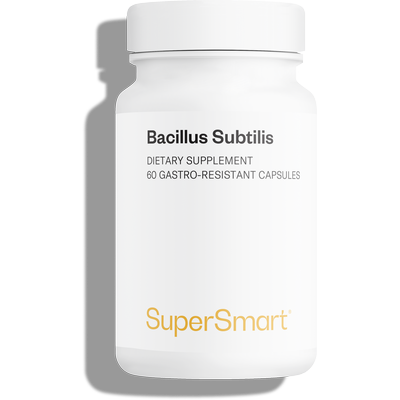
This is the case, for example, with Bacillus subtilis, a bacterium whose properties enable it to resist heat and gastric acid so that it reaches the colon alive (9).
Several studies suggest that it helps to maintain the balance of the intestinal flora, in particular by producing digestive enzymes and competing with undesirable microorganisms (10).
 Discover the Bacillus Subtilis food supplement, which provides 3 billion microorganisms per capsule.
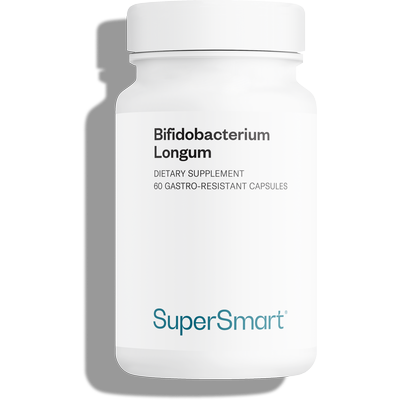
Bifidobacterium longum is one of the most common species of bifidobacteria.
Research shows that it is involved in fibre fermentation and the production of short-chain fatty acids (SCFAs), such as butyrate, which are beneficial to the intestinal mucosa (11).
By secreting lactic acid, it is also thought to help maintain a favourable pH for balanced intestinal flora.
Studied for its effects on bloating and transit regulation, it is often associated with improved digestive comfort (12).
Discover the Bifidobacterium longum food supplement, which provides 6 billion microorganisms per day.
Probiotic synergies for an overall effect
If you want to provide general support for the intestinal microbiota, you can consume several specific strains of probiotics at the same time.
Not all probiotics have the same effects, so they complement each other as part of an overall approach to digestive balance (13).
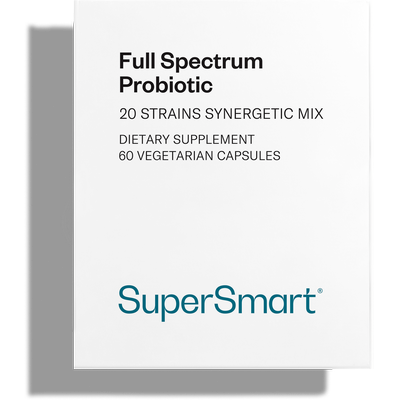
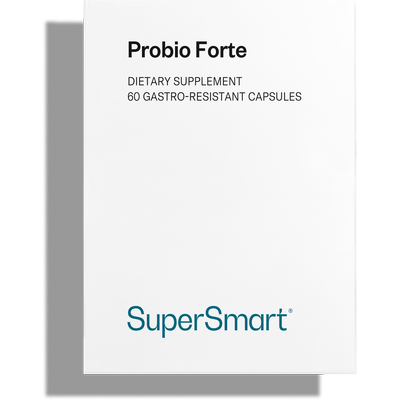
Take a look at the Full Spectrum Probiotic food supplement, a multi-layer complex designed to have a complete effect on bacterial diversity, or the Probio Forte food supplement, a formula with a high dose of CFU.
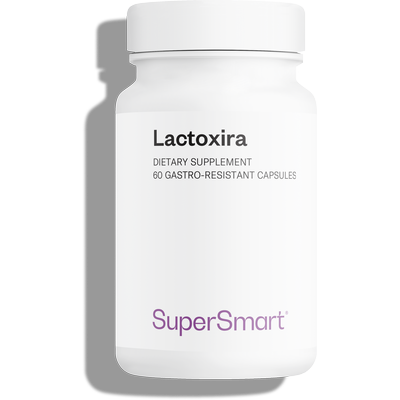
Some synergies are developed from different bacterial strains studied in very specific contexts, for example in the field of mental health (14).
Find out more about the Lactoxira dietary supplement, an innovative combination of strains studied in the field of neuroscience.
Prebiotics: benefits and relevant sources
What are prebiotics used for?
Prebiotics are specific dietary fibres, such as inulin, which escape digestion in the small intestine. They therefore arrive intact in the colon.
Once in the large intestine, they provide a substrate for beneficial bacteria and stimulate their growth. More than just food for the probiotics, they act as 'fertiliser' for them.
According to clinical studies, prebiotics promote the production of short-chain fatty acids (SCFAs), such as butyrate, which are essential for the health of the intestinal mucosa and the maintenance of a pH level favourable to the beneficial flora (15).
What foods contain prebiotics?
Prebiotics are found in a number of plants rich in specific fibres (16):
- garlic
- onions
- artichokes
- bananas (especially when under-ripe)
- leeks
- asparagus
- Jerusalem artichokes
Criteria for selecting a prebiotic food supplement
Not all prebiotics have the same effects. To choose the right supplement, you need to take into account:
- the nature and quality of the fibre: some fibres are better documented and more likely to nourish the good bacteria
- origin: natural, controlled plant-based sourcing is preferable
- fermentation speed and digestive tolerance: some fibres ferment too quickly and cause bloating, while others are better tolerated
- targeted effects: depending on the fibre chosen, the bacteria fed and the impact on the microbiota differ
Fibres with specific prebiotic effects
Some fibres have been particularly studied for their ability to nourish intestinal bacteria.
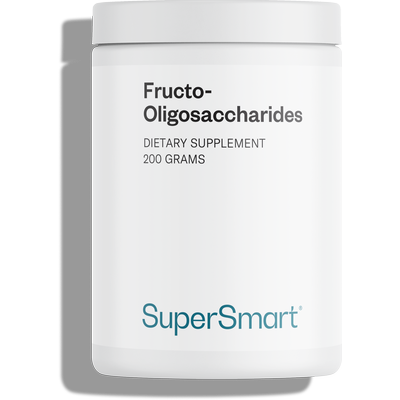
For example, fructo-oligosaccharides (FOS) are short fibres found naturally in asparagus and onions, which appear to selectively favour the growth of bifidobacteria (17).
What's more, their short fermentation time offers rapid effects.
Discover the Fructo-Oligosaccharides food supplement, made in France from GMO-free beetroot.
Acacia gum is a soluble fibre derived from acacia sap (18).
Unlike FOS, it is characterised by slow, gentle fermentation, which is very well tolerated even by sensitive individuals.
It gradually nourishes the good bacteria and contributes to a stable microbial balance, without excess gas or bloating.
Discover Organic Acacia, a healthy, natural food supplement.
SUPERSMART ADVICE
References
- Wang X, Zhang P, Zhang X. Probiotics Regulate Gut Microbiota: An Effective Method to Improve Immunity. Molecules. 2021 Oct 8;26(19):6076. doi: 10.3390/molecules26196076. PMID: 34641619; PMCID: PMC8512487.
- Valcheva R, Dieleman LA. Prebiotics: Definition and protective mechanisms. Best Pract Res Clin Gastroenterol. 2016 Feb;30(1):27-37. doi: 10.1016/j.bpg.2016.02.008. Epub 2016 Feb 18. PMID: 27048894.
- Hrncir T. Gut Microbiota Dysbiosis: Triggers, Consequences, Diagnostic and Therapeutic Options. Microorganisms. 2022 Mar 7;10(3):578. doi: 10.3390/microorganisms10030578. PMID: 35336153; PMCID: PMC8954387.
- Lee YK, Puong KY. Competition for adhesion between probiotics and human gastrointestinal pathogens in the presence of carbohydrate. Br J Nutr. 2002 Sep;88 Suppl 1:S101-8. doi: 10.1079/BJN2002635. PMID: 12215184.
- van Zyl WF, Deane SM, Dicks LMT. Molecular insights into probiotic mechanisms of action employed against intestinal pathogenic bacteria. Gut Microbes. 2020 Nov 9;12(1):1831339. doi: 10.1080/19490976.2020.1831339. PMID: 33112695; PMCID: PMC7595611.
- Fijan S. Probiotics and Their Antimicrobial Effect. Microorganisms. 2023 Feb 19;11(2):528. doi: 10.3390/microorganisms11020528. PMID: 36838493; PMCID: PMC9963354.
- Mazziotta C, Tognon M, Martini F, Torreggiani E, Rotondo JC. Probiotics Mechanism of Action on Immune Cells and Beneficial Effects on Human Health. Cells. 2023 Jan 2;12(1):184. doi: 10.3390/cells12010184. PMID: 36611977; PMCID: PMC9818925.
- Binda S, Hill C, Johansen E, Obis D, Pot B, Sanders ME, Tremblay A, Ouwehand AC. Criteria to Qualify Microorganisms as "Probiotic" in Foods and Dietary Supplements. Front Microbiol. 2020 Jul 24;11:1662. doi: 10.3389/fmicb.2020.01662. PMID: 32793153; PMCID: PMC7394020.
- Kimelman H, Shemesh M. Probiotic Bifunctionality of Bacillus subtilis-Rescuing Lactic Acid Bacteria from Desiccation and Antagonizing Pathogenic Staphylococcus aureus. Microorganisms. 2019 Sep 29;7(10):407. doi: 10.3390/microorganisms7100407. PMID: 31569575; PMCID: PMC6843919.
- Aliakbarpour HR, Chamani M, Rahimi G, Sadeghi AA, Qujeq D. The Bacillus subtilis and Lactic Acid Bacteria Probiotics Influences Intestinal Mucin Gene Expression, Histomorphology and Growth Performance in Broilers. Asian-Australas J Anim Sci. 2012 Sep;25(9):1285-93. doi: 10.5713/ajas.2012.12110. PMID: 25049692; PMCID: PMC4092943.
- Fernando WMADB, Flint SH, Ranaweera KKDS, Bamunuarachchi A, Johnson SK, Brennan CS. The potential synergistic behaviour of inter- and intra-genus probiotic combinations in the pattern and rate of short chain fatty acids formation during fibre fermentation. Int J Food Sci Nutr. 2018 Mar;69(2):144-154. doi: 10.1080/09637486.2017.1340932. Epub 2017 Jun 28. PMID: 28659066.
- Lenoir M, Wienke J, Fardao-Beyler F, Roese N. An 8-Week Course of Bifidobacterium longum 35624®Is Associated with a Reduction in the Symptoms of Irritable Bowel Syndrome. Probiotics Antimicrob Proteins. 2025 Feb;17(1):315-327. doi: 10.1007/s12602-023-10151-w. Epub 2023 Sep 13. PMID: 37702965; PMCID: PMC11832793.
- Fernando WMADB, Flint SH, Ranaweera KKDS, Bamunuarachchi A, Johnson SK, Brennan CS. The potential synergistic behaviour of inter- and intra-genus probiotic combinations in the pattern and rate of short chain fatty acids formation during fibre fermentation. Int J Food Sci Nutr. 2018 Mar;69(2):144-154. doi: 10.1080/09637486.2017.1340932. Epub 2017 Jun 28. PMID: 28659066.
- Kumar A, Sivamaruthi BS, Dey S, Kumar Y, Malviya R, Prajapati BG, Chaiyasut C. Probiotics as modulators of gut-brain axis for cognitive development. Front Pharmacol. 2024 Feb 20;15:1348297. doi: 10.3389/fphar.2024.1348297. PMID: 38444940; PMCID: PMC10912297.
- van der Beek CM, Canfora EE, Kip AM, Gorissen SHM, Olde Damink SWM, van Eijk HM, Holst JJ, Blaak EE, Dejong CHC, Lenaerts K. The prebiotic inulin improves substrate metabolism and promotes short-chain fatty acid production in overweight to obese men. Metabolism. 2018 Oct;87:25-35. doi: 10.1016/j.metabol.2018.06.009. Epub 2018 Jun 25. PMID: 29953876.
- Carlson JL, Erickson JM, Lloyd BB, Slavin JL. Health Effects and Sources of Prebiotic Dietary Fiber. Curr Dev Nutr. 2018 Jan 29;2(3):nzy005. doi: 10.1093/cdn/nzy005. PMID: 30019028; PMCID: PMC6041804.
- Gibson GR, Beatty ER, Wang X, Cummings JH. Selective stimulation of bifidobacteria in the human colon by oligofructose and inulin. Gastroenterology. 1995 Apr;108(4):975-82. doi: 10.1016/0016-5085(95)90192-2. PMID: 7698613.
- Rawi MH, Abdullah A, Ismail A, Sarbini SR. Manipulation of Gut Microbiota Using Acacia Gum Polysaccharide. ACS Omega. 2021 Jul 2;6(28):17782-17797. doi: 10.1021/acsomega.1c00302. PMID: 34308014; PMCID: PMC8296006.
Keywords




6 Days
Heldere info
Heldere info
HanS.
6 Days
Snelle levering
Snelle levering
harrie
12 Days
Adequate info en hoge kwaliteit
Adequate info en hoge kwaliteit
HanS.
21 Days
Supplementen zijn goed.
Supplementen zijn goed. Zachte prijzen. Website met problemen ( altijd ) niet goed voor nieuwe klanten.
Gino RJ
31 Days
Alles op tijd geleverd.
Alles op tijd geleverd. De producten worden alsmaar duurder, terwijl mijn pensioen niet meer stijgt. Vandaar kan ik alsmaar minder vaak bestellen.
Wouters
1101 Days
Great service
Great service
Ryszard
1114 Days
Profesjonalna obsługa
Bardzo dobre i rzeczowe opisy. Profesjonalna obsługa.
PIEKOSZEWSKI Chris
1782 Days
Wszystko OK!
Wszystko poszło jak powinno 🙂
SITKIEWICZ Pawel
2569 Days
Szybko sprawnie bez problemów
Szybko sprawnie bez problemów
Marek
of experience
your money back
##montant## purchase