
Tendonitis and diet: what foods and supplements should you choose?
Shoulder, elbow, heel... Tendonitis, that inflammation of the tendon, sometimes comes with its share of pain. Discover the best nutritional tips (foods and supplements) for looking after your tendons.


Tendonitis: definition, causes and symptoms
Tendonitis is an inflammation of the tendons, the fibrous cords that connect our muscles to the bones.
This condition is part of the family of tendinopathies, a term that covers the various ailments of the tendon, which can also be linked to wear and tear or degeneration.
Composed of around 70% water, as well as collagen, glycoprotein and proteoglycan, tendons form a structure that is both flexible and resistant.
When they are overworked, ill-prepared for exercise, subjected to repetitive movements or prolonged poor posture, they can become irritated, swollen and painful.
The body then triggers an inflammatory reaction: the immune system sends cells to repair the micro-injuries in the tendon.
This natural process can be accompanied by redness, heat, stiffness and pain: this is tendonitis.
Although diet does not directly cause tendonitis, it does play a very important role in the development of inflammation and its relief.
Tendonitis and diet: what to avoid and what to prioritise?
Foods to avoid or limit so as not to encourage inflammation
Certain foods can contribute to inflammation, making the body more vulnerable to this musculoskeletal disorder.
Here are some inflammatory foods to avoid in the event of tendonitis:
- ultra-processed foods: sugary breakfast cereals, flavoured salty snacks, ready meals, etc.
- fast sugars (or simple sugars): sweets, factory-made cakes, soft drinks, etc.
- low-quality fats: cold meats, fried foods, factory-made pastries, etc.
- alcohol (1)
Foods and nutrients to support tendons
Conversely, an anti-inflammatory diet can help soothe inflammation, reduce pain and promote better recovery.
Here are some examples:
The key role of omega-3
Omega-3s are unsaturated fatty acids found in oily fish such as salmon, mackerel and sardines.
They appear to help reduce inflammation in the body by modulating the production of pro-inflammatory molecules and promoting the synthesis of mediators with anti-inflammatory effects (2).
They are also available in the form of food supplements for higher intakes:
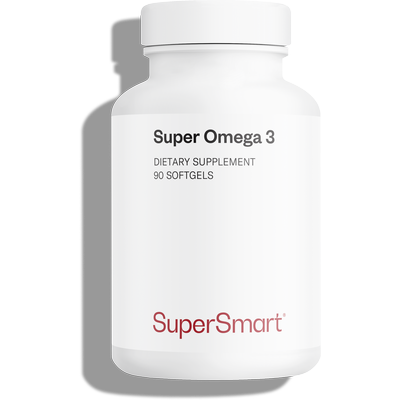
 Discover the Super Omega 3 supplement, which provides you with an optimal intake of omega-3 fatty acids of marine origin.
Vitamin C: collagen and tendon health
Vitamin C, for its part, contributes to the normal formation of collagen to ensure the normal function of cartilage.
Collagen is also widely present in tendons, where it contributes to their solidity, elasticity and proper functioning despite their poor vascularisation.
To fill up on vitamin C, try citrus fruit, kiwi fruit, raw peppers or supplements:
Discover the Triple C food supplement, which combines 3 forms of vitamin C.
Collagen is itself available directly in supplement form to compensate for the natural drop in endogenous collagen production.
In this particular case, we advise you to look at TendoGuard™, an extract of chicken sternum and eggshell membrane standardised to 10% protein (collagen types 1, 2, 5 and 10), 15% mucopolysaccharides, 2% hyaluronic acid and 5% chondroitin:
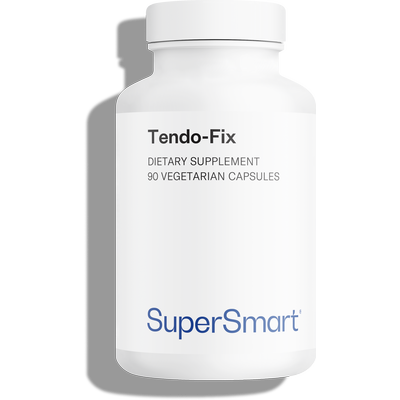
Discover the Tendo-Fix dietary supplement, specifically dedicated to tendons, which contains this exceptional compound TendoGuard™.
Turmeric: against oxidative stress
Turmeric, thanks to its main active compound curcumin, stands out for its significant antioxidant properties.
By neutralising excess free radicals, it helps protect tissues from oxidative stress.
In this way, it helps to maintain healthy joints and bones, supporting their comfort, mobility and resistance (3).
It can be eaten as a powder in your food, or in much higher doses in supplements:
Discover the Natural Curcuma supplement, a superior extract of tumeric standardised in curcuminoids.
Stay hydrated!
Finally, if you have tendonitis, it's important not to neglect hydration.
Drinking enough fluids is essential to keep tissues supple, promote the circulation of nutrients and help eliminate inflammatory waste produced by the body.
Water with a low mineral content can help to remove toxins.
Certain waters rich in bicarbonates can also help to restore a healthy acid-base balance.
In addition to the traditional nutrients found in food, certain specific compounds are attracting attention for their potential role in supporting connective tissue.
Tendonitis: specific nutrients to support the diet
NAG and glycosaminoglycans in tendons
N-acetylglucosamine (NAG) is a form derived from glucosamine, a carbohydrate naturally present in the body.
It appears to be involved in the synthesis of glycosaminoglycans, molecules essential for the structure and lubrication of connective tissue, found in particular in tendons.
Discover the dietary supplement N-Acetyl Glucosamine (NAG), whose content is obtained naturally by extracting chitin from marine invertebrates.
The Boswellia serrata plant for joint comfort
The Boswellia serrata plant, whose resin has been used for thousands of years in phytotherapy, helps to keep joints supple and comfortable.
This action is linked to its boswellic acids, which are capable of modulating certain inflammatory enzymes such as 5-lipoxygenase, thereby reducing the production of pro-inflammatory mediators, which can be useful in the case of tendon disorders.
Discover the Flexi-Smart pro-articular formula, rich in Boswellia serrata, hyaluronic acid, avocado and soya unsaponifiables, plant phytosterols...
SUPERSMART ADVICE
References
- Niknam M, Paknahad Z, Maracy MR, Hashemi M. Dietary fatty acids and inflammatory markers in patients with coronary artery disease. Adv Biomed Res. 2014 Jul 31;3:148. doi: 10.4103/2277-9175.137818. PMID: 25221751; PMCID: PMC4162073.
- Poggioli R, Hirani K, Jogani VG, Ricordi C. Modulation of inflammation and immunity by omega-3 fatty acids: a possible role for prevention and to halt disease progression in autoimmune, viral, and age-related disorders. Eur Rev Med Pharmacol Sci. 2023 Aug;27(15):7380-7400. doi: 10.26355/eurrev_202308_33310. PMID: 37606147.
- Dehzad MJ, Ghalandari H, Nouri M, Askarpour M. Antioxidant and anti-inflammatory effects of curcumin/turmeric supplementation in adults: A GRADE-assessed systematic review and dose-response meta-analysis of randomized controlled trials. Cytokine. 2023 Apr;164:156144. doi: 10.1016/j.cyto.2023.156144. Epub 2023 Feb 15. PMID: 36804260.
Keywords




2 Days
Adequate info en hoge kwaliteit
Adequate info en hoge kwaliteit
HanS.
12 Days
Supplementen zijn goed.
Supplementen zijn goed. Zachte prijzen. Website met problemen ( altijd ) niet goed voor nieuwe klanten.
Gino RJ
21 Days
Alles op tijd geleverd.
Alles op tijd geleverd. De producten worden alsmaar duurder, terwijl mijn pensioen niet meer stijgt. Vandaar kan ik alsmaar minder vaak bestellen.
Wouters
1091 Days
Great service
Great service
Ryszard
1104 Days
Profesjonalna obsługa
Bardzo dobre i rzeczowe opisy. Profesjonalna obsługa.
PIEKOSZEWSKI Chris
1772 Days
Wszystko OK!
Wszystko poszło jak powinno 🙂
SITKIEWICZ Pawel
2559 Days
Szybko sprawnie bez problemów
Szybko sprawnie bez problemów
Marek
of experience
your money back
##montant## purchase