
Is folic acid good for your hair?
Often recommended at the start of pregnancy, folic acid could also have an effect on hair health. What exactly is its role, and what can we expect from targeted supplementation?


What is folic acid, and what is it used for?
Folic acid, also known as vitamin B9 or folates (in its natural form), is a water-soluble vitamin essential for many biological functions.
First and foremost, folic acid plays an essential role in the process of cell division and the synthesis of amino acids. It also contributes to blood formation (production of red and white blood cells), normal functioning of the immune system, normal psychological function and reduced fatigue.
Folic acid is also involved in the growth of maternal tissue during pregnancy. All pregnant women are advised to take folate supplements at the start of their pregnancy, as folate deficiency can cause malformations of the embryo's nervous system (1).
The body does not synthesise this vitamin, so it must be provided through the diet or supplements. Recommended dietary intakes vary according to age. For adults, between 300 and 330 µg per day is recommended, and 400 µg for pregnant women.
Although B9 is best known for its role in preventing embryonic malformations, it is also attracting growing interest in the areas of skin health, vitality and hair health.
What are the possible effects of folic acid on hair?
There are as yet no specific studies officially linking vitamin B9 to hair health. However, several credible biological mechanisms suggest that this vitamin may play an indirect role in hair growth, resistance and vitality.
A role in cell division in the follicle
Hair originates in hair follicles, small structures located in the scalp. To ensure continuous hair growth, hair follicle cells need to be renewed rapidly.
As vitamin B9 is involved in the process of cell division, it could help support the active renewal of cells in the hair bulb.
A folate deficiency, on the other hand, could slow hair growth or affect its strength or density.
Support for red blood cell formation and tissue oxygenation
Folic acid plays a key role in the normal formation of red blood cells. Well-formed red blood cells ensure optimal oxygenation of tissues, including the scalp and hair follicles.
An adequate intake of vitamin B9 could therefore promote a better supply of nutrients and oxygen to hair roots, potentially supporting their growth and vitality.
Visible effects in the event of deficiency
Folic acid deficiency can result from a number of factors:
- a diet low in green vegetables, legumes, fresh fruit or wholegrain cereals
- excessive alcohol consumption, which disrupts the intestinal absorption of folates
- chronic digestive disorders (coeliac disease, Crohn's disease, etc.)
- certain medications (anti-epileptics, methotrexate, oral contraceptives, etc.)
Prolonged deficiency can lead to the appearance of certain symptoms that are sometimes difficult to identify: tiredness and paleness, reduced immunity, muscle cramps and headaches, etc.
Other signs may also appear in the event of folic acid deficiency: dull, brittle, thinning hair, or even premature grey hair (although the latter may be linked to other genetic or nutritional factors).
Encouraging observational data
Some scientific studies and anecdotal evidence suggest a possible link between good folate levels and better hair quality (2-5).
Folic acid plays a fundamental role in the biological mechanisms involved in cell growth, blood circulation and general vitality. The result is a potential impact on hair health.
When should you consider folic acid supplementation to support the health of your hair?
A B9 deficiency could, in the long term, affect hair quality and strength. In the right context, folic acid supplementation can therefore be an effective way of supporting hair health.
When is supplementation useful?
Folic acid supplementation may be considered:
- during pregnancy or when trying to conceive, to meet the body's increased needs
- in the case of a vegetarian or unbalanced diet
- for persistent fatigue or chronic digestive problems
- to support overall vitality, including hair vitality
Stress and hormonal balance, dietary deficiencies, lifestyle habits and genetics are some of the many factors on which the health of our hair depends. Vitamin B9 supplementation should therefore be considered as part of an overall approach, as a complement to a healthy, balanced lifestyle.
Which supplements should I choose?
Vitamin B9 supplements come in different forms. 4th-generation folates are an active form, directly assimilated by the body:
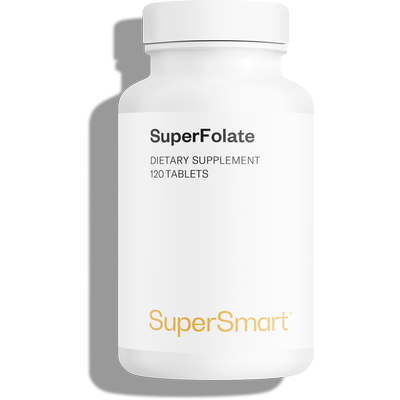
- Discover the SuperFolate supplement, which contains 200 µg of the latest-generation active folate for optimum bioavailability.
For overall support for metabolism, vitality and potentially healthy hair, you can also opt for food supplements that combine several B vitamins:
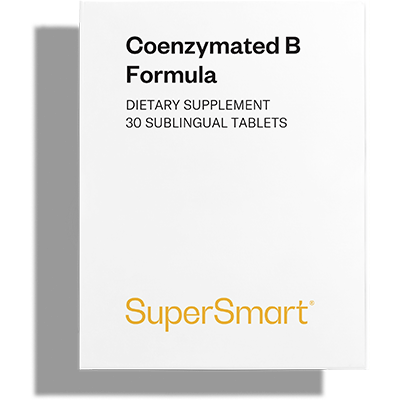
- Discover the Coenzymated B Vitamins Formula supplement, which contains the full range of 8 B vitamins in their best form.
If you want to take more direct action on the health of your hair, you can turn to targeted formulas that can be used with vitamin B9.
A supplement based on brewer's yeast, for example, is excellent for supporting hair growth and health:
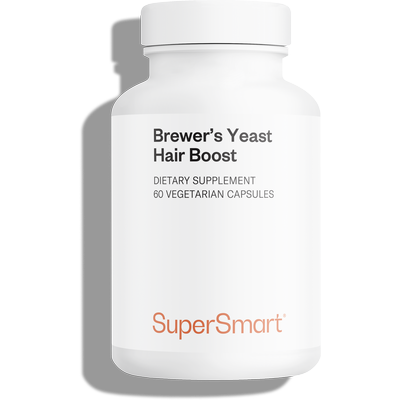
- Discover Brewer's Yeast Hair Boost supplement, which contains a high dose of inactivated brewer's yeast, zinc bisglycinate, biotin and vitamin B6.
Zinc also helps to maintain normal hair by helping to protect cells against oxidative stress:
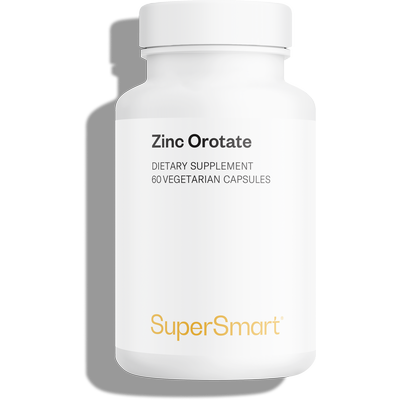
- Discover Zinc Ororate, a food supplement with optimal bioavailability.
SUPERSMART ADVICE
References
- Kancherla V. Neural tube defects: a review of global prevalence, causes, and primary prevention. Childs Nerv Syst. 2023 Jul;39(7):1703-1710. doi: 10.1007/s00381-023-05910-7. Epub 2023 Mar 8. PMID: 36882610.
- Almohanna HM, Ahmed AA, Tsatalis JP, Tosti A. The Role of Vitamins and Minerals in Hair Loss: A Review. Dermatol Ther (Heidelb). 2019 Mar;9(1):51-70. doi: 10.1007/s13555-018-0278-6. Epub 2018 Dec 13. PMID: 30547302; PMCID: PMC6380979.
- Daulatabad, Deepashree; Singal, Archana; Grover, Chander; Chhillar, Neelam1. Prospective Analytical Controlled Study Evaluating Serum Biotin, Vitamin B12, and Folic Acid in Patients with Premature Canities. International Journal of Trichology 9(1):p 19-24, Jan–Mar 2017. | DOI: 10.4103/ijt.ijt_79_16
- Sant'Anna Addor FA, Donato LC, Melo CSA. Comparative evaluation between two nutritional supplements in the improvement of telogen effluvium. Clin Cosmet Investig Dermatol. 2018 Sep 10;11:431-436. doi: 10.2147/CCID.S173082. PMID: 30237729; PMCID: PMC6136400.
- Riegel K, Hengl T, Krischok S, Schlinzig K, Abts HF. L-Cystine-Containing Hair-Growth Formulation Supports Protection, Viability, and Proliferation of Keratinocytes. Clin Cosmet Investig Dermatol. 2020 Aug 3;13:499-510. doi: 10.2147/CCID.S254720. PMID: 32801826; PMCID: PMC7413702.





16 Days
Prodotti eccezionali
Prodotti eccezionali! Consegna rapida e precisa
paola
27 Days
Heldere info
Heldere info
HanS.
27 Days
Snelle levering
Snelle levering
harrie
32 Days
Adequate info en hoge kwaliteit
Adequate info en hoge kwaliteit
HanS.
42 Days
Supplementen zijn goed.
Supplementen zijn goed. Zachte prijzen. Website met problemen ( altijd ) niet goed voor nieuwe klanten.
Gino RJ
52 Days
Alles op tijd geleverd.
Alles op tijd geleverd. De producten worden alsmaar duurder, terwijl mijn pensioen niet meer stijgt. Vandaar kan ik alsmaar minder vaak bestellen.
Wouters
1122 Days
Great service
Great service
Ryszard
1134 Days
Profesjonalna obsługa
Bardzo dobre i rzeczowe opisy. Profesjonalna obsługa.
PIEKOSZEWSKI Chris
1803 Days
Wszystko OK!
Wszystko poszło jak powinno 🙂
SITKIEWICZ Pawel
2589 Days
Szybko sprawnie bez problemów
Szybko sprawnie bez problemów
Marek
of experience
your money back
##montant## purchase