
GABA and sleep: what is the link between this brain messenger and falling asleep?
A key messenger in the brain, GABA plays a central role in balancing the nervous system. And its involvement in the mechanisms of relaxation and sleep is now attracting growing interest, both scientifically and nutritionally...


What is GABA, and what is it used for?
GABA, or gamma-aminobutyric acid, is a neurotransmitter naturally produced by the brain.
It acts as an inhibitory chemical messenger, i.e. it helps to regulate the activity of neurons.
In the nervous system, the balance is based on a permanent alternation between excitatory signals (which stimulate brain activity) and inhibitory signals (which slow it down). GABA plays precisely this role of physiological brake, by limiting excessive neuronal excitability.
In concrete terms, it helps to:
- modulate the intensity of nerve signals
- maintain a balance between alertness and relaxation
- avoid prolonged over-activation of the nervous system
This excitation/inhibition balance is essential for proper brain function and is particularly involved in sleep/wake rhythms.
The role of endogenous GABA in sleep mechanisms
Sleep is not simply a passive state: it corresponds to a precise and active reorganisation of brain activity.
As evening approaches, certain regions of the brain gradually reduce their activity, allowing the transition from wakefulness to sleep.
And GABA (produced naturally by the body) plays a central role in this transition.
It helps to reduce cerebral hyperactivity by encouraging a slowing down of the neuronal circuits involved in vigilance, attention and alertness.
This gradual relaxation allows:
- a progressive reduction of activity within wakefulness-related neural networks
- a smoother transition to sleep
- a reduction in ‘neuronal noise’ incompatible with sleep
Conversely, imbalances in the GABAergic system have been cited in the scientific literature as potentially disrupting these mechanisms (1-2).
Insufficient neuronal inhibition could contribute to difficulty in falling asleep, sleep fragmentation, or the appearance of nocturnal wakefulness or frequent waking.
GABA supplementation: potential effects on sleep onset and sleep?
For some time now, research has been looking into the potential effects of GABA supplementation on certain parameters linked to sleep onset and sleep (3-5).
Some hypotheses suggest that support for GABAergic mechanisms could help slow down brain activity at the end of the day, and contribute to:
- reduced mental agitation
- less cognitive overload in the evening
- cerebral availability that is more compatible with falling asleep
GABA is also involved in a number of brain structures that participate in the regulation of sleep cycles.
This explains the interest in its indirect role in the overall architecture of sleep, particularly via interactions between the different phases (6).
Furthermore, chronic stress and emotional overload are frequently associated with cognitive hyperstimulation, which is incompatible with falling asleep.
Research is therefore looking into the potential links between prolonged stress, imbalances in inhibitory neurotransmitters and difficulties in mentally ‘switching off’ in the evening.
Some hypotheses suggest that a neurochemical environment less favourable to inhibition could maintain a state of excessive vigilance; it is in this context that GABA is being studied as a potential player in nervous balance (7-8).
Food supplements and GABA: when should supplementation be considered?
It is essential to remember that the body produces GABA naturally.
Before considering supplementation, it is therefore important to act on a number of fundamental factors that play a central role in the mechanisms involved in falling asleep:
- exposure to natural light during the day
- stress management
- a healthy, balanced diet
- adopting a healthy lifestyle on a daily basis
- a sleep-friendly environment (limiting the use of screens before bedtime, a dark, cool, well-ventilated bedroom, etc.)
What GABA supplements are needed?
In certain situations, GABA supplementation may be considered as a complement to an overall approach to sleep and nervous balance.
This may be particularly relevant during periods of:
- chronic or prolonged stress
- difficulty falling asleep due to persistent mental agitation
- a feeling of nervous tension at the end of the day
- desynchronisation of the sleep-wake rhythm (irregular rhythm, cognitive overload, staggered working hours)
In this context, different forms of GABA are available as dietary supplements, with specific characteristics.
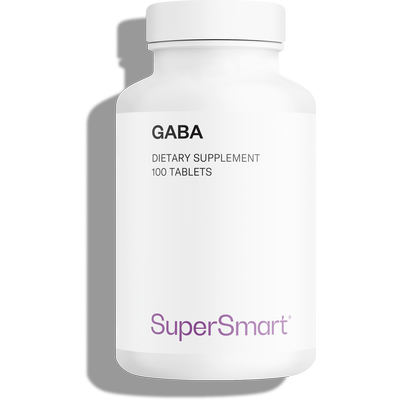
 Discover GABA, a food supplement with a powerful dose to support the natural mechanisms of relaxation and balance in the nervous system.
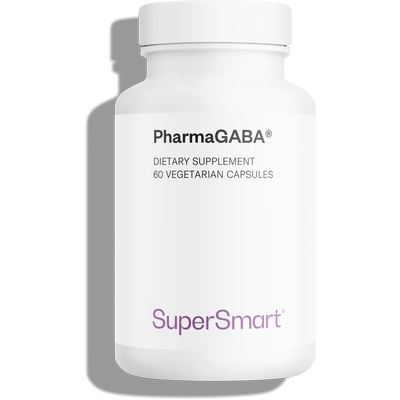
Discover PharmaGABA®, a patented form resulting from a fermentation process, studied for its tolerance and structural similarity to the GABA naturally produced by the body.
Liposomal GABA: what is the theoretical benefit?
GABA is a hydrophilic molecule, meaning that it dissolves easily in water but much less so in lipids.
The absorption of nutrients by the body depends largely on their ability to cross lipid-rich biological membranes, such as the intestinal wall.
This explains why the bioavailability of GABA by the oral route is the subject of discussion and research: part of the molecule could be limited in its passage through biological barriers, reducing the amount actually available to the body after ingestion.
To address this bioavailability issue, some formulations use liposomal technology.
Liposomes are microspheres made of lipids, capable of encapsulating active ingredients.
This lipid envelope is designed to protect sensitive compounds during digestive passage, promote their absorption and improve their stability during digestion.
In the case of GABA, liposomal encapsulation is being explored as a way of optimising its theoretical availability after ingestion.
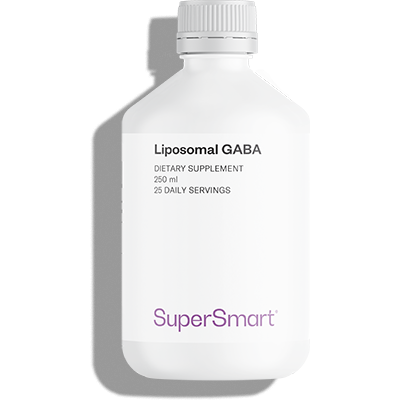
Discover Liposomal GABA, a formula combining GABA with liposomal technology, designed to optimise the protection and absorption of active ingredients.
SUPERSMART ADVICE
References
- Gottesmann C. GABA mechanisms and sleep. Neuroscience. 2002;111(2):231-9. doi: 10.1016/s0306-4522(02)00034-9. PMID: 11983310.
- Park S, Kang I, Edden RAE, Namgung E, Kim J, Kim J. Shorter sleep duration is associated with lower GABA levels in the anterior cingulate cortex. Sleep Med. 2020 Jul;71:1-7. doi: 10.1016/j.sleep.2020.02.018. Epub 2020 Feb 28. PMID: 32447224; PMCID: PMC7302996.
- Guimarães AP, Seidel H, Pires LVM, Trindade CO, Baleeiro RDS, Souza PM, Silva FGDE, Coelho DB, Becker LK, Oliveira EC. GABA Supplementation, Increased Heart-Rate Variability, Emotional Response, Sleep Efficiency and Reduced Depression in Sedentary Overweight Women Undergoing Physical Exercise: Placebo-Controlled, Randomized Clinical Trial. J Diet Suppl. 2024;21(4):512-526. doi: 10.1080/19390211.2024.2308262. Epub 2024 Feb 6. PMID: 38321713.
- Chaturvedi R, Emery P. Fly into tranquility: GABA's role in Drosophila sleep. Curr Opin Insect Sci. 2024 Aug;64:101219. doi: 10.1016/j.cois.2024.101219. Epub 2024 Jun 5. PMID: 38848811; PMCID: PMC11290982.
- Mabunga DF, Gonzales EL, Kim HJ, Choung SY. Treatment of GABA from Fermented Rice Germ Ameliorates Caffeine-Induced Sleep Disturbance in Mice. Biomol Ther (Seoul). 2015 May;23(3):268-74. doi: 10.4062/biomolther.2015.022. Epub 2015 May 1. PMID: 25995826; PMCID: PMC4428720.
- Oishi Y, Saito YC, Sakurai T. GABAergic modulation of sleep-wake states. Pharmacol Ther. 2023 Sep;249:108505. doi: 10.1016/j.pharmthera.2023.108505. Epub 2023 Aug 3. PMID: 37541595.
- Dolfen N, Veldman MP, Gann MA, von Leupoldt A, Puts NAJ, Edden RAE, Mikkelsen M, Swinnen S, Schwabe L, Albouy G, King BR. A role for GABA in the modulation of striatal and hippocampal systems under stress. Commun Biol. 2021 Sep 2;4(1):1033. doi: 10.1038/s42003-021-02535-x. PMID: 34475515; PMCID: PMC8413374.
- Hasan MM, Alabdallah NM, Alharbi BM, Waseem M, Yao G, Liu XD, Abd El-Gawad HG, El-Yazied AA, Ibrahim MFM, Jahan MS, Fang XW. GABA: A Key Player in Drought Stress Resistance in Plants. Int J Mol Sci. 2021 Sep 20;22(18):10136. doi: 10.3390/ijms221810136. PMID: 34576299; PMCID: PMC8471019.
Keywords




1 Days
Adequate info en hoge kwaliteit
Adequate info en hoge kwaliteit
HanS.
11 Days
Supplementen zijn goed.
Supplementen zijn goed. Zachte prijzen. Website met problemen ( altijd ) niet goed voor nieuwe klanten.
Gino RJ
20 Days
Alles op tijd geleverd.
Alles op tijd geleverd. De producten worden alsmaar duurder, terwijl mijn pensioen niet meer stijgt. Vandaar kan ik alsmaar minder vaak bestellen.
Wouters
1090 Days
Great service
Great service
Ryszard
1103 Days
Profesjonalna obsługa
Bardzo dobre i rzeczowe opisy. Profesjonalna obsługa.
PIEKOSZEWSKI Chris
1771 Days
Wszystko OK!
Wszystko poszło jak powinno 🙂
SITKIEWICZ Pawel
2558 Days
Szybko sprawnie bez problemów
Szybko sprawnie bez problemów
Marek
of experience
your money back
##montant## purchase