
Rebalancing your diet: where to start for lasting results?
Dietary rebalancing is attracting growing interest, particularly for weight management and overall health. But what does this term actually mean? And how can you make changes that produce lasting effects?


Dietary rebalancing: the basics for getting off to a good start
A balanced diet is an approach that aims to improve the quality of your diet in the long term, without resorting to excessive restrictions.
Unlike a strict diet, it does not rely on the radical elimination of foods or rigid rules, but on the gradual adoption of habits that are more conducive to nutritional balance.
For lasting results, dietary rebalancing is based on simple physiological principles:
- stabilising blood sugar levels to limit rapid fluctuations in energy and appetite;
- regulating feelings of hunger and fullness;
- supporting insulin sensitivity, which plays a role in nutrient management;
- supporting normal metabolic function.
These mechanisms play a key role in energy balance and explain why certain eating habits promote better weight regulation and can support a sustainable weight loss approach.
Effective dietary rebalancing therefore does not mean eating less, but rather structuring one’s diet more effectively to create a more stable nutritional environment for the body.
The key mechanisms of sustainable dietary rebalancing
Dietary rebalancing is not based on strict rules, but on an understanding of essential physiological mechanisms. It is this approach that enables sustainable results to be achieved, without the ‘yo-yo’ effect.
Stabilising blood sugar levels for sustained energy
Rapid fluctuations in blood sugar levels can lead to fatigue, cravings and sugar cravings, making it harder to maintain a balanced diet over time.
Combining fibre, protein and fat in the same meal can help slow down the absorption of carbohydrates and limit rapid spikes in blood sugar levels.
The result: energy levels remain more stable throughout the day, hunger pangs are better managed and the urge to snack is reduced.
To support this balance, it is advisable to prioritise:
- minimally processed foods;
- fibre-rich foods (vegetables, pulses, whole grains);
- an adequate intake of protein.
Certain compounds are also being researched for their interaction with mechanisms involved in glucose metabolism and insulin sensitivity.
Berberine, a plant-derived alkaloid, is being studied for its role in activating AMPK, an enzyme involved in energy metabolism (1-2).
 Discover Berberine and Berberine Max Bioactivity, two dietary supplements containing natural berberine.
Regulating hunger and satiety in the long term
The feeling of hunger is regulated by several hormones, notably ghrelin, leptin and certain gut hormones involved in satiety, such as GLP-1.
When these signals are disrupted (unbalanced meals, irregular intake, highly processed foods), appetite can become more difficult to regulate.
Rebalancing your diet aims to re-establish more stable patterns, by prioritising structured meals rich in fibre, protein and nutrients that promote satiety.
Soluble fibre, in particular, helps to slow down gastric emptying, which can help prolong the feeling of fullness. Some types, such as those derived from carob, are being studied for their ability to form a viscous gel in the stomach.
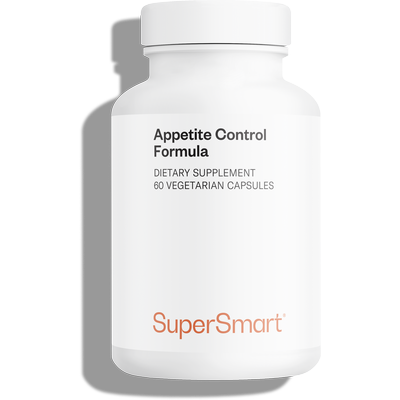
Certain nutritional approaches combine several active ingredients that act on different mechanisms involved in appetite regulation, notably blood sugar levels and satiety signals.
Discover Appetite Control Formula, a formula that combines several active ingredients involved in appetite regulation.
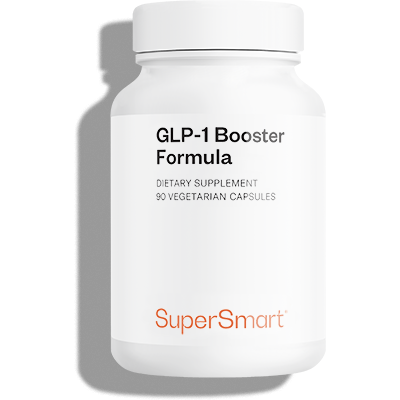
Certain nutritional strategies also focus on mechanisms involving gut hormones, such as GLP-1, which has been studied for its role in appetite regulation (3).
Discover GLP-1 Booster Formula, a supplement based on plant extracts and chromium.
Improving insulin sensitivity to limit fat storage
Insulin is a key hormone in the management of nutrients, particularly carbohydrates.
When insulin sensitivity decreases, the body may find it harder to use glucose efficiently, which can promote energy storage and make weight stabilisation more difficult.
Conversely, a more effective insulin response allows cells to utilise nutrients more efficiently and contributes to a more stable metabolic balance.
This mechanism helps to limit the energy fluctuations often associated with the ‘yo-yo’ effect.
Combined with regular physical activity, a balanced diet, rich in fibre and low in refined sugars, helps to support insulin sensitivity (4).
Certain micronutrients also play a role in normal carbohydrate metabolism, such as chromium, which helps maintain normal blood sugar levels.
Discover Crominex® 3+, a dietary supplement containing trivalent chromium (Cr3+) that contributes to the normal metabolism of macronutrients and the maintenance of normal blood sugar levels.
Supporting the microbiota for long-term balance
The gut microbiota plays a role in numerous functions related to digestion, metabolism and certain signals involved in satiety.
An imbalance in this ecosystem can influence how the body uses and stores energy.
A varied, fibre-rich diet (vegetables, pulses, fruit, whole grains) helps to nourish gut bacteria and promote a more diverse microbiota.
Several studies have linked this balance to more stable metabolic regulation, which may help maintain results over the long term.
Certain probiotic strains are being researched for their interaction with the microbiota and energy metabolism, such as Lactobacillus gasseri (5).
Discover Lactobacillus Gasseri, a probiotic strain recognised for its interaction with the gut microbiota.
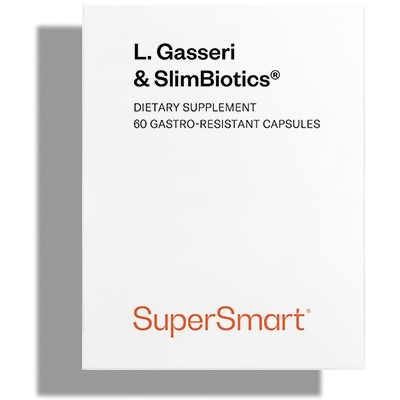
Also discover the L. Gasseri & Slimbiotics® supplement, a Lactobacillus gasseri formula enhanced with SlimBiotics®, a blend of 3 strains of Lactobacillus fermentum.
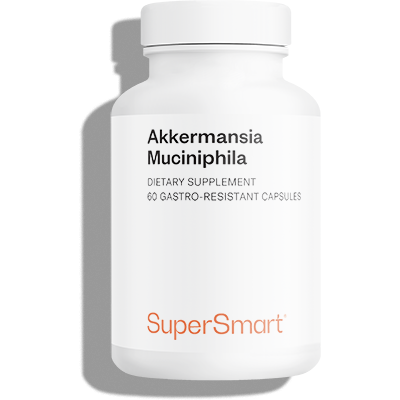
The microorganism Akkermansia muciniphila is also being studied for its role in maintaining the integrity of the gut barrier and its links to metabolism (6).
Discover Akkermansia Muciniphila, a probiotic dietary supplement containing 1 billion CFU per capsule.
Limiting fat absorption in certain situations
Limiting fat absorption can sometimes act as an additional tool for dietary rebalancing, for example when eating richer meals than usual.
Certain fibres or compounds are being studied for their ability to bind to some dietary lipids in the digestive tract, thereby helping to partially reduce their absorption.
This approach can be used on an ad hoc basis, particularly when indulging in food, as a complementary measure.
However, it does not replace a comprehensive dietary rebalancing, which remains the foundation for achieving lasting results.
Furthermore, certain plant-based active ingredients are being researched for their interaction with mechanisms involved in lipid and glucose metabolism.
Turmeric extract is thus being studied for its interaction with certain pathways involved in lipid metabolism (7).
Moringa extract may influence glucose metabolism (8), and Murraya koenigii is also being studied for its potential interaction with lipid metabolism (9).
These approaches can form part of a comprehensive strategy, complementing a balanced diet.
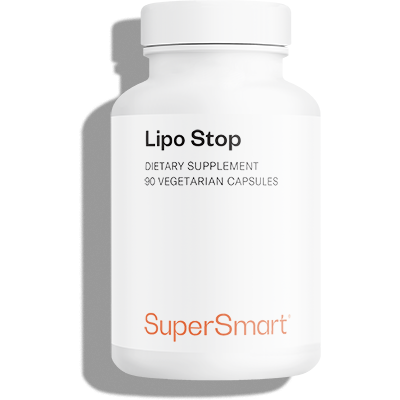
Discover Lipo-Stop (formerly Slendacor®), a formula combining extracts of turmeric, Moringa oleifera and Murraya koenigii.
Supporting metabolism without slowing it down
Very restrictive diets can cause the body to adapt, resulting in reduced energy expenditure, which may lead to weight regain in the medium term.
Conversely, a balanced diet aims to maintain an active metabolism by providing the body with the nutrients it needs on a regular basis.
Muscle mass plays a key role in this process, as it directly influences energy expenditure at rest. An adequate protein intake helps to preserve it, unlike overly restrictive approaches which can lead to muscle loss.
Furthermore, certain micronutrients play a role in energy metabolism. This is particularly true of B vitamins, several of which contribute to normal energy metabolism.
Discover Coenzymated B Vitamins, a dietary supplement that combines all 8 B vitamins in coenzyme forms.
SUPERSMART’S ADVICE

References
- Chang W, Chen L, Hatch GM. Berberine as a therapy for type 2 diabetes and its complications: From mechanism of action to clinical studies. Biochem Cell Biol. 2015 Oct;93(5):479-86. doi: 10.1139/bcb-2014-0107. Epub 2014 Dec 1. PMID: 25607236.
- Liu D, Zhao L, Wang Y, Wang L, Wu D, Liu Y. Berberine: A Rising Star in the Management of Type 2 Diabetes-Novel Insights into Its Anti-Inflammatory, Metabolic, and Epigenetic Mechanisms. Pharmaceuticals (Basel). 2025 Dec 14;18(12):1890. doi: 10.3390/ph18121890. PMID: 41471379; PMCID: PMC12735998.
- Moiz A, Filion KB, Tsoukas MA, Yu OH, Peters TM, Eisenberg MJ. Mechanisms of GLP-1 Receptor Agonist-Induced Weight Loss: A Review of Central and Peripheral Pathways in Appetite and Energy Regulation. Am J Med. 2025 Jun;138(6):934-940. doi: 10.1016/j.amjmed.2025.01.021. Epub 2025 Jan 31. PMID: 39892489.
- Whytock KL, Goodpaster BH. Unraveling Skeletal Muscle Insulin Resistance: Molecular Mechanisms and the Restorative Role of Exercise. Circ Res. 2025 Jul 7;137(2):184-204. doi: 10.1161/CIRCRESAHA.125.325532. Epub 2025 Jul 3. PMID: 40608853; PMCID: PMC12802857.
- Kim MJ, Kim JE, Lee MJ, Bae HR, Kwon EY, Shin SK. Lactobacillus paragasseri SBT2055 suppressed insulin resistance and fatty liver by inhibiting oxidative stress and inflammation in high-fat diet-induced obese mice. Benef Microbes. 2025 Jul 24;17(2):165-178. doi: 10.1163/18762891-bja00092. PMID: 40716757.
- Paone P, Petitfils C, Puel A, Latousakis D, de Vos WM, Delzenne NM, Juge N, Van Hul M, Cani PD. Akkermansia muciniphilamodulates intestinal mucus composition to counteract high-fat diet-induced obesity in mice. Gut Microbes. 2026 Dec 31;18(1):2612580. doi: 10.1080/19490976.2025.2612580. Epub 2026 Jan 9. PMID: 41511159; PMCID: PMC12795273.
- Kehinde SA, Qaisrani ZN, Pattanayaiying R, Lay BB, Phyo KY, Lin WP, San MM, Awaeloh N, Aunsorn S, Kitkangplu R, Chusri S. Clinical Potential of Curcuma longa Linn. as Nutraceutical/Dietary Supplement for Metabolic Syndrome: Systematic Review and Meta-Analysis of Randomized Controlled Trials. Foods. 2025 Dec 24;15(1):60. doi: 10.3390/foods15010060. PMID: 41517125; PMCID: PMC12785604.
- Li X, Yong J, Zhao B, Zhu Y, Luo J, Sheng J, Tian Y. Hypoglycemic effect of dietary fibers from Moringa oleifera leaves: In vitro and in vivo studies. Food Res Int. 2025 May;209:116196. doi: 10.1016/j.foodres.2025.116196. Epub 2025 Mar 22. PMID: 40253172.
- Wickramasinghe ASD, Attanayake AP, Kalansuriya P, Menuka Arawwawala LDA. Antidiabetic, Antihyperlipidemic Activities of Gelatin Nanoparticles Encapsulated With Murraya koenigii (L.) Spreng. in High Fat Diet-Fed Streptozotocin-Induced Wistar Rats. Chem Biodivers. 2025 Jul;22(7):e202402965. doi: 10.1002/cbdv.202402965. Epub 2025 Mar 21. PMID: 40040337.
Keywords






7 Days
Prodotti eccezionali
Prodotti eccezionali! Consegna rapida e precisa
paola
17 Days
Heldere info
Heldere info
HanS.
17 Days
Snelle levering
Snelle levering
harrie
23 Days
Adequate info en hoge kwaliteit
Adequate info en hoge kwaliteit
HanS.
33 Days
Supplementen zijn goed.
Supplementen zijn goed. Zachte prijzen. Website met problemen ( altijd ) niet goed voor nieuwe klanten.
Gino RJ
42 Days
Alles op tijd geleverd.
Alles op tijd geleverd. De producten worden alsmaar duurder, terwijl mijn pensioen niet meer stijgt. Vandaar kan ik alsmaar minder vaak bestellen.
Wouters
1112 Days
Great service
Great service
Ryszard
1125 Days
Profesjonalna obsługa
Bardzo dobre i rzeczowe opisy. Profesjonalna obsługa.
PIEKOSZEWSKI Chris
1793 Days
Wszystko OK!
Wszystko poszło jak powinno 🙂
SITKIEWICZ Pawel
2580 Days
Szybko sprawnie bez problemów
Szybko sprawnie bez problemów
Marek
of experience
your money back
##montant## purchase