
What foods should you eat to lose weight?
Good news! It's perfectly possible to lose weight without frustration and still enjoy eating, by choosing foods that are satiating, nutritious and low in calories.


The link between diet and weight loss
Weight loss is based on a first essential principle: you need to create a calorie deficit, i.e. consume less energy than you expend.
But this doesn't mean depriving yourself of food: the important thing is to focus on nutrient-rich foods that make you feel full, while remaining moderate in calories.
A balanced diet should combine quality proteins, dietary fibre, low glycaemic index carbohydrates and good fats.
These elements help to stabilise blood sugar levels, preserve muscle mass, sustain energy and limit cravings.
Physical activity also plays a major role: it increases energy expenditure, stimulates the metabolism and helps preserve muscle mass during weight loss.
The foods that are best for losing weight share a number of characteristics:
- low calorie density, with a lot of volume for few calories
- high fibre content, to promote satiety and transit
- high protein content, to help maintain lean body mass and satiety
- good fats, to help maintain hormonal balance
- low glycaemic index, to limit insulin peaks and cravings
- high water content, to promote satiety with a reduced calorie intake
What foods should I choose to lose weight?
Adopting a balanced diet for slimming means more than just cutting calories: it also means choosing foods that nourish the body properly. Here are the main families to choose from.
Fruit and vegetables: essential for healthy weight loss
Rich in fibre and water, and low in calories, fruit and vegetables quickly make you feel full.
They also contain a wide variety of vitamins, minerals and antioxidants that are essential for the metabolism and general well-being.
Examples: courgette, broccoli, apple, orange, red fruit, etc.
Lean proteins: to maintain muscle mass
Essential to the body, proteins help you feel full and maintain your muscles during a diet (1).
And so-called 'lean' sources are low in fat, particularly saturated fat.
Examples: chicken, turkey, white fish, eggs, tofu, etc.
Pulses: for fibre and satiety
Pulses are plant species that combine protein, fibre, vitamins and minerals.
They prolong the feeling of satiety and reduce the urge to nibble, while regulating the appetite.
Examples: lentils, chickpeas, kidney beans, split peas, etc.
Wholegrain cereals: for stable energy
Wholegrain cereals provide complex carbohydrates, fibre, B vitamins and minerals.
They release their energy gradually, avoiding the blood sugar spikes that cause tiredness and hunger pangs.
Examples: brown rice, quinoa, oats, brown bread, etc.
Good fats: for metabolic balance
Fats should not be totally omitted from a slimming diet.
Polyunsaturated fatty acids, such as omega-3s, have a number of benefits for the body and metabolic health (2-3).
Examples: olive oil, avocado, walnuts, linseed, oily fish, etc.
Building a slimming diet every day
Knowing the best foods to eat to lose weight is the first step. But you also need to know how to organise your meals and maintain a healthy balance on a daily basis.
Foods to limit
Certain foods interfere with weight loss because of their high calorie density and low nutritional value.
This is particularly true of ultra-processed foods, sugary drinks, fatty and sweet snacks, etc.
These foods encourage insulin spikes and fat accumulation, while also fuelling cravings.
Example of a typical day
- Breakfast: Greek yoghurt with oatmeal, red fruit and chia seeds
- Lunch: grilled chicken fillet, quinoa, steamed vegetables
- Snack: apple and a handful of almonds
- Dinner: vegetable soup, spiced lentils, green salad
A few practical tips
As well as choosing the right foods to eat to lose weight, it is advisable to:
- prepare your meals in advance to avoid temptation
- drink water regularly throughout the day
- eat slowly and listen to your satiety signals
- combine balance and pleasure for long-term success
- gradually introduce dietary changes so that they become lasting habits
What food supplements can help you lose weight?
Alongside a balanced diet, certain supplements can help support appetite management, satiety and metabolic balance.
Their use should always be considered on the advice of a health professional.
Glucomannan, for example, a soluble fibre found in the konjac tuber, contributes to weight loss as part of a low-calorie diet. One study suggests that it helps to reduce total calorie intake (4).
Commiphora mukul, a tree used in Ayurvedic medicine for its potential effects on fat breakdown, is also thought to inhibit the formation of new fat cells.
And green coffee extract is being studied for its many bioactive substances (5), in particular chlorogenic acid, which is thought to act on changes in body fat (6).
 Discover Weight Loss Formula, a supplement made with Commiphora mukul, Amorphophallus konjac extract and green coffee extract, among other ingredients, to optimise weight loss by influencing different mechanisms.
Conjugated linoleic acid (CLA) is being studied for its potential role in fat oxidation during physical activity (7).
Discover CLA, a high-quality conjugated linoleic acid food supplement.
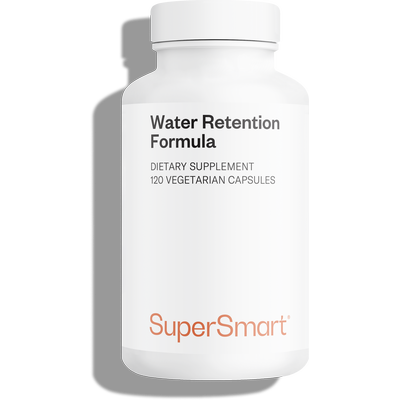
Used by naturopaths, some draining agents can also help to alleviate the feeling of bloating, reduce water retention and encourage its elimination.
Discover Water Retention Formula, a natural formulation rich in prickly pear and powerful natural active ingredients.
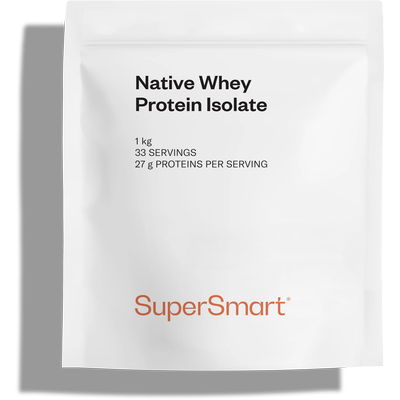
Easy to take in powder form, whey isolate is an excellent source of protein, which helps maintain muscle mass.
Discover Native Whey Protein Isolate, the purest and most effective form of protein powder for building muscle mass.
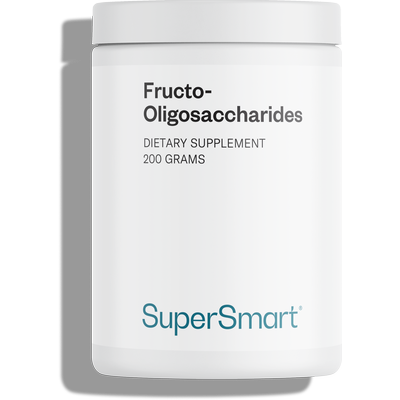
By nourishing the good bacteria of the intestinal microbiota, prebiotic fibres such as FOS could play a role in regulating appetite and controlling weight (8-9).
Discover Fructo-Oligosaccharides, a prebiotic fibre supplement derived from beetroot, for sprinkling on drinks or food.
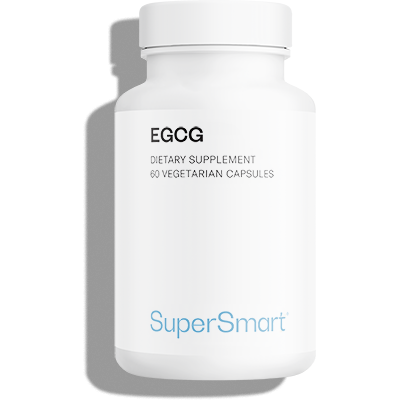
Green tea is also useful for weight loss: it contains catechins (EGCG), which support thermogenesis and energy expenditure (10-12).
Find out more about EGCG, a dietary supplement containing green tea EGCG, known to help control weight by improving metabolism and facilitating fat elimination.
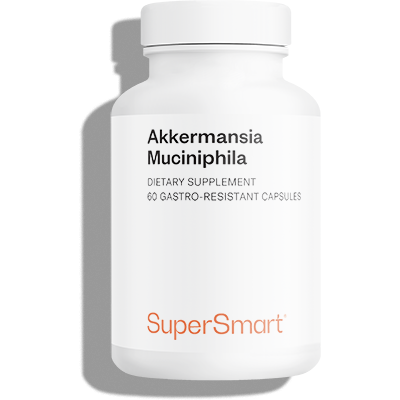
Finally, the microbiota plays a key role in metabolic balance, and several strains of probiotics are now being studied for their potential role in weight management (13-14).
Discover Akkermansia Muciniphila, a new-generation probiotic ideal for accompanying a slimming diet.
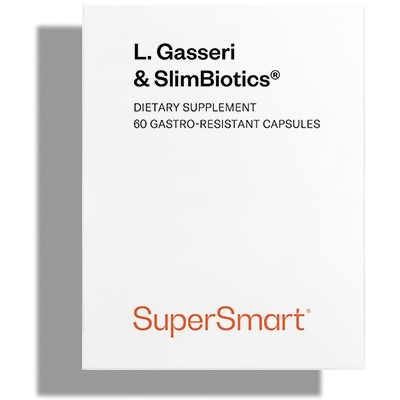
Discover L. Gasseri & SlimBiotics, a synergistic formula for balancing the microbiota, with a high dose of Lactobacillus gasseri, the most studied potential probiotic for slimming and burning fat.
SUPERSMART ADVICE
References
- https://www.anses.fr/fr/content/les-proteines
- https://www.anses.fr/fr/content/les-lipides
- Albracht-Schulte K, Kalupahana NS, Ramalingam L, Wang S, Rahman SM, Robert-McComb J, Moustaid-Moussa N. Omega-3 fatty acids in obesity and metabolic syndrome: a mechanistic update. J Nutr Biochem. 2018 Aug;58:1-16. doi: 10.1016/j.jnutbio.2018.02.012. Epub 2018 Feb 27. PMID: 29621669; PMCID: PMC7561009.
- Au-Yeung F, Jovanovski E, Jenkins AL, Zurbau A, Ho HVT, Vuksan V. The effects of gelled konjac glucomannan fibre on appetite and energy intake in healthy individuals: a randomised cross-over trial. Br J Nutr. 2018 Jan;119(1):109-116. doi: 10.1017/S0007114517003233. Epub 2017 Dec 5. PMID: 29202887.
- Kanchanasurakit S, Saokaew S, Phisalprapa P, Duangjai A. Chlorogenic acid in green bean coffee on body weight: a systematic review and meta-analysis of randomized controlled trials. Syst Rev. 2023 Sep 14;12(1):163. doi: 10.1186/s13643-023-02311-4. PMID: 37710316; PMCID: PMC10503105.
- Cho AS, Jeon SM, Kim MJ, Yeo J, Seo KI, Choi MS, Lee MK. Chlorogenic acid exhibits anti-obesity property and improves lipid metabolism in high-fat diet-induced-obese mice. Food Chem Toxicol. 2010 Mar;48(3):937-43. doi: 10.1016/j.fct.2010.01.003. Epub 2010 Jan 12. PMID: 20064576.
- Navarro V, Fernández-Quintela A, Churruca I, Portillo MP. The body fat-lowering effect of conjugated linoleic acid: a comparison between animal and human studies. J Physiol Biochem. 2006 Jun;62(2):137-47. doi: 10.1007/BF03174074. PMID: 17217167.
- Whelan K, Efthymiou L, Judd PA, Preedy VR, Taylor MA. Appetite during consumption of enteral formula as a sole source of nutrition: the effect of supplementing pea-fibre and fructo-oligosaccharides. Br J Nutr. 2006 Aug;96(2):350-6. doi: 10.1079/bjn20061791. PMID: 16923230.
- Slavin J. Fiber and prebiotics: mechanisms and health benefits. Nutrients. 2013 Apr 22;5(4):1417-35. doi: 10.3390/nu5041417. PMID: 23609775; PMCID: PMC3705355.
- Janssens PL, Hursel R, Westerterp-Plantenga MS. Nutraceuticals for body-weight management: The role of green tea catechins. Physiol Behav. 2016 Aug 1;162:83-7. doi: 10.1016/j.physbeh.2016.01.044. Epub 2016 Feb 1. PMID: 26836279.
- Shixian Q, VanCrey B, Shi J, Kakuda Y, Jiang Y. Green tea extract thermogenesis-induced weight loss by epigallocatechin gallate inhibition of catechol-O-methyltransferase. J Med Food. 2006 Winter;9(4):451-8. doi: 10.1089/jmf.2006.9.451. PMID: 17201629.
- Rondanelli M, Riva A, Petrangolini G, Allegrini P, Perna S, Faliva MA, Peroni G, Naso M, Nichetti M, Perdoni F, Gasparri C. Effect of Acute and Chronic Dietary Supplementation with Green Tea Catechins on Resting Metabolic Rate, Energy Expenditure and Respiratory Quotient: A Systematic Review. Nutrients. 2021 Feb 17;13(2):644. doi: 10.3390/nu13020644. PMID: 33671139; PMCID: PMC7922336.
- Wang S, Wu W, Chen Z, Xu C, Zhang K, Xu X. The effect of probiotics on weight management in patients with severe obesity undergoing metabolic and bariatric surgery: a systematic review and meta-analysis. Ann Med. 2025 Dec;57(1):2551284. doi: 10.1080/07853890.2025.2551284. Epub 2025 Aug 24. PMID: 40851363; PMCID: PMC12379696.
- Tomé-Castro XM, Rodriguez-Arrastia M, Cardona D, Rueda-Ruzafa L, Molina-Torres G, Roman P. Probiotics as a therapeutic strategy in obesity and overweight: a systematic review. Benef Microbes. 2021 Feb 24;12(1):5-15. doi: 10.3920/BM2020.0111. Epub 2021 Jan 17. PMID: 33459204.
Keywords


2 Days
Adequate info en hoge kwaliteit
Adequate info en hoge kwaliteit
HanS.
12 Days
Supplementen zijn goed.
Supplementen zijn goed. Zachte prijzen. Website met problemen ( altijd ) niet goed voor nieuwe klanten.
Gino RJ
21 Days
Alles op tijd geleverd.
Alles op tijd geleverd. De producten worden alsmaar duurder, terwijl mijn pensioen niet meer stijgt. Vandaar kan ik alsmaar minder vaak bestellen.
Wouters
1091 Days
Great service
Great service
Ryszard
1104 Days
Profesjonalna obsługa
Bardzo dobre i rzeczowe opisy. Profesjonalna obsługa.
PIEKOSZEWSKI Chris
1772 Days
Wszystko OK!
Wszystko poszło jak powinno 🙂
SITKIEWICZ Pawel
2559 Days
Szybko sprawnie bez problemów
Szybko sprawnie bez problemów
Marek
of experience
your money back
##montant## purchase