
Recent survey shows global micronutrient deficits
A global survey published in 2024 reveals that a large proportion of the population suffers from deficiencies in several essential micronutrients.


More than half the world's population affected by micronutrient deficiencies
A major study published in August 2024 in the journal The Lancet Global Health used databases provided by 31 countries to compare the theoretical needs and actual nutritional intakes of people in 185 countries around the world (1). The subjects were divided into different sub-groups according to their sex and age bracket (5-year intervals between 0 and 80 years of age, plus an ‘80 and over’ category). The researchers focused on 15 essential vitamins, minerals and trace elements that determine physical and mental fitness: vitamins A, B1 (thiamine), B2 (riboflavin), B3 (niacin), B6, B9 (folate), B12, C and E, as well as calcium, iron, iodine, magnesium, selenium and zinc.
The conclusions are worrying, to say the least. Based on strictly dietary intakes (excluding supplements and fortified products), researchers estimate that more than 5 billion people worldwide are not consuming enough of the following: iodine (68% of the population), vitamin E (66%) and calcium (66%). The same is true of iron, which 65% of the population consume in insufficient quantities, as well as vitamins B2 (55%), B9 (54%) and C (53%).
For the same country and age group, there are clear disparities between the sexes. More women than men have inadequate intakes of iodine, iron, selenium and vitamin B12. Conversely, men are more likely to have inadequate intakes of magnesium, zinc, vitamins A, B1, B3, B6 and C.
There are also trends specific to certain regions of the world, linked to cultural and economic factors. Calcium deficiencies, for example, are more marked in South and East Asian countries and in sub-Saharan Africa, where traditional diets include little or no dairy products. Despite easier access to quality foodstuffs, Western countries do not seem to be spared, as a result of the transition to a more processed and impoverished 'modern' diet. In Europe and Central Asia, in particular, the theoretical requirements for vitamin E are generally not being met by the over-15s.
Nutritional deficiencies around the world: what are the causes?
The increase in nutritional deficiencies around the world is directly linked to the quality of our diet. It is difficult, if not impossible, to achieve the recommended daily intake of micronutrients with meals that are unbalanced, insufficiently diversified, or composed mainly of nutritionally poor foods (ready meals, sweets, soft drinks, etc.).
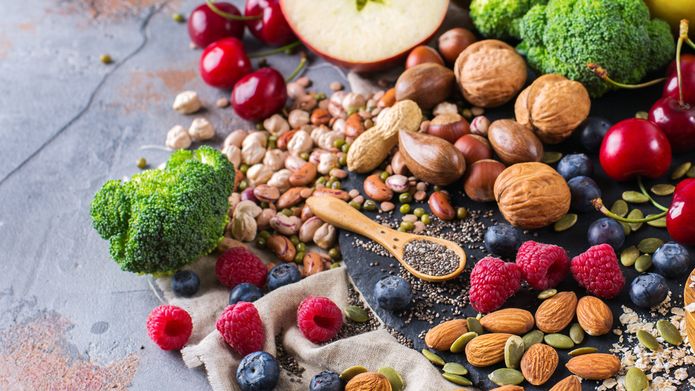
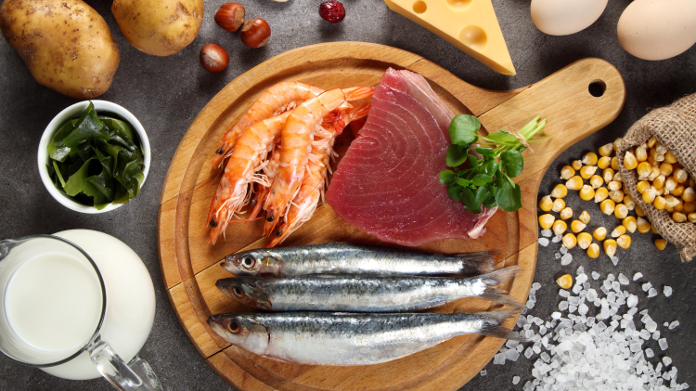
If we hope to cover our theoretical needs, we should instead adopt a varied diet, giving priority to whole foods (fruit, vegetables, wholegrain cereals, pulses, poultry, fish, nuts, etc.) in order to benefit from the widest possible range of vitamins, minerals and trace elements (2).
However, achieving this ideal represents a major challenge, given the inequalities in access to food around the world. It is also challenged by our current lifestyles, which have profoundly altered our eating habits, including a lack of time to cook, chronic stress leading to less healthy choices, and the profusion of ultra-processed foods in supermarkets (3-4), etc.
How can we avoid these nutritional deficiencies?
As mentioned above, preventing micronutrient deficiencies is intrinsically dependent on the availability of foods of high nutritional quality. For those who can, it is therefore advisable to maintain a balanced diet on a daily basis, drawing on all the major food groups and eating as wide a variety of foods as possible.
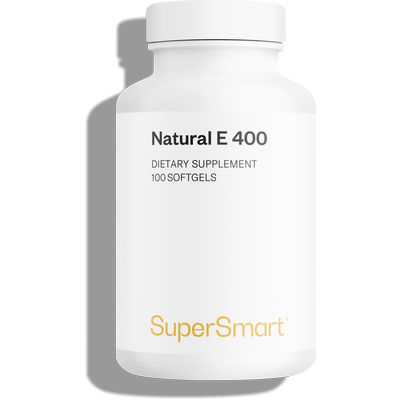
Once again, when conditions allow, food supplements can be used to top up intakes of essential vitamins, minerals and/or trace elements that would otherwise remain insufficient. In view of the results observed in the West, targeted monosupplementation with vitamin E (which helps protect cells against oxidative stress) would be of some relevance (5).
 Discover Natural E 400, a natural and powerful form of vitamin E (D-alpha tocopherol).
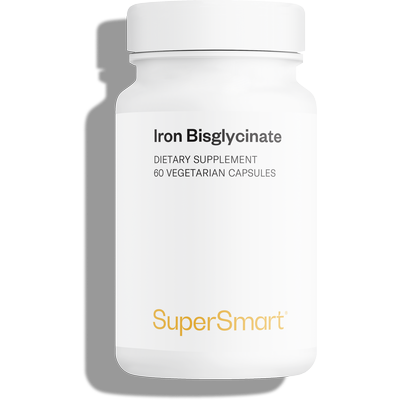
Iron also appears to be lacking in the diet of menstruating women in Europe and Central Asia (6).
Iron Bisglycinate is based on a form of iron that is bioavailable and very well tolerated by the digestive system.
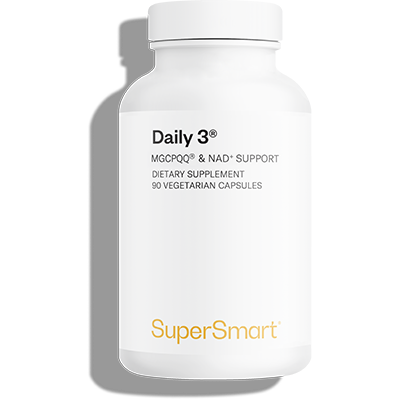
Multivitamin supplements, which combine a broader spectrum of micronutrients in a single formula, are still the best option for those who want to maximise their intake easily and effectively by covering their overall daily requirements.
Daily 3® brings together 45 exceptional nutrients, including 16 vitamins and 9 minerals in natural, active forms.
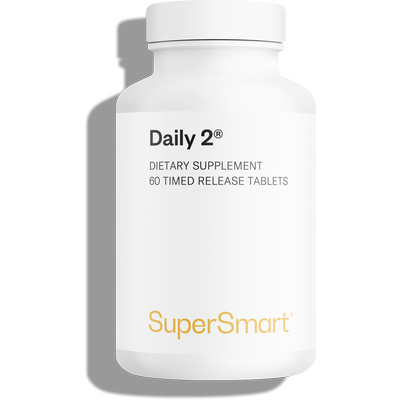
With 32 nutrients, Daily 2® is based on a sustained-release mechanism more in line with natural physiological processes, providing a continuous supply of micronutrients throughout the day.
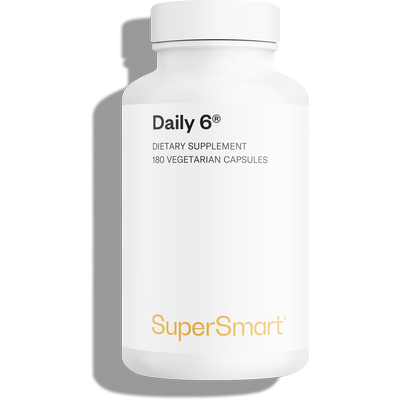
An 'enriched' version of Daily3®, Daily 6® combines 54 natural ingredients, including notable compounds not found in standard supplements (resveratrol, green tea extract, PQQ, etc.).
SUPERSMART ADVICE
References
- Simone Passarelli, Christopher M Free, Alon Shepon, Ty Beal, Carolina Batis, Christopher D Golden, Global estimation of dietary micronutrient inadequacies: a modelling analysis, The Lancet Global Health, Volume 12, Issue 10, 2024, Pages e1590-e1599, ISSN 2214-109X, https://doi.org/10.1016/S2214-109X(24)00276-6
- Chaudhary V, Saraswathy KN, Sarwal R. Dietary diversity as a sustainable approach towards micronutrient deficiencies in India. Indian J Med Res. 2022 Jul;156(1):31-45. doi: 10.4103/ijmr.ijmr_3314_21. PMID: 36510896; PMCID: PMC9903373.
- Jabs J, Devine CM. Time scarcity and food choices: an overview. 2006 Sep;47(2):196-204. doi: 10.1016/j.appet.2006.02.014. Epub 2006 May 15. PMID: 16698116.
- Yau YH, Potenza MN. Stress and eating behaviors. Minerva Endocrinol. 2013 Sep;38(3):255-67. PMID: 24126546; PMCID: PMC4214609.
- Traber MG. Vitamin E inadequacy in humans: causes and consequences. Adv Nutr. 2014 Sep;5(5):503-14. doi: 10.3945/an.114.006254. PMID: 25469382; PMCID: PMC4188222.
- Fernandez-Jimenez MC, Moreno G, Wright I, Shih PC, Vaquero MP, Remacha AF. Iron Deficiency in Menstruating Adult Women: Much More than Anemia. Womens Health Rep (New Rochelle). 2020 Jan 29;1(1):26-35. doi: 10.1089/whr.2019.0011. PMID: 33786470; PMCID: PMC7784796.
- Blumberg JB, Bailey RL, Sesso HD, Ulrich CM. The Evolving Role of Multivitamin/Multimineral Supplement Use among Adults in the Age of Personalized Nutrition. Nutrients. 2018 Feb 22;10(2):248. doi: 10.3390/nu10020248. PMID: 29470410; PMCID: PMC5852824.




3 Hours
Avis général
Well boxes are white but that puts a bit of serious color for my grey matter. Supersmart is quality products and made myself a pharmacy. Honestly should be remboursed by the health institutes selling pills
LEBORDAIS Thomas
1 Days
Arrives in just five days even to Japan…
Arrives in just five days even to Japan – that’s insanely fast! Amazing lineup of innovative products.
namio
3 Days
Quality and choice of supplements.
Quality and choice of supplements.
Maja
8 Days
perfect great
perfect great
igor janic
13 Days
Good products and speedy delivery
Good products and speedy delivery
Jim
16 Days
Very good
Very good, fast delivery
Paddy
17 Days
Excellent products
Excellent products. Excellent servce.
MIFSUD Joseph
17 Days
It was sent expediently
It was sent expediently, the tracking worked nicely!
Roger De Backer
19 Days
Everything okay
Quality products people can account on. Fast shipping.
Fred Laan
30 Days
Good products
Good products
Emmanuel
34 Days
Always great service coupled with the…
Always great service coupled with the best of products Olive and David
David Walsh
36 Days
Products with quality
Products truly help.
Sari
37 Days
Your delivery service in DK is not…
Your delivery service in DK is not giving option of pick up in package shop of my choice!
SZCZEPANSKI Christopher
38 Days
Always good products
Always good products. Thank you
Silke Wieczorek
40 Days
Swift delivery
Swift delivery - quality products
Trusted
of experience
your money back
##montant## purchase