
High blood pressure: a clinical study evaluates olive leaf extract
Traditionally associated with cardiovascular health, the olive leaf is the subject of clinical research. A new study involving 621 patients with high blood pressure assesses the effects of olive leaf extract on blood pressure.
- ✓A randomised, placebo-controlled trial assessed olive leaf extract in 621 patients already being treated for high blood pressure, over a 12-week period.
- ✓Blood pressure was measured over a 24-hour period, both during the day and at night.
- ✓Mean systolic blood pressure fell by 6.4 mmHg with the extract, compared with 1.5 mmHg with the placebo.
- ✓These results add to our understanding, but need to be confirmed.
- ✓A supplement is not a substitute for antihypertensive treatment. Seek advice before taking any supplements and never alter your treatment without medical advice.

Why are researchers interested in olive leaves?
Olive leaves contain various polyphenols, notably oleuropein, an active compound found in particularly high concentrations in this plant.
Researchers are investigating their potential effects on vascular function, particularly the contraction and dilation of blood vessels, as well as on oxidative stress and inflammation (1–4).
This research, carried out mainly on cells and in animals, explores possible biological mechanisms. However, it is not sufficient on its own to demonstrate a benefit in humans, which must be assessed in clinical trials.
Today, olive leaf is available in extract form in certain dietary supplements, with oleuropein content varying depending on the product.
 Discover Olive Leaf Extract, a dietary supplement providing 250mg of Olecol® daily, an Olea europaea leaf extract standardised to 32% oleuropein.
What does this new study on olive leaf extract show?
A recent study published in 2025 in the Journal of Hypertension investigated the effects of olive leaf extract on blood pressure in patients being treated for hypertension (5).
A study involving 621 patients
Here are the main characteristics of this trial:
- It was a multicentre trial, conducted across several centres.
- It was a randomised, double-blind, placebo-controlled trial, in which participants and investigators were unaware of the group to which participants had been assigned.
- It included 621 patients already being treated for high blood pressure: 307 received olive leaf extract and 314 received a placebo.
- The follow-up period lasted 12 weeks.
- Changes in blood pressure were assessed using 24-hour ambulatory monitoring.
This method records blood pressure at regular intervals throughout the day and night. It therefore provides a more comprehensive picture than a single measurement taken in the doctor’s surgery.
A reduction in 24-hour systolic blood pressure
After 12 weeks, the average 24-hour systolic blood pressure had fallen by 6.4 mmHg in the supplement group, compared with 1.5 mmHg in the placebo group.
Systolic pressure is the pressure exerted by the blood on the walls of the arteries when the heart contracts.
Fewer readings exceeding the set thresholds
Blood pressure burden refers to the proportion of readings exceeding the specified thresholds during the 24-hour recording. It therefore provides information on the frequency of excessively high readings.
In the group receiving the supplement:
- the proportion of systolic readings exceeding these thresholds fell from 53.9% to 42.2%;
- the proportion of diastolic readings fell from 30.7% to 21.2%.
Diastolic pressure corresponds to the pressure in the arteries when the heart relaxes between two contractions.
The study also found, in this group, a 13.3% reduction in diastolic blood pressure variability, i.e. the fluctuations between readings. No significant change was observed in systolic blood pressure variability.
Secondary results to be confirmed
The researchers also report favourable changes in certain metabolic parameters, notably blood glucose and blood lipids, including triglycerides. A reduction in CRP, a marker of inflammation, and in body weight was also observed.
These secondary findings need to be confirmed by further studies. All these observations relate to the specific conditions of this trial, which was conducted in patients already being treated for high blood pressure.
A randomised, double-blind, placebo-controlled trial conducted in patients already being treated for hypertension.
A study that adds to our knowledge, albeit with limitations
Previous trials focusing on olive leaf generally involved smaller sample sizes, using different extracts, doses and protocols.
A meta-analysis published in 2025 included three trials totalling 248 participants. It noted favourable findings, particularly regarding systolic blood pressure, but the results varied across the studies.
The authors highlighted the uneven quality of the trials and the need for further research (6).
With 621 participants, the new trial alone involves more patients than the three studies included in that meta-analysis.
Its randomised, double-blind, placebo-controlled design, combined with 24-hour blood pressure monitoring, provides additional data on the effects of the extract under investigation (5).
Several limitations must nevertheless be taken into account. The 12-week follow-up period does not allow for an assessment of the persistence of long-term effects. Differences in composition between the extracts also limit the comparability of the results and their generalisation to all olive leaf-based supplements.
Finally, this trial does not allow us to conclude that there is a reduction in the risk of heart attack or stroke.
The results observed regarding blood pressure still need to be confirmed and supplemented by further research.
Are all olive leaf extracts equally effective?
The composition of an olive leaf extract depends on several factors, including the variety of olive tree, the harvest period and the extraction process.
Two extracts may therefore have different levels of oleuropein and other polyphenols.
Standardisation ensures a defined and controlled content of a compound of interest – in this case, oleuropein – from one batch to the next. It provides information on the extract’s composition.
Discover Olive Leaf Extract, a dietary supplement providing 250 mg of Olecol® daily, an Olea europaea leaf extract standardised to 32% oleuropein.
Depending on their composition and the research protocols used, olive leaf extracts may be studied for their potential effects on various parameters.
Olecol® is currently the subject of research into cholesterol and other blood lipids. The study presented in this article, however, evaluated a different olive leaf extract.
Cardiovascular health: what other nutrients and formulations are there?
Olive leaves are not the only ingredient being studied in the field of cardiovascular health. Other nutrients and compounds are also the subject of research.
Nutrients and compounds studied individually
Magnesium is the subject of extensive research into its links with cardiovascular health, particularly the regulation of blood pressure.
Discover OptiMag®, a formula providing several forms of magnesium.
Omega-3 fatty acids EPA and DHA, for their part, contribute to the normal functioning of the heart and have been extensively studied for their effects on cardiovascular health.
Discover Super Omega 3, a supplement providing omega-3 fatty acids EPA and DHA in concentrated form.
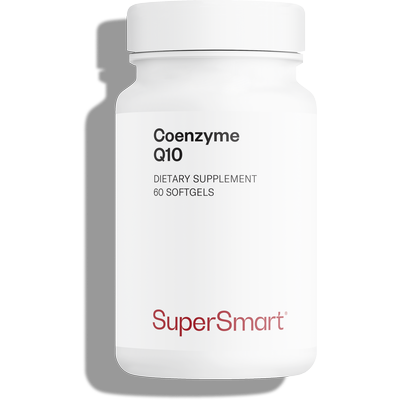
Coenzyme Q10 is a compound naturally present in the body. It is particularly concentrated in tissues with high energy demands, such as the heart muscle.
Discover Coenzyme Q10, a supplement providing CoQ10 in oil-based capsules, with tocopherols.
Formulas combining several ingredients
Some formulas combine olive leaf extract, nutrients and other plant extracts.
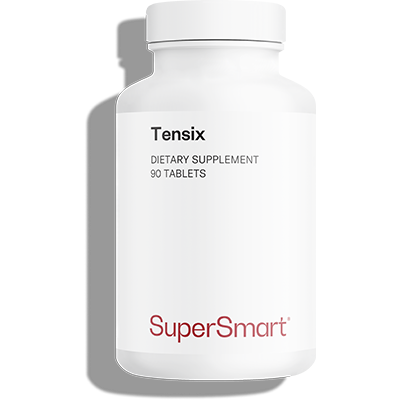
Discover Tensix®, a formula combining a standardised olive leaf extract with hawthorn, arginine alpha-ketoglutarate, magnesium, potassium and celery extract.
A dietary supplement is not a substitute for medical treatment of high blood pressure. The participants in the study discussed in this article were, in fact, already being treated for high blood pressure.
Treatment should never be stopped or altered without medical advice. Before taking any supplements, seek advice from your doctor or pharmacist, particularly if you are taking an antihypertensive, a blood sugar-controlling medication or an anticoagulant, or if you have kidney disease.
SUPERSMART ADVICE
References
- Wu LX, Xu YY, Yang ZJ, Feng Q. Hydroxytyrosol and olive leaf extract exert cardioprotective effects by inhibiting GRP78 and CHOP expression. J Biomed Res. 2018 Sep 29;32(5):371-379. doi: 10.7555/JBR.32.20170111. PMID: 29760296; PMCID: PMC6163112.🔗
- Zarzuelo A, Duarte J, Jiménez J, González M, Utrilla MP. Vasodilator effect of olive leaf. Planta Med. 1991 Oct;57(5):417-9. doi: 10.1055/s-2006-960138. PMID: 1798793.🔗
- Lins PG, Marina Piccoli Pugine S, Scatolini AM, de Melo MP. In vitro antioxidant activity of olive leaf extract (Olea europaea L.) and its protective effect on oxidative damage in human erythrocytes. Heliyon. 2018 Sep 20;4(9):e00805. doi: 10.1016/j.heliyon.2018.e00805. PMID: 30255162; PMCID: PMC6148714.🔗
- Silvestrini A, Giordani C, Bonacci S, Giuliani A, Ramini D, Matacchione G, Sabbatinelli J, Di Valerio S, Pacetti D, Procopio AD, Procopio A, Rippo MR. Anti-Inflammatory Effects of Olive Leaf Extract and Its Bioactive Compounds Oleacin and Oleuropein-Aglycone on Senescent Endothelial and Small Airway Epithelial Cells. Antioxidants (Basel). 2023 Jul 28;12(8):1509. doi: 10.3390/antiox12081509. PMID: 37627504; PMCID: PMC10451521.🔗
- Lamti F, Trabelsi I, Dhaoui R, Hajji E, Amor BB, Sekma A, Keraani L, Toumia M, Boukadida L, Yaakoubi H, Jaballah R, Bakir A, Youssef R, Zorgati A, Ali KBH, Beltaief K, Dridi Z, Hamda KB, Jomaa W, Jerbi N, Sghaier A, Razgallah R, Bouida W, Grissa MH, Saad J, Frikha N, Khochtali I, Boubaker H, Boukef R, Msolli MA, Nouira S. Efficacy of olive leaf extracts in controlling blood pressure in hypertensive patients: a double-blind randomized clinical trial. J Hypertens. 2025 Nov 1;43(11):1878-1884. doi: 10.1097/HJH.0000000000004141. Epub 2025 Sep 3. PMID: 40990594.🔗
- Lachovicz R, Ferro-Lebres V, Almeida-de-Souza J, Pereira JA. Efficacy of Olive Leaf Extract in Improving Blood Pressure in Pre-Hypertensive and Hypertensive Individuals: A Systematic Review and Meta-Analysis. Phytother Res. 2025 May 5. doi: 10.1002/ptr.8509. Epub ahead of print. PMID: 40325976.🔗
Keywords



10 Days
Prodotti eccezionali
Prodotti eccezionali! Consegna rapida e precisa
paola
21 Days
Heldere info
Heldere info
HanS.
21 Days
Snelle levering
Snelle levering
harrie
26 Days
Adequate info en hoge kwaliteit
Adequate info en hoge kwaliteit
HanS.
36 Days
Supplementen zijn goed.
Supplementen zijn goed. Zachte prijzen. Website met problemen ( altijd ) niet goed voor nieuwe klanten.
Gino RJ
46 Days
Alles op tijd geleverd.
Alles op tijd geleverd. De producten worden alsmaar duurder, terwijl mijn pensioen niet meer stijgt. Vandaar kan ik alsmaar minder vaak bestellen.
Wouters
1116 Days
Great service
Great service
Ryszard
1128 Days
Profesjonalna obsługa
Bardzo dobre i rzeczowe opisy. Profesjonalna obsługa.
PIEKOSZEWSKI Chris
1797 Days
Wszystko OK!
Wszystko poszło jak powinno 🙂
SITKIEWICZ Pawel
2583 Days
Szybko sprawnie bez problemów
Szybko sprawnie bez problemów
Marek
of experience
your money back
##montant## purchase