

Complete your selection
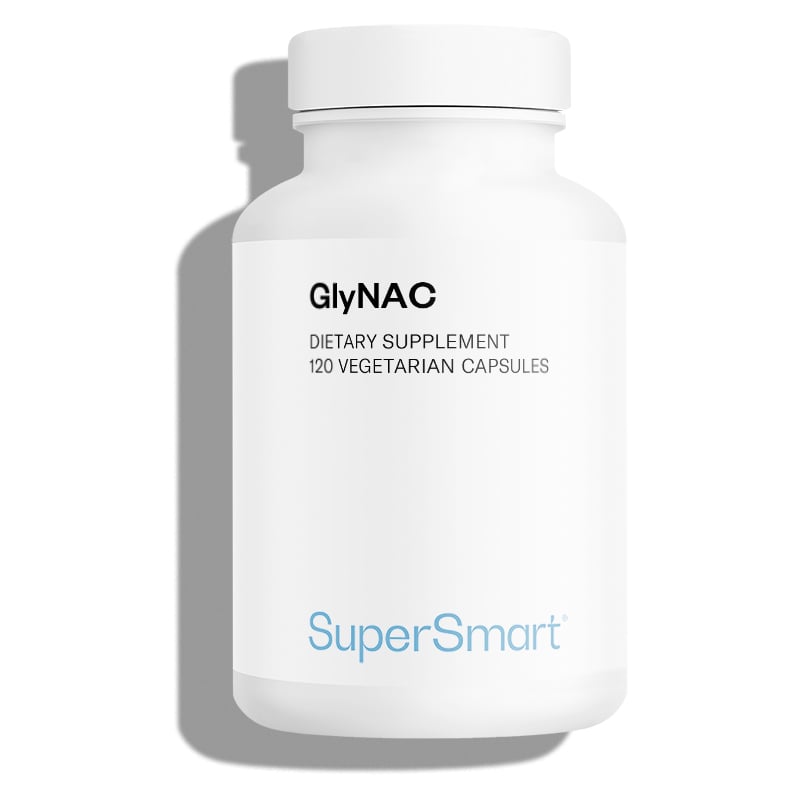
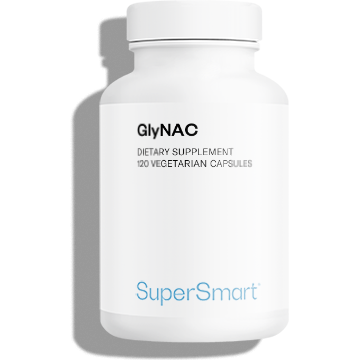
GlyNAC is a dietary supplement combining glycine and N-acetylcysteine (NAC), a source of cysteine – two amino acids involved in the synthesis of glutathione, the body’s main intracellular antioxidant.
This innovative combination is attracting growing interest in research into oxidative stress and longevity.
One bottle provides a 60-day supply, at a dose of 2 capsules per day.
GlyNAC: why combine N-acetylcysteine (NAC) and glycine?
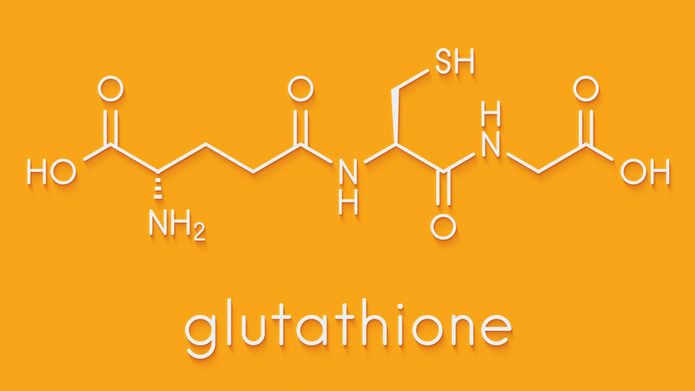
The three components of glutathione
Glutathione, the body’s main intracellular antioxidant, is composed of three amino acids:
- cysteine;
- glycine;
- and glutamate.
Why take NAC supplements rather than glutathione directly?
Glutathione taken orally has variable bioavailability depending on the form used, as it is partially broken down during digestion.
N-acetylcysteine (NAC) is therefore often used as a substitute to provide the body with cysteine, the amino acid that usually limits the rate of glutathione synthesis.
NAC is also known for its excellent absorption and clinically validated efficacy, with potential antioxidant and mucolytic effects (1).
Why add glycine to N-acetylcysteine (NAC)?
Glycine can also become a limiting factor, particularly:
- as we age;
- in the case of a diet low in collagen-rich foods, which are the main dietary sources of glycine;
- in situations of excessive oxidative stress;
- or in cases of metabolic dysfunction, such as insulin resistance.
Whilst NAC provides cysteine, combining it with glycine ensures the availability of both these essential precursors, with the aim of increasing intracellular glutathione levels more significantly than with NAC alone.
Glycine is also thought to have other benefits, notably supporting collagen synthesis, detoxification and metabolic regulation (2).
A 1:1 ratio of NAC to glycine (in this case, 600 mg of each per daily dose) is the most commonly used in clinical studies, making it a sound choice backed by scientific evidence.
And why isn’t glutamate added?
However, there is no need to supplement with glutamate, the third and final component of glutathione.
This amino acid is already present in abundance in the body and does not generally act as a limiting factor in glutathione synthesis.
Benefits of GlyNAC and glutathione for health and cellular longevity
Role of GlyNAC: providing the precursors cysteine and glycine
As we have seen, GlyNAC supplies cysteine and glycine, two precursors of glutathione whose intake or availability may become insufficient.
Its aim: to promote the body’s production of glutathione.
The effects of glutathione against oxidative stress and ageing
The glutathione produced, in turn, offers a range of benefits (3):
- it protects cells against oxidative stress by neutralising free radicals and reactive oxygen species before they damage proteins, lipids or DNA, thereby counteracting a crucial mechanism of cellular ageing;
- it plays a part in cellular detoxification mechanisms, particularly in the liver, where it helps to make many compounds easier for the body to eliminate;
- it helps maintain the oxidative balance of cells, a parameter essential for the proper functioning of numerous enzymes and cellular signalling pathways also involved in longevity;
- finally, it plays an important role in the functioning of the immune system by supporting the activity of cells involved in the body’s defences.
Results of clinical studies on GlyNAC
To date, several clinical studies have assessed the effects of GlyNAC on glutathione levels as well as on various parameters associated with oxidative stress, ageing and metabolism.
These include, in particular:
- a landmark clinical study, conducted on 24 adults aged between 60 and 80 (compared with 12 young adults), which assessed GlyNAC supplementation over a 16-week period. The researchers reported observing an increase in glutathione concentrations, accompanied by improvements in several biological markers linked to ageing, notably oxidative stress, mitochondrial function, inflammation, insulin resistance and certain physical parameters (4);
- another clinical study, conducted on 114 older adults (with an average age of 65), compared a placebo with three daily doses of GlyNAC over a 2-week period. A further analysis of the results suggests a significant benefit in individuals with high levels of oxidative stress and an initial glutathione deficiency (5).
4 key benefits and reasons to buy our GlyNAC for glutathione synthesis
Our GlyNAC dietary supplement stands out for 4 key benefits:
- a comprehensive and innovative NAC + glycine formula: unlike many dietary supplements containing only N-acetylcysteine (NAC), our formula also combines glycine, an amino acid whose intake or availability may become insufficient in certain situations, particularly with advancing age. This approach, which is now at the heart of much research into longevity, aims to provide both of the main precursors required for glutathione synthesis simultaneously;
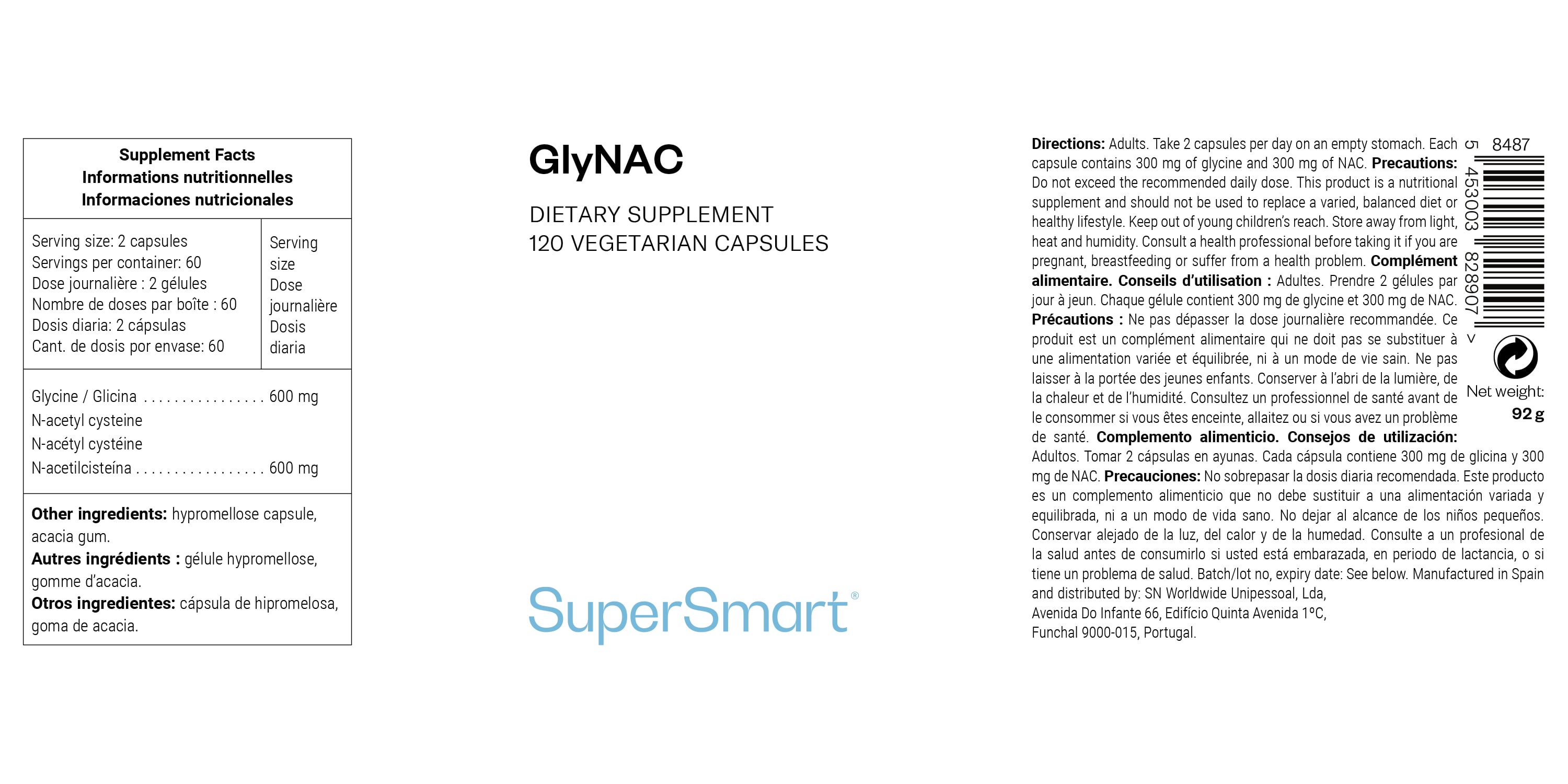
- an optimal dosage of N-acetylcysteine (NAC) and glycine, in line with recommendations and scientific evidence: each daily dose of the product provides no less than 600 mg of N-acetylcysteine (NAC) – the maximum recommended daily dose – combined with 600 mg of glycine, to achieve a 1:1 ratio, in line with the main clinical protocols for GlyNAC. One bottle provides a 60-day supply, with 2 capsules per day;
- NAC obtained through fermentation: unlike most NACs produced by chemical synthesis, our formula uses N-acetylcysteine derived from a fermentation process, a more natural method of production;
- a wholesome and refined composition: this food supplement is encapsulated in hypromellose vegetable capsules (a derivative of cellulose, a natural fibre) with acacia gum as the sole excipient, to provide you with a simple and carefully controlled formula.
Who is it for?
GlyNAC is particularly beneficial for people who wish to naturally support their glutathione production, notably:
- adults over the age of 50: as we age, the body’s natural production of glutathione gradually decreases, whilst the need for glycine may increase. This change is generally accompanied by an increase in oxidative stress, impaired mitochondrial function and a gradual decline in certain physiological functions;
- people exposed to significant oxidative stress: pollution, smoking, chronic stress, intense physical activity or certain metabolic conditions can increase the production of free radicals and raise the body’s need for glutathione;
- people with metabolic disorders, particularly insulin resistance: several studies suggest that these conditions may be accompanied by reduced glutathione concentrations and lower availability of glycine;
- people whose diet is low in collagen-rich foods: as glycine is particularly abundant in these foods, an insufficient intake could reduce the availability of this amino acid, which is necessary for glutathione synthesis;
- and anyone wishing to support their antioxidant defences: thanks to its combination of glycine and N-acetylcysteine (NAC), GlyNAC is an ideal way to promote glutathione synthesis.
Which synergistic dietary supplements should you take alongside our GlyNAC dietary supplement?
Selenium
Selenium is a trace element that helps protect cells against oxidative stress.
In particular, it is an essential component of glutathione peroxidase, an enzyme that uses glutathione to neutralise certain oxidising compounds.
Alongside taking GlyNAC, we recommend specifically opting for L-selenomethionine, a highly bioavailable organic form of selenium (you can, for example, buy Selenium).
NAD+ precursors
NAD+ is a coenzyme essential for numerous reactions involved in energy metabolism, cell repair and, more generally, longevity.
It also plays a role in the regeneration of glutathione, helping to restore it to its active form after it has been used to neutralise free radicals.
It is therefore in your best interests to combine NAC and glycine with potential NAD+ ‘boosters’, such as nicotinamide riboside and apigenin (which you can find in NAD+ Booster Formula).
PQQ and coenzyme Q10
Mitochondria, the cells’ powerhouses, are also one of the main sources of free radicals.
Pyrroloquinoline quinone (PQQ) and coenzyme Q10 are two compounds studied for their potential ability to promote healthy mitochondrial function by supporting their renewal and energy production.
This synergistic duo could therefore help to reduce the production of free radicals and oxidative stress (we recommend purchasing PQQ & Q10).
Glycine and cysteine deficiency: what are the consequences?
Why might glycine and cysteine become deficient?
Glycine and cysteine are two amino acids essential for the synthesis of glutathione.
The body’s demand for cysteine may exceed its ability to produce or mobilise it, particularly when the demand for glutathione increases, for example in cases of oxidative stress.
Glycine may also become a limiting factor, particularly with advancing age, in cases of metabolic disorders, or when the diet is low in collagen-rich foods.
What are the health effects of a glutathione deficiency?
When there is an insufficient supply of glycine and cysteine, glutathione production may be adversely affected.
However, when glutathione levels fall, cells become more vulnerable to oxidative stress.
This situation is likely to impair cellular detoxification mechanisms, the maintenance of redox balance (i.e. oxidative balance), and the functioning of the immune system, as well as accelerating certain processes responsible for ageing.
Quality, purity and traceability
Our GlyNAC combines fermentation-derived N-acetylcysteine (NAC) with high-quality glycine to provide a formula that meets the highest standards.
Its composition is deliberately simple and refined, containing only hypromellose vegetable capsules and acacia gum as excipients, in order to minimise unnecessary ingredients.
Each batch undergoes rigorous quality controls to verify its compliance with established specifications.
Certificates of Analysis (COAs) for marketed batches are available to view directly on this page, in the interests of transparency and traceability.
What is in GlyNAC
Any questions?
Our team of nutrition experts and scientists has the answers.
Yes, several clinical studies suggest that GlyNAC can increase glutathione levels and have a beneficial effect on certain markers associated with oxidative stress and ageing (6–7).
Research is ongoing to better define its long-term benefits.
Glycine is an amino acid naturally present in the body and is generally very well tolerated.
The available clinical studies report an excellent safety profile at the doses used in dietary supplements.
Oral glutathione has variable bioavailability, as it can be partially broken down during digestion.
GlyNAC, on the other hand, provides glycine and cysteine, two of the three amino acids required for the body to synthesise glutathione.
This approach is currently one of the main strategies being studied to sustain intracellular glutathione levels over the long term.
GlyNAC can be taken for several weeks or several months, depending on your goals.
The main clinical studies have assessed supplementation periods ranging from 2 to 16 weeks, taken daily.
A 60-day course, corresponding to one bottle, is a good starting point for GlyNAC supplementation.
Need help?
You may also like
of experience
your money back
##montant## purchase