

Complete your selection
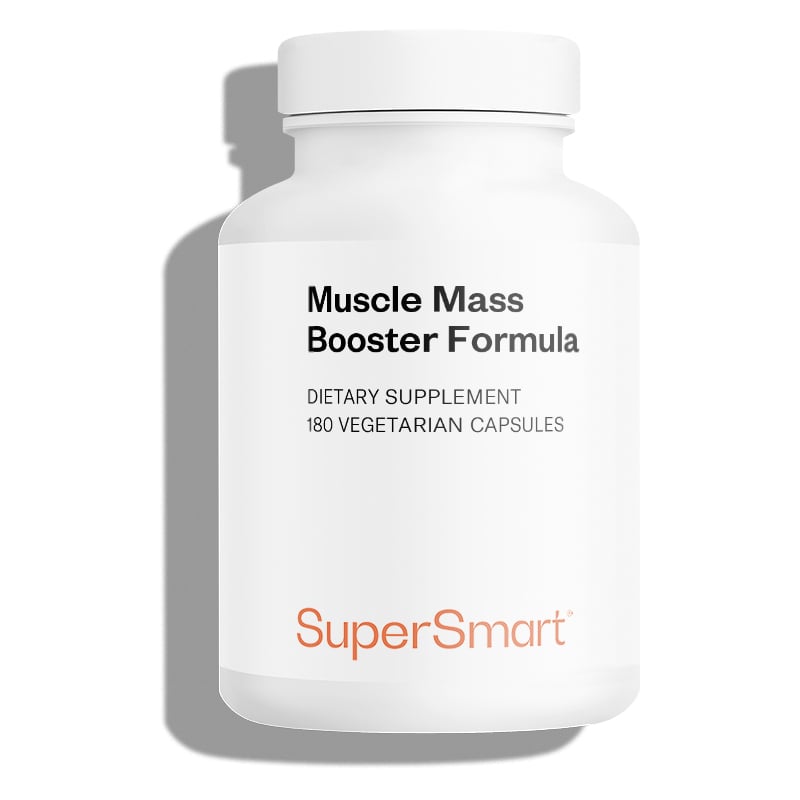
Muscle Mass Booster Formula is a new-generation dietary supplement designed for anyone wishing to maintain or build muscle mass effectively and sustainably.
Its formula combines PeptiStrong®, clinically validated bioactive peptides, with other crucial nutrients to support various mechanisms involved in muscle health and performance.
Composition and benefits of our dietary supplement for muscle mass gain
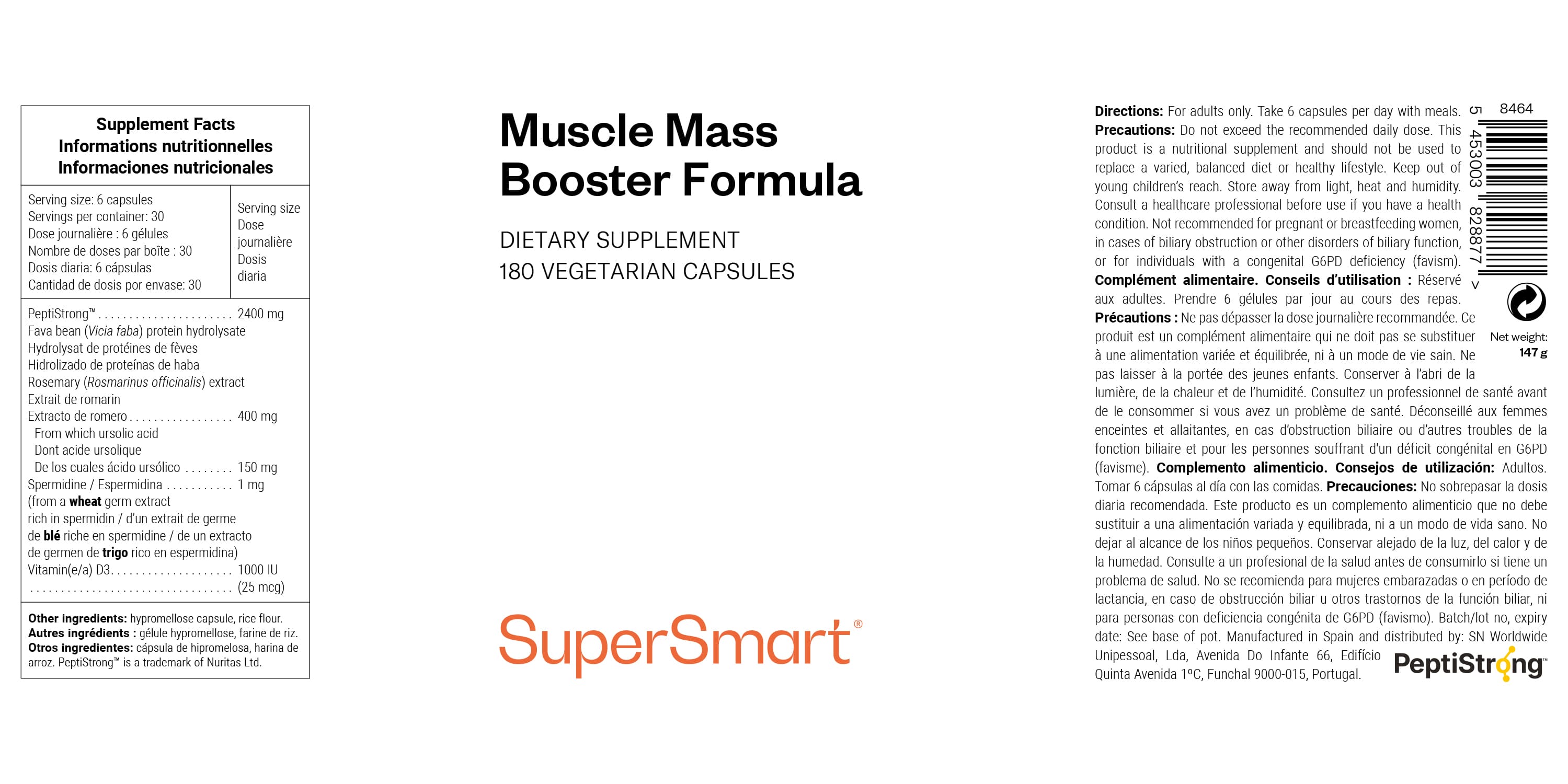
Muscle Mass Booster Formula combines four synergistic ingredients to target the various mechanisms involved in the development and maintenance of muscle mass:
- PeptiStrong™ (2,400 mg): PeptiStrong™ is a hydrolysate of bioactive peptides derived from broad beans (Vicia faba). This next-generation compound is thought to promote muscle protein synthesis, notably by activating the mTOR pathway. Furthermore, PeptiStrong® appears to improve the muscle’s ability to respond to the mechanical stimuli of physical activity, whilst also facilitating better muscle recovery after exercise. Its use is thought to be particularly beneficial in cases of anabolic resistance, where activation of the mTOR pathway and protein synthesis decline with age or under the influence of stress. According to a preclinical study (muscle cells and a mouse model of atrophy), PeptiStrong™ activates mechanisms involved in muscle growth, reduces the expression of genes associated with atrophy and significantly mitigates immobilisation-induced muscle mass loss. The researchers also observed an improvement in muscle fibre structure as well as an increase in the expression of genes linked to protein synthesis (1). In healthy men undergoing intense exercise, daily supplementation with 2,400 mg of PeptiStrong™ for 14 days reportedly led to a 54% increase in muscle strength recovery, a 47% reduction in muscle fatigue and favourable changes in several myokines involved in muscle recovery and metabolism (2). Finally, in young adults who underwent 7 days of leg immobilisation followed by 14 days of remobilisation, PeptiStrong™ reportedly increased the rate of muscle protein synthesis by more than fourfold compared with milk protein (3). A combined analysis of these clinical trials also links PeptiStrong™ to a 148% improvement in muscle strength recovery;
- ursolic acid (150 mg) from a rosemary extract (400 mg): rosemary (Rosmarinus officinalis) is a Mediterranean aromatic herb traditionally used to support the body’s natural defences and help strengthen the body. This herb is rich in bioactive compounds, including ursolic acid, a widely studied triterpene. Ursolic acid may improve anabolic signalling (the mechanisms that stimulate muscle building) whilst mitigating the catabolic pathways (the breakdown of muscle proteins) associated with muscle atrophy. Research therefore suggests that it helps to preserve lean muscle mass over time. Furthermore, its potential antioxidant and anti-inflammatory effects appear to help create a muscle environment conducive to recovery, metabolic efficiency and long-term muscle preservation. In a mouse model fed a high-fat diet, ursolic acid administered via the diet increased the activity of the Akt protein—a key regulator of muscle growth—and stimulated the expression of mRNAs involved in muscle growth and energy metabolism. This resulted in increased grip strength, greater muscle mass, larger diameters of both fast-twitch and slow-twitch fibres, and improved running capacity on a treadmill (4). In aged muscle, ursolic acid (in combination with tomatidine) has been identified as a compound capable of inhibiting a biological pathway (ATF4) implicated in age-related muscle weakness and atrophy. Improvements in muscle strength, quality and mass have been reported in aged animal models (5). In postmenopausal women with metabolic syndrome who were following a combined exercise programme, the administration of 450 mg/day of ursolic acid derived from a rosemary leaf extract was associated with a significant increase in grip strength (6);
- spermidine (1 mg) from a wheat germ extract: spermidine is a polyamine naturally present in cells, involved in numerous processes essential to cellular function. It acts primarily by promoting autophagy, the process by which cells cleanse and recycle themselves. In muscle, effective autophagy promotes the removal of damaged proteins and dysfunctional organelles, thereby helping to preserve the quality of muscle fibres. By maintaining cellular balance, spermidine contributes to long-term muscle maintenance and functional resilience. This mechanism is particularly relevant in ageing muscle, where impaired autophagy is associated with a decline in muscle quality and accelerated muscle loss. In a rat model exhibiting ‘accelerated ageing’ induced by D-galactose, the administration of spermidine attenuated age-related skeletal muscle atrophy: the reported mechanism involved an increase in autophagy and mitophagy (the degradation of defective mitochondria) as well as a reduction in apoptosis (cell death) via the AMPK–FOXO3a pathway, accompanied by improvements in mitochondrial quality (7). In mice lacking collagen VI (a model of myopathy characterised by impaired autophagy), administered spermidine reactivated autophagy and alleviated various muscular abnormalities, supporting the hypothesis of improved cellular clearance and muscle quality (8). A large-scale, randomised, double-blind, placebo-controlled trial (POLYCAD) is currently underway in elderly patients with coronary artery disease: 24 mg/day for 48 weeks (n = 187), with endpoints including, in particular, changes in appendicular lean body mass – that is, the amount of muscle in the arms and legs – one of the key parameters used in research on sarcopenia (9);
- and vitamin D3 (1,000 IU / 25 mcg): vitamin D is an essential fat-soluble vitamin, known in particular for its role in bone and immune health. It is also recognised for helping to maintain normal muscle function. It exerts its effects on muscles via the vitamin D receptor (VDR) present in skeletal muscle cells. Activation of the VDR influences the expression of genes involved in muscle contraction, calcium regulation and neuromuscular signalling – all processes essential for muscle strength and coordination. Adequate vitamin D status also promotes the proper functioning of muscle fibres and their response to mechanical stress. In the context of ageing or deficiency, impaired vitamin D signalling is associated with reduced muscle performance and functional decline, making vitamin D3 a fundamental component for the maintenance of muscle mass. Clinical trials suggest that correcting a vitamin D deficiency improves muscle strength and functional capacity in deficient and frail populations, in whom low vitamin D status is a limiting factor for neuromuscular performance. In older adults with vitamin D deficiency, for example, supplementation has been shown to significantly support lower-limb strength and functional outcomes, thereby promoting muscle performance and reducing the weakness associated with this deficiency (10–11).
4 key benefits and reasons to buy our formula for building or maintaining muscle mass
Muscle Mass Booster Formula stands out for 4 key benefits:
- a formula centred on PeptiStrong®, a patented, innovative and clinically evaluated ingredient: still relatively uncommon in the market for muscle-building supplements, PeptiStrong® bioactive peptides are backed by several scientific studies, including human clinical trials (12–13);
- a multi-ingredient, multi-target formula: Muscle Mass Booster Formula combines four complementary ingredients selected for their role in various mechanisms involved in muscle development, maintenance and quality, offering a holistic approach to muscle health;
- a formula designed for both athletes and those concerned with age-related muscle loss: this dietary supplement is suitable both for physically active people wishing to optimise their response to training and for adults keen to preserve their muscle mass as they age;
- a healthy, simplified composition: this dietary supplement is encapsulated in hypromellose-based vegetable capsules (a derivative of cellulose, a natural fibre) with rice flour as the sole excipient, to provide you with a safe and carefully controlled formula.
Muscle mass, muscle loss and sarcopenia
Definition of muscle mass
Muscle mass refers to the total amount of muscle tissue present in the body.
It is mainly composed of skeletal muscles, which enable movement, maintain posture and generate force.
Muscle loss and sarcopenia: the figures
Muscle mass can decrease as a result of a sedentary lifestyle,insufficient physical activity or an inadequate diet.
It also tends to decline with age: on average, we lose 20 to 30% of our muscle mass between the ages of 30 and 80, which is approximately 3 to 8% per decade.
When this decline is accompanied by a reduction in muscle strength and, in the most advanced cases, a decline in physical performance, the condition is known as sarcopenia.
Consequences of muscle loss The consequences of muscle loss are significant:
- a reduction in physical strength and functional performance;
- greater difficulty with everyday activities such as climbing stairs, lifting objects or getting up from a chair;
- an increased risk of falls and loss of independence, particularly among older people;
- impaired metabolic health, as muscle is a key site for glucose metabolism and energy expenditure.
The causes of muscle loss
Age-related muscle loss results from several biological mechanisms that progressively affect the muscle’s ability to maintain itself, repair itself and adapt to physical demands:
- impaired protein turnover: reduced muscle protein synthesis relative to breakdown leads to a net loss of muscle tissue;
- anabolic resistance: ageing muscles become less responsive to protein intake and mechanical stimulation (exercise), which hinders adaptive growth;
- mitochondrial dysfunction: reduced energy production and increased oxidative stress impair the functioning of muscle cells;
- neuromuscular changes: the loss of motor neurons and reduced function of satellite cells diminish the capacity for regeneration.
Who is it for?
Muscle Mass Booster Formula is particularly suitable for people who wish to build or maintain their muscle mass, including:
- adults over 50: muscle loss accelerates with age, particularly after the age of 50, making middle-aged and older adults a key target group for interventions aimed at promoting the maintenance of muscle mass, even among those who remain moderately active;
- postmenopausal women: the hormonal changes associated with the menopause contribute to a more rapid decline in muscle mass and strength, thereby increasing the risk of functional impairment compared with premenopausal women, despite activity levels similar to those observed earlier in their lives;
- and physically active young adults: although young adults do not suffer from sarcopenia in the strict sense, some struggle to build muscle mass despite following a suitable training programme. Certain lifestyle factors, such as stress, can indeed inhibit muscle protein synthesis and functional adaptation. Furthermore, not all physically active individuals respond in the same way to training: a significant proportion of men and women achieve only limited muscle gains despite regular physical exercise, particularly strength training. This phenomenon is often referred to as ‘low responsiveness’ or anabolic resistance: the muscle’s ability to convert training stimuli into muscle protein synthesis is thereby impaired. This reduced responsiveness may be due to a variety of factors, including genetic variability, chronic stress, suboptimal recovery, insufficient cellular signalling, low-grade inflammation, or early metabolic and mitochondrial dysfunction, even in otherwise healthy and active adults. For these individuals, the problem does not lie in a lack of effort or motivation, but rather in a reduced biological capacity to adapt. It therefore becomes essential to support muscle signalling pathways, protect muscle tissue from excessive breakdown and improve the efficiency of the anabolic response in order to unlock progress and preserve long-term muscle health.
What type of training should you prioritise depending on your age and goals?
Why are resistance exercises essential?
Both building and maintaining muscle mass rely above all on appropriate physical activity.
Whilst needs change with age, resistance exercises (weight training, bodyweight exercises, resistance bands, etc.) remain the main way to stimulate the muscles.
Conversely, endurance activities, whilst excellent for cardiovascular health, are generally not sufficient on their own to build or sustain muscle mass in the long term.
Before the age of 50: building muscle mass
Before the age of 50, muscles generally respond very well to training.
To build muscle mass, resistance exercises remain the gold standard: weight training with free weights or machines, bodyweight exercises (push-ups, pull-ups, squats, etc.), resistance bands or even CrossFit when properly supervised.
Endurance activities such as running, cycling or swimming are excellent for cardiovascular health and general fitness, but they are generally not sufficient to stimulate sustained muscle growth.
They are therefore best complemented by strength training.
Ages 50 to 70: maintaining muscle mass and strength
From the age of 50 onwards, the muscles’ response to exercise gradually decreases.
It therefore becomes essential to include at least two weekly sessions of strength training that engage the whole body.
Supervised weight training remains an excellent option, but exercises using resistance bands, functional strength circuits, resistance-based Pilates or certain toning classes are also effective ways of maintaining muscle mass.
Endurance activities remain beneficial for health, but they are no substitute for resistance exercises.
After the age of 70: maintaining independence
After the age of 70, the main aim is to preserve muscle strength, balance and independence, so that you can continue to carry out activities of daily living as effectively as possible.
Contrary to popular belief, resistance exercises remain the most effective way to limit muscle loss, but they must be tailored to each individual’s abilities.
This does not necessarily mean doing weight training in a gym.
Exercises using resistance bands, sitting-to-standing movements from a chair, climbing stairs, exercises with light weights, strength-building sessions offered by health and fitness centres, or even active gardening are all effective ways of engaging the muscles.
Aqua aerobics, aqua fitness and Pilates are also excellent options.
They allow you to work your muscles against resistance whilst minimising strain on the joints, making them particularly suitable for people suffering from osteoarthritis or pain.
Finally, daily walking remains highly recommended for cardiovascular health, mobility and balance, but it places relatively little strain on muscle mass.
Where possible, it should therefore be supplemented two to three times a week with suitable strength-training exercises.
Which synergistic dietary supplements should you take alongside our muscle-building supplement?
Whey
Alongside taking Muscle Mass Booster Formula and engaging in suitable physical activity, you can supplement your diet with whey – a whey protein naturally rich in essential amino acids – if your dietary protein intake is insufficient.
Indeed, the development of muscle mass depends not only on the biological mechanisms involved in muscle adaptation, but also on an adequate protein intake.
Where possible, opt for native whey isolate, a form very rich in protein obtained directly from fresh milk (you can, for example, buy Native Whey Protein Isolate).
BCAAs
Among the important amino acids found in food, BCAAs (Branched-Chain Amino Acids) are particularly noteworthy; these comprise a group of three essential amino acids: leucine, isoleucine and valine.
They play a key role in muscle metabolism and are particularly popular amongst bodybuilders.
You may also wish to consider taking BCAA supplements (for example, BCAAs).
Creatine
When it comes to pure strength, you can combine your mass-gain booster with creatine, an amino acid derivative found in high concentrations in muscle fibres (see 3-Creatine, which combines three complementary forms of creatine: monohydrate, phosphate and pyruvate).
Magnesium
Don’t overlook magnesium either: this mineral contributes to normal muscle function and protein synthesis, as well as helping to reduce fatigue (for example, try OptiMag, which combines eight synergistic, highly bioavailable forms of magnesium).
Vitamin D deficiency and reduced spermidine levels: what are the consequences for the muscles?
Vitamin D deficiency and reduced muscle strength
Vitamin D deficiency is common, particularly among older people, those with limited sun exposure, or those living in regions with little sunshine.
In these populations, it is associated with a reduction in muscle strength, functional capacity and neuromuscular performance.
Impact on muscles of declining spermidine levels with age
At the same time, several studies show that spermidine concentrations gradually decrease with advancing age.
This decline may contribute to reduced efficiency of cell renewal mechanisms and a gradual deterioration in muscle quality.
By combining vitamin D3 and spermidine with PeptiStrong® bioactive peptides, Muscle Mass Booster Formula brings together several active ingredients that target complementary mechanisms involved in maintaining muscle health and mass.
Quality, purity and traceability
Muscle Mass Booster Formula combines carefully selected ingredients, including PeptiStrong®, a renowned, patented complex that has been the subject of scientific studies in humans.
The formula uses a limited number of excipients: only hypromellose vegetable capsules and rice flour, to ensure maximum purity.
Certificates of Analysis (COAs) for the batches sold are available to view directly on this page to ensure maximum transparency regarding the product’s quality and traceability.
What is in Muscle Mass Booster Formula
Any questions?
Our team of nutrition experts and scientists has the answers.
Building muscle mass is a gradual process that generally requires several months of effort.
There is no method for gaining several kilograms of muscle quickly without consistently working on the three main factors involved in muscle development:
- appropriate resistance training;
- sufficient protein intake;
- adequate recovery, including, in particular, good-quality sleep and avoiding stress.
Certain dietary supplements can also be incorporated into this approach to complement your diet and support the various mechanisms involved in muscle adaptation.
There is no single dietary supplement that is universally ‘best’ for building muscle mass.
The most effective approaches generally rely on a combination of several factors: an adequate protein intake (possibly supplemented by protein powder), improved training performance (notably through creatine) and support for the various mechanisms involved in muscle development.
Muscle Mass Booster Formula has been specifically designed with this in mind, thanks to a formula centred on PeptiStrong®, combined with other complementary ingredients aimed at supporting muscle health.
In addition to a suitable training programme and a balanced diet, several categories of dietary supplements can be considered to support the development and maintenance of muscle mass.
The most popular are:
- protein powders, such as whey, which make it easy to increase protein intake – essential for muscle building;
- BCAAs, which supply the muscles with certain essential amino acids involved in muscle protein synthesis;
- creatine, the daily intake of which improves physical performance during successive sets of very intense, short-duration exercises – a valuable asset for bodybuilders;
- as well as certain specialised synergistic formulas (particularly those rich in bioactive peptides) designed to target various mechanisms involved in muscle development, such as Muscle Mass Booster Formula.
It all depends on what you mean by ‘gaining weight’.
Weight gain can result from an increase in body fat, muscle mass, or both.
From a health and physical performance perspective, the aim is generally to prioritise an increase in muscle mass, achieved through:
- a suitable diet providing sufficient calories, protein and micronutrients;
- regular physical activity, particularly resistance training such as weight training;
- and certain targeted dietary supplements (bioactive peptides, protein powders, creatine, etc.)
Need help?
of experience
your money back
##montant## purchase