

Complete your selection
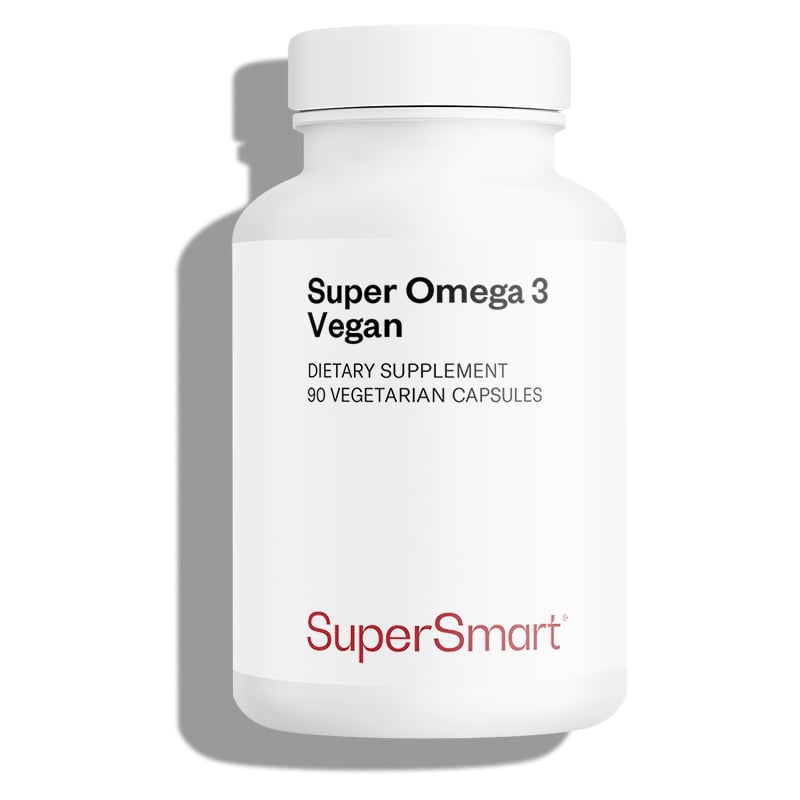
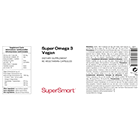
Super Omega 3 Vegan is a new-generation vegan omega-3 dietary supplement, highly concentrated in EPA and DHA.
These essential fatty acids contribute in particular to cardiovascular health, brain function and vision.
Derived from the microalgae Schizochytrium sp., our innovative product stands out for its exceptional EPA content and meets the superior quality standards of Omegavie®, Qualitysilver® and Sensory®.
Vegan omega-3s: definition, benefits and sources
What are omega-3s?
Omega-3s are polyunsaturated fatty acids involved in numerous bodily functions.
Among these, eicosapentaenoic acid (EPA) and docosahexaenoic acid (DHA) are the forms of omega-3 most readily utilised by the body.
What are the health benefits of EPA and DHA?
EPA and DHA contribute to:
- the normal functioning of the heart, by improving the fluidity of heart cell membranes, which promotes regular contraction of the heart muscle and good blood circulation;
- to maintaining normal blood pressure, by increasing the production of vasodilator molecules, such as nitric oxide, and by reducing inflammation of the blood vessel walls;
- and to maintaining normal triglyceride levels, by inhibiting hepatic triglyceride synthesis and stimulating their use as an energy source (1).
Furthermore, DHA contributes to:
- maintaining normal brain function, as it is a major structural component of neurons and optimises signal transmission between nerve cells;
- and in maintaining normal vision, as it is highly concentrated in the photoreceptors of the retina, where it supports the conversion of light into nerve signals (2).
Omega-3s are also being studied for their potential effects on:
- cardiometabolic health, particularly insulin sensitivity and lipid metabolism, via the combined action of EPA and DHA;
- inflammatory balance, particularly thanks to EPA, which is involved in the production of mediators that resolve inflammation;
- emotional well-being, again mainly thanks to EPA, which is associated with certain neurobiological mechanisms involved in mood regulation (3–5).
What are the plant-based sources of omega-3?
As the body does not produce sufficient amounts of omega-3, it must be obtained through the diet.
As for plant-based sources, these include certain oilseeds (flax, chia, perilla, etc.), nuts and their oils, which are rich in alpha-linolenic acid (ALA); however, this must be converted into EPA and DHA within the body, with limited efficiency.
EPA and DHA are therefore obtained in much greater quantities through the consumption of oily fish.
It is important to note, however, that fish themselves derive the majority of these fatty acids from microalgae at the base of the marine food chain.
Consuming these EPA- and, above all, DHA-producing microalgae directly thus allows one to obtain these fatty acids ‘at the source’ (6).
The benefits of microalgae rich in EPA and DHA
Microalgae such as Schizochytrium sp. therefore represent an ideal alternative for people who wish to increase their intake of EPA and DHA whilst following a vegan diet or limiting their consumption of animal products.
Furthermore, the microalgae used in vegan omega-3 supplements are cultivated in closed fermentation systems, similar to those used in pharmaceutical or probiotic production, rather than being harvested from the open sea.
This controlled production model offers several advantages:
- it reduces exposure to environmental contaminants and eliminates the bioaccumulation effect inherent in marine food chains, thereby strengthening its positioning in terms of purity and traceability;
- unlike fish oil, algae oil does not depend on wild fish stocks: it avoids contributing to pressure on marine ecosystems and promotes a more resource-efficient omega-3 supply chain, in line with long-term environmental responsibility;
- fermentation-based production also allows for year-round manufacturing, independent of fishing quotas, climate variability or maritime geopolitical constraints, offering greater supply predictability and strategic stability.
4 key benefits and reasons to buy our vegan omega-3s
Super Omega 3 Vegan stands out for 4 key benefits:
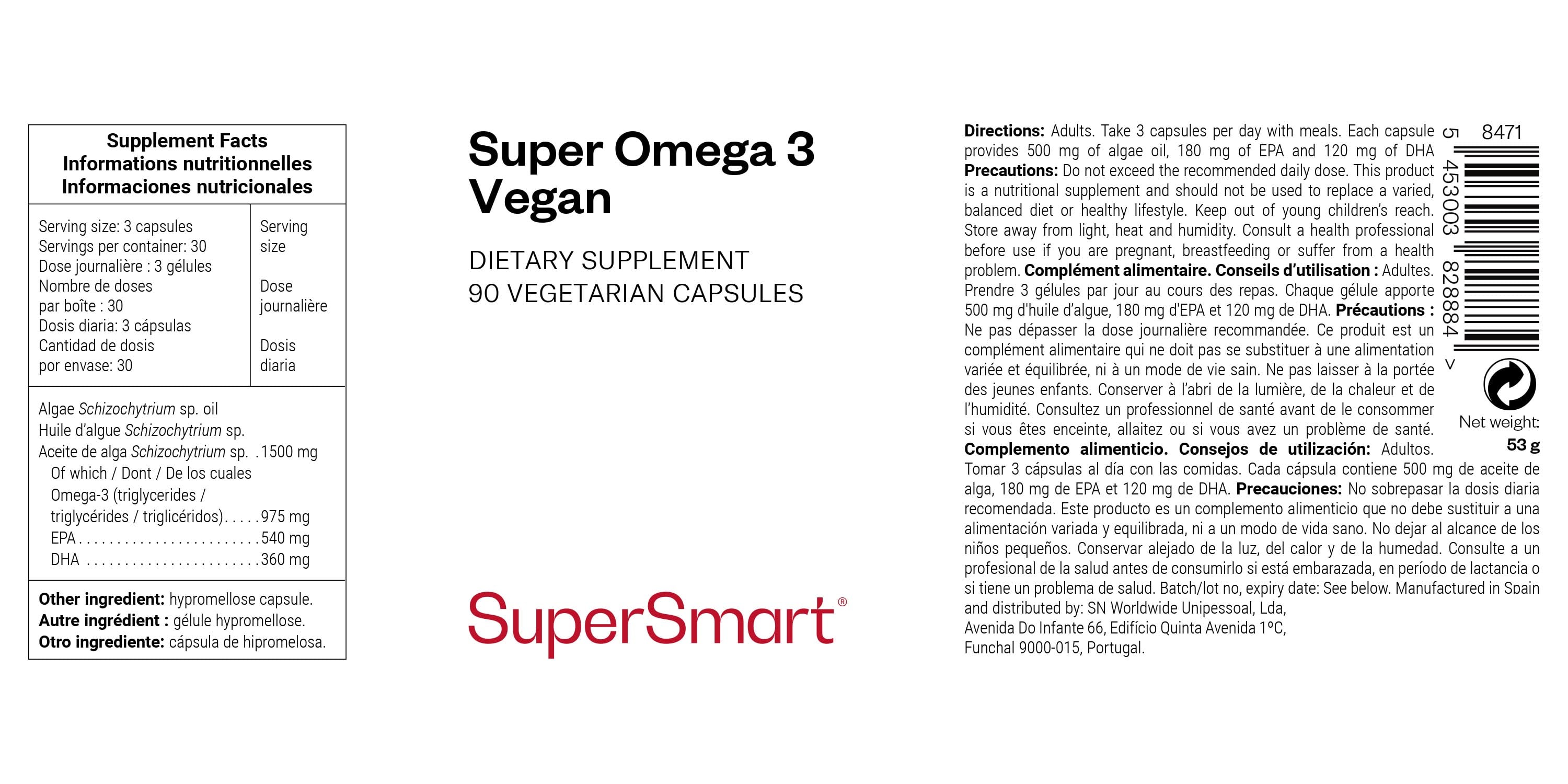
- an exceptionally high concentration of omega-3, including a rare level of EPA: each daily dose provides 1,500 mg of algae oil, of which 975 mg is omega-3, comprising 540 mg of EPA and 360 mg of DHA – particularly high amounts for a vegan omega-3 supplement. As algae oils are naturally richer in DHA, achieving such a high level of EPA remains rare among vegan supplements and requires more demanding production processes;
- a pure, premium algae oil meeting the highest quality standards: our product is certified to the Omegavie® standard, ensuring optimal purity and full traceability. Its Qualitysilver® antioxidant technology also significantly limits the oxidation of omega-3s, which are particularly sensitive to air, heat and light, whilst Sensory® technology preserves a neutral taste, free from any unpleasant aftertaste;
- omega-3s in their natural triglyceride form: unlike certain reconstituted or processed oils in the form of ethyl esters, our EPA and DHA are present in their natural triglyceride form, which is better recognised, absorbed and utilised by the body (7);
- vegetarian capsules free from unnecessary excipients: our supplement is encapsulated in vegetarian hypromellose capsules (a derivative of cellulose, a plant fibre). Its composition limits excipients to the bare minimum in order to offer you the purest possible vegan formula.
What is in Super Omega 3 Vegan
Any questions?
Our team of nutrition experts and scientists has the answers.
Vegan omega-3s are omega-3s derived from plant sources, containing no ingredients of animal origin.
They come fromplant oils:
- such as linseed or chia oils, rich in alpha-linolenic acid (ALA), a plant-based omega-3 that must be converted by the body into EPA and DHA, with reduced efficiency;
- orfrom oils derived from certain algae such as Schizochytrium sp., which provideeicosapentaenoic acid (EPA) anddocosahexaenoic acid (DHA) directly—the two forms of omega-3 most readily utilised by the body.
Fish-free omega-3 supplements are generally formulated from microalgae that are naturally rich in EPA and DHA.
They offer an alternative to traditional fish oil-based supplements, whilst providing the same key forms of omega-3.
They are particularly suitable for people who have adopted a vegan diet or simply wish to reduce their consumption of animal products.
Linseed oil is generally considered to be the vegetable oil richest in omega-3.
However, it mainly containsALA, only a small proportion of which is converted into EPA and DHA in humans.
This is why certain innovative plant-based sources, such as Schizochytrium sp. microalgae (used in Super Omega 3 Vegan), are now attracting growing interest: they provide EPA and DHA directly, without relying on the conversion of ALA and without requiring fish oil.
If you wish to focus on the most essential supplements, combine Super Omega 3 Vegan with a multivitamin. Through synergies of vitamins, minerals and even phytonutrients, multivitamins provide valuable support forenergy andimmunity. Ideally, opt for highly concentrated formulas that are also rich in rare compounds such as PQQ, which plays a role in mitochondrial function, and nicotinamide riboside, a precursor of NAD+ essential for cellular energy (this is the case with the complete vegetarian multivitamin Daily 3®).
Are you primarily interested in the benefits of omega-3s for vision? Then combine your vegetarian omega-3s with pigments known as carotenoids. Lutein, zeaxanthin and astaxanthin are indeed being studied for their presence in eye tissues as well as their potential role in protecting cells against oxidative stress and in visual comfort (try, for example, the Macula Plus formula).
Finally, if your main priority is looking after your heart health, consider coenzyme Q10. Naturally produced in small quantities by the body, this molecule plays a part incellular energy production, particularly in energy-intensive tissues such as the heart. It thus complements the action of omega-3s oncardiovascular health. You can also buy it as a dietary supplement (see Coenzyme Q10).
Need help?
You may also like
of experience
your money back
##montant## purchase