
Propolis: a study suggests its effects on the intestinal microbiota
What if propolis hasn't yet revealed all its secrets? A recent study suggests its potential ability to modulate the composition of the intestinal microbiota, thereby helping to maintain our biological balance.


What is propolis?
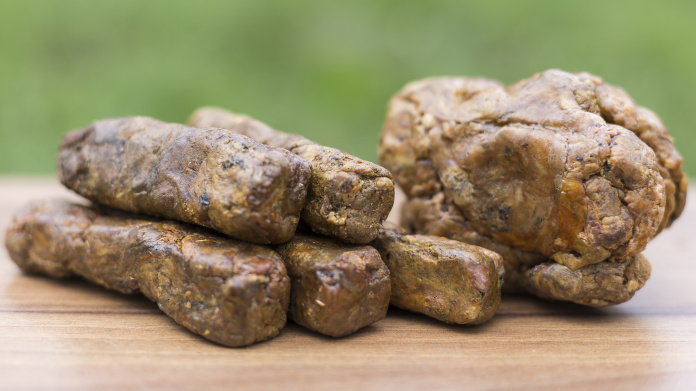
Propolis is a complex resin produced by worker bees from plant substances harvested from the buds, bark and leaves of certain plants – poplars and conifers in Europe, mangroves in Brazil, etc. It contains over 400 compounds identified to date, including flavonoids, phenols, fatty acids, essential oils, aromatic acids and amino acids, as well as vitamins (1).
Its primary function is to protect the hive against external aggression, whether climatic, bacterial or fungal. It lines and seals the walls, insulating them from humidity and draughts, and sanitises the cells before they are used. Its name, a combination of the words pro ('in front of') and polis ('city'), aptly illustrates its role as a bulwark for the colony.
Heralded as a traditional natural remedy since antiquity, this treasure from the hive was prized by Roman legionnaires, who used it to disinfect their wounds. Since then, it has been the subject of numerous scientific studies that are still trying to establish its reputed anti-infectious, antioxidant and immunostimulant properties (2).
Propolis modulates the intestinal microbiota, according to a recent review
A scientific review published in 2025 sheds new light on the mode of action of propolis by exploring its ability to modulate the composition of the intestinal microbiota and have a positive impact on the host's overall health (3).
Researchers are highlighting its possible ability to selectively eliminate pathogenic microflora (with in vivo activity observed on strains of Listeria monocytogenes, Clostridium difficile and Fusobacterium nucleatum) while promoting the growth of beneficial probiotic bacteria (from the genera Lactobacillus and Bifidobacterium in particular) in the digestive system. In so doing, it helps to maintain a balanced intestinal ecosystem.
At the same time, the phenolic compounds in propolis are thought to be transformed into beneficial metabolites, including short-chain fatty acids (SCFAs) that are particularly active in strengthening the intestinal barrier and controlling the inflammatory response. In healthy adults, supplementation was accompanied by a significant increase in the production of acetic acid (119%), propionic acid (832%) and butyric acid (142%).
The researchers see this dual modulation as a promising lever for supporting metabolic, digestive and cerebral health more generally, given the complex interactions that exist between the microbiota and neuronal, immune and neuroendocrine pathways.
It should be pointed out, however, that the precise mechanisms of action of propolis remain only partially elucidated to date. While modulation of the intestinal microbiota appears to be a determining factor, it is certainly not enough to explain all the benefits observed. Some hypotheses suggest, for example, that certain phenolic compounds and flavonoids have their own antioxidant or anti-inflammatory activity, while others, such as caffeic acids, may have their effects modified or amplified by the intestinal flora (4). The fact remains that propolis is now emerging as a functional food ingredient with great potential.
Why and how should we supplement with propolis?
To maintain a healthy, stable and resilient microbiota, a guarantee of good general health, the primary approach is a varied diet rich in protective nutrients. Dietary fibre (vegetables, fruit, pulses, wholegrain cereals, etc.) nourishes the beneficial bacteria, while polyphenols and antioxidants (berries, green tea, cocoa, herbs, spices, etc.) help to curb the inflammatory response and neutralise free radicals (5).
The fact remains, however, that certain situations can upset the balance: digestive sensitivity, infectious episodes in winter, oxidative stress, etc. (6). In these situations, propolis supplementation can provide invaluable help by supporting the body's natural defence and regulation mechanisms, either locally or systemically, depending on the problems targeted.
It is important to remember that there are different types of propolis, each with its own specific biological characteristics. Collected in Brazil, green propolis comes mainly from the vegetative apices of field rosemary (Baccharis dracunculifolia). It is distinguished by its richness in cinnamic acid, kaempferol and, above all, artepillin C, a powerful phenolic acid, which is the subject of intense research in immunology (7-8).
 Discover Green Propolis, a supplement of green propolis from Brazil standardised in phenolic acids and artepillin C for unequalled effectiveness.
Even rarer, red propolis is synthesised by bees from the Dalbergia ecastaphyllum species found in Brazilian mangroves. Of all the propolis known to date, it contains the highest concentration of phenolic compounds, particularly isoflavones. It is therefore a prime candidate to support and effectively strengthen our defensive arsenal (9).
You'll find it in Red Propolis, a high-quality red propolis harvested in Brazil and extracted in France.
Finally, if your throat is irritated, there are propolis mouth sprays with targeted action (10).
Propolis Throat Spray combines 8 powerful active ingredients to soothe the throat and support the immune system: essential oils of eucalyptus and tea tree, honey, zinc, vitamin C and others.
SUPERSMART ADVICE
References
- Šuran J, Cepanec I, Mašek T, Radić B, Radić S, Tlak Gajger I, Vlainić J. Propolis Extract and Its Bioactive Compounds-From Traditional to Modern Extraction Technologies. Molecules. 2021 May 14;26(10):2930. doi: 10.3390/molecules26102930. PMID: 34069165; PMCID: PMC8156449.
- Zullkiflee N, Taha H, Usman A. Propolis: Its Role and Efficacy in Human Health and Diseases. Molecules. 2022 Sep 19;27(18):6120. doi: 10.3390/molecules27186120. PMID: 36144852; PMCID: PMC9504311.
- Deng Y, Liu D, Dissanayake I, Jaye K, Bhuyan DJ, Low M, Li CG. Propolis as a functional food ingredient: Modulation of gut microbiota and implications for chronic disease management. Food Res Int. 2025 Oct;218:116836. doi: 10.1016/j.foodres.2025.116836. Epub 2025 Jun 13. PMID: 40790666.
- Wang X, Qi Y, Zheng H. Dietary Polyphenol, Gut Microbiota, and Health Benefits. Antioxidants (Basel). 2022 Jun 20;11(6):1212. doi: 10.3390/antiox11061212. PMID: 35740109; PMCID: PMC9220293.
- Meiners F, Ortega-Matienzo A, Fuellen G, Barrantes I. Gut microbiome-mediated health effects of fiber and polyphenol-rich dietary interventions. Front Nutr. 2025 Aug 29;12:1647740. doi: 10.3389/fnut.2025.1647740. PMID: 40948860; PMCID: PMC12425962.
- Shen Y, Fan N, Ma SX, Cheng X, Yang X, Wang G. Gut Microbiota Dysbiosis: Pathogenesis, Diseases, Prevention, and Therapy. MedComm (2020). 2025 Apr 18;6(5):e70168. doi: 10.1002/mco2.70168. PMID: 40255918; PMCID: PMC12006732.
- Xu X, Yang B, Wang D, Zhu Y, Miao X, Yang W. The Chemical Composition of Brazilian Green Propolis and Its Protective Effects on Mouse Aortic Endothelial Cells against Inflammatory Injury. Molecules. 2020 Oct 10;25(20):4612. doi: 10.3390/molecules25204612. PMID: 33050458; PMCID: PMC7587206.
- Shahinozzaman M, Basak B, Emran R, Rozario P, Obanda DN. Artepillin C: A comprehensive review of its chemistry, bioavailability, and pharmacological properties. Fitoterapia. 2020 Nov;147:104775. doi: 10.1016/j.fitote.2020.104775. Epub 2020 Nov 3. PMID: 33152464.
- Daugsch A, Moraes CS, Fort P, Park YK. Brazilian red propolis--chemical composition and botanical origin. Evid Based Complement Alternat Med. 2008 Dec;5(4):435-41. doi: 10.1093/ecam/nem057. Epub 2007 Jul 7. PMID: 18955226; PMCID: PMC2586321.
- Ożarowski M, Karpiński TM. The Effects of Propolis on Viral Respiratory Diseases. Molecules. 2023 Jan 1;28(1):359. doi: 10.3390/molecules28010359. PMID: 36615554; PMCID: PMC9824023.




21 Hours
Arrives in just five days even to Japan…
Arrives in just five days even to Japan – that’s insanely fast! Amazing lineup of innovative products.
namio
3 Days
Quality and choice of supplements.
Quality and choice of supplements.
Maja
7 Days
perfect great
perfect great
igor janic
12 Days
Good products and speedy delivery
Good products and speedy delivery
Jim
16 Days
Very good
Very good, fast delivery
Paddy
16 Days
Excellent products
Excellent products. Excellent servce.
MIFSUD Joseph
17 Days
It was sent expediently
It was sent expediently, the tracking worked nicely!
Roger De Backer
18 Days
Everything okay
Quality products people can account on. Fast shipping.
Fred Laan
29 Days
Good products
Good products
Emmanuel
33 Days
Always great service coupled with the…
Always great service coupled with the best of products Olive and David
David Walsh
35 Days
Products with quality
Products truly help.
Sari
37 Days
Your delivery service in DK is not…
Your delivery service in DK is not giving option of pick up in package shop of my choice!
SZCZEPANSKI Christopher
37 Days
Always good products
Always good products. Thank you
Silke Wieczorek
39 Days
Swift delivery
Swift delivery - quality products
Trusted
39 Days
Incredible and quick service and…
Incredible and quick service and delivery. Thank you again for your assistance. Your products are really helpful!
Kazanti Kleopatra
of experience
your money back
##montant## purchase