
How can you beat depression?
Dark thoughts, constant sadness, exhaustion… Depression is the kind of unhappiness that needs to be taken seriously. Here’s our advice on how to keep seeing the light at the end of the tunnel day after day.


What are the symptoms of depression?
Unlike a passing ‘case of the blues’, depression is a real psychological illness that disrupts every aspect of daily life. To qualify as actual depression, it needs to have lasted for more than two weeks.
Sufferers present with varying degrees of psycho-emotional, behavioural and somatic symptoms (1). These typically consist of:
- marked disturbances in mood (sadness, negative thoughts, pessimism), feeling emotionally empty;
- a loss of interest or pleasure in activities they once enjoyed;
- low self-worth, feelings of guilt or helplessness;
- uncharacteristic irritability and/or anxiety;
- overwhelming fatigue usually accompanied by sleep problems (too little or excessive sleep) which makes it impossible to get up in the morning and carry out everyday tasks;
- changes in appetite leading to weight loss or gain;
- difficulty concentrating at work, memory lapses, indecisiveness;
- social isolation;
- suicidal thoughts.
According to the World Health Organization (WHO), depression is thought to affect 3.8% of the global population, including 5% of adults and 5.7% of those over 60, making it one of the most common mental health problems (2). It’s thought to have a greater impact on women (3), and also affects children and adolescents (4).
What are the causes of depression?
Due to their interrelationship, the causes of depression are difficult to pinpoint, but are likely to be the result of a combination of life event, genetic and neurobiological factors.
Traumatic events, such as separation, bereavement, job loss, abandonment, physical or psychological aggression – sometimes dating back to childhood – can all trigger the onset of depression (5), as can chronic illness or disability, which mobilises physical and mental resources. Alcohol dependence is also known to create the right conditions for depression (6).
Genetic predisposition may also be a factor (7). An individual with at least one parent who has had depression may be 2-4 times more likely to suffer an episode themselves at some point in their life, though this predisposition would really only be expressed against a backdrop of a difficult experience. This partly explains why two individuals faced with the same situation react very differently.
People with depression have been identified as having abnormalities in the transmission of nerve impulses between areas of the brain involved in emotional and cognitive control and self-reference. This may be the result of inadequate production of three neurotransmitters: serotonin, dopamine and noradrenaline (8).
Beating depression: cognitive therapy and treatments
Since depression creates a vicious circle from which it’s difficult to emerge unaided, sufferers need support from those around them as well as from the medical profession. In the first instance, they need to consult their GP, who will be able to refer them on to a psychiatrist if need be.
For episodes of mild depression, psychotherapy alone may be enough (9). Short-duration treatments, such as behavioural and cognitive therapy, focus more on managing the crisis in question by correcting cognitive biases. Longer-term therapies, such as psychoanalysis, aim to identify the ‘origins of the illness’ by revealing past breakdowns that may have led to current negative patterns.
For moderate to severe depression, antidepressant drugs (such as selective serotonin reuptake inhibitors or tricyclic antidepressants) will be prescribed to reduce symptoms and prevent a relapse (10).
Light therapy, a valuable device for seasonal depression
With shorter days comes less exposure to natural light and disruption to our body clocks… as well as our mood! The more sensitive among us may go on to develop seasonal depression, or Seasonal Affective Disorder (SAD) which manifests in a lack of energy and low mood in winter (11). How can this be addressed?
By diffusing a white light that mimics the sun, light therapy boxes help to combat the winter blues (12). The dose normally recommended is 100,000 lux in the morning for a period of 30 minutes. Even when the depression is not related to the change in season, light therapy may be effective as an adjunct to conventional treatment (13). Discuss it with your doctor, psychiatrist or psychologist.
In addition, certain practices can boost the production of ‘feelgood’ hormones in the brain: taking regular exercise, eating a diet rich in tyrosine (animal source products) and omega-3 (oily fish, nuts, rapeseed oil), meditation and positive visualisation exercises (14-16)…
The best supplement for maintaining a positive mood
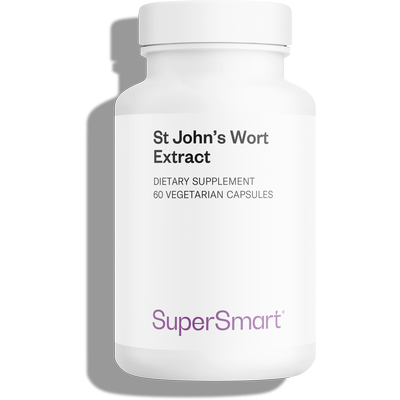
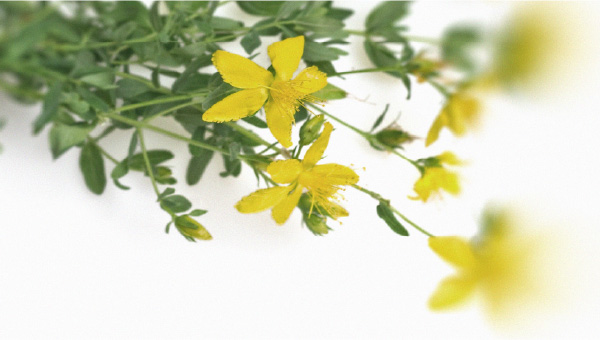
St John’s Wort (present in the product St John Wort Extract) supports a healthy psychological state and regulation of mood (17). Though it has long been thought to have an inhibitory effect on monoamine-oxidase, this theory has now been rejected: its benefits are now believed to be due to its dual content of hypericin and hyperforin. However, this plant has a number of known interactions with drugs and should only be taken under medical supervision.
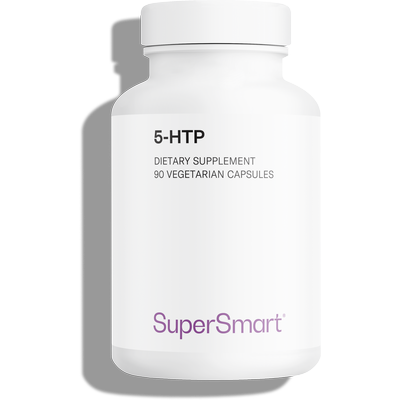
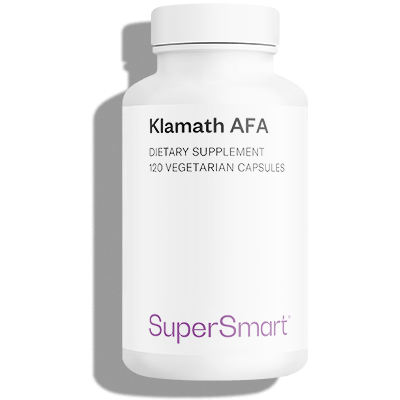
Some compounds are directly related to the ‘happiness’ neurotransmitters. 5-HTP is, in particular, involved with the synthesis of serotonin (it can be found in the 98% standardised supplement 5-HTP), while PEA (isolated from the algae Aphanizomenon flos-aquae in AFA Extract) is a precursor of dopamine (18-19).
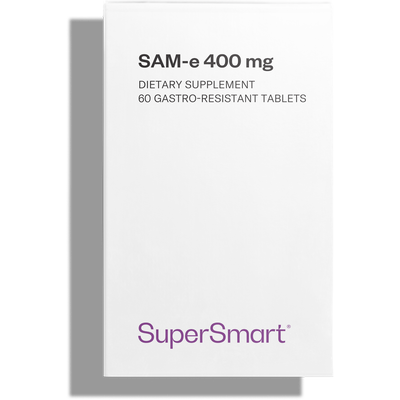
Levels of SAM-e or S-adenosylmethionine, a compound naturally present in our cells, fall when we’re suffering from low mood. It’s thought to play a pivotal role in the three-way functioning of dopamine-serotonin-noradrenalin (the best form for helping to beat the blues is the higher-dose SAM-e 400 mg) (20).
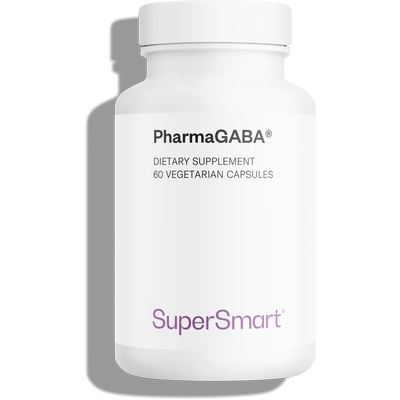
If you’re feeling hyper-sensitive, GABA is an inhibitory neurotransmitter which tends to curb nerve impulses and have a calming effect (21). When low mood is accompanied by a state of stress, it can be helpful to take it as a supplement (such as via the product PharmaGABA, the quality and safety profile of which has been approved by the US Food and Drug Administration).
SUPERSMART ADVICE
References
- Chand SP, Arif H. Depression. [Updated 2022 Jul 18]. In: StatPearls [Internet]. Treasure Island (FL): StatPearls Publishing; 2023 Jan-. Available from: https://www.ncbi.nlm.nih.gov/books/NBK430847/
- Institute of Health Metrics and Evaluation. Global Health Data Exchange (GHDx). http://ghdx.healthdata.org/gbd-results-tool?params=gbd-api-2019-permalink/d780dffbe8a381b25e1416884959e88b (consulté le 1er mai 2021).
- Albert PR. Why is depression more prevalent in women? J Psychiatry Neurosci. 2015 Jul;40(4):219-21. doi: 10.1503/jpn.150205. PMID: 26107348; PMCID: PMC4478054.
- Alsaad AJ, Azhar Y, Al Nasser Y. Depression In Children. [Updated 2022 Nov 17]. In: StatPearls [Internet]. Treasure Island (FL): StatPearls Publishing; 2023 Jan-. Available from: https://www.ncbi.nlm.nih.gov/books/NBK534797/
- Vitriol V, Cancino A, Weil K, Salgado C, Asenjo MA, Potthoff S. Depression and psychological trauma: an overview integrating current research and specific evidence of studies in the treatment of depression in public mental health services in chile. Depress Res Treat. 2014;2014:608671. doi: 10.1155/2014/608671. Epub 2014 Feb 17. PMID: 24695633; PMCID: PMC3948592.
- McHugh RK, Weiss RD. Alcohol Use Disorder and Depressive Disorders. Alcohol Res. 2019 Jan 1;40(1):arcr.v40.1.01. doi: 10.35946/arcr.v40.1.01. PMID: 31649834; PMCID: PMC6799954.
- Shadrina M, Bondarenko EA, Slominsky PA. Genetics Factors in Major Depression Disease. Front Psychiatry. 2018 Jul 23;9:334. doi: 10.3389/fpsyt.2018.00334. PMID: 30083112; PMCID: PMC6065213.
- Nutt DJ. The role of dopamine and norepinephrine in depression and antidepressant treatment. J Clin Psychiatry. 2006;67 Suppl 6:3-8. PMID: 16848670.
- Cuijpers P, Quero S, Dowrick C, Arroll B. Psychological Treatment of Depression in Primary Care: Recent Developments. Curr Psychiatry Rep. 2019 Nov 23;21(12):129. doi: 10.1007/s11920-019-1117-x. PMID: 31760505; PMCID: PMC6875158.
- Sheffler ZM, Patel P, Abdijadid S. Antidepressants. [Updated 2023 Mar 1]. In: StatPearls [Internet]. Treasure Island (FL): StatPearls Publishing; 2023 Jan-. Available from: https://www.ncbi.nlm.nih.gov/books/NBK538182/
- Munir S, Abbas M. Seasonal Depressive Disorder. [Updated 2022 Mar 26]. In: StatPearls [Internet]. Treasure Island (FL): StatPearls Publishing; 2023 Jan-. Available from: https://www.ncbi.nlm.nih.gov/books/NBK568745/
- Campbell PD, Miller AM, Woesner ME. Bright Light Therapy: Seasonal Affective Disorder and Beyond. Einstein J Biol Med. 2017;32:E13-E25. PMID: 31528147; PMCID: PMC6746555.
- Campbell PD, Miller AM, Woesner ME. Bright Light Therapy: Seasonal Affective Disorder and Beyond. Einstein J Biol Med. 2017;32:E13-E25. PMID: 31528147; PMCID: PMC6746555.
- org [Internet]. Cologne, Germany: Institute for Quality and Efficiency in Health Care (IQWiG); 2006-. Depression: Can sports and exercise help? [Updated 2020 Jun 18]. Available from: https://www.ncbi.nlm.nih.gov/books/NBK559350/
- Liao Y, Xie B, Zhang H, He Q, Guo L, Subramanieapillai M, Fan B, Lu C, McIntyre RS. Efficacy of omega-3 PUFAs in depression: A meta-analysis. Transl Psychiatry. 2019 Aug 5;9(1):190. doi: 10.1038/s41398-019-0515-5. Erratum in: Transl Psychiatry. 2021 Sep 7;11(1):465. PMID: 31383846; PMCID: PMC6683166.
- Alabsi A, Khoudary AC, Abdelwahed W. The Antidepressant Effect of L-Tyrosine-Loaded Nanoparticles: Behavioral Aspects. Ann Neurosci. 2016 Jul;23(2):89-99. doi: 10.1159/000443575. Epub 2016 Jul 7. Erratum in: Ann Neurosci. 2019 Jan;25(3):141-151. PMID: 27647959; PMCID: PMC5020390.
- Ng QX, Venkatanarayanan N, Ho CY. Clinical use of Hypericum perforatum (St John's wort) in depression: A meta-analysis. J Affect Disord. 2017 Mar 1;210:211-221. doi: 10.1016/j.jad.2016.12.048. Epub 2017 Jan 3. PMID: 28064110.
- Maffei ME. 5-Hydroxytryptophan (5-HTP): Natural Occurrence, Analysis, Biosynthesis, Biotechnology, Physiology and Toxicology. Int J Mol Sci. 2020 Dec 26;22(1):181. doi: 10.3390/ijms22010181. PMID: 33375373; PMCID: PMC7796270.
- De Gregorio D, Manchia M, Carpiniello B, Valtorta F, Nobile M, Gobbi G, Comai S. Role of palmitoylethanolamide (PEA) in depression: Translational evidence: Special Section on "Translational and Neuroscience Studies in Affective Disorders". Section Editor, Maria Nobile MD, PhD. This Section of JAD focuses on the relevance of translational and neuroscience studies in providing a better understanding of the neural basis of affective disorders. The main aim is to briefly summaries relevant research findings in clinical neuroscience with particular regards to specific innovative topics in mood and anxiety disorders. J Affect Disord. 2019 Aug 1;255:S0165-0327(18)31599-4. doi: 10.1016/j.jad.2018.10.117. Epub 2018 Oct 25. PMID: 30391203.
- Sharma A, Gerbarg P, Bottiglieri T, Massoumi L, Carpenter LL, Lavretsky H, Muskin PR, Brown RP, Mischoulon D; as Work Group of the American Psychiatric Association Council on Research. S-Adenosylmethionine (SAMe) for Neuropsychiatric Disorders: A Clinician-Oriented Review of Research. J Clin Psychiatry. 2017 Jun;78(6):e656-e667. doi: 10.4088/JCP.16r11113. PMID: 28682528; PMCID: PMC5501081.
- Luscher B, Shen Q, Sahir N. The GABAergic deficit hypothesis of major depressive disorder. Mol Psychiatry. 2011 Apr;16(4):383-406. doi: 10.1038/mp.2010.120. Epub 2010 Nov 16. PMID: 21079608; PMCID: PMC3412149.
Keywords


1084 Days
Great service
Great service
Ryszard
1097 Days
Profesjonalna obsługa
Bardzo dobre i rzeczowe opisy. Profesjonalna obsługa.
PIEKOSZEWSKI Chris
1765 Days
Wszystko OK!
Wszystko poszło jak powinno 🙂
SITKIEWICZ Pawel
2552 Days
Szybko sprawnie bez problemów
Szybko sprawnie bez problemów
Marek
of experience
your money back
##montant## purchase