
The 5 best ‘natural antidepressants’ for your emotional wellbeing
In search of gentle solutions to restore emotional wellbeing, more and more people are turning to ‘natural antidepressants’. What can we really expect from them, and which are the most effective?

‘Natural antidepressant’: what are we talking about?
To begin with, it is worth recalling that depression is a medically recognised condition, characterised by a state of sadness and a lack of interest that persists over time. It requires a diagnosis and specific management, which sometimes includes treatments known as ‘antidepressants’ (1).
The term ‘natural antidepressant’, as used here, should therefore be regarded as a common search term. It specifically refers to natural substances studied for their ability to restore emotional well-being, manage stress more effectively or improve one’s mood. However, they are not intended to replace medical care.
In light of the research, five ‘natural antidepressants’ stand out in particular: St John’s wort, saffron, targeted probiotics, vitamin D and SAMe, each of which acts on different aspects of emotional balance, which we will now explore in detail.
The 5 most powerful ‘natural antidepressants’ for emotional wellbeing
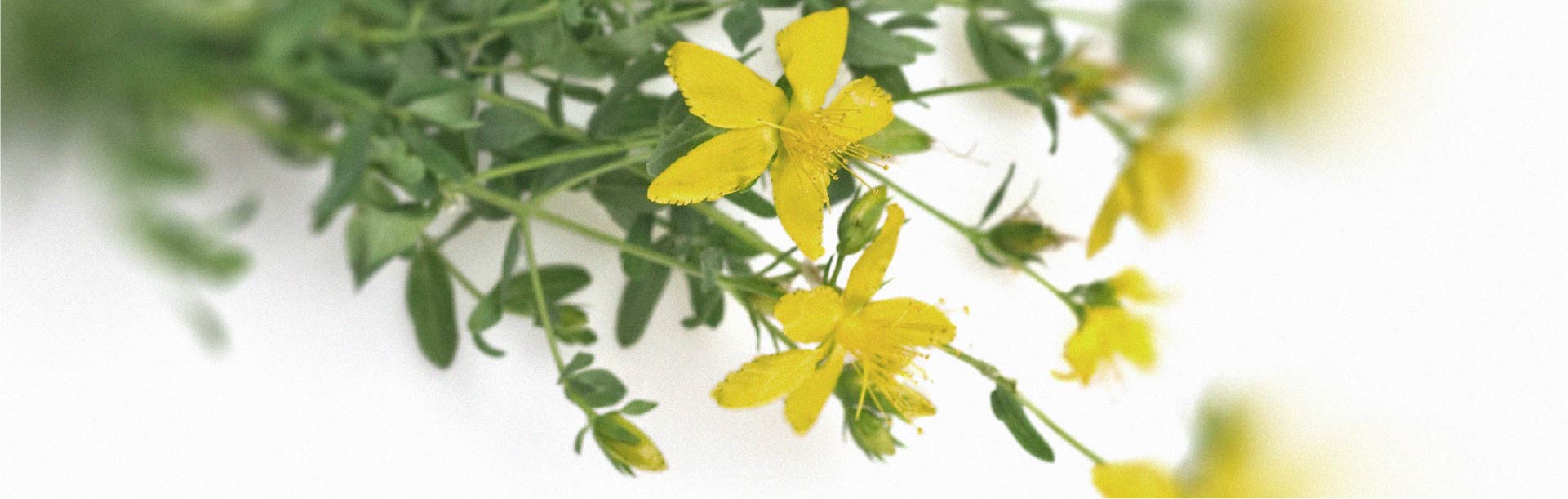
St. John’s wort, the closest thing to a true ‘natural antidepressant’
St. John’s wort (Hypericum perforatum) is undoubtedly the most obvious candidate for the title of ‘natural antidepressant’, both in the collective imagination and in scientific literature.
Its benefits for mood maintenance and psychological stability, mainly attributed to its content of hypericin and hyperforin, are endorsed by the WHO. It interacts with several neurotransmitter systems involved in emotional balance (such as serotonin, dopamine and noradrenaline) by inhibiting their reuptake. It is thought to increase their availability in the synapses—the areas where neurons exchange signals—and prolong their effects. It is also believed to influence the hypothalamic-pituitary-adrenal axis (stress response) and the receptors that regulate neuronal excitation (GABA, glutamate) (2).
Its main benefit therefore lies in its multi-targeted action on neurotransmitters, which sets it apart from other, more indirect approaches.
Due to the extensive research conducted on it and its broad spectrum of interactions, St John’s Wort is the most ‘pharmacological’ active ingredient in this selection and therefore requires a degree of caution (3).
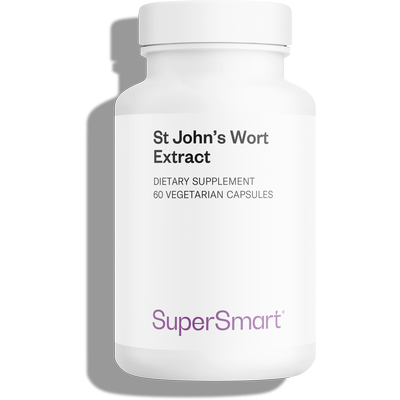
 On medical advice, you may consider taking a supplement containing St John’s Wort Extract, a high-quality St John’s Wort extract standardised for hypericin.
Saffron, an active ingredient targeting mood and emotional balance
Saffron (Crocus sativus) is now recognised as one of the most clinically convincing substances for supporting mood.
Researchers currently attribute its benefits for mental health to several bioactive compounds, including crocin and safranal. They suggest several potential biological mechanisms: modulation of serotonergic transmission, which may alter emotional perception and stress responsiveness; suppression of neuronal oxidative stress; or an influence on neurotrophic factors involved in brain plasticity (4-5).
Targeting mental well-being and generally well-tolerated, saffron joins the list of promising ‘natural antidepressants’. Synergistic formulations also combine it with other nutrients to enhance its effects.
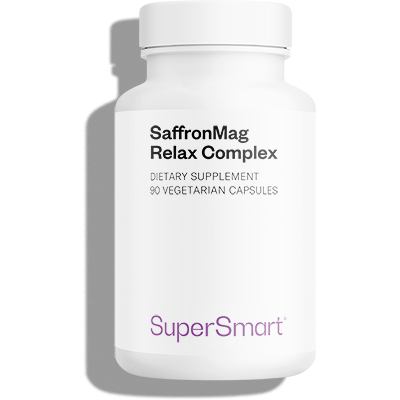
This is the case with SaffronMag Relax Complex, which combines a clinically studied, multi-award-winning saffron extract with magnesium bisglycinate, L-theanine and vitamin B6 for optimal mood regulation.
Probiotics, to influence the gut-brain axis
We now know that the gut microbiota communicates with the nervous system by producing numerous neuroactive metabolites: short-chain fatty acids, tryptophan, indole derivatives, etc.
It is therefore easy to imagine that certain probiotics, by acting on this gut-brain axis, may contribute to better regulation of stress and emotional balance (6). For example, by modulating the synthesis of certain neurotransmitters (including serotonin, which is largely produced in the gut), by reducing low-grade systemic inflammation, by reducing intestinal permeability, or by interacting with the enteric nervous system and the vagus nerve.
This is a particularly interesting avenue, as it links emotional well-being, digestion, stress and psychological resilience, and is currently being explored by ‘psychobiotics’ – a specific class of probiotics designed precisely to harmonise this microbiota-brain communication (7).
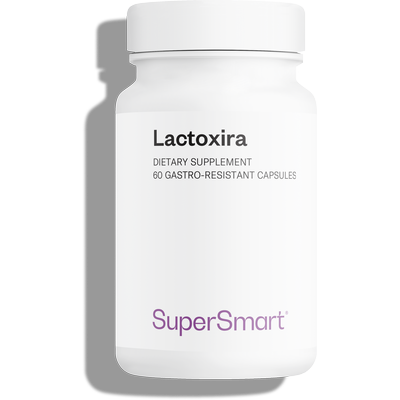
Lactoxira combines 8 selected probiotic strains, based on the latest advances in neuroscience.
Vitamin D, especially in cases of deficiency
Vitamin D is not immediately thought of as a ‘natural antidepressant’. Nevertheless, it is one of the most scientifically sound supplements in this field.
Its receptors are indeed present in many regions of the brain. As a key factor in the normal functioning of the immune system, it is thought to play a specific neuro-immune role and regulate inflammation levels. It is therefore suspected that it interacts with certain neurobiological circuits involved in mood regulation, and that insufficient levels may predispose individuals to greater emotional instability (8).
Vitamin D supplementation is therefore of greater relevance than that of St John’s wort or saffron. Whilst it is not a universal solution, it is particularly relevant for those with a deficiency or insufficiency, who would benefit from taking high-dose supplements (9).
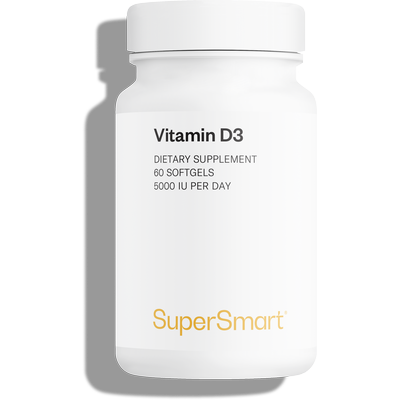
Opt for Vitamin D3 5000 IU, where the vitamin D is encapsulated in oil-based capsules for maximum absorption.
SAMe, a little-known biochemical player
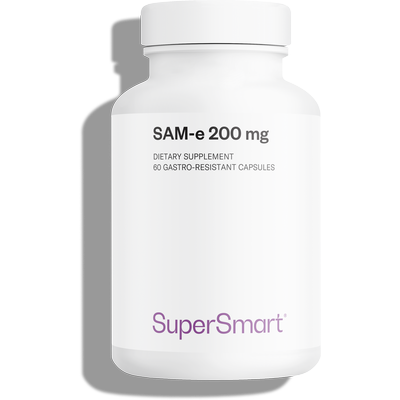
SAMe (or S-adenosylmethionine) is a molecule naturally produced by the body. It plays a role in methylation reactions, which are essential for many biological processes.
In the brain, it is thought to play a role in the synthesis and metabolism of several neurotransmitters involved in emotional balance, such as serotonin, dopamine and noradrenaline. It is also thought to contribute to the production of phospholipids necessary for the fluidity of neuronal membranes, as well as to the synthesis of glutathione, a key antioxidant. Furthermore, it is believed to influence the expression of genes linked to neuronal function (10).
An ‘expert’ active ingredient far less well known to the general public, more biochemical than botanical, which, study after study, is emerging as a rising star among ‘natural antidepressants’.
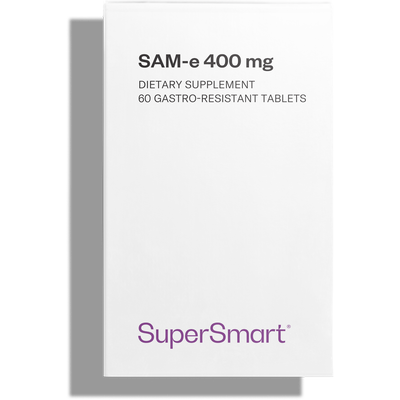
Available in SAM-e 200 mg, or in a more potent form in SAM-e 400 mg.
SUPERSMART ADVICE
References
- Chand SP, Arif H. Depression. [Updated 2023 Jul 17]. In: StatPearls [Internet]. Treasure Island (FL): StatPearls Publishing; 2026 Jan-. Available from: https://www.ncbi.nlm.nih.gov/books/NBK430847/
- Butterweck V. Mechanism of action of St John's wort in depression : what is known? CNS Drugs. 2003;17(8):539-62. doi: 10.2165/00023210-200317080-00001. PMID: 12775192.
- Henderson L, Yue QY, Bergquist C, Gerden B, Arlett P. St John's wort (Hypericum perforatum): drug interactions and clinical outcomes. Br J Clin Pharmacol. 2002 Oct;54(4):349-56. doi: 10.1046/j.1365-2125.2002.01683.x. PMID: 12392581; PMCID: PMC1874438.
- Database of Abstracts of Reviews of Effects (DARE): Quality-assessed Reviews [Internet]. York (UK): Centre for Reviews and Dissemination (UK); 1995-. Saffron (Crocus sativus) for depression: a systematic review of clinical studies and examination of underlying antidepressant mechanisms of action. 2014. Available from: https://www.ncbi.nlm.nih.gov/books/NBK292058/
- Siddiqui MJ, Saleh MSM, Basharuddin SNBB, Zamri SHB, Mohd Najib MHB, Che Ibrahim MZB, Binti Mohd Noor NA, Binti Mazha HN, Mohd Hassan N, Khatib A. Saffron (Crocus sativus L.): As an Antidepressant. J Pharm Bioallied Sci. 2018 Oct-Dec;10(4):173-180. doi: 10.4103/JPBS.JPBS_83_18. PMID: 30568374; PMCID: PMC6266642.
- Dinan TG, Cryan JF. The Microbiome-Gut-Brain Axis in Health and Disease. Gastroenterol Clin North Am. 2017 Mar;46(1):77-89. doi: 10.1016/j.gtc.2016.09.007. Epub 2017 Jan 4. PMID: 28164854.
- Sharma R, Gupta D, Mehrotra R, Mago P. Psychobiotics: The Next-Generation Probiotics for the Brain. Curr Microbiol. 2021 Feb;78(2):449-463. doi: 10.1007/s00284-020-02289-5. Epub 2021 Jan 4. PMID: 33394083.
- Eyles DW. Vitamin D: Brain and Behavior. JBMR Plus. 2020 Oct 18;5(1):e10419. doi: 10.1002/jbm4.10419. PMID: 33553986; PMCID: PMC7839822.
- Menon V, Kar SK, Suthar N, Nebhinani N. Vitamin D and Depression: A Critical Appraisal of the Evidence and Future Directions. Indian J Psychol Med. 2020 Jan 6;42(1):11-21. doi: 10.4103/IJPSYM.IJPSYM_160_19. PMID: 31997861; PMCID: PMC6970300.
- Cuomo A, Beccarini Crescenzi B, Bolognesi S, Goracci A, Koukouna D, Rossi R, Fagiolini A. S-Adenosylmethionine (SAMe) in major depressive disorder (MDD): a clinician-oriented systematic review. Ann Gen Psychiatry. 2020 Sep 5;19:50. doi: 10.1186/s12991-020-00298-z. PMID: 32939220; PMCID: PMC7487540.
Keywords



1087 Days
Great service
Great service
Ryszard
1100 Days
Profesjonalna obsługa
Bardzo dobre i rzeczowe opisy. Profesjonalna obsługa.
PIEKOSZEWSKI Chris
1768 Days
Wszystko OK!
Wszystko poszło jak powinno 🙂
SITKIEWICZ Pawel
2555 Days
Szybko sprawnie bez problemów
Szybko sprawnie bez problemów
Marek
of experience
your money back
##montant## purchase