
When to take ashwagandha for best effects?
Morning or evening? On an empty stomach or with a meal? When is the best time to take ashwagandha? Understanding how this plant works helps you choose the time to take it that is best suited to your needs and your daily routine.


Ashwagandha: an adaptogenic plant with well-documented uses
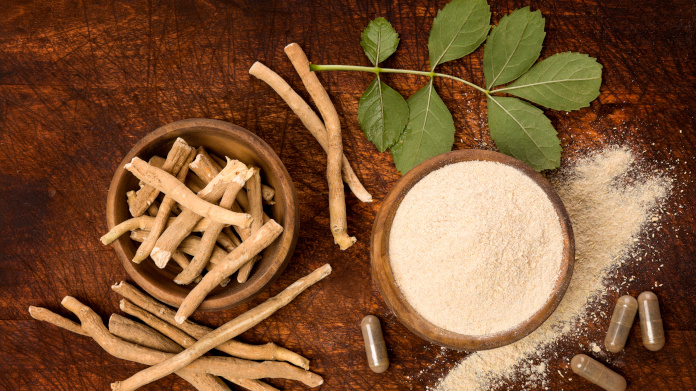
Ashwagandha (Withania somnifera) is a plant that has been used for centuries in traditional Ayurvedic medicine.
Its main active compounds are withanolides, natural molecules, which are now widely studied in the scientific literature (1-3).
Ashwagandha is described as an ‘adaptogen’, and is often associated with:
- adaptation to stress
- emotional balance
- support for mental and physical well-being
In addition to stress management, research is also looking at its potential effects on the cardiovascular system (4), cognitive functions (5) and physical performance (endurance, strength, muscle recovery) (6), with results varying according to the dosage and profile studied.
When and how to take ashwagandha, depending on your objective
There is no single ideal time to take ashwagandha. The choice depends above all on the objective being pursued, individual sensitivity and the context (stress, fatigue, sleep, etc.).
To manage stress and anxiety
Some people prefer to take ashwagandha at the end of the day or in the evening, particularly when they are trying to better manage the stress accumulated during the day.
This choice is in line with the circadian rhythm, i.e. the biological clock which regulates numerous physiological functions over 24 hours.
Under normal circumstances, cortisol – often referred to as the ‘stress hormone’ – follows this rhythm: it peaks in the morning to promote wakefulness, then gradually decreases throughout the day.
In situations of chronic stress, this profile can be disrupted in some people, with higher or poorly synchronised secretion at the end of the day. This is why some people choose to take ashwagandha in the evening.
Apart from these biological considerations, taking ashwagandha at the end of the day is often a more natural part of a decompression ritual, encouraging the transition from a state of alertness to a phase of relaxation.
This approach may be suitable for people who feel a heavy mental load or nervous tension at the end of the day. However, it is highly dependent on individual experience, and may require a few adjustments to find the most suitable timing.
To boost energy and concentration
Other people prefer to take ashwagandha in the morning, particularly when they are looking for support for mental vitality and concentration throughout the day.
Ashwagandha is not a stimulant in the traditional sense: it does not act like coffee or other stimulants. It is, however, described as an adaptogenic plant, i.e. one that can help the body cope better with the stresses of everyday life.
In this context, a morning dose could:
- become part of a stress management routine at the start of the day
- accompany periods of cognitive load or mental fatigue
- be suitable for people who are sensitive to stress in the morning or at the start of the day
As with all adaptogenic plants, the perceived effects may vary. Some people also prefer to take it in two doses (in the morning and at the end of the day).
To improve sleep
Although ashwagandha is not a sleeping aid, some users prefer to take it at the end of the day to improve the quality of their sleep.
This preference may be linked to:
- a greater feeling of relaxation at the end of the day
- a reduction in the nervous tension accumulated over the day
- better synchronisation with the circadian rhythm, particularly during the transition from wakefulness to rest
It's important to remember, however, that the effects can vary: for some people, taking it too late may make no difference at all, and may even be less well tolerated.
It's essential to listen to your own body before adjusting the timing of your intake.
On an empty stomach or with a meal?
Taking ashwagandha with a meal is generally better tolerated from a digestive point of view, especially for sensitive people.
The presence of dietary fat may also favour the absorption of withanolides, which are naturally lipophilic.
Taking ashwagandha on an empty stomach may be suitable for others, but it is not essential and depends very much on individual tolerance.
In practice, there is no single 'right' time to take ashwagandha: the key is to take it regularly, at your own pace and supported by a quality supplement.
How do I choose quality ashwagandha supplements?
Prolonged stress, recurring tiredness or an unbalanced lifestyle... Targeted supplementation can be considered in certain situations, as a complement to a healthy lifestyle and subject to certain precautions.
In particular, ashwagandha is not recommended during pregnancy, breastfeeding or medical treatment, without the advice of a health professional.
Not all ashwagandha supplements are created equal. The quality of the extract, its standardisation in withanolides and the traceability of the raw materials are among the essential criteria to be taken into account.
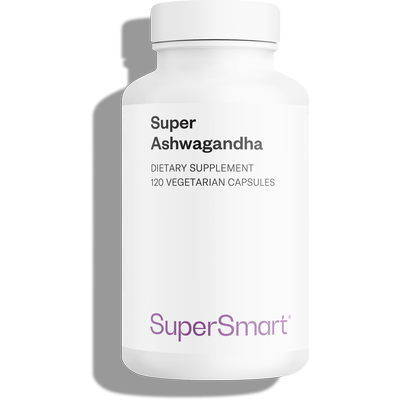
 Discover Super Ashwagandha, an organic Withania somnifera extract highly concentrated and standardised in withanolides, with a precise concentration for optimum efficacy.
You can also opt for synergistic formulas, which combine ashwagandha with other so-called adaptogenic plants.
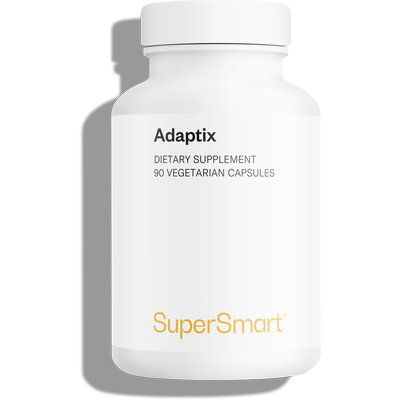
Discover Adaptix, a complete formula combining several adaptogens, designed to help the body cope with periods of stress and fatigue.
Other nutrients can also help to support the body during periods of stress, such as magnesium, which contributes to the normal functioning of the nervous system and reduces fatigue.
Stress can actually increase magnesium requirements, sometimes contributing to a vicious circle of fatigue, tension and nervousness.
Discover OptiMag, a unique, synergistic combination of eight exceptional forms of magnesium, which covers 100% of the recommended daily intake of magnesium.
Finally, some formulas combine adaptogenic plants, vitamins and minerals in a comprehensive approach to stress.
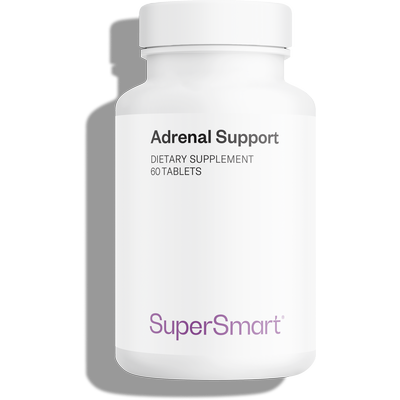
Discover Adrenal Support, a synergistic formula combining adaptogens, micronutrients and vitamins, designed to support the body during periods of high stress.
SUPERSMART ADVICE

References
- Speers AB, Cabey KA, Soumyanath A, Wright KM. Effects of Withania somnifera (Ashwagandha) on Stress and the Stress- Related Neuropsychiatric Disorders Anxiety, Depression, and Insomnia. Curr Neuropharmacol. 2021;19(9):1468-1495. doi: 10.2174/1570159X19666210712151556. PMID: 34254920; PMCID: PMC8762185.
- Yoshitomi R, Nanda R, Hirano K, Kaul SC, Dhanjal JK, Wadhwa R. Ashwagandha withanolides, Withaferin-A, and Withanone for natural interventions in aging and obesity. Mech Ageing Dev. 2025 Dec;228:112126. doi: 10.1016/j.mad.2025.112126. Epub 2025 Nov 20. PMID: 41274355.
- Paul S, Chakraborty S, Anand U, Dey S, Nandy S, Ghorai M, Saha SC, Patil MT, Kandimalla R, Proćków J, Dey A. Withania somnifera (L.) Dunal (Ashwagandha): A comprehensive review on ethnopharmacology, pharmacotherapeutics, biomedicinal and toxicological aspects. Biomed Pharmacother. 2021 Nov;143:112175. doi: 10.1016/j.biopha.2021.112175. Epub 2021 Sep 27. PMID: 34649336.
- MALHOTRA CL, DAS PK, DHALLA NS. Studies on Withania ashwagandha. (Part II): Effect of total extract on cardiovascular system, respiration and skeletal muscle. Indian J Physiol Pharmacol. 1960 Jan;4:49-64. PMID: 14420295.
- Choudhary D, Bhattacharyya S, Bose S. Efficacy and Safety of Ashwagandha (Withania somnifera (L.) Dunal) Root Extract in Improving Memory and Cognitive Functions. J Diet Suppl. 2017 Nov 2;14(6):599-612. doi: 10.1080/19390211.2017.1284970. Epub 2017 Feb 21. PMID: 28471731.
- Verma N, Gupta SK, Patil S, Tiwari S, Mishra AK. Effects of Ashwagandha ( Withania somnifera) standardized root extract on physical endurance and VO 2max in healthy adults performing resistance training: An eight-week, prospective, randomized, double-blind, placebo-controlled study. F1000Res. 2024 Apr 8;12:335. doi: 10.12688/f1000research.130932.2. PMID: 38988644; PMCID: PMC11234080.
Keywords





5 Days
Adequate info en hoge kwaliteit
Adequate info en hoge kwaliteit
HanS.
15 Days
Supplementen zijn goed.
Supplementen zijn goed. Zachte prijzen. Website met problemen ( altijd ) niet goed voor nieuwe klanten.
Gino RJ
24 Days
Alles op tijd geleverd.
Alles op tijd geleverd. De producten worden alsmaar duurder, terwijl mijn pensioen niet meer stijgt. Vandaar kan ik alsmaar minder vaak bestellen.
Wouters
1094 Days
Great service
Great service
Ryszard
1107 Days
Profesjonalna obsługa
Bardzo dobre i rzeczowe opisy. Profesjonalna obsługa.
PIEKOSZEWSKI Chris
1775 Days
Wszystko OK!
Wszystko poszło jak powinno 🙂
SITKIEWICZ Pawel
2562 Days
Szybko sprawnie bez problemów
Szybko sprawnie bez problemów
Marek
of experience
your money back
##montant## purchase