
Polyphenols as a dietary supplement: how to make the right choice?
Resveratrol, quercetin, EGCG… Polyphenols comprise thousands of molecules with very different properties. To choose a polyphenol as a dietary supplement, you need to consider its family, formulation and bioavailability.
- ✓Polyphenols are plant compounds found mostly in fruit, vegetables, tea, coffee, cocoa, spices and certain seeds.
- ✓They are primarily studied for their interactions with oxidative stress and associated cellular mechanisms.
- ✓Certain polyphenols, such as resveratrol, quercetin and EGCG, are available as dietary supplements.
- ✓A standardised extract provides a defined quantity of active ingredients, whilst certain micellar or liposomal formulations can improve the bioavailability of poorly soluble molecules.
- ✓Dietary supplements rich in polyphenols are no substitute for a varied diet and should be chosen based on their composition, dosage and precautions for use.


What is a polyphenol? Definition and mechanism of action
Compounds naturally produced by plants
Polyphenols are a vast family of compounds produced by plants.
They play a key role in the plants’ pigmentation, defence mechanisms and adaptation to environmental stresses.
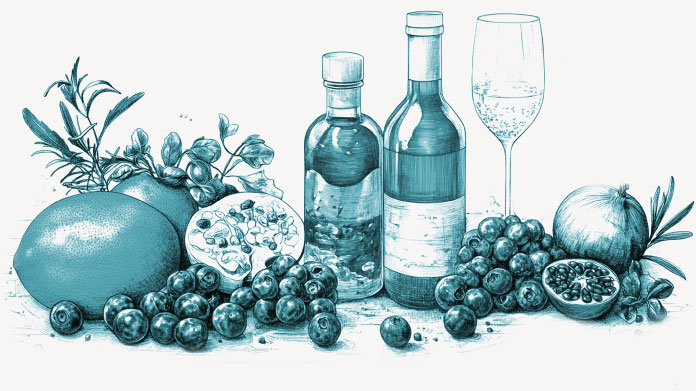
They are found in many plant-based foods: grapes, red berries, apples, citrus fruits, green tea, coffee, cocoa, turmeric and pulses.
The term ‘polyphenol’ therefore does not refer to a single molecule, but to several thousand compounds with different structures and properties.
They are generally divided into two main categories, which we will discuss in more detail later: flavonoids and non-flavonoid compounds.
How do polyphenols interact with oxidative stress?
During normal functioning, the body produces reactive species, commonly known as free radicals, which are missing electrons. These play a part in various physiological mechanisms.
When produced in excess and overwhelming the body’s antioxidant defences, oxidative stress can occur, contributing to premature cellular ageing.
Under experimental conditions, certain polyphenols can neutralise reactive species by donating an electron or a hydrogen atom to them. They can also interact with certain metals involved in oxidation reactions.
In the body, however, their action is more complex than simply acting as ‘free radical scavengers’.
Polyphenols are metabolised during digestion and subsequently by the liver or the gut microbiota. This explains why their effects are being studied in relation to liver health.
Researchers are therefore also studying their metabolites and their interactions with the cellular mechanisms involved in the body’s natural antioxidant defences (1).
In other words, the amount of polyphenols consumed is not enough to predict their fate. To understand the benefits – and limitations – of polyphenol supplementation, we must first examine how these molecules are released, metabolised and absorbed.
Why take a polyphenol as a dietary supplement?
Diet remains the primary source of polyphenols and also provides fibre, vitamins, minerals and other plant compounds. A dietary supplement, however, can provide a precise and concentrated amount of a specific molecule.
How cooking and the food matrix can affect this
The amount of polyphenols provided by a food depends on several factors:
- its variety and degree of ripeness;
- its growing conditions;
- how long it has been stored;
- how it is prepared and cooked.
Cooking does not necessarily destroy polyphenols. Moderate heat can even break down plant tissue and facilitate the release of certain molecules.
However, not all polyphenols react in the same way. Anthocyanins, which are responsible for the red, blue or purple colours of many plants, are among the polyphenols most sensitive to temperature.
Soluble compounds may also leach into the cooking water when this is not consumed (2).
The amount actually available also depends on the food matrix, that is, the structure of the food and the interactions between its fibres, proteins, lipids and micronutrients.
Depending on the food and how it is processed, this matrix may retain certain polyphenols, protect them or facilitate their release during digestion.
This is where standardised plant extracts offer a distinct advantage. By concentrating certain compounds, they allow the exact amount consumed to be known and reproduced every day – something that diet alone does not always guarantee.
However, an extract does not replicate the full nutritional diversity of the original food.
Diet and supplementation are therefore complementary: the former provides a wide variety of plant compounds, whilst a dietary supplement allows a specific polyphenol to be targeted in a formula at a precisely defined dose.
The scientific challenge of bioavailability
Before it can be absorbed, a polyphenol must be released from the food or supplement and then dissolve in digestive fluids: this is known as bioaccessibility.
Some of it may then pass through the intestinal wall before being metabolised by the intestine and the liver. The unabsorbed fraction reaches the colon, where the gut microbiota can convert it into smaller metabolites.
Bioavailability refers to the absorbed fraction that reaches the bloodstream, either in its original form or after being metabolised.
An apple and a capsule of apple extract cannot therefore be compared gram for gram. The former provides a range of fibre and micronutrients, whilst the latter delivers a concentrated and measurable amount of certain polyphenols.
However, this concentration does not automatically imply better absorption.
Some formulations aim to improve the dispersion of molecules that are poorly soluble in digestive fluids:
- micelles surround a lipophilic molecule to facilitate its dispersion in water;
- liposomes encapsulate it within small vesicles composed of phospholipids.
However, their benefits must be assessed for each active ingredient and each formulation.
A randomised, double-blind study involving 15 healthy adults compared native curcumin with a micellar formulation over a 7-day period (3).
After the first dose, the peak blood concentration of curcuminoids was approximately 39 times higher with the micellar form. Total blood exposure, meanwhile, was 14 times higher.
In this trial, the micellar formulation therefore significantly increased blood exposure to curcuminoids. However, this result does not imply that all micellar forms are equivalent, nor that their biological effect increases by the same proportion.
 Discover Curcumin Solution, a formula based on NovaSOL® curcumin dispersed in the form of micelles.
Recent research no longer regards flavonoids merely as free radical scavengers. It also investigates their metabolites, their interactions with the microbiota and their influence on cellular mechanisms associated with oxidative stress.
However, the results observed in humans vary depending on the molecule, the dose, the formulation and the individuals studied (4).
The main families of polyphenols and their sources
Polyphenols are classified according to their chemical structure. This classification helps to explain why two plant extracts may differ in terms of absorption, properties and precautions for use.
Flavonoids: a particularly diverse family
Flavonoids are found in many fruits, vegetables, seeds and drinks such as tea. They include (5):
- flavonols, including quercetin found in onions, apples and capers;
- flavanols, such as the catechins in green tea, including EGCG;
- anthocyanins, the pigments found in red, blue or purple fruits;
- flavanones, found mainly in citrus fruits;
- proanthocyanidins, the oligomeric forms of which are known as OPCs and are found in particular in grape seeds.
Discover Daily Booster, a comprehensive formula containing, amongst other ingredients, a grape seed extract which is a source of OPCs.
Discover EGCG, a standardised green tea extract providing 455 mg of EGCG per daily dose.
Discover Super Quercetin, a specialised formula based on anhydrous quercetin.
Discover FlavoLife, a complex combining, amongst other ingredients, rutin, quercetin, EGCG and OPC.
Non-flavonoid compounds
Non-flavonoid polyphenols include:
- resveratrol, a stilbene found in red grapes, particularly in the grape skin, certain berries and peanuts;
- phenolic acids, found notably in coffee, whole grains, fruit and vegetables;
- curcumin, which belongs to the curcuminoid family naturally found in turmeric.
Each of these molecules has a specific structure, metabolism and bioavailability. The choice of an extract should therefore be based on its composition and dosage, rather than solely on the general term ‘antioxidant’ (6).
Discover Resveratrol, a specialised formula derived in particular from Vitis vinifera and Polygonum cuspidatum.
Discover AntiOxidant Synergy, which combines, amongst other ingredients, curcumin, EGCG, resveratrol and grape seed extract.
What criteria should you use to choose the right polyphenol-based dietary supplement?
A high dose is not always preferable
There is no standard recommended daily intake applicable to all polyphenols.
The amount to be taken depends on the molecule, its concentration, its formulation and the individual’s profile. A high content is therefore not, in itself, a measure of quality.
At high concentrations, certain polyphenols may exhibit pro-oxidant behaviour under experimental conditions (7). This does not mean that they automatically become harmful, but it does confirm that there is no point in seeking the maximum dose.
Free radicals also play a role in cell signalling. The aim is therefore not to neutralise them entirely, but to maintain the body’s natural balance (8).
What information should you check on the label?
When choosing a polyphenol as a dietary supplement, it is best to look for:
- a clearly stated botanical source;
- a standardised extract specifying its active ingredient content;
- a clearly stated daily dose;
- a formulation with documented benefits in terms of solubility or bioavailability;
- a clear composition, with identified excipients.
The term ‘pure’ does not, on its own, guarantee a product’s quality, bioavailability or safety.
Nor is an excipient problematic simply because it has a chemical name: it is essential to examine its function, quantity and regulatory compliance.
When should a polyphenol-based food supplement be taken?
The timing of intake depends on the active ingredient and its formulation. It is therefore advisable to follow the instructions on the product.
Some antioxidant extracts and dietary supplements are better tolerated when taken with a meal, whilst specific formulations have their own guidelines.
In particular, concentrated green tea extracts containing EGCG should not be taken on an empty stomach or combined, on the same day, with other green tea-based products.
What are the main precautions?
Supplementation requires greater caution in the case of:
- pregnant or breastfeeding women;
- people who take medication regularly;
- people due to undergo surgery;
- children and adolescents, unless advised by a healthcare professional.
Depending on the polyphenol, interactions may occur, in particular, with anticoagulants, antiplatelet agents or certain medicines metabolised by the liver (9).
If you are taking any medication or have any doubts, it is advisable to seek advice from a healthcare professional.
Food or supplements: which should you choose?
No, because they serve different purposes. Fruit, vegetables, tea, cocoa, spices, pulses and whole grains provide a variety of polyphenols that a capsule cannot replicate.
This is why the Mediterranean diet offers so many benefits, particularly for those seeking to maintain their youthful vitality.
A dietary supplement, on the other hand, allows you to target a specific molecule and know its exact dose. It therefore complements a varied diet without replacing it.
SUPERSMART ADVICE

References
- Di Lorenzo, C.; Colombo, F.; Biella, S.; Stockley, C.; Restani, P. Polyphenols and Human Health: The Role of Bioavailability. Nutrients 2021, 13, 273. + 🔗
- Aprifel. Avis d’expert – Polyphénols et alimentation : 2 questions à Flore Depeint + 🔗
- Grafeneder J, Derhaschnig U, Eskandary F, Buchtele N, Sus N, Frank J, Jilma B, Schoergenhofer C. Micellar Curcumin: Pharmacokinetics and Effects on Inflammation Markers and PCSK-9 Concentrations in Healthy Subjects in a Double-Blind, Randomized, Active-Controlled, Crossover Trial. Molecular Nutrition & Food Research. 2022;66(22):e2200139. + 🔗
- Rudrapal M, de Oliveira AM and Singh RP (2026) Dietary polyphenols maintain human health through modulation of gut microbiota. Front. Pharmacol. 16:1710088. doi: 10.3389/fphar.2025.1710088 + 🔗
- Kozłowska A, Szostak-Wegierek D. Flavonoids--food sources and health benefits. Rocz Panstw Zakl Hig. 2014;65(2):79-85. PMID: 25272572. + 🔗
- Manach C, Scalbert A, Morand C, Rémésy C, Jiménez L. Polyphenols: food sources and bioavailability. Am J Clin Nutr. 2004 May;79(5):727-47. doi: 10.1093/ajcn/79.5.727. PMID: 15113710. + 🔗
- Halliwell B. Are polyphenols antioxidants or pro-oxidants? What do we learn from cell culture and in vivo studies? Arch Biochem Biophys. 2008 Aug 15;476(2):107-12. doi: 10.1016/j.abb.2008.01.028. Epub 2008 Feb 7. PMID: 18284912. + 🔗
- Holmström KM, Finkel T. Cellular mechanisms and physiological consequences of redox-dependent signalling. Nat Rev Mol Cell Biol. 2014 Jun;15(6):411-21. doi: 10.1038/nrm3801. PMID: 24854789. + 🔗
- Duda-Chodak A, Tarko T. Possible Side Effects of Polyphenols and Their Interactions with Medicines. Molecules. 2023 Mar 10;28(6):2536. doi: 10.3390/molecules28062536. PMID: 36985507; PMCID: PMC10058246. + 🔗



17 Days
Prodotti eccezionali
Prodotti eccezionali! Consegna rapida e precisa
paola
28 Days
Heldere info
Heldere info
HanS.
28 Days
Snelle levering
Snelle levering
harrie
33 Days
Adequate info en hoge kwaliteit
Adequate info en hoge kwaliteit
HanS.
43 Days
Supplementen zijn goed.
Supplementen zijn goed. Zachte prijzen. Website met problemen ( altijd ) niet goed voor nieuwe klanten.
Gino RJ
52 Days
Alles op tijd geleverd.
Alles op tijd geleverd. De producten worden alsmaar duurder, terwijl mijn pensioen niet meer stijgt. Vandaar kan ik alsmaar minder vaak bestellen.
Wouters
1123 Days
Great service
Great service
Ryszard
1135 Days
Profesjonalna obsługa
Bardzo dobre i rzeczowe opisy. Profesjonalna obsługa.
PIEKOSZEWSKI Chris
1803 Days
Wszystko OK!
Wszystko poszło jak powinno 🙂
SITKIEWICZ Pawel
2590 Days
Szybko sprawnie bez problemów
Szybko sprawnie bez problemów
Marek
of experience
your money back
##montant## purchase