
Menopause: its little-known impact on gastrointestinal health
The menopause is not limited to hot flushes and water retention. It can also influence the intestinal microbiota and digestive comfort. A recent study attempts to unravel these little-known links.

Menopause: an impact on digestive balance that is all too often overlooked
Generally occurring between the ages of 45 and 55, the menopause corresponds to the definitive cessation of menstruation, following the reduction in the synthesis of ovarian hormones (oestrogen and progesterone) (1). This physiological transition is accompanied by a number of changes in the body.
While hot flushes, mood swings and sleep disturbances are regularly mentioned, the impact on the digestive system is much less so. Yet it would appear that the hormonal variations observed during this period can affect intestinal motility and the balance of the microbiota, to the point of inducing digestive discomfort in some women that affects their quality of life.
A study explores the links between menopause, gastrointestinal health and microbiota
A recent scientific review published in Nature in May 2025 looked at the effects of the menopause on gastrointestinal and liver health (2). To do this, the authors compiled available data on digestive symptoms, changes in intestinal microbiota, quality of life and the impact of hormone replacement therapy. They also assessed certain bone-related issues associated with both the menopause and certain digestive pathologies.
Impact on intestinal motility
The researchers noted changes in gastrointestinal function at the time of the menopause, and more specifically in intestinal motility – i.e. all the movements of the intestinal muscles that ensure the progress of food through the digestive tract. These changes are most likely linked to the presence of oestrogen and progesterone receptors throughout the digestive tract. For some women, this could exacerbate existing digestive symptoms and have a negative impact on their quality of life.
Possible changes to intestinal flora
This review also points to a possible change in the composition of the intestinal microbiota in menopausal or peri-menopausal women, which may occur over time as a result of hormonal fluctuations, particularly oestrogen (3). Although the data is still very incomplete, this area appears to be an important area for research, since we now know that the microbiota interacts with the intestinal ecosystem, metabolism and potentially with certain digestive disorders.
More frequent or more severe gastrointestinal and liver diseases
The study also highlights the fact that certain gastrointestinal and liver disorders are more frequent in the peri- and post-menopausal periods. Women already affected before this period could also see their symptoms worsen.
The impact of hormone replacement therapy on gastrointestinal comfort
The review also describes hormone replacement therapy (HRT), prescribed to relieve menopausal symptoms, as a factor likely to influence gastrointestinal health and well-being. To date, the scientific literature has produced contradictory results. For example, a worldwide database analysis suggests an association between hormone replacement therapy and slower gastric emptying (4). Conversely, another study found that postmenopausal women with chronic inflammatory bowel disease experienced a reduction in symptoms on HRT (5). At the very least, this is a factor to be taken into account when considering women's intestinal comfort during the menopausal transition.
An interdependence between digestive health and bone health
Beyond the digestive sphere, this study provides a reminder that menopausal women are naturally exposed to an increased risk of bone remodelling and osteoporosis. However, certain digestive diseases or specific treatments used in gastroenterology could increase this risk (6). Once again, this is a key point in the correct management of digestive problems in the menopause.
Nevertheless, this article highlights a lack of data and the need for further research. The menopause, although universal on a biological scale, is still insufficiently analysed from the point of view of digestive symptoms to draw definitive conclusions.
How can we improve our digestive well-being at the menopause?
This study urges us to take better account of gastrointestinal health as part of our overall support for the menopause. The main known levers for action obviously remain a varied diet, with a fibre intake adapted to tolerance, regular physical activity and quality sleep (7-8). If digestive symptoms become troublesome and persistent, you should contact your doctor or a gastroenterologist for comprehensive, personalised treatment.
Some supplements can also be part of a more general nutritional support approach. It should be pointed out that they are in no way intended to 'treat' digestive or hormonal disorders, nor to replace medical advice.
Given the presumed impact of the menopause on the intestinal flora, it may be worth taking probiotics to help maintain its balance (9-10).
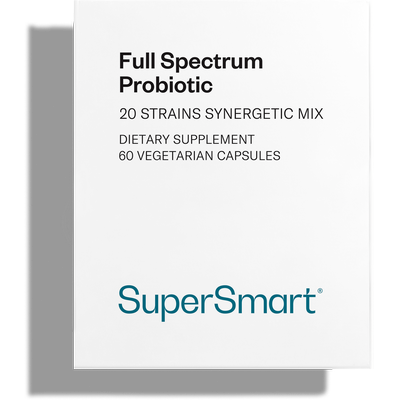
 With its 20 synergistic strains, Full Spectrum Probiotic provides a wide range of microorganisms to maintain a healthy, balanced flora.
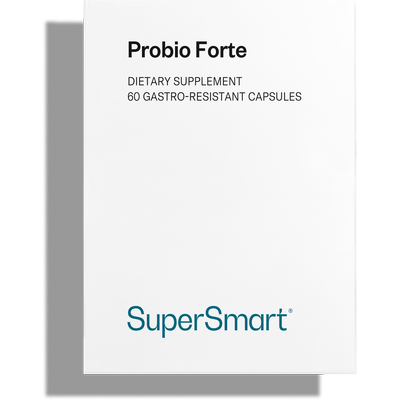
Probio Forte, on the other hand, combines 5 of the most widely researched strains for intestinal discomfort: Bifidobacterium lactis, Lactobacillus acidophilus, Lactobacillus casei, etc.
Some formulas dedicated to menopausal women offer even more comprehensive support (11).
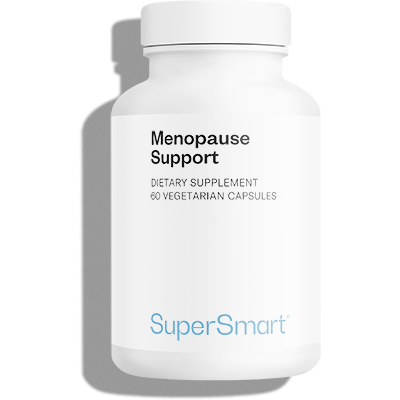
This is the case with Menopause Support, a formula free from synthetic hormones and soya, rich in black cohosh, which promotes a calmer, more comfortable menopause by alleviating the various symptoms.
Where necessary, specific supplements dedicated to maintaining bone density may also be considered (12-13).
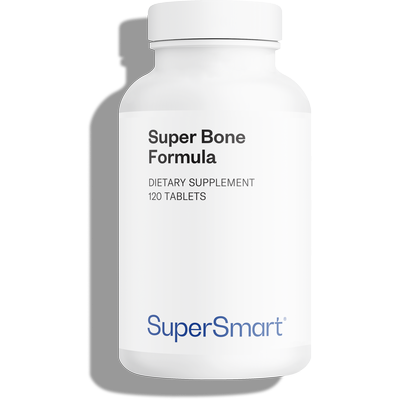
Super Bone Formula brings together the best compounds for bone health: calcium, zinc, magnesium, vitamins D3 and K2.
The vitamin D in the practical Vitamin D3 2000 IU Spray, to be sprayed directly under the tongue, helps maintain normal bones by enabling calcium to be properly assimilated.
SUPERSMART ADVICE

References
- Peacock K, Carlson K, Ketvertis KM. Menopause. [Updated 2023 Dec 21]. In: StatPearls [Internet]. Treasure Island (FL): StatPearls Publishing; 2026 Jan-. Available from: https://www.ncbi.nlm.nih.gov/books/NBK507826/
- Ley D, Saha S. Menopause and gastrointestinal health and disease. Nat Rev Gastroenterol Hepatol. 2025 Aug;22(8):556-569. doi: 10.1038/s41575-025-01075-7. Epub 2025 May 23. PMID: 40410564.
- Lin F, Ma L, Sheng Z. Health disorders in menopausal women: microbiome alterations, associated problems, and possible treatments. Biomed Eng Online. 2025 Jul 7;24(1):84. doi: 10.1186/s12938-025-01415-3. PMID: 40624665; PMCID: PMC12235801.
- Khalil J, Hill H, Kaelber D, Song G. The Association between Hormone Replacement Therapy and Gastroparesis in Post-Menopausal Women: A Worldwide Database Analysis. J Pers Med. 2024 Feb 29;14(3):275. doi: 10.3390/jpm14030275. PMID: 38541017; PMCID: PMC10970917.
- Freeman M, Lally L, Teigen L, Graziano E, Shivashankar R, Shmidt E. Hormone Replacement Therapy Is Associated with Disease Activity Improvement among Post-Menopausal Women with Inflammatory Bowel Disease. J Clin Med. 2023 Dec 23;13(1):88. doi: 10.3390/jcm13010088. PMID: 38202098; PMCID: PMC10779540.
- Ali T, Lam D, Bronze MS, Humphrey MB. Osteoporosis in inflammatory bowel disease. Am J Med. 2009 Jul;122(7):599-604. doi: 10.1016/j.amjmed.2009.01.022. PMID: 19559158; PMCID: PMC2894700.
- Erdélyi A, Pálfi E, Tűű L, Nas K, Szűcs Z, Török M, Jakab A, Várbíró S. The Importance of Nutrition in Menopause and Perimenopause-A Review. Nutrients. 2023 Dec 21;16(1):27. doi: 10.3390/nu16010027. PMID: 38201856; PMCID: PMC10780928.
- Erdélyi A, Pálfi E, Tűű L, Nas K, Szűcs Z, Török M, Jakab A, Várbíró S. The Importance of Nutrition in Menopause and Perimenopause-A Review. Nutrients. 2023 Dec 21;16(1):27. doi: 10.3390/nu16010027. PMID: 38201856; PMCID: PMC10780928.
- Barrea L, Verde L, Auriemma RS, Vetrani C, Cataldi M, Frias-Toral E, Pugliese G, Camajani E, Savastano S, Colao A, Muscogiuri G. Probiotics and Prebiotics: Any Role in Menopause-Related Diseases? Curr Nutr Rep. 2023 Mar;12(1):83-97. doi: 10.1007/s13668-023-00462-3. Epub 2023 Feb 7. PMID: 36746877; PMCID: PMC9974675.
- Wang H, Shi F, Zheng L, Zhou W, Mi B, Wu S, Feng X. Gut microbiota has the potential to improve health of menopausal women by regulating estrogen. Front Endocrinol (Lausanne). 2025 Jun 9;16:1562332. doi: 10.3389/fendo.2025.1562332. PMID: 40551890; PMCID: PMC12183514.
- Ruhlen RL, Sun GY, Sauter ER. Black Cohosh: Insights into its Mechanism(s) of Action. Integr Med Insights. 2008;3:21-32. Epub 2008 Aug 27. PMID: 21614156; PMCID: PMC3046019.
- Mei Z, Hu H, Zou Y, Li D. The role of vitamin D in menopausal women's health. Front Physiol. 2023 Jun 12;14:1211896. doi: 10.3389/fphys.2023.1211896. PMID: 37378077; PMCID: PMC10291614.
- Zhou M, Han S, Zhang W, Wu D. Efficacy and safety of vitamin K2 for postmenopausal women with osteoporosis at a long-term follow-up: meta-analysis and systematic review. J Bone Miner Metab. 2022 Sep;40(5):763-772. doi: 10.1007/s00774-022-01342-6. Epub 2022 Jun 16. PMID: 35711002.
Keywords





7 Days
Adequate info en hoge kwaliteit
Adequate info en hoge kwaliteit
HanS.
17 Days
Supplementen zijn goed.
Supplementen zijn goed. Zachte prijzen. Website met problemen ( altijd ) niet goed voor nieuwe klanten.
Gino RJ
26 Days
Alles op tijd geleverd.
Alles op tijd geleverd. De producten worden alsmaar duurder, terwijl mijn pensioen niet meer stijgt. Vandaar kan ik alsmaar minder vaak bestellen.
Wouters
1096 Days
Great service
Great service
Ryszard
1109 Days
Profesjonalna obsługa
Bardzo dobre i rzeczowe opisy. Profesjonalna obsługa.
PIEKOSZEWSKI Chris
1777 Days
Wszystko OK!
Wszystko poszło jak powinno 🙂
SITKIEWICZ Pawel
2564 Days
Szybko sprawnie bez problemów
Szybko sprawnie bez problemów
Marek
of experience
your money back
##montant## purchase