
AMD: a large-scale study explores an unexpected role for melatonin
Best known for its role in the sleep-wake cycle, melatonin may also affect eyesight. A large-scale study of medical records has recently revealed an unexpected association between regular melatonin intake and the development of AMD.
- ✓A large-scale US study investigated the link between melatonin and age-related macular degeneration (AMD) using data from over 180,000 medical records.
- ✓Regular use of melatonin was associated with a lower risk of developing AMD.
- ✓In people already living with dry AMD, it was also associated with a lower risk of progression to exudative AMD.
- ✓This observational study provides promising scientific evidence, but does not allow us to conclude that there is a cause-and-effect relationship.
- ✓Melatonin is no substitute for regular eye check-ups or prescribed treatments, but it represents an interesting avenue of research into retinal ageing.


- 01.What is AMD? ›
- 02.Why study a sleep hormone in relation to age-related eye changes? ›
- 03.Melatonin and age-related macular degeneration: what does the study say? ›
- 04.Why is this study important? ›
- 05.Melatonin and the retina: what are the practical takeaways? ›
- 06.Which supplements can help preserve retinal function? ›
What is AMD?
Age-related macular degeneration (AMD) is a chronic disease of the retina that specifically affects the macula, an area essential for central vision and the perception of detail (1).
There are two main forms of AMD:
- non-exudative AMD, also known as dry AMD, which is the most common form. It is characterised by a slow and progressive deterioration of the cells in the macula;
- exudative AMD, or wet AMD, characterised by the development of abnormal new blood vessels beneath the retina, which can lead to a more rapid deterioration of central vision (2).
Not all cases of dry AMD progress to the exudative form. The diagnosis, monitoring and management of this condition are the exclusive responsibility of an ophthalmologist.
Why study a sleep hormone in relation to age-related eye changes?
Melatonin is a hormone naturally produced by the pineal gland in response to darkness. Its main function is to synchronise circadian rhythms and facilitate falling asleep (3).
Beyond sleep, this molecule is also present in several tissues, including the retina (4). For several years now, researchers have therefore been investigating its potential role in ocular ageing and macular health.
Among the mechanisms considered are, in particular:
- a role in protecting cells against oxidative stress (5);
- modulation of certain inflammatory processes;
- support for mitochondrial function in retinal cells, which are particularly energy-intensive (6);
- a role in regulating circadian rhythms, which also influence retinal physiology;
- a probable influence on the formation of new blood vessels (7).
These various biological hypotheses, which explain the scientific community’s growing interest in its benefits for eye health, were not directly assessed in the study presented here. The study was limited to analysing the observed associations between melatonin intake and the progression of AMD.
It should be noted that melatonin is available as a dietary supplement.
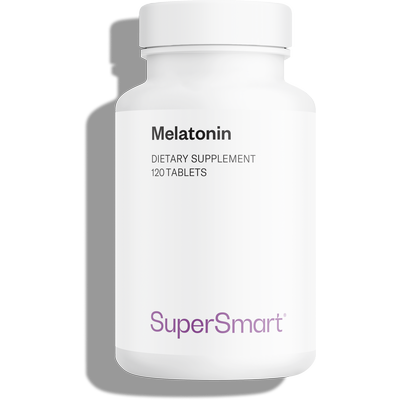
 Melatonin 1 mg provides 1 mg of melatonin per tablet and helps reduce the time taken to fall asleep.
Melatonin and age-related macular degeneration: what does the study say?
An analysis of over 187,000 medical records
To investigate the link between melatonin and AMD, researchers conducted a retrospective study published in JAMA Ophthalmology (8). To do so, they drew on the US TriNetX database, which contains anonymised electronic medical records from hospital and outpatient care facilities in the United States, covering the period from 4 December 2023 to 19 March 2024.
Two distinct populations were studied:
- 121,523 people aged 50 or over with no known AMD at the start of the study;
- 66,253 people who already had dry AMD, with no signs of exudative AMD.
In each of these groups, the researchers compared individuals taking melatonin regularly with control subjects matched on numerous criteria (age, sex, ethnic origin, associated conditions, treatments, etc.) in order to minimise bias as much as possible.
A potentially lower risk of macular degeneration
The results highlight two notable associations:
- among people who did not have AMD at the start of the study, regular melatonin users had a 58 per cent lower relative risk of being diagnosed with AMD compared with the control group;
- among participants already diagnosed with dry AMD, taking melatonin was associated with a 56 per cent lower relative risk of progression to exudative AMD.
Similar results were reported in the sub-populations aged 60 and over, and then 70 and over.
It should be noted, however, that these are statistical associations between two groups. These results therefore do not demonstrate that melatonin reduces the absolute risk of developing AMD or of slowing its progression.
RR = 0.42; 95% CI: 0.28–0.62
RR = 0.44; 95% CI: 0.34–0.56
Results from a retrospective study based on US electronic health records. The figures represent relative risks and do not demonstrate a causal link.
Why is this study important?
The uniqueness of this study lies primarily in the fact that it examines melatonin at two distinct stages in the natural history of AMD: before the onset of the disease, and then following a diagnosis of dry AMD, in order to assess the risk of progression to the exudative form.
It is also notable for the substantial size of the study populations, with nearly 188,000 medical records analysed, as well as for the consistency of the results observed across several age groups. These factors reinforce the credibility of the statistical signal identified.
However, several important limitations must be highlighted. This is a retrospective observational study, not a randomised clinical trial. The doses, duration of use and formulations of melatonin were not standardised, whilst certain confounding factors (such as sleep quality, smoking, diet or lifestyle) may have biased the results despite statistical adjustments.
Melatonin therefore currently appears to be a credible avenue of research into retinal ageing. Further clinical trials are, however, still needed to establish a possible causal link.
Melatonin and the retina: what are the practical implications?
Whilst this large-scale study reports encouraging results, it does not currently provide sufficient grounds to recommend melatonin for the prevention or management of AMD. Nevertheless, it provides a sufficiently robust scientific signal to justify the conduct of clinical trials specifically focused on macular ageing.
To date, the main recognised use of melatonin remains its effect on sleep. It is already recognised that it helps to reduce the time taken to fall asleep and alleviate the subjective symptoms of jet lag (9–10).
Available in Melatonin 1 mg, a fast-acting oral melatonin tablet (taking effect 30 to 60 minutes after taking).
Which supplements can help maintain retinal function?
Melatonin is not the only compound being studied in relation to age-related eye changes. Several nutrients and antioxidants are also attracting the attention of researchers specialising in retinal and macular health.
DHA, a major component of the retina
DHA (docosahexaenoic acid) is an omega-3 fatty acid found in particularly high concentrations in the membranes of the retina’s photoreceptors (11). It helps maintain normal vision. Whilst oily fish (such as salmon, mackerel and sardines) are the main dietary sources, it is still possible to take supplements to effectively increase one’s intake.
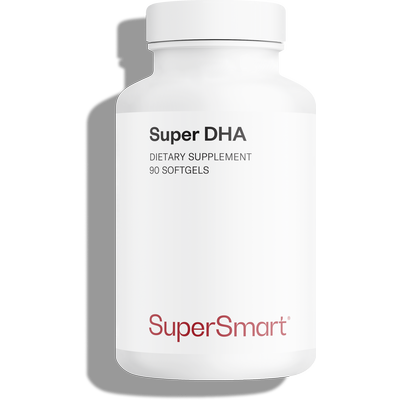
Super DHA provides 310 mg of DHA per softgel.
Lutein and zeaxanthin, the macular pigments
Lutein and zeaxanthin are two carotenoid pigments naturally concentrated in the macula, where they are thought to act as shields against oxidative damage (12). As the body cannot synthesise them, they must be obtained from the diet. They are found, for example, in green leafy vegetables and egg yolks, but also in certain supplements.
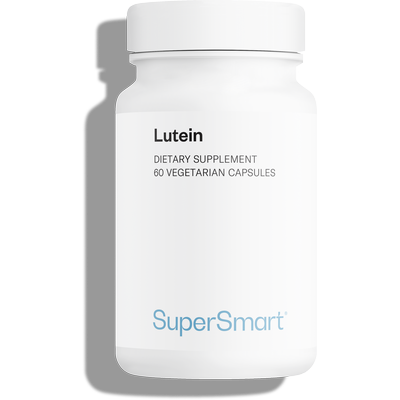
Lutein provides 20 mg of natural lutein extracted from marigold.
Saffron: an emerging area of interest
Saffron (Crocus sativus) is also attracting growing interest in research into eye health. Studies suggest that its carotenoids, including crocin, may support the antioxidant defences of retinal photoreceptors (13).
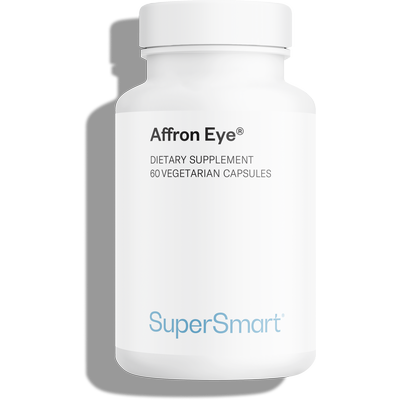
Affron Eye® is a saffron stigma extract standardised to 3 per cent crocin.
Synergistic formulations for eye health
Some formulations take a more holistic approach by combining several ingredients that have been studied for their effects on eye function.
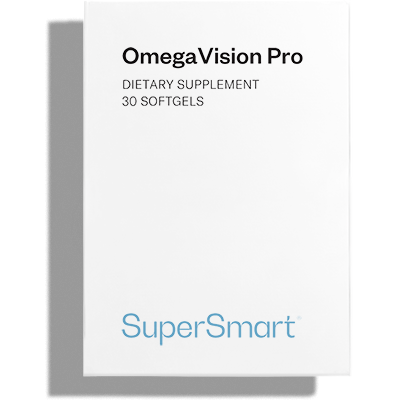
OmegaVision Pro, for example, combines DHA, lutein, zeaxanthin, zinc and vitamins A, B2 and E.
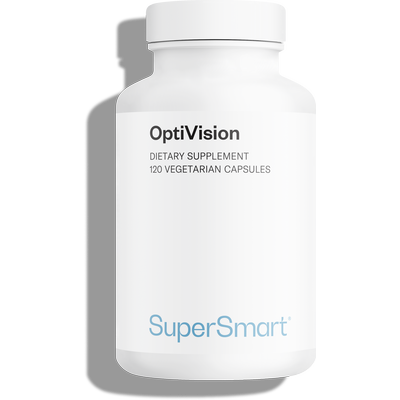
Rich in antioxidant blueberry, which supports visual health, OptiVision® also combines carotenoids, zinc and various endogenous compounds and natural extracts.
Important: dietary supplements are no substitute for screening, medical supervision or prescribed treatments for AMD. A sudden loss of central vision, distortion of straight lines or any sudden change in vision requires prompt consultation with an ophthalmologist.
SUPERSMART ADVICE
References
- Ruia S, Kaufman EJ. Macular Degeneration. [Updated 2023 Jul 31]. In: StatPearls [Internet]. Treasure Island (FL): StatPearls Publishing; 2026 Jan-. Available from: https://www.ncbi.nlm.nih.gov/books/NBK560778/
- Hobbs SD, Tripathy K, Pierce K. Wet Age-Related Macular Degeneration (AMD) [Updated 2024 Aug 11]. In: StatPearls [Internet]. Treasure Island (FL): StatPearls Publishing; 2026 Jan-. Available from: https://www.ncbi.nlm.nih.gov/books/NBK572147/
- Savage RA, Zafar N, Yohannan S, et al. Melatonin. [Updated 2024 Feb 9]. In: StatPearls [Internet]. Treasure Island (FL): StatPearls Publishing; 2026 Jan-. Available from: https://www.ncbi.nlm.nih.gov/books/NBK534823/
- Blasiak J, Reiter RJ, Kaarniranta K. Melatonin in Retinal Physiology and Pathology: The Case of Age-Related Macular Degeneration. Oxid Med Cell Longev. 2016;2016:6819736. doi: 10.1155/2016/6819736. Epub 2016 Sep 5. PMID: 27688828; PMCID: PMC5027321.
- Sun J, Liu Y, Chen Z. Melatonin and retinal cell damage: molecular and biological functions. Naunyn Schmiedebergs Arch Pharmacol. 2025 Apr;398(4):3199-3212. doi: 10.1007/s00210-024-03575-w. Epub 2024 Nov 9. PMID: 39520554.
- Wu P, Zhao L, Du Y, Lu J, He Y, Shu Q, Peng H, Wang X. Melatonin protects retinal pigment epithelium cells against ferroptosis in AMD via the PI3K/AKT/MDM2/P53 pathway. Front Pharmacol. 2025 Feb 27;16:1543575. doi: 10.3389/fphar.2025.1543575. PMID: 40083383; PMCID: PMC11903707.
- Ozdemir G, Ergün Y, Bakariş S, Kılınç M, Durdu H, Ganiyusufoğlu E. Melatonin prevents retinal oxidative stress and vascular changes in diabetic rats. Eye (Lond). 2014 Aug;28(8):1020-7. doi: 10.1038/eye.2014.127. Epub 2014 Jun 13. PMID: 24924441; PMCID: PMC4135253.
- Jeong H, Shaia JK, Markle JC, Talcott KE, Singh RP. Melatonin and Risk of Age-Related Macular Degeneration. JAMA Ophthalmol.2024;142(7):648–654. doi:10.1001/jamaophthalmol.2024.1822
- Melatonin is effective for some sleep disorders. 2005 Jun 25;330(7506):0. PMCID: PMC558438.
- Herxheimer A, Petrie KJ. Melatonin for preventing and treating jet lag. Cochrane Database Syst Rev. 2001;2002(1):CD001520. doi: 10.1002/14651858.CD001520. Update in: Cochrane Database Syst Rev. 2002;(2):CD001520. doi: 10.1002/14651858.CD001520. PMID: 11279722; PMCID: PMC8958662.
- Shindou H, Koso H, Sasaki J, Nakanishi H, Sagara H, Nakagawa KM, Takahashi Y, Hishikawa D, Iizuka-Hishikawa Y, Tokumasu F, Noguchi H, Watanabe S, Sasaki T, Shimizu T. Docosahexaenoic acid preserves visual function by maintaining correct disc morphology in retinal photoreceptor cells. J Biol Chem. 2017 Jul 21;292(29):12054-12064. doi: 10.1074/jbc.M117.790568. Epub 2017 Jun 3. PMID: 28578316; PMCID: PMC5519357.
- Roberts JE, Dennison J. The Photobiology of Lutein and Zeaxanthin in the Eye. J Ophthalmol. 2015;2015:687173. doi: 10.1155/2015/687173. Epub 2015 Dec 20. PMID: 26798505; PMCID: PMC4698938.
- Lashay A, Sadough G, Ashrafi E, Lashay M, Movassat M, Akhondzadeh S. Short-term Outcomes of Saffron Supplementation in Patients with Age-related Macular Degeneration: A Double-blind, Placebo-controlled, Randomized Trial. Med Hypothesis Discov Innov Ophthalmol. 2016 Spring;5(1):32-38. PMID: 28289690; PMCID: PMC5342880.
Keywords



3 Days
Prodotti eccezionali
Prodotti eccezionali! Consegna rapida e precisa
paola
14 Days
Heldere info
Heldere info
HanS.
14 Days
Snelle levering
Snelle levering
harrie
19 Days
Adequate info en hoge kwaliteit
Adequate info en hoge kwaliteit
HanS.
29 Days
Supplementen zijn goed.
Supplementen zijn goed. Zachte prijzen. Website met problemen ( altijd ) niet goed voor nieuwe klanten.
Gino RJ
39 Days
Alles op tijd geleverd.
Alles op tijd geleverd. De producten worden alsmaar duurder, terwijl mijn pensioen niet meer stijgt. Vandaar kan ik alsmaar minder vaak bestellen.
Wouters
1109 Days
Great service
Great service
Ryszard
1121 Days
Profesjonalna obsługa
Bardzo dobre i rzeczowe opisy. Profesjonalna obsługa.
PIEKOSZEWSKI Chris
1790 Days
Wszystko OK!
Wszystko poszło jak powinno 🙂
SITKIEWICZ Pawel
2576 Days
Szybko sprawnie bez problemów
Szybko sprawnie bez problemów
Marek
of experience
your money back
##montant## purchase