
Collagen: What benefits does it have for the body?
Collagen is a key protein in the human body whose decline with age is arousing growing interest in the scientific community. But what exactly are its benefits for the body?


What is collagen?
Collagen is the most abundant protein in the human body, accounting for 25–30% of the body's total protein content (1). Often compared to a ‘framework’ or ‘armature’, collagen plays a structural role, providing support, cohesion, resistance and elasticity to tissues. It is concentrated in the skin, bones, cartilage, tendons, ligaments and blood vessels, where it occurs in several types – mainly types I to V. Produced by specialised cells (mainly fibroblasts in connective tissue), its synthesis decreases naturally with age, by around 1% a year from the age of 25–30 (2).
The collagen we produce is so ubiquitous in our tissues that it has multiple physiological impacts. As the framework of the dermis, it helps, in tandem with elastin, to maintain the skin's tone and firmness (3). In the joints, it is thought to contribute to the biomechanical properties of the cartilage used during movement, optimising resistance to compression, shock absorption and the sliding of joint surfaces (4). It also helps to maintain the strength and flexibility of tendons and ligaments, possibly assisting regeneration in the event of trauma or inflammation (by providing a sort of 'scaffolding' for repair cells) (5).
What are the potential benefits of taking collagen supplements?
As we have seen, the reduction in endogenous collagen production is an inevitable process that affects all individuals. That's without taking into account the specific situations that require increased intakes: intensive sporting activities, joint fragility, recovery from injury, repeated exposure to the sun, which precipitates skin ageing (6), etc. However, our modern diet is increasingly turning its back on major sources of collagen, such as bone broth or fish skin. In this context, the use of collagen supplements seems increasingly justified.
Skin and skin ageing
Numerous studies have explored the effects of collagen supplements on the visible signs of ageing. One systematic review indicates that subjects supplemented with hydrolysed collagen have suppler, more hydrated skin, with the benefits being all the more pronounced in the case of prolonged use (7). A second review points to a reduction in wrinkles and skin roughness (8).
Joints and mobility
With age, or as a result of repeated mechanical stress, joint cartilage undergoes progressive deterioration: the activity of chondrocytes, which harmoniously orchestrate its renewal and breakdown, diminishes. In particular, they produce fewer collagen fibres, resulting in a thinning of the cartilage tissue that can lead to stiffness and discomfort. In light of these details, taking collagen supplements seems at the very least to be a promising strategy for compensating for this deficit. In fact, several studies have reported improvements in pain and discomfort, as well as mobility, in osteoarthritic participants supplemented with type II native collagen (9).
Bone and bone density
Making up around 30% of bone mass, collagen forms the organic framework of the bone to which minerals are attached. Although still few and limited, some studies suggest that an intake of collagen peptides may be associated with favourable changes in bone remodelling biomarkers and with the stabilisation of bone mineral density in certain populations, particularly postmenopausal women (10).
Muscle mass and recovery
Collagen is also involved in the structure of intramuscular connective tissue. Reviews of the literature show that taking collagen peptides, combined with regular physical activity, could improve certain measures of performance or recovery (11). However, they do not appear to have a direct impact on muscle protein synthesis, which is why it is important to combine them with dietary proteins, which act in synergy.
Digestive comfort
Researchers are also investigating the link between collagen and digestive function. Cellular models, for example, suggest that marine collagen peptides, which supply structural amino acids to the mucosa (glycine, proline, glutamine), have a favourable impact on the intestinal epithelial barrier (12). They may, in particular, modulate the expression of tight junction proteins, which are responsible for maintaining intestinal permeability. It should be noted that human studies have also reported encouraging results on bloating and abdominal pain, supporting the theory of a potential prebiotic action that is still widely debated (13).
Which collagen food supplements should you choose?
It's worth pointing out that collagen supplementation is always part of an overall health approach. It is no substitute for a balanced diet, restful sleep and regular exercise. It can, however, offer targeted support according to your needs, provided that you choose carefully.
Type I collagen is the most widespread in the body (14). It is found mainly in the skin, joints, bones and muscles. It can be offered as a supplement in native form (where it retains its original structure) or hydrolysed (where it is broken down into low-molecular-weight peptides). The latter form, which is more soluble and bioavailable, remains the preferred choice (15).
 Marine Collagen combines type I marine collagen peptides from sustainable fishing, hydrolysed using a gentle enzymatic process, with vitamin C (which contributes to the normal formation of collagen for the proper functioning of the skin, cartilage and bones).
Lifted skin, shiny nails, radiant hair: the all-in-one Daily Beauty formula combines Verisol® collagen peptides with the best beauty-enhancing agents (solubilised keratin, biotin, zinc, vitamin B3, avocado oil, etc.).
Type II collagen is found mainly in joint cartilage. Unlike type I collagen, it is best used in its native (non-denatured) form for supplementation – the only form deemed capable of potentially interacting with the immune system, according to the scientific literature (16).
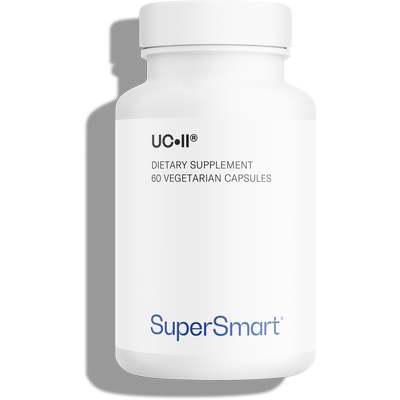
Discover UC-II®, a patented form of undenatured type II collagen, supported by 4 clinical studies.
The Arthro Fast Relief synergy combines in a single formula patented type II native collagen with the most extensively researched compounds on joint comfort (PEA, MSM, vitamin C, fermented ginger, etc.) to provide both rapid relief and long-term cartilage regeneration.
Finally, some formulations combine several types of collagen in balanced proportions.
This is the case with Tendo-Fix, dedicated entirely to tendon structures, which combines types I, II, V and X collagens.
SUPERSMART ADVICE
References
- Wu M, Cronin K, Crane JS. Biochemistry, Collagen Synthesis. [Updated 2023 Sep 4]. In: StatPearls [Internet]. Treasure Island (FL): StatPearls Publishing; 2025 Jan-. Available from: https://www.ncbi.nlm.nih.gov/books/NBK507709/
- Chaudhary M, Khan A, Gupta M. Skin Ageing: Pathophysiology and Current Market Treatment Approaches. Curr Aging Sci. 2020;13(1):22-30. doi: 10.2174/1567205016666190809161115. PMID: 31530270; PMCID: PMC7403684.
- Wang S, Li F, Feng X, Feng M, Niu X, Jiang X, Chen W, Bai R. Promoting collagen synthesis: a viable strategy to combat skin ageing. J Enzyme Inhib Med Chem. 2025 Dec;40(1):2488821. doi: 10.1080/14756366.2025.2488821. Epub 2025 Apr 11. PMID: 40213810; PMCID: PMC11995770.
- Alcaide-Ruggiero L, Molina-Hernández V, Granados MM, Domínguez JM. Main and Minor Types of Collagens in the Articular Cartilage: The Role of Collagens in Repair Tissue Evaluation in Chondral Defects. Int J Mol Sci. 2021 Dec 11;22(24):13329. doi: 10.3390/ijms222413329. PMID: 34948124; PMCID: PMC8706311.
- Docheva D, Müller SA, Majewski M, Evans CH. Biologics for tendon repair. Adv Drug Deliv Rev. 2015 Apr;84:222-39. doi: 10.1016/j.addr.2014.11.015. Epub 2014 Nov 21. PMID: 25446135; PMCID: PMC4519231.
- Campos LD, Santos Junior VA, Pimentel JD, Carregã GLF, Cazarin CBB. Collagen supplementation in skin and orthopedic diseases: A review of the literature. Heliyon. 2023 Mar 28;9(4):e14961. doi: 10.1016/j.heliyon.2023.e14961. PMID: 37064452; PMCID: PMC10102402.
- Danessa G, Notario D, Regina R. Effects of collagen-based supplements on skin's hydration and elasticity: A systematic review and meta-analysis. Indian J Dermatol Venereol Leprol. 2025 Nov-Dec;91(6):730-740. doi: 10.25259/IJDVL_1165_2023. PMID: 40826844.
- Al-Atif H. Collagen Supplements for Aging and Wrinkles: A Paradigm Shift in the Fields of Dermatology and Cosmetics. Dermatol Pract Concept. 2022 Jan 1;12(1):e2022018. doi: 10.5826/dpc.1201a18. PMID: 35223163; PMCID: PMC8824545.
- Martínez-Puig D, Costa-Larrión E, Rubio-Rodríguez N, Gálvez-Martín P. Collagen Supplementation for Joint Health: The Link between Composition and Scientific Knowledge. Nutrients. 2023 Mar 8;15(6):1332. doi: 10.3390/nu15061332. PMID: 36986062; PMCID: PMC10058045.
- König D, Oesser S, Scharla S, Zdzieblik D, Gollhofer A. Specific Collagen Peptides Improve Bone Mineral Density and Bone Markers in Postmenopausal Women-A Randomized Controlled Study. Nutrients. 2018 Jan 16;10(1):97. doi: 10.3390/nu10010097. PMID: 29337906; PMCID: PMC5793325.
- Khatri M, Naughton RJ, Clifford T, Harper LD, Corr L. The effects of collagen peptide supplementation on body composition, collagen synthesis, and recovery from joint injury and exercise: a systematic review. Amino Acids. 2021 Oct;53(10):1493-1506. doi: 10.1007/s00726-021-03072-x. Epub 2021 Sep 7. PMID: 34491424; PMCID: PMC8521576.
- Chen Q, Chen O, Martins IM, Hou H, Zhao X, Blumberg JB, Li B. Collagen peptides ameliorate intestinal epithelial barrier dysfunction in immunostimulatory Caco-2 cell monolayers via enhancing tight junctions. Food Funct. 2017 Mar 22;8(3):1144-1151. doi: 10.1039/c6fo01347c. PMID: 28174772.
- Abrahams M, O'Grady R, Prawitt J. Effect of a Daily Collagen Peptide Supplement on Digestive Symptoms in Healthy Women: 2-Phase Mixed Methods Study. JMIR Form Res. 2022 May 31;6(5):e36339. doi: 10.2196/36339. PMID: 35639457; PMCID: PMC9198822.
- Naomi R, Ridzuan PM, Bahari H. Current Insights into Collagen Type I. Polymers (Basel). 2021 Aug 9;13(16):2642. doi: 10.3390/polym13162642. PMID: 34451183; PMCID: PMC8399689.
- Wang H. A Review of the Effects of Collagen Treatment in Clinical Studies. Polymers (Basel). 2021 Nov 9;13(22):3868. doi: 10.3390/polym13223868. PMID: 34833168; PMCID: PMC8620403.
- Gencoglu H, Orhan C, Sahin E, Sahin K. Undenatured Type II Collagen (UC-II) in Joint Health and Disease: A Review on the Current Knowledge of Companion Animals. Animals (Basel). 2020 Apr 17;10(4):697. doi: 10.3390/ani10040697. PMID: 32316397; PMCID: PMC7222752.




16 Days
Prodotti eccezionali
Prodotti eccezionali! Consegna rapida e precisa
paola
27 Days
Heldere info
Heldere info
HanS.
27 Days
Snelle levering
Snelle levering
harrie
33 Days
Adequate info en hoge kwaliteit
Adequate info en hoge kwaliteit
HanS.
42 Days
Supplementen zijn goed.
Supplementen zijn goed. Zachte prijzen. Website met problemen ( altijd ) niet goed voor nieuwe klanten.
Gino RJ
52 Days
Alles op tijd geleverd.
Alles op tijd geleverd. De producten worden alsmaar duurder, terwijl mijn pensioen niet meer stijgt. Vandaar kan ik alsmaar minder vaak bestellen.
Wouters
1122 Days
Great service
Great service
Ryszard
1134 Days
Profesjonalna obsługa
Bardzo dobre i rzeczowe opisy. Profesjonalna obsługa.
PIEKOSZEWSKI Chris
1803 Days
Wszystko OK!
Wszystko poszło jak powinno 🙂
SITKIEWICZ Pawel
2590 Days
Szybko sprawnie bez problemów
Szybko sprawnie bez problemów
Marek
of experience
your money back
##montant## purchase