
Top 10 best foods for healthy hair
Did you know that your diet can directly influence the beauty of your hair, from scalp to ends? Discover the 10 star foods for radiant hair... with a superfood of unsuspected benefits at the top of the list!

How does food play an essential role in the health of your hair?
As a source of varied nutrients, food provides the resources needed to support the hair life cycle, from the growth phase (anagen) to the resting phase (telogen).
The foods we eat provide fundamental elements such as proteins, vitamins and minerals, which are essential for forming and maintaining the hair fibre.
A dietary imbalance or deficiency can therefore have a direct impact on the health of your hair, leading to problems such as hair loss, increased fragility of the fibre and lack of shine (1).
Top 10 foods to strengthen your hair
Now that we've covered the basics about the role of nutrition in hair health, let's take a look at the top 10 foods for strong, dense, healthy hair.
10. Flaxseeds: sources of omega-3 for a healthy scalp
Flaxseeds are an excellent source of alpha-linolenic acid (ALA), an essential fatty acid in the omega-3 family.
Omega-3s are structural lipids in cell membranes (2).
Their presence in the diet could therefore potentially contribute to maintaining the integrity of the scalp's cutaneous barrier and modulate inflammatory processes, thereby promoting a healthy environment for the hair follicle.
 If you want to increase your omega-3 intake, Super Omega 3 is the ideal supplement.
9. Red peppers: a source of vitamin C
Red peppers are distinguished by their exceptional vitamin C content, which contributes to the normal formation of collagen to ensure the normal function of the skin, and therefore the scalp.
It also helps protect cells against oxidative stress, preserving the vitality of the hair follicle.
For maximum assimilation of this essential vitamin, opt for the Liposomal Vitamin C food supplement.
8. Pumpkin seeds: zinc to limit hair loss
Pumpkin seeds are a highly concentrated source of zinc, which helps maintain normal hair.
It is biologically involved in protein synthesis (including keratin, the main constituent of hair) and in cell division (3): two processes essential for the growth and rapid renewal of hair follicle cells.
7. Lentils: a combination of iron, protein and zinc
Lentils are a good source of iron, vegetable protein and zinc.
Iron is essential because it contributes to the normal transport of oxygen in the body (4), and therefore to oxygenation of the dermal papilla (the hair production zone), which is necessary for healthy hair growth.
To optimise your iron levels in the event of a proven deficiency, consider the dietary supplement Iron Bisglycinate, formulated for excellent absorption.
6. Sweet potatoes: the potential sebum-boosting benefits of beta-carotene
Sweet potatoes are rich in beta-carotene, a precursor of vitamin A, a nutrient that helps maintain normal skin by playing a role in regulating the activity of the sebaceous glands (5).
Balanced sebum production keeps the scalp moisturised and hair naturally shiny.
The Carottol supplement allows you to ensure a targeted supply of beta-carotene, a precursor of vitamin A, which is useful for the health of the scalp.
5. Spinach: a food containing iron and vitamins
Spinach simultaneously provides iron, vitamin A and vitamin C. This trio could contribute to optimal nutrition and oxygenation of the hair root.
4. Walnuts: vitamin E and fatty acids for shine
Walnuts are particularly concentrated in essential fatty acids and vitamin E.
Essential fatty acids are part of the lipids that coat the hair (6), which could potentially enhance shine and suppleness.
At the same time, vitamin E helps to protect these same lipids from oxidative stress, enhancing their action.
3. Oysters: a highly bioavailable source of zinc
Oysters are one of the best dietary sources of zinc, with excellent assimilation.
Zinc helps maintain normal hair and is essential for protein synthesis, which is necessary for hair growth and the hair life cycle.
Zinc Orotate is an effective solution for supplementing your intake of zinc, a mineral essential for maintaining normal hair.
2. Eggs: proteins and biotin for hair growth
Eggs are a complete food for healthy hair. In particular, they provide high-quality proteins.
These are sources of amino acids that are part of the structural components of keratin (7): the protein that makes up 90% of the hair fibre.
Eggs also contain biotin (vitamin B8), which helps to maintain normal skin and hair, and is therefore beneficial to both the hair fibre and the scalp.
For optimum support of keratin and hair, the Biotin supplement contains a high dose of vitamin B8.
1. Brewer's yeast: the ultimate hair super food
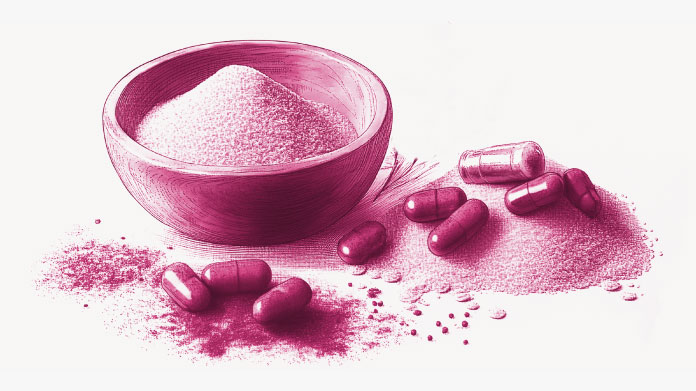
Brewer's yeast is traditionally used in various preparations for hair and nails.
It is exceptionally high in B vitamins, especially biotin, and proteins.
Brewer's yeast is often recommended by naturopaths to stimulate growth and strengthen fragile hair.
Discover Brewer's Yeast Hair Boost, a brewer's yeast-based food supplement enriched with vitamins B8, B6 and zinc.
What other supplements should I consider for beautiful hair?
As a complement to an optimal diet, targeted supplements can provide ingredients not commonly found on your plate.
Solubilised (hydrolysed) keratin, for example, complements the body's own synthesis.
This protein is, in fact, naturally produced by our body to build and strengthen the structure of the hair fibre from the inside.
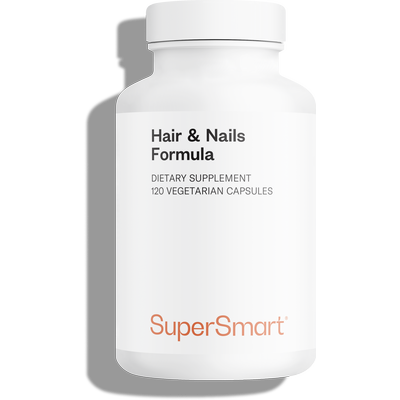
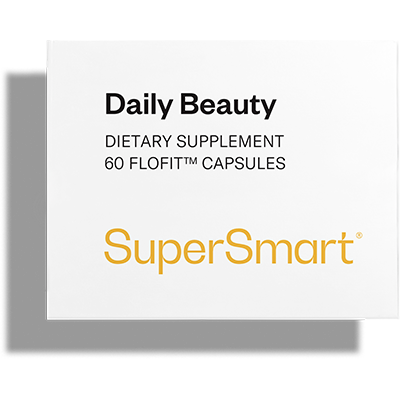
To supplement your keratin production, you can use a supplement such as Hair & Nails Formula or Daily Beauty.
For its part, the collagen synthesised by our cells helps support the density and firmness of the scalp's skin, thereby helping anchor the hair in place.
In the event of insufficient production, a supply of hydrolysed collagen can help to supplement the human body's natural production.
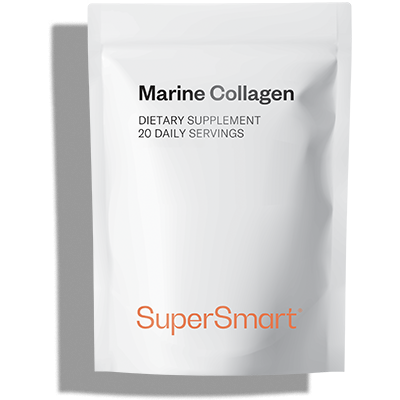
To increase the amount of collagen in your body, try a food supplement like Marine Collagen.
Finally, MSM (Methylsulfonylmethane), often used in hair supplements, is a source of sulphur, a key component of keratin.
Ideally, opt for an extremely pure MSM supplement, rich in organic sulphur, such as OptiMSM®.
SUPERSMART ADVICE
References
- Guo, E. L., & Katta, R. (2017). Diet and hair loss: effects of nutrient deficiency and supplement use. Dermatology Practical & Conceptual, 7(1), 1–10. https://pmc.ncbi.nlm.nih.gov/articles/PMC5315033/
- Stillwell, W., & Wassall, S. R. (2003). Omega-3 fatty acids in cellular membranes: a unified concept. Lipids, 38(8), 807–817. https://pubmed.ncbi.nlm.nih.gov/15458813/
- Rouse, M. S., Maibach, H., & Maibach, M. (2024). Role of zinc in health and disease. Molecular and Cellular Biochemistry, 478, 1–11. https://pmc.ncbi.nlm.nih.gov/articles/PMC10874324/
- Dev, S. (2017). The interplay between iron and oxygen homeostasis with a particular focus on the heart. Frontiers in Pharmacology, 8, 786. https://pmc.ncbi.nlm.nih.gov/articles/PMC5668453/
- Noy, N. (2012). Endogenous retinoids in the hair follicle and sebaceous gland. Dermato-endocrinology, 4(1), 74–79. https://pmc.ncbi.nlm.nih.gov/articles/PMC3237781/
- Lovászi, M., Szegedi, A., & Zsíros, L. (2020). The role of polyunsaturated fatty acids in the hair follicle and sebaceous gland. International Journal of Molecular Sciences, 21(10), 3624. https://pmc.ncbi.nlm.nih.gov/articles/PMC7279328/
- Runds, M., & Trüeb, R. M. (2021). “Let Food be Thy Medicine”: Value of Nutritional Treatment for Hair Loss. Journal of Clinical Medicine, 10(23), 5693. https://pmc.ncbi.nlm.nih.gov/articles/PMC8647708/



7 Days
Adequate info en hoge kwaliteit
Adequate info en hoge kwaliteit
HanS.
17 Days
Supplementen zijn goed.
Supplementen zijn goed. Zachte prijzen. Website met problemen ( altijd ) niet goed voor nieuwe klanten.
Gino RJ
27 Days
Alles op tijd geleverd.
Alles op tijd geleverd. De producten worden alsmaar duurder, terwijl mijn pensioen niet meer stijgt. Vandaar kan ik alsmaar minder vaak bestellen.
Wouters
1097 Days
Great service
Great service
Ryszard
1109 Days
Profesjonalna obsługa
Bardzo dobre i rzeczowe opisy. Profesjonalna obsługa.
PIEKOSZEWSKI Chris
1777 Days
Wszystko OK!
Wszystko poszło jak powinno 🙂
SITKIEWICZ Pawel
2564 Days
Szybko sprawnie bez problemów
Szybko sprawnie bez problemów
Marek
of experience
your money back
##montant## purchase