
Oral Microbiome: How to Care for It to Protect Your Teeth and Gums
The mouth is home to a complex ecosystem composed of hundreds of species of microorganisms. This oral microbiome helps maintain the balance of the oral cavity and supports the health of your teeth and gums. So how can you care for it on a daily basis?

How to care for your oral microbiome
The oral microbiome refers to all the microorganisms naturally present in the mouth. It is found throughout the oral cavity: on the teeth, gums, tongue, mucous membranes, and in saliva.
The hundreds of species of oral bacteria that make up this microbiota form a true ecosystem in which each plays a specific role (breaking down food debris, limiting unwanted bacteria, etc.).
The proper functioning of this oral ecosystem is closely linked to the balance among these different bacterial populations. And its composition can vary!
In fact, when one species gains the upper hand over the others, the oral environment can become unbalanced and promote the growth of unwanted bacteria.
Dental plaque itself is a collection of bacteria known as a natural biofilm, whose composition is constantly changing.
There are several ways to maintain a balanced oral microbiome and take care of your oral health in general:
- maintaining good oral and dental hygiene;
- monitoring certain dietary factors and lifestyle habits;
- promoting healthy saliva production;
- support the oral microbiome with appropriate probiotics;
- provide certain nutrients and compounds studied for their effects on the oral microbiota.
How can you maintain the balance of the oral microbiome?
Good oral hygiene to preserve the oral ecosystem
Proper oral hygiene helps maintain the balance of the oral microbiome and the oral environment, particularly through:
- regular tooth brushing;
- cleaning between teeth;
- cleaning the tongue;
- regular checkups at the dentist.
However, the goal is not to eliminate all bacteria, since their presence is essential for oral health.
Rather, the goal is to promote a healthy balance within the oral microbiome between “good” bacteria and pathogenic bacteria.
Diet and lifestyle influence the oral microbiome
Diet is one of the main factors influencing the composition of the oral microbiome.
Several factors have been identified as potentially disrupting this balance (1).
Frequent snacking can increase exposure to sugars throughout the day. However, these sugars serve as a substrate for certain bacteria, which can promote their proliferation at the expense of others (2).
Tobacco use is also associated with changes in the composition of the oral microbiome, with a decrease in certain bacterial groups among smokers, according to a study of more than 1,200 adults (3).
Another study examined alcohol, which is also associated with changes in oral bacterial diversity (4).
Finally, insufficient hydration can reduce saliva production and thus lead to dry mouth. And, as we will see, saliva plays a major role in oral balance.
Each of these factors alters the composition of the oral microbiome in its own way.
As a result, it is constantly evolving in response to the environment to which it is exposed.
Saliva: An Often-Overlooked Ally of the Oral Microbiome
Saliva plays a major role in maintaining oral balance because it contributes to the mouth’s natural cleansing process (5):
- by facilitating the removal of food debris and certain microorganisms;
- by helping to maintain a balanced oral flora;
- by helping to maintain daily oral comfort.
You can promote saliva production through simple habits such as staying well-hydrated throughout the day and rinsing your mouth when it feels dry.
Chewing gum is said to have a similar effect. A recent study confirmed that chewing gum increases saliva flow, even in people with dry mouth (6).
Note: The longer you chew, the greater the improvement in saliva flow.
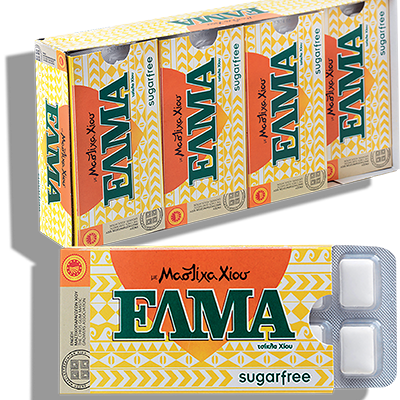
 Discover Mastic Gum Elma, sugar-free chewing gum that can support daily oral hygiene while helping to freshen breath.
Can probiotics support the oral microbiome?
Research is currently being conducted on certain probiotic strains to investigate their interactions with the oral microbiome.
The goal here is not to prevent or treat a disease with probiotics, but to explore approaches that may help maintain the balance of the oral microbiome.
Probiotics are live microorganisms studied for their ability to interact with the bacterial communities naturally present in the body.
Several probiotic strains have thus been studied for their potential interactions with oral bacteria.
Species of Lactobacillus and Bifidobacterium are believed to produce compounds capable of limiting the proliferation of certain bacteria, such as Streptococcus mutans, which is involved in the formation of dental plaque (7).
Lactobacillus rhamnosus has been studied for its interaction with bacteria involved in dental plaque and has shown promising potential (8).
Lactobacillus salivarius is naturally present in human saliva. It has been studied for its ability to produce compounds that limit biofilm formation by Streptococcus mutans (9).
Several studies have examined Lactobacillus reuteri, exploring its interaction with various bacteria associated with dental caries and periodontal disease (10).
Bifidobacterium longum, for its part, has been studied for its ability to interact with certain bacteria involved in periodontal diseases (7).
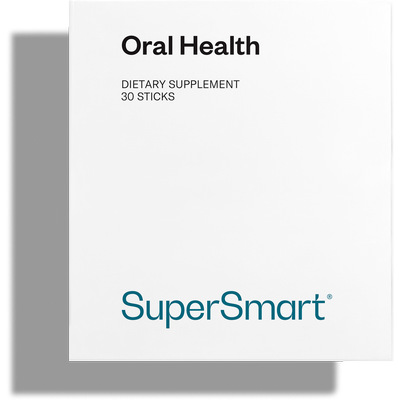
It is in this context that certain dietary supplements containing these probiotic strains help increase their intake.
Discover Oral Health, a dietary supplement combining several probiotic strains studied in the context of the oral microbiome.
Probiotics thus represent a promising avenue of research as part of a comprehensive approach to oral health.
Other Nutrients Studied for the Oral Environment
Other nutrients and compounds are also being studied for their interaction with the oral microbiome, the gums, or certain components of the oral cavity.
This is the case with vitamin C. A systematic review found that a lower intake of vitamin C was associated with a higher risk of periodontal disease (11).
In some trials, oral vitamin C supplementation reduced gum bleeding in people with gingivitis.
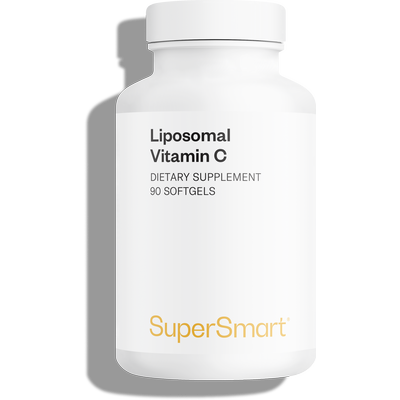
Discover Liposomal Vitamin C, a liposomal form of vitamin C designed for optimal bioavailability and prolonged absorption in the body.
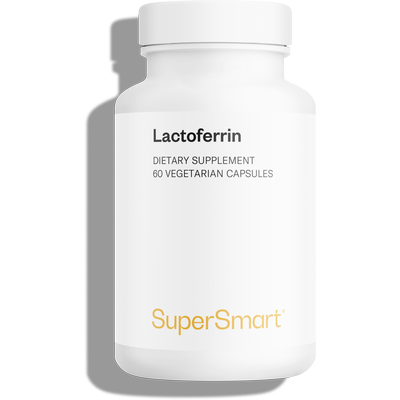
Researchers are also interested in lactoferrin, a protein naturally present in saliva and other bodily fluids. This protein is particularly known for its ability to bind to iron, which may limit the availability of this nutrient to certain harmful bacteria (12). It may thus inhibit the growth and biofilm formation of two periodontal pathogens (13).
Discover Lactoferrin, a dietary supplement containing lactoferrin extracted from whey protein and formulated with 100% natural excipients.
Polyphenols, and in particular green tea catechins such as EGCG (epigallocatechin gallate), are also being studied for their potential interactions with the oral microbiome.
These polyphenols may limit certain bacteria associated with oral diseases while preserving certain bacteria that are more beneficial to oral balance (14).
Another study also found that EGCG limited biofilm formation by Streptococcus mutans, a bacterium associated with dental plaque (15).
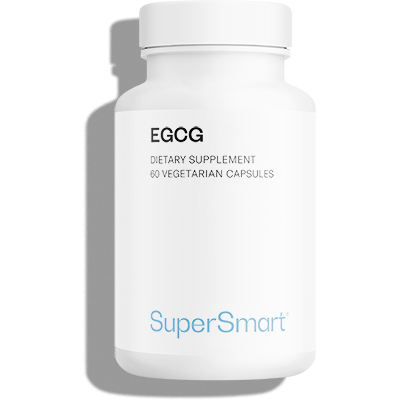
Discover EGCG, a supplement containing epigallocatechin gallate, the most potent of the antioxidant catechins found in green tea.
Xylitol, a natural sweetener extracted primarily from birch or corn, is also of interest to researchers for its potential benefits to oral health.
One study in particular showed that it limits the formation of biofilm by Streptococcus mutans by disrupting bacterial adhesion to tooth surfaces (16).
Discover Mastic Gum Elma, sugar-free chewing gum with xylitol, to support oral hygiene while freshening breath.
What signs may be associated with an imbalance in the oral microbiome?
An imbalance in the oral microbiome can sometimes result in some noticeable changes in the oral environment.
For example:
- changes in breath odor;
- a feeling of discomfort in the mouth;
- gum sensitivity;
- a dry mouth;
- or other changes felt in the mouth.
However, these signs are very general. They can have many causes and, on their own, are not sufficient to assess the state of the oral microbiome.
A healthcare professional should always be consulted if symptoms persist or are cause for concern.
In conclusion, it’s important to remember that oral hygiene, diet, saliva, and the microbiome all work together to protect your teeth and gums.
SUPERSMART ADVICE
References
- Akimbekov NS, Digel I, Yerezhepov AY, Shardarbek RS, Wu X, Zha J. Nutritional factors influencing microbiota-mediated colonization resistance of the oral cavity: A literature review. Front Nutr. 2022 Oct 20;9:1029324. doi: 10.3389/fnut.2022.1029324. PMID: 36337619; PMCID: PMC9630914.
- Bowen WH, Burne RA, Wu H, Koo H. Oral Biofilms: Pathogens, Matrix, and Polymicrobial Interactions in Microenvironments. Trends Microbiol. 2018 Mar;26(3):229-242. doi: 10.1016/j.tim.2017.09.008. Epub 2017 Oct 30. PMID: 29097091; PMCID: PMC5834367.
- Wu J, Peters BA, Dominianni C, Zhang Y, Pei Z, Yang L, Ma Y, Purdue MP, Jacobs EJ, Gapstur SM, Li H, Alekseyenko AV, Hayes RB, Ahn J. Cigarette smoking and the oral microbiome in a large study of American adults. ISME J. 2016 Oct;10(10):2435-46. doi: 10.1038/ismej.2016.37. Epub 2016 Mar 25. PMID: 27015003; PMCID: PMC5030690.
- Fan X, Peters BA, Jacobs EJ, Gapstur SM, Purdue MP, Freedman ND, Alekseyenko AV, Wu J, Yang L, Pei Z, Hayes RB, Ahn J. Drinking alcohol is associated with variation in the human oral microbiome in a large study of American adults. Microbiome. 2018 Apr 24;6(1):59. doi: 10.1186/s40168-018-0448-x. PMCID: PMC5914044.
- Lynge Pedersen AM, Belstrøm D. The role of natural salivary defences in maintaining a healthy oral microbiota. J Dent. 2019 Jan;80 Suppl 1:S3-S12. doi: 10.1016/j.jdent.2018.08.010. PMID: 30696553.
- Dodds MWJ, Haddou MB, Day JEL. The effect of gum chewing on xerostomia and salivary flow rate in elderly and medically compromised subjects: a systematic review and meta-analysis. BMC Oral Health. 2023 Jun 20;23(1):406. doi: 10.1186/s12903-023-03084-x. PMID: 37340436; PMCID: PMC10280939.
- Mahdizade Ari M, Mirkalantari S, Darban-Sarokhalil D, Darbandi A, Razavi S, Talebi M. Investigating the antimicrobial and anti-inflammatory effects of Lactobacillus and Bifidobacterium spp. on cariogenic and periodontitis pathogens. Front Microbiol. 2024 May 30;15:1383959. doi: 10.3389/fmicb.2024.1383959. PMID: 38881669; PMCID: PMC11177620.
- Chen Y, Hao Y, Chen J, Han Q, Wang Z, Peng X, Cheng L. Lacticaseibacillus rhamnosus inhibits the development of dental caries in rat caries model and in vitro. J Dent. 2024 Oct;149:105278. doi: 10.1016/j.jdent.2024.105278. Epub 2024 Aug 6. PMID: 39111536.
- Ma N, Yang W, Chen B, Bao M, Li Y, Wang M, Yang X, Liu J, Wang C, Qiu L. Exploration of the primary antibiofilm substance and mechanism employed by Lactobacillus salivarius ATCC 11741 to inhibit biofilm of Streptococcus mutans. Front Cell Infect Microbiol. 2025 Mar 11;15:1535539. doi: 10.3389/fcimb.2025.1535539. PMID: 40134782; PMCID: PMC11933110.
- Ananda N, Suniarti DF, Bachtiar EW. The antimicrobial effect of Limosilactobacillus reuteri as probiotic on oral bacteria: A scoping review. F1000Res. 2024 Mar 4;12:1495. doi: 10.12688/f1000research.139697.2. PMID: 38434653; PMCID: PMC10905032.
- Tada A, Miura H. The Relationship between Vitamin C and Periodontal Diseases: A Systematic Review. Int J Environ Res Public Health. 2019 Jul 11;16(14):2472. doi: 10.3390/ijerph16142472. PMID: 31336735; PMCID: PMC6678404.
- Moreno-Expósito L, Illescas-Montes R, Melguizo-Rodríguez L, Ruiz C, Ramos-Torrecillas J, de Luna-Bertos E. Multifunctional capacity and therapeutic potential of lactoferrin. Life Sci. 2018 Feb 15;195:61-64. doi: 10.1016/j.lfs.2018.01.002. Epub 2018 Jan 4. PMID: 29307524.
- Wakabayashi H, Yamauchi K, Kobayashi T, Yaeshima T, Iwatsuki K, Yoshie H. Inhibitory effects of lactoferrin on growth and biofilm formation of Porphyromonas gingivalis and Prevotella intermedia. Antimicrob Agents Chemother. 2009 Aug;53(8):3308-16. doi: 10.1128/AAC.01688-08. Epub 2009 May 18. PMID: 19451301; PMCID: PMC2715627.
- Kong C, Zhang H, Li L, Liu Z. Effects of green tea extract epigallocatechin-3-gallate (EGCG) on oral disease-associated microbes: a review. J Oral Microbiol. 2022 Oct 2;14(1):2131117. doi: 10.1080/20002297.2022.2131117. PMID: 36212989; PMCID: PMC9542882.
- Schneider-Rayman M, Steinberg D, Sionov RV, Friedman M, Shalish M. Effect of epigallocatechin gallate on dental biofilm of Streptococcus mutans: An in vitro study. BMC Oral Health. 2021 Sep 15;21(1):447. doi: 10.1186/s12903-021-01798-4. PMID: 34525984; PMCID: PMC8444437.
- Söderling E, Pienihäkkinen K. Specific effects of xylitol chewing gum on mutans streptococci levels, plaque accumulation and caries occurrence: a systematic review. BMC Oral Health. 2025 Jul 29;25(1):1275. doi: 10.1186/s12903-025-06602-1. PMID: 40731400; PMCID: PMC12305977.


9 Days
Prodotti eccezionali
Prodotti eccezionali! Consegna rapida e precisa
paola
19 Days
Heldere info
Heldere info
HanS.
19 Days
Snelle levering
Snelle levering
harrie
25 Days
Adequate info en hoge kwaliteit
Adequate info en hoge kwaliteit
HanS.
35 Days
Supplementen zijn goed.
Supplementen zijn goed. Zachte prijzen. Website met problemen ( altijd ) niet goed voor nieuwe klanten.
Gino RJ
44 Days
Alles op tijd geleverd.
Alles op tijd geleverd. De producten worden alsmaar duurder, terwijl mijn pensioen niet meer stijgt. Vandaar kan ik alsmaar minder vaak bestellen.
Wouters
1114 Days
Great service
Great service
Ryszard
1127 Days
Profesjonalna obsługa
Bardzo dobre i rzeczowe opisy. Profesjonalna obsługa.
PIEKOSZEWSKI Chris
1795 Days
Wszystko OK!
Wszystko poszło jak powinno 🙂
SITKIEWICZ Pawel
2582 Days
Szybko sprawnie bez problemów
Szybko sprawnie bez problemów
Marek
of experience
your money back
##montant## purchase