
This little-known neural network that allows the gut to act independently
Often described as our ‘second brain’, the gut possesses a remarkably complex neural network. A recent scientific review reveals the extent to which this still little-understood system is capable of coordinating numerous functions.


The enteric nervous system: at the heart of the gut’s surprising autonomy
The gut is equipped with a vast network of neurons known as the enteric nervous system.
Studied by neurogastroenterology, it coordinates numerous digestive functions without being constantly dependent on commands from the brain.
This network is involved in particular in:
- regulating intestinal motility;
- the coordination of digestive secretions;
- communication with the central nervous system;
- certain local responses in the intestine;
- the overall balance of digestive function.
A recent scientific review focusing on advances in neurogastroenterology (1) shows that the enteric nervous system constitutes a particularly sophisticated neural network, capable of integrating a wide range of information and finely coordinating the functioning of the digestive tract.
But how does such a network manage to achieve this remarkable autonomy? Recent research is now helping us to understand this better…
How can the gut function so autonomously?
A veritable neural network within the digestive tract
The enteric nervous system consists of a vast network of neurons distributed throughout the digestive tract, from the oesophagus to the rectum.
It alone contains several hundred million nerve cells, making it one of the body’s largest neural networks.
These enteric neurons do not operate in isolation: they are constantly communicating with one another and form genuine circuits capable of receiving information, processing it and then triggering appropriate responses.
This organisation enables the digestive system to coordinate numerous functions locally without having to systematically involve the brain.
Recent research in neurogastroenterology thus shows that the enteric nervous system constitutes a particularly sophisticated network (2), the mechanisms of which continue to be actively explored.
Regulating intestinal motility and digestive secretions
One of the main roles of the enteric nervous system is to orchestrate the digestive process (3).
In particular, it helps to coordinate the movements of the intestine, which allow food to be mixed and then move through the digestive tract.
This digestive motility constantly adapts to the nature of the intestinal contents and the different stages of digestion.
The enteric nervous system is also involved in controlling certain digestive secretions, which are essential for digestion and the absorption of nutrients.
Remarkably, a large proportion of these adjustments can be carried out locally.
Thanks to its own neural networks, the gut is able to coordinate many digestive processes largely autonomously, whilst remaining in communication with the rest of the body.
Constant communication with the brain
Although it is sometimes referred to as the ‘second brain’, this does not mean that the gut functions entirely independently.
The enteric nervous system continuously exchanges information with the central nervous system viathe gut-brain axis.
This communication takes place via various neural, hormonal and immune pathways, ensuring a constant dialogue between the two systems (4).
The brain can thus influence certain aspects of digestive function, whilst signals from the gut also contribute to this two-way communication.
Researchers now regard the gut-brain axis as a particularly complex system, involving multiple interactions whose mechanisms continue to be actively studied.
A role in the local balance of the gut
Beyond digestive motility and secretions, the enteric nervous system also appears to play a part in maintaining the balance of the intestinal environment.
Research suggests that it may, in particular:
- interact with various cells present in the digestive tract wall;
- contribute to mechanisms involved in maintaining the intestinal barrier function (5);
- be involved in mechanisms related to digestive homeostasis.
Interactions with the gut microbiota, immune cells and enteric glial cells are, in particular, the subject of growing scientific interest (6–8).
However, these mechanisms are still being actively studied and many aspects of how they function remain to be clarified.
A rapidly expanding discipline
Although it receives less media attention than other fields of neuroscience, neurogastroenterology is currently developing at a particularly rapid pace.
Advances in the study of the enteric nervous system are leading to a better understanding not only of the normal functioning of the gut, but also of the mechanisms involved in various gastrointestinal disorders.
This discipline is also helping to deepen our understanding of the interactions between the nervous system, the microbiota, the digestive environment and barrier function.
As our knowledge advances, researchers are gradually uncovering the remarkable complexity of the constant dialogue that exists between the gut and the rest of the body…
Can we naturally support the environment of the intestinal ‘second brain’?
What we can — and cannot — do
The enteric nervous system is an extremely complex neural network. To date, there is no proven nutritional approach that can directly influence its functioning.
However, several natural compounds are currently being researched for their interactions with certain elements of its environment, notably the gut microbiota, the intestinal barrier function, the mechanisms involved in digestive homeostasis, and the gut-brain axis.
These form part of a holistic approach, based on a varied diet, an adequate intake of fibre and, more broadly, a balanced lifestyle.
Butyrate, a key metabolite of the gut ecosystem
Butyrate is a short-chain fatty acid produced by certain gut bacteria when they ferment dietary fibre. It is one of the main metabolites resulting from this microbial activity.
However, a great deal of research is focusing on its interaction with the gut environment (9).
In particular, it is being studied for its role in:
- the metabolism of intestinal wall cells;
- the mechanisms involved in the intestinal barrier function;
- various processes involved in digestive homeostasis.
Butyrate is produced naturally when the gut microbiota has a sufficient supply of fermentable fibre, also known as prebiotics.
Butyrate-based dietary supplements are also available to deliver this short-chain fatty acid directly to the digestive ecosystem.
 Discover Butyrate Max Bioactivity, a microencapsulated sodium butyrate formula designed for targeted release in the colon.
Probiotics and the balance of the gut microbiota
Probiotics are live microorganisms which, when consumed in adequate quantities, can have beneficial effects on health.
Depending on the strains used, they are being studied for their interactions with the balance of the gut microbiota and the diversity of the digestive ecosystem.
Research is also focusing on their interactions with different microbial populations and their local environment, an area that is still the subject of numerous studies.
Probiotics form part of a holistic approach combining a varied, high-fibre diet that promotes a balanced gut microbiota.
Dietary supplements containing different probiotic strains can also be incorporated into a holistic nutritional approach.
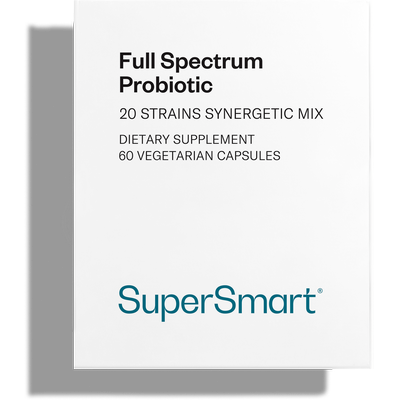
Discover Probio Forte and Full Spectrum Probiotic, two dietary supplements combining several probiotic strains selected for their effects, as documented by clinical studies.
Nourishing the microbiota with prebiotic fibre
Not all fibres play the same role: some, known as prebiotics, serve as a substrate for the bacteria naturally present in the gut.
By fermenting them, these microorganisms produce various metabolites, including short-chain fatty acids (such as butyrate), which help maintain the balance of the gut environment.
A regular intake of fibre helps to nourish the gut microbiota and is generally associated with greater microbial diversity.
Diet remains the main source of prebiotics, but dietary supplements containing this type of fibre may also be considered.
Discover Organic Acacia, a natural source of soluble fibre derived from acacia gum.
Glutamine, an amino acid particularly utilised by the gut
Glutamine is an amino acid naturally present in the body.
It is an important source of energy for certain cells of the intestinal mucosa, which have high metabolic requirements.
It is the subject of extensive research into its interactions with the mechanisms involved in the intestinal barrier function, the intestinal mucosa and digestive homeostasis.
Its role in the body’s adaptation to certain situations of physiological stress is also being investigated.
Discover L-Glutamine, a dietary supplement containing natural glutamine.
Omega-3s and the gut-brain axis
Omega-3 fatty acids are essential components of cell membranes, including those of neurons.
DHA, in particular, helps maintain normal brain function, provided an adequate daily intake is maintained.
Omega-3s are also the subject of extensive research into their interactions with the mechanisms involved in the inflammatory response, the gut microbiota and the neural communication pathways associated withthe gut-brain axis.
They occur naturally in certain foods (particularly oily fish). Omega-3 dietary supplements can also be a source of these fatty acids.
Discover Super Omega 3, a formula providing EPA and DHA fatty acids in their natural form.
Polyphenols studied for their interactions with the microbiota
Polyphenols are compounds naturally found in many plants, including fruit, vegetables, tea and certain spices.
Some of these molecules, such as quercetin and resveratrol, are currently the subject of research into their interactions with the microbiota and certain mechanisms involved in the gut environment.
The interactions between polyphenols and gut bacteria are complex: the microbiota can transform these compounds, whilst they, in turn, can influence the composition and activity of certain microbial populations.
Discover Super Quercetin and Resveratrol, two dietary supplements providing polyphenols.
SUPERSMART ADVICE





References
- Chmelir T, Jarkovska D, Pandey S, Chottova Dvorakova M. Neurogastroenterology: Current insights into gastrointestinal innervation in health and disease. Auton Neurosci. 2025 Oct;261:103339. doi: 10.1016/j.autneu.2025.103339. Epub 2025 Aug 29. PMID: 40902240.
- (2) Linden DR, Sharkey KA. The enteric nervous system. Curr Biol. 2025 Oct 20;35(20):R979-R985. doi: 10.1016/j.cub.2025.08.020. PMID: 41118742.
- Waxenbaum JA, Reddy V, Das JM. Anatomy, Autonomic Nervous System. 2025 Dec 1. In: StatPearls [Internet]. Treasure Island (FL): StatPearls Publishing; 2026 Jan–. PMID: 30969667.
- Park JC, Chang L, Kwon HK, Im SH. Beyond the gut: decoding the gut-immune-brain axis in health and disease. Cell Mol Immunol. 2025 Nov;22(11):1287-1312. doi: 10.1038/s41423-025-01333-3. Epub 2025 Aug 14. PMID: 40804450; PMCID: PMC12575876.
- Snoek SA, Verstege MI, Boeckxstaens GE, van den Wijngaard RM, de Jonge WJ. The enteric nervous system as a regulator of intestinal epithelial barrier function in health and disease. Expert Rev Gastroenterol Hepatol. 2010 Oct;4(5):637-51. doi: 10.1586/egh.10.51. PMID: 20932148.
- Yang C, Lan X, Zhong H, Geng J, Wang W. Enteric nervous system in microbiota-associated gut inflammation. Front Immunol. 2026 Jan 27;17:1735727. doi: 10.3389/fimmu.2026.1735727. PMID: 41676138; PMCID: PMC12886487.
- Bessac A, Cani PD, Meunier E, Dietrich G, Knauf C. Inflammation and Gut-Brain Axis During Type 2 Diabetes: Focus on the Crosstalk Between Intestinal Immune Cells and Enteric Nervous System. Front Neurosci. 2018 Oct 10;12:725. doi: 10.3389/fnins.2018.00725. PMID: 30364179; PMCID: PMC6191495.
- Wang S, Wang Y, Miao J, Zheng X, Ge W, Chen G, Yin Y. Enteric nervous system and inflammatory bowel disease. Gastroenterol Rep (Oxf). 2026 Feb 13;14:goag005. doi: 10.1093/gastro/goag005. PMID: 41696441; PMCID: PMC12902791.
- Liu S, Zheng Y, Cui B, Yang J, Yuan B, Cao Y, Zhao Z, Sun Z, Wang Q, Yang X, Pan W, He C. Gut microbiota-derived butyrate alleviates the impairment of mice intestinal integrity caused by Toxoplasma gondii infection. Life Sci. 2025 Aug 1;374:123709. doi: 10.1016/j.lfs.2025.123709. Epub 2025 May 12. PMID: 40368048.
Keywords




7 Days
Adequate info en hoge kwaliteit
Adequate info en hoge kwaliteit
HanS.
17 Days
Supplementen zijn goed.
Supplementen zijn goed. Zachte prijzen. Website met problemen ( altijd ) niet goed voor nieuwe klanten.
Gino RJ
27 Days
Alles op tijd geleverd.
Alles op tijd geleverd. De producten worden alsmaar duurder, terwijl mijn pensioen niet meer stijgt. Vandaar kan ik alsmaar minder vaak bestellen.
Wouters
1097 Days
Great service
Great service
Ryszard
1109 Days
Profesjonalna obsługa
Bardzo dobre i rzeczowe opisy. Profesjonalna obsługa.
PIEKOSZEWSKI Chris
1778 Days
Wszystko OK!
Wszystko poszło jak powinno 🙂
SITKIEWICZ Pawel
2564 Days
Szybko sprawnie bez problemów
Szybko sprawnie bez problemów
Marek
of experience
your money back
##montant## purchase