

Complete your selection

What are the benefits of our creatine monohydrate capsules?
Get a daily supply of creatine in its most extensively studied form
Creatine is a natural amino acid derivative, synthesised by the body from arginine, glycine and methionine, and then stored mainly in the muscles.
With over 1,000 clinical trials in humans and several decades of research, the effects of creatine supplementation are well documented and its safety profile is well established at the usual doses of 3 to 5 g per day.
Of the various forms used, creatine monohydrate is by far the most extensively studied and is considered a benchmark in sports nutrition.
Improve your performance and support your muscle strength
During high-intensity exercise, the muscles use phosphocreatine (PCr) – a form of creatine found in the muscles and bound to a phosphate group – to rapidly regenerate ATP, the body’s ‘energy currency’.
By increasing intramuscular stores of creatine and therefore phosphocreatine, creatine supplementation provides a greater supply of energy that can be mobilised quickly.
At a dose of 3 g of creatine per day, as provided by Creatine Monohydrate Capsules, it improves physical performance during successive sets of very intense, short-duration exercises.
A meta-analysis of 23 randomised controlled trials conducted in adults under 50 years of age thus suggests that the combination of creatine and resistance training, compared with placebo (1):
- significantly increases strength, with an average improvement across various strength tests equivalent to a +4.4 kg increase in load for the upper body and a +11.4 kg increase in load for the lower body;
- leads to even greater gains in untrained individuals and when training is carried out at high intensity.
Supporting your muscle mass gains and improvements in body composition
The effects of creatine have also been studied in relation to muscle mass and body composition when combined with resistance training.
A meta-analysis of 12 randomised controlled trials conducted in adults under 50 years of age found, compared with training alone (2):
- an additional gain of 1.14 kg in lean body mass;
- and an additional reduction in fat mass of 0.88 per cent (0.73 kg).
Helping to maintain your strength and muscle mass as you get older
Ageing is accompanied by a gradual decline in muscle mass and function, which can progress to sarcopenia; this explains the growing interest in creatine in this context.
Creatine supplementation is therefore being studied for its potential effects on maintaining muscle strength and mass as we age:
- in older adults, several meta-analyses suggest gains in strength, particularly during training programmes lasting at least 24 weeks, and a more favourable ratio of lean body mass to fat mass, with a significant reduction of 0.55 per cent in fat mass in those aged 50 and over (3–4);
- in 608 postmenopausal women, a meta-analysis of 7 randomised controlled trials conducted over 12 to 104 weeks showed a significant increase in lean body mass (+0.37 kg) and strength on the leg press (+7.5 kg), a leg-strengthening machine (5).
Boosting your memory and cognitive function, according to recent studies
The brain is a particularly energy-intensive organ: whilst it accounts for only around 2 per cent of body weight, it consumes nearly 20 per cent of the body’s energy, and its neurons depend on the continuous regeneration of ATP, a process in which the phosphocreatine system plays a part.
Taking creatine monohydrate can increase creatine stores in the brain and is therefore likely to support memory and cognitive function:
- a meta-analysis of 8 randomised controlled trials observed a significant improvement in memory among healthy adults, with a particularly marked effect in those aged 66 to 76 (6);
- another meta-analysis of 16 randomised controlled trials involving 492 participants, all of whom were supplemented with creatine monohydrate, observed significant effects on memory, attention and information processing speed (7).
5 key benefits and reasons to buy our creatine monohydrate capsules
Our Creatine Monohydrate Capsules dietary supplement stands out for 5 key benefits:
- the most widely studied form of creatine: creatine monohydrate is the standard form in the scientific literature, with a long history of research and the bulk of the available clinical data on creatine supplementation;
- 99.9% purity: the selected raw material has a very high degree of purity and extremely low levels of manufacturing impurities, particularly creatinine, DHT and DCD, well below the limits set by European regulations;
- 3.4 g of creatine monohydrate per daily dose: 5 capsules a day provide you with 3,400 mg of creatine monohydrate, equivalent to 3,000 mg of creatine per day, a standard dosage whose effectiveness has been scientifically established;
- a convenient capsule format: the capsule form allows you to take the creatine directly, without having to mix powder, without any taste and without having to measure out a dose, whilst making it easy to carry and use on a daily basis;
- vegetable-based capsules with no added excipients: each capsule contains only the active ingredient in a hypromellose shell (a derivative of cellulose, a plant fibre).
What is the composition of this pure creatine monohydrate food supplement?
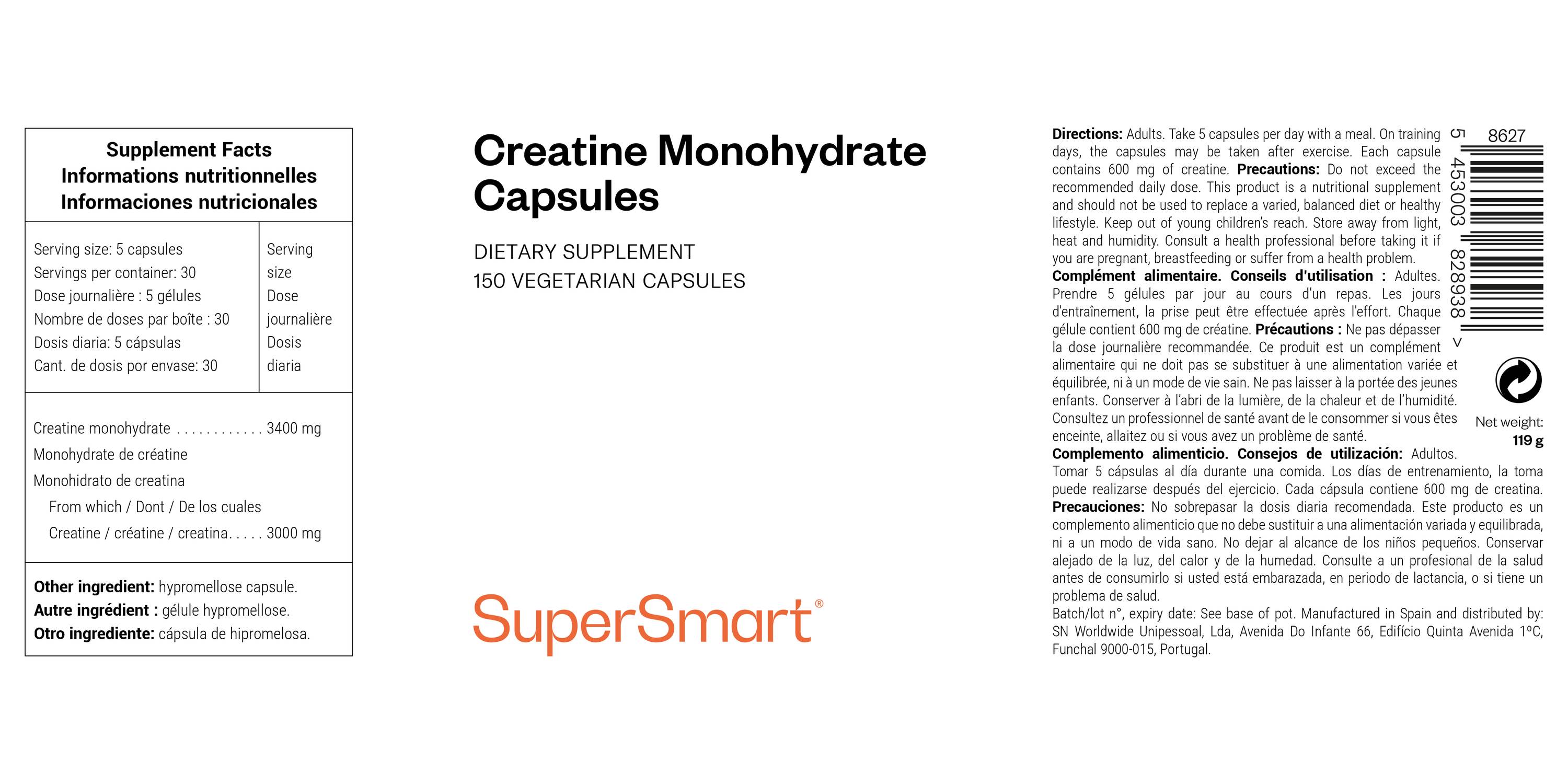
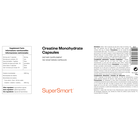
| Daily dose: 5 capsules Number of doses per box: 30 | Daily dose |
| Creatine monohydrate Of which: Creatine | 3,400 mg 3,000 mg |
| Other ingredient: hypromellose capsule. | |
Creatine: from a controversial reputation to an increasingly popular ingredient
A dietary supplement long subject to certain misconceptions
Creatine has long been associated primarily with bodybuilding, whilst being subject to persistent misconceptions regarding its safety, particularly for the kidneys and liver.
This perception has contributed to confining creatine to a highly athletic audience, despite extensive scientific evidence supporting its safety when used appropriately.
Creatine: a staple of sports nutrition
In reality, creatine is one of the most scientifically studied ingredients in sports nutrition.
Its potential effects on strength, power, high-intensity performance and recovery have been the subject of several decades of research and explain its use by both professional athletes and amateur sportspeople.
Prospects that now extend beyond sport
More recent research is also exploring the potential benefits of creatine beyond its traditional sporting applications.
In particular, research is focusing on healthy ageing and cognitive function.
These new prospects are gradually helping to change perceptions of creatine, which is now also associated with health and longevity.
A new surge of interest in creatine
In recent years, creatine has been attracting the interest of a wider audience, thanks to its visibility on social media, in podcasts and in scientific communications.
In this context, the capsule format can help make its use more widespread by offering a more accessible alternative to people who do not like powders or are looking for a simpler daily supplement.
Who is it for?
Creatine Monohydrate Capsules are particularly suitable for:
- athletes engaged in repeated, short-duration, high-intensity exercises, such as weight training, sprinting or certain team sports;
- people who wish to support a training programme aimed at developing their strength, power or muscle mass;
- adults over the age of 55 who do resistance training and wish to maintain their muscle strength as they get older;
- people interested in the potential effects of creatine on cognitive function and memory, which are now the subject of numerous scientific studies;
- those who prefer a convenient alternative to powdered creatine, with no mixing or measuring required.
Can you have a creatine deficiency?
Creatine supply from the body and diet
The body naturally produces creatine from several amino acids and also obtains it from the diet, mainly through meat and fish.
Some of this creatine is continuously converted into creatinine and then excreted, which means reserves need to be replenished daily.
What is the benefit of increasing your creatine stores?
Natural sources of creatine do not necessarily optimise muscle stores: supplementation helps to increase muscle concentrations of creatine and phosphocreatine, the latter being rapidly mobilised to regenerate ATP during intense exercise.
Taking creatine supplements is therefore not necessarily about correcting a deficiency, but about building up reserves above their usual level in order to benefit from the documented effects of supplementation.
Reserves vary between individuals and depending on diet
Initial levels of creatine stores vary from person to person and depend, in particular, on dietary habits.
Vegetarians and vegans, whose dietary intake of creatine is low or virtually non-existent, generally have lower muscle concentrations than omnivores and may therefore be even more responsive to supplementation.
Dosage: how much creatine monohydrate should you take and when?
The recommended daily dose of Creatine Monohydrate Capsules is 5 capsules per day, providing 3.4 g of creatine monohydrate, equivalent to 3 g of creatine.
These 3 g of creatine per day correspond to a particularly well-documented reference dose for increasing muscle creatine stores.
The 5 capsules can simply be taken with a meal.
On training days, you may prefer to take them after your workout.
Which synergistic dietary supplements should be taken with Creatine Monohydrate Capsules?
Whey protein to increase muscle mass
Proteins are the main building blocks of muscle and help to increase and maintain muscle mass.
Whey, a naturally protein-rich by-product of milk that is also rich in essential amino acids, can therefore be combined with creatine as part of a training programme aimed at developing muscle mass and performance.
 You can buy Native Whey Protein Isolate, our native whey isolate, to easily supplement your daily intake.
Bioactive peptides and other active ingredients for muscle development
Plant-based protein hydrolysates rich in bioactive peptides, such as PeptiStrong®, are being studied in humans for their potential effects on muscle mass, strength and recovery.
PeptiStrong® can be combined with other beneficial active ingredients in this context, such as ursolic acid, spermidine and vitamin D3, the latter of which helps maintain normal muscle function.
Discover Muscle Mass Booster, a formula combining these four active ingredients, which can be used alongside creatine supplementation to support muscle development.
Magnesium for muscle function and energy metabolism
Magnesium complements creatine supplementation well as it contributes to normal muscle function and normal energy metabolism.
It also helps to reduce fatigue and maintain electrolyte balance – functions that are particularly important for physically active people.
We recommend purchasing OptiMag, which combines eight complementary and bioavailable forms of magnesium in a single formula.
Quality, purity and traceability
For Creatine Monohydrate Capsules, we have selected a creatine monohydrate raw material with a purity of 99.9 per cent, which is also characterised by extremely low levels of residual compounds resulting from the manufacturing process.
Its specifications stipulate, in particular, very low levels of creatinine (< 50 mg/kg), dicyandiamide (DCD) (< 20 mg/kg) and dihydrotriazine (DHT) (< 3 mg/kg).
The formula is also deliberately simple: it contains no added excipients, only creatine monohydrate and a vegetable-based hypromellose capsule.
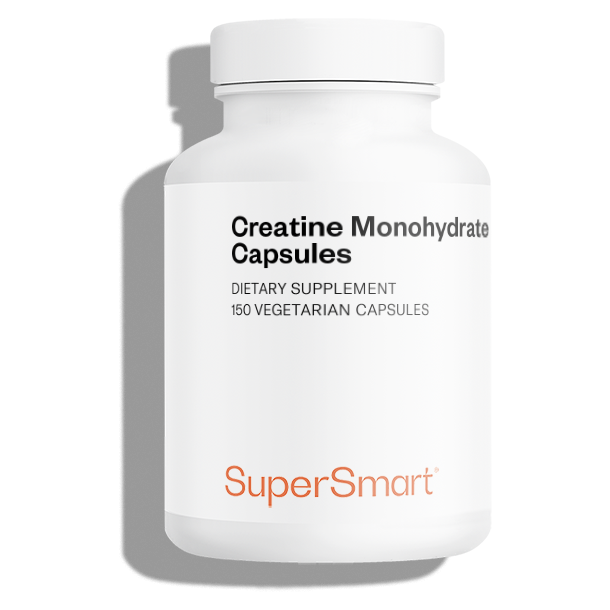
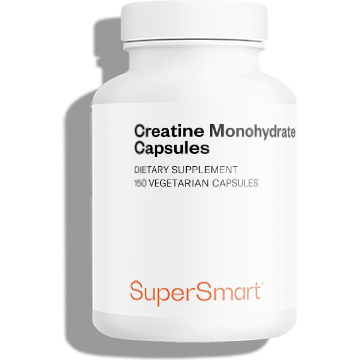
Creatine Monohydrate Capsules are manufactured in Spain and packaged in packs of 150 vegetable capsules, equivalent to 30 daily doses.
In the interests of transparency and traceability, the certificates of analysis (COA) for the batches on sale can be viewed on this page.
What is in Creatine Monohydrate Capsules
Any questions?
Our team of nutrition experts and scientists has the answers.
Creatine monohydrate is mainly used to support physical and muscular performance in the context of sporting activity.
At a dose of 3 g of creatine per day, it improves performance during successive sets of short, high-intensity exercises.
Its potential effects are also being studied in relation to muscle strength, mass and recovery, as well as in the area of cognition, particularly memory.
Creatine monohydrate has a long history of scientific research and has a good safety profile at the usual doses in healthy adults.
Contrary to some common misconceptions, the available data show no adverse effects on kidney or liver function in healthy individuals at the doses typically studied.
Effects that are sometimes observed include, in particular, slight weight gain linked to increased water retention in the muscles and some digestive discomfort, especially with high doses.
Yes, creatine can be taken daily, including on non-training days.
During a period of supplementation, regular intake helps to maintain high muscle reserves of creatine.
Furthermore, the available data are reassuring regarding the safety of long-term use at standard doses in healthy adults.
For an equivalent amount of creatine, the choice between powder and capsules depends primarily on individual preferences and habits.
Creatine powder makes it easy to adjust the amount consumed and is particularly suitable for people who are used to mixing their supplements into a drink (SuperSmart offers this format with Creatine Monohydrate, our creatine monohydrate powder supplement).
Capsules, on the other hand, offer simplicity: they can be taken straight away, are easy to carry and require no mixing, no unpleasant taste to put up with and no measuring of doses (this is the case with Creatine Monohydrate Capsules).
Both formats therefore have their advantages: the key is to choose the one that allows for sufficiently regular intake and helps you reach your desired daily intake of creatine.
Need help?
of experience
your money back
##montant## purchase