
Best probiotic for the menopause: which one should you choose?
The menopause is accompanied by numerous hormonal changes that also affect the gut and vaginal microbiota. Certain probiotic strains may therefore help to maintain this balance. But which ones?
- ✓Menopause profoundly alters the gut and vaginal microbiota.
- ✓Certain strains of Lactobacillus are the subject of particular research.
- ✓A recent meta-analysis of 39 studies suggests potential benefits for several menopausal symptoms.
- ✓Probiotics are not a substitute for comprehensive management.
- ✓Diet, fibre and certain supplements can help women cope better during this period.

Why does the menopause alter the microbiota?
The role of oestrogen
Oestrogens indirectly influence the composition of the vaginal microbiota. In particular, they promote the accumulation of glycogen in the cells of the vaginal epithelium. As these cells are renewed, this glycogen is gradually converted into sugars that can be utilised by Lactobacillus, lactic acid bacteria that produce lactic acid and help maintain an acidic vaginal pH, which is not conducive to the growth of opportunistic microorganisms. With the onset of the menopause, the fall in oestrogen levels reduces the amount of glycogen available, which is associated with a decline in Lactobacillus and a gradual imbalance in the vaginal flora. (1).
The decline in Lactobacillus
The decline in Lactobacillus populations, which usually dominate the vaginal microbiota in women of childbearing age, can therefore lead to:
- a reduction in the production of lactic acid and other protective substances;
- an increase in vaginal pH;
- the proliferation of undesirable bacteria and yeasts;
- an increased risk of vaginal discomfort, vaginal dryness or recurrent urinary tract infections in some women (2).
The estrobolome
The gut microbiota plays a role in oestrogen metabolism through a group of bacteria known as the estrobolome. These microorganisms produce, in particular, enzymes capable of transforming oestrogens excreted by the liver, thereby influencing their reabsorption and availability within the body (3).
Whilst its exact role in postmenopausal women remains to be clarified, several studies suggest that an imbalance in the estrobolome could contribute to the hormonal, metabolic and inflammatory changes observed after the menopause (4).
More generally, reduced diversity of the gut microbiota is thought to be associated with an impairment of the intestinal barrier and changes in the immune response, which may promote a state of low-grade chronic inflammation (inflammaging) (5).
These findings explain why researchers are taking an increasing interest in probiotics as a potential tool to support this transitional period, in terms of both the vaginal microbiota and the gut microbiota.
A recent meta-analysis confirms the potential benefits of probiotics during the menopause
An initial meta-analysis, published in 2025, compiled the results of 39 studies involving 3,187 perimenopausal or postmenopausal women (6). Its aim was to assess the benefits of probiotics, either alone or in combination with oestrogenic substances such as oestriol or isoflavones, in managing the main symptoms of the menopause.
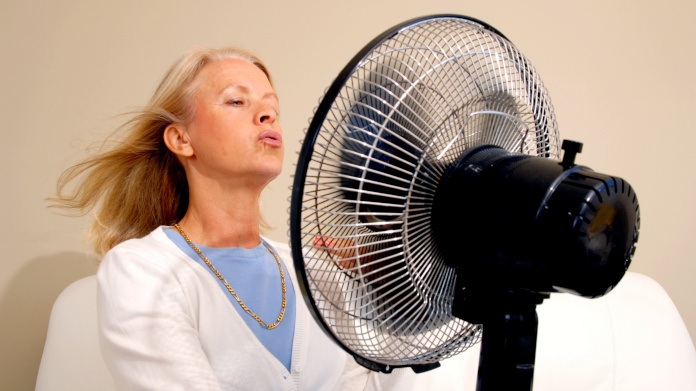
The authors report beneficial effects on several parameters. In particular, probiotics appeared to help alleviate vasomotor symptoms, such as hot flushes, improve certain psychological symptoms, reduce vaginal dryness and promote a better balance of the vaginal microbiota. Potential benefits were also observed in relation to bone health, as well as the efficacy and tolerability of treatments based on oestriol or isoflavones.
However, the meta-analysis did not reveal any significant improvement in somatic symptoms or sexual dysfunction.
Results from a meta-analysis published in 2025, combining 39 studies involving 3,187 perimenopausal or menopausal women.
Research into the effects of probiotics on the gut microbiota of postmenopausal women is still in its early stages. However, several strains of Lactobacillus have already shown encouraging results. In animal studies, Lactobacillus acidophilus has notably been associated with better preservation of bone mineral density, whilst Lactobacillus intestinalis YT2 has helped to correct gut dysbiosis following oophorectomy (7). This initial research supports the potential of probiotics as a non-hormonal supportive treatment, but larger-scale clinical trials remain essential to confirm these benefits.
Which probiotics appear to be the most promising during the menopause?
Lactobacillus strains to maintain vaginal balance
As explained above, in menstruating women, the vaginal microbiota is generally dominated by various species of Lactobacillus. By producing lactic acid, these bacteria help to maintain an acidic environment that is unfavourable to the proliferation of certain undesirable microorganisms.
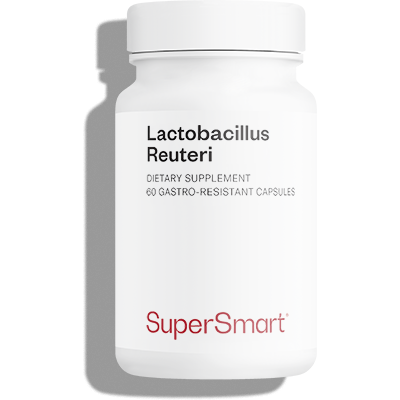
Not all strains within the same species are equivalent. Consequently, not all strains of Lactobacillus possess the same properties. Among those best documented in the field of women’s health are Lactobacillus rhamnosus, which naturally colonises the gut and vaginal flora; Lactobacillus reuteri, often combined with L. rhamnosus in studies on the balance of the vaginal microbiota and urogenital health; and Lactobacillus acidophilus (8).
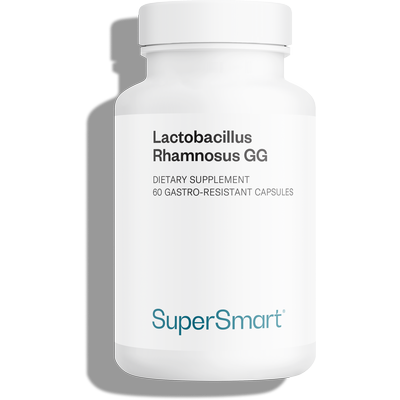
 A good initial strategy is therefore, for example, to combine the probiotics Lactobacillus rhamnosus GG and Lactobacillus reuteri.
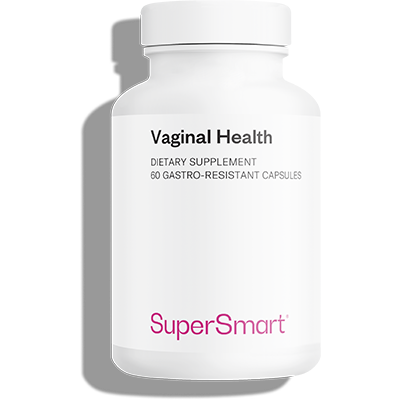
For an even more comprehensive approach, the Vaginal Health formula combines five microorganisms — L. rhamnosus ATCC 53103, B. lactis, L. salivarius, L. acidophilus and L. casei — along with fructo-oligosaccharides, which serve as a substrate for them.
Probiotics for the gut microbiota
In regards to the gut, research remains at a preliminary stage and focuses on a variety of objectives: microbial diversity, integrity of the gut barrier, inflammation, metabolism and even estrobolome activity.
From this perspective, multi-strain formulations combining Lactobacillus, Lactococcus and Bifidobacterium are beneficial as they provide a wide diversity of microorganisms and support the gut ecosystem as a whole (9).
Full Spectrum Probiotic thus combines 20 microorganisms, including B. breve, B. bifidum, L. rhamnosus, L. plantarum, L. paracasei, L. casei and L. acidophilus.
Other ways to manage the menopause more effectively
Probiotics are just one part of a broader approach to managing the menopause. Diet, physical activity and, depending on individual needs, certain targeted supplements can also help restore comfort during this transitional period.
Adopting a high-fibre diet
Fermentable fibre found in vegetables, fruit, pulses, whole grains, nuts and seeds nourishes certain gut bacteria. Their fermentation leads, in particular, to the production of short-chain fatty acids, metabolites involved in maintaining the intestinal barrier and in the interactions between the microbiota and the immune system. Several studies have also highlighted the protective role of a high-fibre diet in the development of metabolic syndrome and depressive symptoms in postmenopausal women (10–11).
Staying physically active
Exercise helps to preserve muscle mass and bone density, two factors that are particularly important after the menopause. It also contributes to weight management, cardiovascular health, sleep quality and psychological well-being. Ideally, you should alternate between endurance activities — such as brisk walking, cycling or swimming — and strength training, with consistency being more important than intensity (12).
Consider targeted supplements
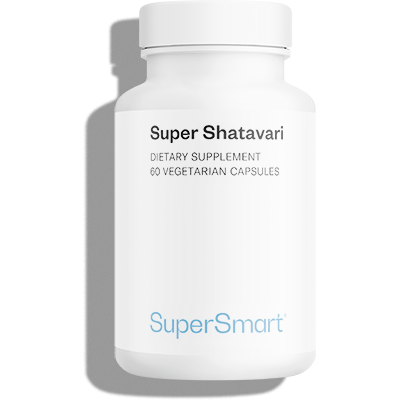
Shatavari (Asparagus racemosus) is a key plant in the Ayurvedic tradition associated with women’s wellbeing. In India, it is regularly used by women going through the menopause (13). Its roots contain steroidal saponins known as shatavarins. A clinical study involving 70 female patients aged between 40 and 65, who were given the Aspurus® extract – standardised to 5% shatavarins – for 8 weeks, reported an improvement in several symptoms (hot flushes, night sweats, fatigue, etc.) that can impair quality of life.
An extract at the heart of the Super Shatavari supplement.
For a more holistic, non-hormonal approach, certain plants and micronutrients can be utilised. These include black cohosh, which helps ensure a calmer and more comfortable menopause; fennel, which has been extensively studied for its effects on vasomotor symptoms and mood; and magnesium, which supports the normal functioning of the nervous system and normal psychological function (14–16).
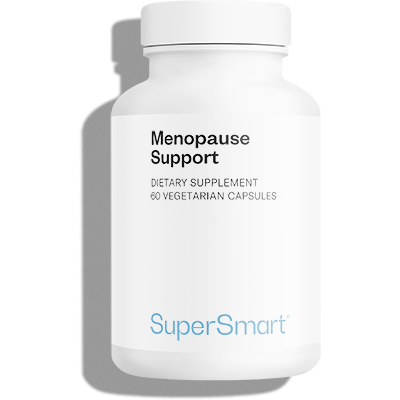
All these ingredients are combined in Menopause Support, a comprehensive formula free from synthetic hormones and soya isoflavones, which also contains vitamins D3 and B6.
The menopause is also accompanied by a significant drop in the production of progesterone, a steroid hormone naturally secreted by the ovaries during a woman’s reproductive years (17). This decline in production may exacerbate certain discomforts experienced during the menopause. External progesterone supplementation may therefore be considered, always under medical supervision and following an assessment of the benefits and contraindications.
Natural Progesterone Cream contains natural progesterone, extracted from wild yam, in a formulation designed for enhanced absorption.
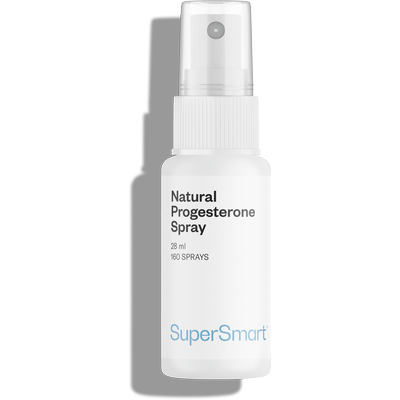
This same form of natural progesterone is also available in Natural Progesterone Spray, a very convenient spray format also designed for topical application.
SUPERSMART ADVICE
References
- Muhleisen AL, Herbst-Kralovetz MM. Menopause and the vaginal microbiome. Maturitas. 2016 Sep;91:42-50. doi: 10.1016/j.maturitas.2016.05.015. Epub 2016 Jun 1. PMID: 27451320.
- Zheng N, Guo R, Wang J, Zhou W, Ling Z. Contribution of Lactobacillus iners to Vaginal Health and Diseases: A Systematic Review. Front Cell Infect Microbiol. 2021 Nov 22;11:792787. doi: 10.3389/fcimb.2021.792787. PMID: 34881196; PMCID: PMC8645935.
- Larnder AH, Manges AR, Murphy RA. The estrobolome: Estrogen-metabolizing pathways of the gut microbiome and their relation to breast cancer. Int J Cancer. 2025 Aug 15;157(4):599-613. doi: 10.1002/ijc.35427. Epub 2025 Apr 3. PMID: 40177842; PMCID: PMC12178105.
- Peters BA, Lin J, Qi Q, Usyk M, Isasi CR, Mossavar-Rahmani Y, Derby CA, Santoro N, Perreira KM, Daviglus ML, Kominiarek MA, Cai J, Knight R, Burk RD, Kaplan RC. Menopause Is Associated with an Altered Gut Microbiome and Estrobolome, with Implications for Adverse Cardiometabolic Risk in the Hispanic Community Health Study/Study of Latinos. mSystems. 2022 Jun 28;7(3):e0027322. doi: 10.1128/msystems.00273-22. Epub 2022 Apr 13. PMID: 35675542; PMCID: PMC9239235.
- Fransen F, van Beek AA, Borghuis T, Aidy SE, Hugenholtz F, van der Gaast-de Jongh C, Savelkoul HFJ, De Jonge MI, Boekschoten MV, Smidt H, Faas MM, de Vos P. Aged Gut Microbiota Contributes to Systemical Inflammaging after Transfer to Germ-Free Mice. Front Immunol. 2017 Nov 2;8:1385. doi: 10.3389/fimmu.2017.01385. PMID: 29163474; PMCID: PMC5674680.
- Andrews RAF, Lacey A, Roach H, Tomlinson R, Kidd EJ, Bache K. Investigating the effects of probiotics during the menopause transition: A systematic review & meta-analysis. Clin Nutr ESPEN. 2025 Oct;69:241-256. doi: 10.1016/j.clnesp.2025.07.009. Epub 2025 Jul 8. PMID: 40639456.
- Liaquat M, Minihane AM, Vauzour D, Pontifex MG. The gut microbiota in menopause: Is there a role for prebiotic and probiotic solutions? Post Reprod Health. 2025 Jun;31(2):105-114. doi: 10.1177/20533691251340491. Epub 2025 May 7. PMID: 40335047; PMCID: PMC12209548.
- Liu P, Lu Y, Li R, Chen X. Use of probiotic lactobacilli in the treatment of vaginal infections: In vitro and in vivo investigations. Front Cell Infect Microbiol. 2023 Apr 3;13:1153894. doi: 10.3389/fcimb.2023.1153894. PMID: 37077531; PMCID: PMC10106725.
- Shin YJ, Ma X, Joo MK, Baek JS, Kim DH. Lactococcus lactis and Bifidobacterium bifidum alleviate postmenopausal symptoms by suppressing NF-κB signaling and microbiota dysbiosis. Sci Rep. 2024 Dec 30;14(1):31675. doi: 10.1038/s41598-024-81500-0. PMID: 39738244; PMCID: PMC11685947.
- Li D, Tong Y, Li Y. Dietary Fiber Is Inversely Associated With Depressive Symptoms in Premenopausal Women. Front Neurosci. 2020 May 6;14:373. doi: 10.3389/fnins.2020.00373. PMID: 32435179; PMCID: PMC7218088.
- Lepping K, Adams-Campbell LL, Hicks J, Mills M, Dash C. Dietary fiber intake and metabolic syndrome in postmenopausal African American women with obesity. PLoS One. 2022 Sep 2;17(9):e0273911. doi: 10.1371/journal.pone.0273911. PMID: 36054124; PMCID: PMC9439193.
- Trujillo-Muñoz PJ, Sánchez-Ojeda MA, Rodríguez-Huamán EC, Mezyani-Haddu K, Hoyo-Guillot I, Navarro-Prado S. Effects of Physical Exercise on Symptoms and Quality of Life in Women in Climacteric: A Systematic Review and Meta-Analysis. Healthcare (Basel). 2025 Mar 15;13(6):644. doi: 10.3390/healthcare13060644. PMID: 40150494; PMCID: PMC11942093.
- Gudise VS, Dasari MP, Kuricheti SSK. Efficacy and Safety of Shatavari Root Extract for the Management of Menopausal Symptoms: A Double-Blind, Multicenter, Randomized Controlled Trial. Cureus. 2024 Apr 8;16(4):e57879. doi: 10.7759/cureus.57879. PMID: 38725785; PMCID: PMC11079574.
- Hedaoo K, Badge AK, Tiwade YR, Bankar NJ, Mishra VH. Exploring the Efficacy and Safety of Black Cohosh (Cimicifuga racemosa) in Menopausal Symptom Management. J Midlife Health. 2024 Jan-Mar;15(1):5-11. doi: 10.4103/jmh.jmh_242_23. Epub 2024 Apr 4. PMID: 38764923; PMCID: PMC11100637.
- Khadivzadeh T, Najafi MN, Kargarfard L, Ghazanfarpour M, Dizavandi FR, Khorsand I. Effect of Fennel on the Health Status of Menopausal Women: A Systematic and Meta-analysis. J Menopausal Med. 2018 Apr;24(1):67-74. doi: 10.6118/jmm.2018.24.1.67. Epub 2018 Apr 30. PMID: 29765930; PMCID: PMC5949311.
- Zhang J, Mai CL, Xiong Y, Lin ZJ, Jie YT, Mai JZ, Liu C, Xie MX, Zhou X, Liu XG. The Causal Role of Magnesium Deficiency in the Neuroinflammation, Pain Hypersensitivity and Memory/Emotional Deficits in Ovariectomized and Aged Female Mice. J Inflamm Res. 2021 Dec 7;14:6633-6656. doi: 10.2147/JIR.S330894. PMID: 34908863; PMCID: PMC8665878.
- Spark MJ, Willis J. Systematic review of progesterone use by midlife and menopausal women. Maturitas. 2012 Jul;72(3):192-202. doi: 10.1016/j.maturitas.2012.03.015. Epub 2012 Apr 25. PMID: 22541358.



1088 Days
Great service
Great service
Ryszard
1100 Days
Profesjonalna obsługa
Bardzo dobre i rzeczowe opisy. Profesjonalna obsługa.
PIEKOSZEWSKI Chris
1768 Days
Wszystko OK!
Wszystko poszło jak powinno 🙂
SITKIEWICZ Pawel
2555 Days
Szybko sprawnie bez problemów
Szybko sprawnie bez problemów
Marek
of experience
your money back
##montant## purchase