
Osteoarthritis of the hands: a clinical trial tests the turmeric-boswellia combination
Osteoarthritis of the hands can make many everyday tasks difficult. Whilst studies on plant extracts have mainly focused on the knee, a new clinical trial is investigating the potential effects of the turmeric-boswellia combination on osteoarthritis of the hands.
- ✓ A clinical study evaluated a combination of turmeric and boswellia in 162 people with symptomatic osteoarthritis of the hands.
- ✓After three months, the reduction in self-reported pain was greater with the study formula than with the placebo.
- ✓The trial focused on symptoms and did not assess any changes to the cartilage or the disease itself.
- ✓There are various turmeric and boswellia-based supplement formulations available.
- ✓Dietary supplements are not a substitute for medical management of osteoarthritis.

Why study the turmeric-boswellia combination for osteoarthritis of the hands?
Osteoarthritis is a chronic joint condition in which the cartilage covering the bones gradually breaks down. Joint discomfort can particularly affect the fingers and hands.
It is associated with inflammation, which causes disability and pain in the hands, as well as oxidative stress (1).
As part of a natural management approach, turmeric (Curcuma longa) and boswellia (Boswellia serrata) are attracting particular attention from researchers.
As a source of curcuminoids, including curcumin, turmeric is traditionally associated with maintaining joint health. It is used in particular to relieve inflammatory pain and maintain joint flexibility.
Boswellia resin, meanwhile, contains boswellic acids, which are being studied for their potential effect on joint comfort and the health of bones and joints in general.
According to some scientific studies, these compounds may modulate pathways involved in the inflammatory response and oxidative stress, as well as influencing the degradation of the cartilage matrix (2).
Experimental studies now suggest that curcumin and boswellic acids may act via distinct but complementary mechanisms, justifying the benefits of combining them (3).
A clinical study on turmeric and boswellia for osteoarthritis pain in the hands
A further reduction in pain compared with placebo
Published in 2025, the study followed 162 people aged 40 or over suffering from symptomatic osteoarthritis of the hands (4).
This multicentre, randomised, double-blind, placebo-controlled trial compared the daily intake of two tablets of a formula combining specific patented extracts of Curcuma longa and Boswellia serrata, as well as vitamin D3, with that of a placebo over a three-month period.
It was therefore not simply a mixture of plant powders.
The primary outcome measure was the change in pain on a visual analogue scale ranging from 0 to 100 mm: the higher the score reported by the participant, the greater the pain experienced.
After three months, the study showed that the pain score had decreased more significantly in those who received the formula under investigation than in those taking the placebo.
In addition to pain scores, the participants’ overall assessment and certain quality-of-life indicators also improved favourably over the same period.
Results observed after 3 months in a multicentre, randomised, double-blind, placebo-controlled trial involving 162 people with symptomatic osteoarthritis of the hands (4).
Encouraging results for osteoarthritis of the hands
The results of this study are of interest, as few trials to date have specifically investigated this type of plant extract in osteoarthritis of the fingers and hands.
By focusing solely on this specific area, the study also has methodological strengths, as it was randomised and conducted as a double-blind, placebo-controlled trial across several centres.
However, certain limitations mean that the results should be interpreted with caution. On the one hand, the trial lasted only three months and involved a relatively small sample size.
Furthermore, in the absence of imaging, it is not possible to determine whether the structure of the joints has changed.
Finally, the results relate to a specific formulation based on patented extracts of turmeric and boswellia: they cannot therefore be extrapolated to just any supplement containing these plants at present.
This combination appears here to be a promising avenue for joint comfort, but its effectiveness will need to be confirmed by further research.
Are all turmeric and boswellia extracts equally effective?
Simply labelling a product ‘turmeric’ or ‘boswellia’ is not enough to determine the quality of an extract.
The extraction process, standardisation for active compounds and the bioavailability of these compounds are also important criteria to take into account.
Turmeric and boswellia extracts in separate individual formulations
Turmeric presents a challenge in terms of formulation due to the naturally low bioavailability of curcumin.
Various technologies therefore exist to improve its absorption.
One of these is the combination of curcuminoids with phospholipids, which help facilitate their passage into the bloodstream (5).
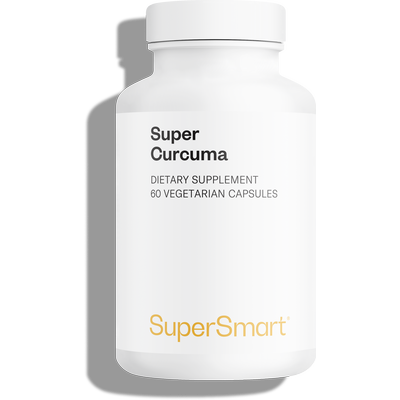
 Discover the Super Curcuma dietary supplement, a turmeric extract standardised for curcuminoids and combined with Meriva® phosphatidylcholine to enhance their absorption.
Boswellia, for its part, contains various boswellic acids, one of the most extensively studied being AKBA.
To benefit from its documented biological properties, it is therefore recommended to choose a boswellia extract with a standardised composition (6).
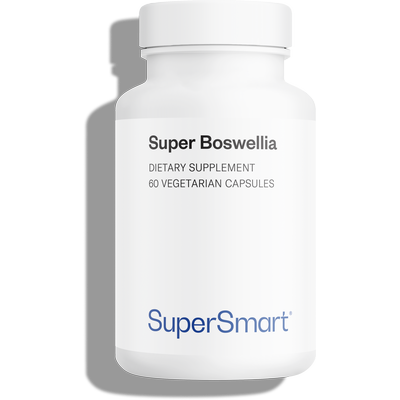
Discover the Super Boswellia dietary supplement, a Boswellia serrata extract standardised to 20% AKBA.
It is entirely possible to combine these two types of extract to maximise their benefits for joint health. However, they are not the exact equivalent of the formula studied in the clinical trial discussed in this article.
Formulas combining turmeric and boswellia
Because they complement each other, turmeric and boswellia are sometimes combined in a single oral formula.
They may also be combined with other ingredients that have been studied for their benefits to joint health.
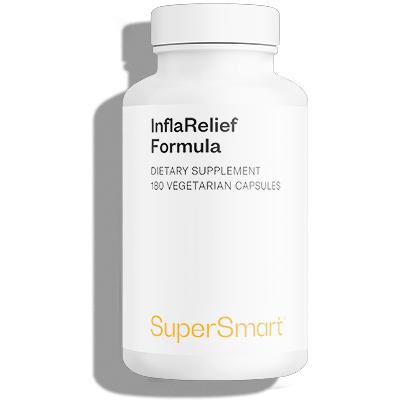
Discover the InflaRelief Formula dietary supplement, which combines 12 targeted active ingredients, including the patented Curcumin C3 Complex® standardised for curcuminoids and the patented boswellia extract standardised for AKBA 5-Loxin®.
Topical treatments based on plant extracts
To treat painful joints, there are also creams and topical treatments that can be applied to the affected areas.
However, their local action differs from the effects observed in the clinical trial discussed in this article (7).
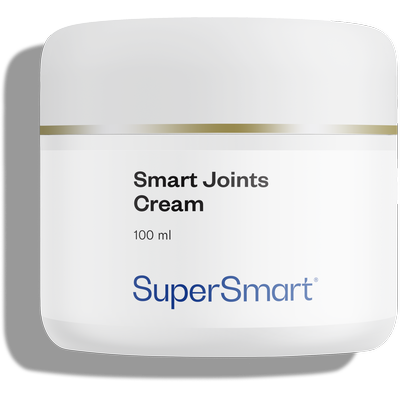
Discover Smart Joints Cream, a topical treatment containing, amongst other ingredients, boswellia, eucalyptus, MSM and glucosamine.
What other approaches are there to promote joint comfort?
Joint comfort depends on various factors, which explains the interest in active ingredients other than boswellia or turmeric. For example:
- Type II collagen is known to be one of the main components of joint cartilage (8).
- PEA (9), ginger (10) and MSM (11) are the subject of research into joint comfort and mobility.
- Vitamin C has an antioxidant effect and contributes to the normal formation of collagen, which is necessary for the proper functioning of cartilage.
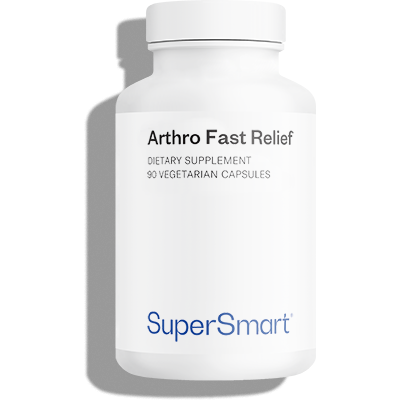
Discover the Arthro Fast Relief dietary supplement, which combines native type II collagen Collavant® n2, the patented PEA Levagen®+, Ferzinger® fermented ginger, MSM, vitamin C and astaxanthin.
Furthermore, bear in mind that dietary supplements are just one approach amongst many.
Maintaining finger mobility, doing suitable hand exercises and following the advice of a healthcare professional remain essential for preserving joint health.
Finally, osteoarthritis requires appropriate management: no supplement can replace the measures and treatments prescribed by a doctor.
SUPERSMART ADVICE
References
- Marshall M, Watt FE, Vincent TL, Dziedzic K. Hand osteoarthritis: clinical phenotypes, molecular mechanisms and disease management. Nat Rev Rheumatol. 2018 Nov;14(11):641-656. doi: 10.1038/s41584-018-0095-4. PMID: 30305701. 🔗
- Sethi V, Garg M, Herve M, Mobasheri A. Potential complementary and/or synergistic effects of curcumin and boswellic acids for management of osteoarthritis. Ther Adv Musculoskelet Dis. 2022 Sep 22;14:1759720X221124545. doi: 10.1177/1759720X221124545. PMID: 36171802; PMCID: PMC9511324. 🔗
- Sanchez C, Zappia J, Lambert C, Foguenne J, Dierckxsens Y, Dubuc JE, Delcour JP, Gothot A, Henrotin Y. Curcuma longa and Boswellia serrata Extracts Modulate Different and Complementary Pathways on Human Chondrocytes In Vitro: Deciphering of a Transcriptomic Study. Front Pharmacol. 2022 Aug 11;13:931914. doi: 10.3389/fphar.2022.931914. PMID: 36034822; PMCID: PMC9403192. 🔗
- Henrotin Y, de Schrijver F, De Vlam K, Devinck M, Joos R, Luyten H, Rasmont Q, Van den Berghe M, Vanhaverbeke T, Vanhoof J, Van Praet L, Wittoek R. Effect of a combination of C. longa and B. serrata extracts on hand osteoarthritis. Results of a double-blind, randomized, placebo-controlled, multicenter trial. Osteoarthritis Cartilage. 2025 Nov;33(11):1404-1411. doi: 10.1016/j.joca.2025.06.005. Epub 2025 Jun 17. PMID: 40554037. 🔗
- Cuomo J, Appendino G, Dern AS, Schneider E, McKinnon TP, Brown MJ, Togni S, Dixon BM. Comparative absorption of a standardized curcuminoid mixture and its lecithin formulation. J Nat Prod. 2011 Apr 25;74(4):664-9. doi: 10.1021/np1007262. Epub 2011 Mar 17. PMID: 21413691. 🔗
- Sengupta K, Alluri KV, Satish AR, Mishra S, Golakoti T, Sarma KV, Dey D, Raychaudhuri SP. A double blind, randomized, placebo controlled study of the efficacy and safety of 5-Loxin for treatment of osteoarthritis of the knee. Arthritis Res Ther. 2008;10(4):R85. doi: 10.1186/ar2461. Epub 2008 Jul 30. PMID: 18667054; PMCID: PMC2575633. 🔗
- Mohsenzadeh A, Karimifar M, Soltani R, Hajhashemi V. Evaluation of the effectiveness of topical oily solution containing frankincense extract in the treatment of knee osteoarthritis: a randomized, double-blind, placebo-controlled clinical trial. BMC Res Notes. 2023 Mar 4;16(1):28. doi: 10.1186/s13104-023-06291-5. PMID: 36869332; PMCID: PMC9984289. 🔗
- Elsaid KA, Chichester CO. Review: Collagen markers in early arthritic diseases. Clin Chim Acta. 2006 Mar;365(1-2):68-77. doi: 10.1016/j.cca.2005.09.020. Epub 2005 Oct 28. PMID: 16257399. 🔗
- Steels E, Venkatesh R, Steels E, Vitetta G, Vitetta L. A double-blind randomized placebo controlled study assessing safety, tolerability and efficacy of palmitoylethanolamide for symptoms of knee osteoarthritis. Inflammopharmacology. 2019 Jun;27(3):475-485. doi: 10.1007/s10787-019-00582-9. Epub 2019 Mar 29. PMID: 30927159. 🔗
- Araya-Quintanilla F, Gutierrez-Espinoza H, Munoz-Yanez MJ, Sanchez-Montoya U, Lopez-Jeldes J. Effectiveness of Ginger on Pain and Function in Knee Osteoarthritis: A PRISMA Systematic Review and Meta-Analysis. Pain Physician. 2020 Mar;23(2):E151-E161. PMID: 32214292. 🔗
- Debbi EM, Agar G, Fichman G, Ziv YB, Kardosh R, Halperin N, Elbaz A, Beer Y, Debi R. Efficacy of methylsulfonylmethane supplementation on osteoarthritis of the knee: a randomized controlled study. BMC Complement Altern Med. 2011 Jun 27;11:50. doi: 10.1186/1472-6882-11-50. PMID: 21708034; PMCID: PMC3141601. 🔗



5 Days
Adequate info en hoge kwaliteit
Adequate info en hoge kwaliteit
HanS.
15 Days
Supplementen zijn goed.
Supplementen zijn goed. Zachte prijzen. Website met problemen ( altijd ) niet goed voor nieuwe klanten.
Gino RJ
25 Days
Alles op tijd geleverd.
Alles op tijd geleverd. De producten worden alsmaar duurder, terwijl mijn pensioen niet meer stijgt. Vandaar kan ik alsmaar minder vaak bestellen.
Wouters
1095 Days
Great service
Great service
Ryszard
1107 Days
Profesjonalna obsługa
Bardzo dobre i rzeczowe opisy. Profesjonalna obsługa.
PIEKOSZEWSKI Chris
1775 Days
Wszystko OK!
Wszystko poszło jak powinno 🙂
SITKIEWICZ Pawel
2562 Days
Szybko sprawnie bez problemów
Szybko sprawnie bez problemów
Marek
of experience
your money back
##montant## purchase