
Vitamin K1 (phylloquinone): benefits, dietary sources and requirements
Vitamin K1 is best known for its role in blood clotting, but it also helps maintain healthy bones. Discover the benefits of vitamin K1, the foods richest in it and the recommended daily intakes.
- ✓Vitamin K1 (phylloquinone) is the main form of vitamin K obtained from food.
- ✓It contributes to normal blood clotting and the maintenance of normal bones.
- ✓Green leafy vegetables are the best sources of vitamin K1.
- ✓Its absorption is enhanced when consumed with a small amount of fat.
- ✓People being treated with an anti-vitamin K anticoagulant must maintain a regular intake of vitamin K and should not alter this without medical advice.


- 01.What is vitamin K1 (phylloquinone)? ›
- 02.What is the role of vitamin K1? ›
- 03.Vitamin K1 deficiency: contexts and affected populations ›
- 04.Where can vitamin K1 be found? The best plant-based dietary sources ›
- 05.Recommended intakes: how much vitamin K1 per day? ›
- 06.Supplementation: how can you optimise your intake effectively? ›
- 07.Frequently asked questions ›
What is vitamin K1 (phylloquinone)?
Definition, origin and biochemical mechanism
Vitamin K1, also known as phylloquinone, is a fat-soluble vitamin found naturally in plants.
It is the main form of vitamin K obtained from the diet (1).
Following absorption in the gut, which is aided by the presence of dietary fats, it is transported primarily to the liver, then to other tissues (2).
It then plays a role in the activation of several proteins involved in blood clotting, as well as in bone metabolism (3).
Fundamental difference between vitamin K1 and vitamin K2
The term ‘vitamin K’ refers to a family of compounds that share a common mechanism of action but differ in their origin, structure and fate within the body (4):
- Vitamin K1 (phylloquinone) is produced by plants. It is mainly obtained from green vegetables and is rapidly taken up by the liver.
- Vitamin K2 (menaquinones or MK) comprises several forms synthesised by certain bacteria. It also plays a role in the activation of vitamin K-dependent proteins, but its distribution within the body is different (5).
- Vitamin K3 (menadione) is a synthetic form used in research or animal feed, but never as a dietary supplement for humans.
To provide a comprehensive supply of vitamin K, some formulations combine vitamins K1 and K2 to cover a broad spectrum.
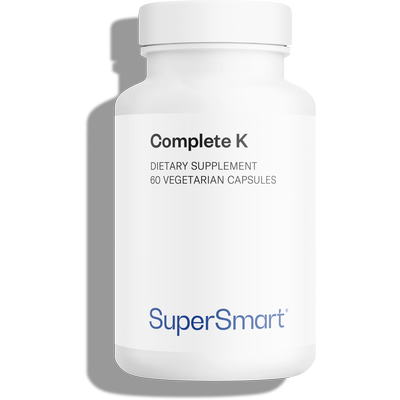
 Discover the Complete K dietary supplement, which combines a form of vitamin K1 with two forms of vitamin K2: MK-4 and the patented MK-7, MenaQ7®.
What is the role of vitamin K1?
Vitamin K1 contributes to normal blood clotting and the maintenance of normal bones.
The cornerstone of normal blood clotting
In the liver, vitamin K1 acts as a cofactor for an enzyme involved in the γ-carboxylation of several clotting factors, including prothrombin (factor II) and factors VII, IX and X (6).
This biochemical process enables them to bind calcium, an essential step in triggering clotting and forming a clot when a blood vessel is ruptured (7).
In the event of a vitamin K deficiency, this carboxylation becomes insufficient: the activity of the clotting factors decreases and the risk of bleeding increases (8).
Its role in bone metabolism
Vitamin K1, like vitamin K2, is involved in the γ-carboxylation of osteocalcin, a protein synthesised by bone cells known as osteoblasts (9).
Once activated by vitamin K, osteocalcin is able to bind to calcium and contribute to the normal process of bone mineralisation (10).
Observational studies suggest that a higher dietary intake of vitamin K1 is associated with a lower risk of fracture, although the data do not allow us to conclude that supplementation prevents fractures (11).
In a meta-analysis of five observational studies, the highest dietary intake of vitamin K1 was associated with a 22 per cent lower relative risk of fracture compared with the lowest intake (12).
Result from a meta-analysis of five observational studies examining dietary intake of vitamin K1 and the risk of fracture (12).
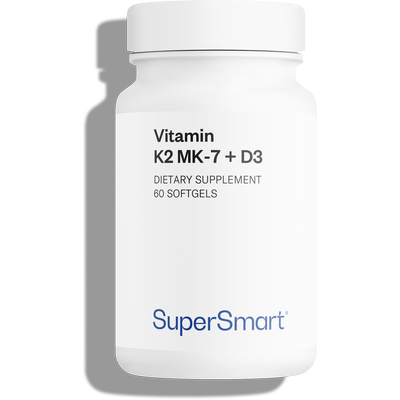
Discover the Vitamin K2 MK-7 + Vitamin D3 dietary supplement, which combines two vitamins that help maintain normal bones. Vitamin D also contributes to the normal absorption and utilisation of calcium and phosphorus.
Vitamin K1 deficiency: contexts and affected populations
Although clinical vitamin K deficiency is rare in healthy adults, certain situations warrant particular vigilance.
Why are newborns the subject of systematic monitoring?
At birth, vitamin K stores are naturally low, particularly because of the limited transfer of the vitamin across the placenta.
The newborn’s gut microbiota is also still immature, and breast milk contains relatively little vitamin K.
This situation puts them at risk of haemorrhagic disease of the newborn linked to vitamin K deficiency. Although rare, this condition is potentially serious and can cause skin or gastrointestinal bleeding, or even intracranial haemorrhages (13).
To prevent this risk, the administration of vitamin K1 after birth is routinely recommended in France. The specific procedures and doses depend, in particular, on the infant’s feeding method and clinical condition.
Risk factors for deficiency in adults
In adults, clinical vitamin K deficiency is most commonly associated with a medical condition, malabsorption or certain treatments (14):
- diseases leading to fat malabsorption, such as certain forms of Crohn’s disease, coeliac disease or pancreatic insufficiency;
- cholestasis and certain hepatobiliary conditions that disrupt the absorption of fat-soluble vitamins;
- prolonged courses of antibiotic therapy, particularly when combined with inadequate nutrition or malabsorption.
Anti-vitamin K anticoagulant treatments constitute a special case: they deliberately block the recycling of vitamin K in order to reduce the activity of certain clotting factors. They must never be combined with vitamin K supplementation without medical advice.
When the deficiency becomes severe, the activation of vitamin K-dependent clotting factors decreases. Various haemorrhagic manifestations may then occur (15):
- frequent bruising;
- repeated nosebleeds;
- prolonged bleeding following an injury;
- particularly heavy periods.
A vitamin K deficiency cannot be diagnosed on the basis of symptoms alone.
If a deficiency is suspected, the doctor may prescribe a coagulation profile, including the PT/INR. These parameters may be abnormal in the event of a deficiency, but they are not specific and are not sufficient to confirm the diagnosis.
Where can you find vitamin K1? The best plant-based dietary sources
The foods richest in vitamin K1
Vitamin K1 is an essential micronutrient, just like other vitamins and minerals.
It is found mainly in plant-based foods, particularly in dark green leafy vegetables, aromatic herbs, certain types of cabbage and some vegetable oils.
This concentration in the green parts of plants is due to the role of phylloquinone in photosynthesis.
|
Foods rich in vitamin K1 |
Vitamin K1 content (µg/100 g) |
|
Fresh parsley |
1,220 |
|
Kale |
817 |
|
Cooked spinach |
540 |
|
Cooked Swiss chard |
484 |
|
Watercress |
250 |
|
Cooked Brussels sprouts |
177 |
|
Cooked broccoli |
141 |
|
Romaine lettuce |
102 |
|
Kiwi |
40 |
|
Avocado |
21 |
Optimising the absorption of dietary vitamin K1
As vitamin K1 is fat-soluble, its absorption is enhanced by the presence of fat in the meal.
Dressing a salad with vegetable oil or drizzling a little olive oil over vegetables therefore helps to improve its bioavailability.
Vitamin K1 is relatively stable when heated, but its content and bioavailability may vary depending on the food and method of preparation. Cooking, chopping or blending can alter the plant matrix, although their effect on absorption is not consistent.
Recommended intakes: how much vitamin K1 per day?
In France, ANSES recommends a satisfactory intake of 79 µg of vitamin K1 per day for adults.
In practice, a varied diet that regularly includes green vegetables generally meets these requirements.
Certain vegetable oils, particularly soya and rapeseed oils, also provide vitamin K1. Their fat content also aids the absorption of this fat-soluble vitamin.
For those wishing to combine several forms of vitamin K in a single formula, there are supplements specifically designed for this purpose.
Discover the Complete K dietary supplement, which combines vitamin K1 with two forms of vitamin K2: MK-4 and the patented MK-7, MenaQ7®.
Vitamin K can also be taken as part of a more comprehensive multivitamin formula.
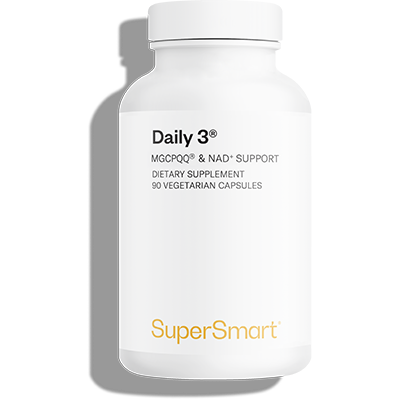
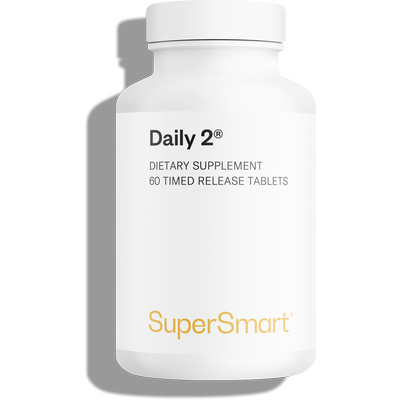
Discover the Daily 2 and Daily 3 dietary supplements, which include vitamin K in various forms alongside other vitamins and minerals essential for the body.
Supplementation: how can you optimise your intake effectively?
Vitamin K supplementation is not always necessary for healthy adults. Whether it is beneficial depends, in particular, on diet, state of health and any treatments being followed.
Not all vitamin K-based dietary supplements take the same approach: some provide only vitamin K1, whilst others contain several forms of vitamin K.
The Complete K dietary supplement combines three forms of vitamin K: vitamin K1, vitamin K2 MK-4 and vitamin K2 MK-7 MenaQ7®. All play a role in the activation of vitamin K-dependent proteins, but have different half-lives and distribution patterns within the body.
As vitamin K is fat-soluble, the supplement should be taken with a meal, in accordance with the recommended dose. It is not a substitute for a varied and balanced diet.
Please note: people being treated with an anti-vitamin K anticoagulant should seek their doctor’s advice before taking any supplements. Nor should they make sudden changes to their dietary intake of vitamin K without medical supervision.
Frequently Asked Questions
What is the difference between vitamin K1 and vitamin K2?
Vitamin K1 (phylloquinone) is found mainly in plants, whilst vitamin K2 comprises several menaquinones, particularly those of bacterial origin, which are present in fermented foods and certain animal products. Both forms contribute to normal blood clotting and the maintenance of normal bones.
Which foods are richest in vitamin K1?
Green vegetables, particularly leafy greens, are the best sources of vitamin K1. Parsley, kale, spinach, Swiss chard, watercress and broccoli are particularly rich in it.
What exactly is the role of vitamin K1 in the body?
Vitamin K1 contributes to normal blood clotting by enabling the activation of several clotting factors. It also contributes to the maintenance of normal bones by activating proteins involved in bone metabolism.
How much vitamin K1 should you take each day?
In France, ANSES recommends an adequate intake of 79 µg per day for adults. This is a dietary guideline, generally met by a varied diet rich in green vegetables.
SUPERSMART ADVICE
References
- Mladěnka P, Macáková K, Kujovská Krčmová L, Javorská L, Mrštná K, Carazo A, Protti M, Remião F, Nováková L; OEMONOM researchers and collaborators. Vitamin K - sources, physiological role, kinetics, deficiency, detection, therapeutic use, and toxicity. Nutr Rev. 2022 Mar 10;80(4):677-698. doi: 10.1093/nutrit/nuab061. PMID: 34472618; PMCID: PMC8907489. https://pmc.ncbi.nlm.nih.gov/articles/PMC8907489/
- Shearer MJ, Newman P. Metabolism and cell biology of vitamin K. Thromb Haemost. 2008;100(4):530-547. PMID: 18841274. https://pubmed.ncbi.nlm.nih.gov/18841274/
- Shearer MJ. Vitamin K metabolism and nutriture. Blood Rev. 1992;6(2):92-104. PMID: 1633511. https://pubmed.ncbi.nlm.nih.gov/1633511/
- Simes DC, Viegas CSB, Araújo N, Marreiros C. Vitamin K as a diet supplement with impact in human health: current evidence in age-related diseases. Nutrients. 2020;12(1):138. PMID: 31947821. https://www.mdpi.com/2072-6643/12/1/138
- Schurgers LJ, Vermeer C. Differential lipoprotein transport pathways of K-vitamins in healthy subjects. Biochim Biophys Acta. 2002;1570(1):27-32. PMID: 11960685.
https://pubmed.ncbi.nlm.nih.gov/11960685/ - Furie B, Bouchard BA, Furie BC. Vitamin K-dependent biosynthesis of gamma-carboxyglutamic acid. Blood. 1999;93(6):1798-1808. PMID: 10068650.
https://pubmed.ncbi.nlm.nih.gov/10068650/ - Mijares ME, Nagy E, Guerrero B, Arocha-Piñango CL. Vitamin K: biochemistry, function, and deficiency. Invest Clin. 1998;39(3):213-229. PMID: 9780555.
https://pubmed.ncbi.nlm.nih.gov/9780555/ - Tie JK, Stafford DW. Structural and functional insights into enzymes of the vitamin K cycle. J Thromb Haemost. 2016;14(2):236-247. PMID: 26663892.
https://pmc.ncbi.nlm.nih.gov/articles/PMC5073812/ - Zoch ML, Clemens TL, Riddle RC. New insights into the biology of osteocalcin. Bone. 2016;82:42-49. PMID: 26055108. https://pmc.ncbi.nlm.nih.gov/articles/PMC4670816/
- Bügel S. Vitamin K and bone health in adult humans. Vitam Horm. 2008;78:393-416. PMID: 18374200. https://pubmed.ncbi.nlm.nih.gov/18374200/
- Mott A, Bradley T, Wright K, Cockayne ES, Shearer MJ, Adamson J, Lanham-New SA, Torgerson DJ. Effect of vitamin K on bone mineral density and fractures in adults: an updated systematic review and meta-analysis of randomised controlled trials. Osteoporos Int. 2019 Aug;30(8):1543-1559. doi: 10.1007/s00198-019-04949-0. Epub 2019 May 10. Erratum in: Osteoporos Int. 2020 Nov;31(11):2269-2270. doi: 10.1007/s00198-020-05586-8. PMID: 31076817. https://www.mdpi.com/2227-9059/10/5/1048
- Hao G, Zhang B, Gu M, et al. Vitamin K intake and the risk of fractures: a meta-analysis. Medicine (Baltimore). 2017;96(17):e6725. PMID: 28445289.
https://pubmed.ncbi.nlm.nih.gov/28445289/ - Jullien S. Vitamin K prophylaxis in newborns. BMC Pediatr. 2021;21(Suppl 1):350. PMID: 34496783. https://pubmed.ncbi.nlm.nih.gov/34496783/
- Lai Y, Masatoshi H, Ma Y, Guo Y, Zhang B. Role of Vitamin K in Intestinal Health. Front Immunol. 2022 Jan 5;12:791565. doi: 10.3389/fimmu.2021.791565. PMID: 35069573; PMCID: PMC8769504. https://pmc.ncbi.nlm.nih.gov/articles/PMC8769504/
- Imbrescia K, Moszczynski Z. Vitamin K. 2023 Jul 10. In: StatPearls [Internet]. Treasure Island (FL): StatPearls Publishing; 2026 Jan–. PMID: 31869059. https://www.ncbi.nlm.nih.gov/books/NBK551578/
Keywords


4 Days
Adequate info en hoge kwaliteit
Adequate info en hoge kwaliteit
HanS.
14 Days
Supplementen zijn goed.
Supplementen zijn goed. Zachte prijzen. Website met problemen ( altijd ) niet goed voor nieuwe klanten.
Gino RJ
23 Days
Alles op tijd geleverd.
Alles op tijd geleverd. De producten worden alsmaar duurder, terwijl mijn pensioen niet meer stijgt. Vandaar kan ik alsmaar minder vaak bestellen.
Wouters
1093 Days
Great service
Great service
Ryszard
1106 Days
Profesjonalna obsługa
Bardzo dobre i rzeczowe opisy. Profesjonalna obsługa.
PIEKOSZEWSKI Chris
1774 Days
Wszystko OK!
Wszystko poszło jak powinno 🙂
SITKIEWICZ Pawel
2561 Days
Szybko sprawnie bez problemów
Szybko sprawnie bez problemów
Marek
of experience
your money back
##montant## purchase