
Hydration in summer: which nutrients should you prioritise?
It is often thought that simply drinking enough water is enough to stay well hydrated in summer. However, other factors come into play. Electrolytes, minerals, diet… Find out how to maintain a good fluid balance to avoid dehydration.

Hydration in summer: the body’s needs
In summer, the body loses more water due to the heat: sweating increases to ensure thermoregulation, i.e. the regulation of body temperature.
This mechanism is essential, but it leads to greater fluid loss than usual.
Staying hydrated is therefore essential, and not just for thermoregulation.
In fact, hydration also plays a role in cellular function, the transport of nutrients and the elimination of metabolic waste.
Common signs of dehydration include:
- feeling thirsty;
- fatigue;
- headaches;
- dark urine;
- difficulty concentrating.
Contrary to what one might think, hydration does not depend solely on water intake.
It also depends on the presence of essential minerals called electrolytes, particularly sodium, potassium, magnesium and calcium.
Without a sufficient intake of electrolytes, the body may find it more difficult to maintain fluid balance.
These minerals are obtained from food and can be supplemented, if necessary, with electrolyte-enriched drinks.
 Discover Hydration Electrolytes Formula, a powdered drink mix that provides electrolytes as part of a daily hydration strategy, particularly during hot weather or physical activity.
How can you stay properly hydrated in summer?
Drink regularly, without waiting until you feel thirsty
The sensation of thirst is often seen as a signal that it is time to drink. However, it usually appears when the body is already starting to run low on water (1).
It is therefore best to drink regularly throughout the day, without waiting until you feel the need.
Drinking large amounts of water in one go is generally less effective than spreading your intake over the course of the day. This regularity allows the body to compensate more effectively for losses due to heat and sweating.
Another important point: water requirements vary from person to person.
A large international study highlights that the amount of water used by the body each day varies considerably from one person to another depending on the outside temperature, level of physical activity and body composition (2).
Other research also suggests that water and electrolyte losses can vary significantly from person to person (3).
Age, body composition, acclimatisation to heat and individual sweat rates also influence hydration needs.
Prioritise foods rich in water and nutrients
Drinking water is not the only source of hydration.
Part of our daily water intake comes naturally from food, particularly water-rich fruit and vegetables (4).
Among the foods with the highest water content (5) are:
- cucumber (96%);
- lettuce (94–96%);
- tomatoes (94%);
- courgette (94%);
- watermelon (92%);
- strawberries (91%);
- melon (90%).
Certain foods also provide minerals and other micronutrients involved in fluid balance and the proper functioning of the body (6):
- leafy green vegetables;
- nuts and seeds;
- pulses;
- wholemeal cereals;
- dairy products;
- eggs.
So, staying well-hydrated in summer isn’t just about drinking enough water: a varied diet, rich in hydrating foods and micronutrients, also helps maintain the body’s water balance.
Adjusting your fluid intake in hot weather or during exercise
During periods of high heat or physical activity, water and electrolyte losses increase due to sweating.
In these situations, it is recommended that you:
- drink more regularly throughout the day;
- to increase your intake of water-rich fruit and vegetables;
- to ensure you maintain sufficient intake of minerals such as sodium, potassium and magnesium;
- to adjust your intake according to your level of physical activity and outdoor temperatures (7).
Good hydration therefore relies on a holistic approach combining drinking water, diet and mineral intake.
These different elements work together to help the body maintain optimal hydration, particularly in summer.
How can you ensure an adequate intake of electrolytes?
Sodium, potassium and magnesium: minerals essential for hydration
Electrolytes are minerals that are essential for maintaining the body’s hydration.
Among the most important are sodium, potassium and magnesium.
Sodium is the main electrolyte in the extracellular compartment. It plays a role in fluid distribution within the body and helps maintain fluid balance (8).
Potassium, meanwhile, is the main electrolyte found inside cells. In interaction with sodium, it plays a role in water exchange between the body’s different compartments and in proper cellular function (9).
Magnesium also plays an important role. It contributes to the normal functioning of the nervous system, normal muscle function and the reduction of fatigue.
In particular, it is involved in the transmission of nerve impulses and in the mechanisms involved in muscle contraction.
Increased losses in summer and during exercise
In summer, sweating increases to help the body regulate its temperature.
However, sweat does not contain only water: it also leads to the loss of sodium, potassium, magnesium and other electrolytes.
Several studies show that these losses can become significant during prolonged exposure to heat or during sustained physical activity (10,11).
When these losses are not replenished, they can be associated with the onset of fatigue, muscle cramps, a drop in energy levels or even a decline in physical performance.
This is why water alone is not always sufficient to compensate for losses associated with sweating.
Effective hydration relies on a balance between water intake and electrolyte intake.
When requirements increase, particularly in hot weather or during prolonged physical activity, it may be advisable to pay particular attention to electrolyte intake.
Before taking any supplements, it is always advisable to seek advice from a healthcare professional to determine the most appropriate requirements for your situation.
Discover Hydration Electrolytes Formula, a powdered drink mix providing electrolytes, suitable for periods of heat or sustained physical activity.
Furthermore, certain nutrients are also the subject of research in the field of hydration and physical exercise.
This is particularly the case with taurine, which is being studied for its potential role in regulating cell volume and in certain mechanisms involved in muscle function (12).
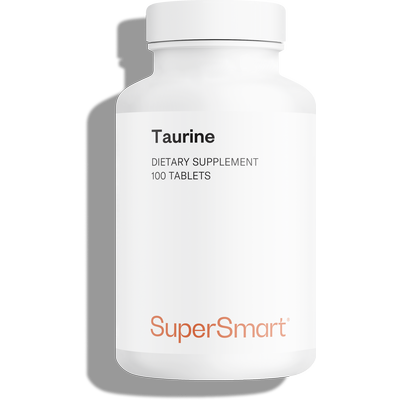
Discover Taurine, a supplement providing 1,000 mg of taurine per tablet, an amino acid currently being researched in the fields of physical exercise and cellular balance.
SUPERSMART ADVICE

References
- Greenleaf JE. Problem: thirst, drinking behavior, and involuntary dehydration. Med Sci Sports Exerc. 1992 Jun;24(6):645-56. PMID: 1602937.
- Yamada Y, Zhang X, Henderson MET, Sagayama H, Pontzer H, Watanabe D, Yoshida T, Kimura M, Ainslie PN, Andersen LF, Anderson LJ, Arab L, Baddou I, Bedu-Addo K, [...] ; International Atomic Energy Agency (IAEA) Doubly Labeled Water (DLW) Database Consortium§. Variation in human water turnover associated with environmental and lifestyle factors. Science. 2022 Nov 25;378(6622):909-915. doi: 10.1126/science.abm8668. Epub 2022 Nov 24. PMID: 36423296; PMCID: PMC9764345.
- Li H, Early KS, Zhang G, Ma P, Wang H. Personalized Hydration Strategy to Improve Fluid Balance and Intermittent Exercise Performance in the Heat. Nutrients. 2024 Apr 29;16(9):1341. doi: 10.3390/nu16091341. PMID: 38732589; PMCID: PMC11085813.
- Guelinckx I, Tavoularis G, König J, Morin C, Gharbi H, Gandy J. Contribution of Water from Food and Fluids to Total Water Intake: Analysis of a French and UK Population Surveys. Nutrients. 2016 Oct 14;8(10):630. doi: 10.3390/nu8100630. PMID: 27754402; PMCID: PMC5084017.
- données issues de la base USDA FoodData Central
- Schiefermeier-Mach N, Egg S, Erler J, Hasenegger V, Rust P, König J, Purtscher AE. Electrolyte Intake and Major Food Sources of Sodium, Potassium, Calcium and Magnesium among a Population in Western Austria. Nutrients. 2020 Jun 30;12(7):1956. doi: 10.3390/nu12071956. PMID: 32630029; PMCID: PMC7400604.
- Mora-Rodriguez R, Ortega JF, Fernandez-Elias VE, Kapsokefalou M, Malisova O, Athanasatou A, Husemann M, Domnik K, Braun H. Influence of Physical Activity and Ambient Temperature on Hydration: The European Hydration Research Study (EHRS). Nutrients. 2016 Apr 27;8(5):252. doi: 10.3390/nu8050252. PMID: 27128938; PMCID: PMC4882665.
- Woodcock, T. (2024). Physiologie des fluides, partie 1 : Volume et distribution de l’eau et de ses principaux solutés entre le plasma, l’interstitium et le liquide intracellulaire. Dans : Malbrain, ML, Wong, A., Nasa, P., Ghosh, S. (éd.) Utilisation rationnelle des solutés intraveineux chez les patients en soins intensifs. Springer, Cham.
- Zacchia M, Abategiovanni ML, Stratigis S, Capasso G. Potassium: From Physiology to Clinical Implications. Kidney Dis (Basel). 2016 Jun;2(2):72-9. doi: 10.1159/000446268. Epub 2016 May 26. PMID: 27536695; PMCID: PMC4947686.
- Siquier-Coll J, Bartolomé I, Pérez-Quintero M, Grijota FJ, Muñoz D, Maynar-Mariño M. Effect of heat exposure and physical exercise until exhaustion in normothermic and hyperthermic conditions on serum, sweat and urinary concentrations of magnesium and phosphorus. J Therm Biol. 2019 Aug;84:176-184. doi: 10.1016/j.jtherbio.2019.07.010. Epub 2019 Jul 2. PMID: 31466751.
- Cemeli T, Tort-Nasarre G, Roca J, Lavedán-Santamaría A, Campoy C, Selva-Pareja L, Vilaplana J, Mateo J, Espart A. Electrolyte Imbalance and Indirect Indicators of Dehydration in Temporary Agricultural Workers Exposed to Extreme Heat in the Mediterranean: An Observational Study on Environmental Health Risks. Healthcare (Basel). 2025 Dec 22;14(1):29. doi: 10.3390/healthcare14010029. PMID: 41516960; PMCID: PMC12786055.
- Schaffer SW, Jong CJ, Ramila KC, Azuma J. Physiological roles of taurine in heart and muscle. J Biomed Sci. 2010 Aug 24;17 Suppl 1(Suppl 1):S2. doi: 10.1186/1423-0127-17-S1-S2. PMID: 20804594; PMCID: PMC2994395.


18 Days
Prodotti eccezionali
Prodotti eccezionali! Consegna rapida e precisa
paola
29 Days
Heldere info
Heldere info
HanS.
29 Days
Snelle levering
Snelle levering
harrie
34 Days
Adequate info en hoge kwaliteit
Adequate info en hoge kwaliteit
HanS.
44 Days
Supplementen zijn goed.
Supplementen zijn goed. Zachte prijzen. Website met problemen ( altijd ) niet goed voor nieuwe klanten.
Gino RJ
54 Days
Alles op tijd geleverd.
Alles op tijd geleverd. De producten worden alsmaar duurder, terwijl mijn pensioen niet meer stijgt. Vandaar kan ik alsmaar minder vaak bestellen.
Wouters
1124 Days
Great service
Great service
Ryszard
1136 Days
Profesjonalna obsługa
Bardzo dobre i rzeczowe opisy. Profesjonalna obsługa.
PIEKOSZEWSKI Chris
1804 Days
Wszystko OK!
Wszystko poszło jak powinno 🙂
SITKIEWICZ Pawel
2591 Days
Szybko sprawnie bez problemów
Szybko sprawnie bez problemów
Marek
of experience
your money back
##montant## purchase