
Top 10 foods richest in magnesium: the list and recommended daily intakes
Your body does not produce magnesium: it must be obtained regularly from your diet. Discover ten magnesium-rich foods, their magnesium content per 100g and the intake per serving.
- ✓Pumpkin seeds provide around 592mg of magnesium per 100g. A 30g portion provides 178mg, which is 47% of the Nutrient Reference Value (NRV).
- ✓The portion size matters: 100g of cooked periwinkle meat provides 83% of the NRV, compared with 16% for 30g of dark chocolate containing around 70% cocoa.
- ✓Cramps, twitching eyelids or disturbed sleep: these symptoms alone are not sufficient to diagnose a magnesium deficiency. If they persist, seek medical advice.


Why does the body have a vital need for magnesium?
An adult’s body contains around 25g of magnesium, 50-60% of which is found in the bones.
This mineral is involved in over 300 enzymatic reactions, helping enzymes to carry out their functions.
In particular, magnesium helps reduce fatigue, supports normal energy metabolism, and contributes to the normal functioning of the nervous system and normal muscle function (1).
However, the body does not produce magnesium itself: it must therefore be obtained regularly from food and drink.
It is important to distinguish between insufficient intake and a confirmed dietary deficiency.
How can a magnesium deficiency be identified (symptoms and signs)?
Insufficient magnesium intake can go unnoticed and does not necessarily lead to a deficiency.
In the event of a magnesium deficiency, several symptoms may occur: fatigue, muscle weakness and, in more severe cases, muscle cramps or tingling.
However, these symptoms are not specific to magnesium. Irritability, insomnia, headaches or eyelid twitching do not, on their own, indicate a magnesium deficiency either.
A blood test for magnesium can detect an abnormally low concentration, known as hypomagnesaemia.
It is important to note that this does not perfectly reflect the body’s reserves, which are mainly found in the bones and cells: a normal result therefore does not always rule out a deficiency.
Nevertheless, if one or more of these symptoms persist, speak to a healthcare professional. They will be able to investigate the cause and determine whether further tests or supplementation are necessary.
A study carried out in France and published in 1997 had, in fact, revealed that many adults had magnesium intakes below the recommendations at the time (2):
Results from a 1997 study involving 5,448 adults who were monitored for one year.
10 foods to boost your magnesium intake
The nutrient contents shown are taken from the ANSES Ciqual 2025 table, unless otherwise stated (3). The percentages are calculated based on the Nutrient Reference Value (NRV) of 375mg, used for food labelling for adults (4).
For solid foods, the claims ‘source of magnesium’ and ‘rich in magnesium’ correspond to at least 56.25mg and 112.5mg per 100g respectively (5).
Seeds and nuts, seafood, pulses, whole grains and green vegetables provide a varied source of magnesium.
Here is a selection of ten foods that contribute to magnesium intake. The table allows you to compare their magnesium content per 100g and per portion.
| Food | Magnesium per 100 g | Approximate portion | Magnesium per portion | % NRV per portion | Reference value per 100 g |
|---|---|---|---|---|---|
| Dried pumpkin seeds | 592mg | 30g | 178mg | 47% | Rich |
| Brazil nuts, no added salt | 376mg | 5g | 19mg | 5% | Rich |
| Cooked periwinkles | 310mg | 100g | 310mg | 83% | Rich |
| Almonds with skin, no added salt | 270mg | 30g | 81mg | 22% | Rich |
| Dark chocolate with approximately 70% cocoa | 200mg | 30g | 60mg | 16% | Rich |
| Flaked muesli with fruit, nuts and/or seeds, no added sugars, not fortified | 113 mg | 50 g | 57mg | 15% | Rich |
| Raw oysters, species unspecified | 90.2 mg | 60 g | 54mg | 14% | Source |
| Quinoa cooked in water, with no added salt | 71 mg | 150 g | 107mg | 28% | Source |
| Black beans, boiled in water, with no added salt (6) | 70 mg | 150 g | 105mg | 28% | Source |
| Cooked spinach | 54.4 mg | 200 g | 109mg | 29% | Below the ‘source’ threshold |
The values per portion and the percentages are rounded. The portions are provided to illustrate nutrient intakes and do not constitute recommendations for daily consumption. For shellfish, the weights refer to the edible flesh, excluding the shell.
The terms ‘source’ and ‘rich in’ are based here on the content per 100g, not on the portions. A food below these thresholds may nevertheless contribute to nutrient intakes.
1. Pumpkin seeds: 47% of the NRV per portion
A 30g portion of pumpkin seeds provides around 178mg of magnesium, or 47% of the NRV. You can add them to yoghurt, a warm salad or homemade muesli.
2. Brazil nuts and other nuts and seeds
Brazil nuts are particularly high in magnesium per 100g. However, their selenium content, which is high and variable, means it is advisable to avoid eating large quantities of them every day.
3. Periwinkles and other seafood
With 310mg of magnesium per 100g of cooked flesh, periwinkles are a particularly concentrated source. Cooked whelks and cooked mussels can also contribute to your intake.
4. Almonds
A 30g portion of almonds provides around 81mg of magnesium, or 22% of the NRV. They also provide calcium, which is necessary for maintaining normal bones.
5. Dark chocolate containing around 70% cocoa
A 30g portion of dark chocolate provides around 60mg of magnesium, or 16% of the NRV. Unsweetened cocoa powder is another option, with the actual intake depending on the quantity used.
6. Muesli with no added sugar, with buckwheat as an alternative
A 50g portion of muesli with no added sugar provides around 57mg of magnesium, or 15% of the NRV. It can therefore contribute to your intake from breakfast onwards.
Buckwheat is another interesting option. However, its magnesium content varies considerably depending on its form - flour, hulled grains or cooked grains - so the figure should refer to a clearly identified product.
7. Raw oysters
Raw oysters provide around 54mg of magnesium per 60g of flesh, or 14% of the NRV according to the relevant Ciqual entry. They are also notable for their high zinc content.
8. Quinoa
The water absorbed during cooking reduces the magnesium concentration of quinoa per 100g. A 150g portion of cooked quinoa nevertheless provides around 107mg, or 28% of the NRV.
9. Black beans, lentils and other pulses
A 150g portion of cooked black beans provides around 105mg of magnesium, or 28% of the NRV. Lentils and chickpeas also contribute to your intake when eaten in typical portions.
Good to know: soaking, rinsing and cooking pulses can reduce some of their phytate content. These compounds can limit the absorption of certain minerals.
10. Cooked spinach and other green vegetables
Cooked spinach falls slightly below the regulatory threshold for being described as a “source” of magnesium per 100g. However, a 200g portion provides around 109mg of magnesium, or 29% of the NRV.
When boiled, some of the magnesium can leach into the cooking water. Steaming limits contact with water and can help to reduce these losses.
Other sources not to be overlooked: mineral waters, fruit and soya
Certain natural mineral waters contribute to magnesium intake: Rozana, Hépar, Badoit and Quézac contain between 69-160mg per litre.
Regulations allow the term ‘magnesium-rich’ to be used when the magnesium content exceeds 50mg per litre (7).
As for fruit, dried figs (around 53mg), bananas (28mg) and avocados (21mg) supplement the intake. These figures correspond to 100g of edible portions (3).
Tofu is also a good source, but its magnesium content varies depending on how it is made. Nigari, a coagulant containing magnesium chloride, can contribute to this intake.
Above all, these different sources help to diversify your daily intake. Persistent tiredness or recurrent cramps always warrant medical advice.
When should magnesium supplementation be considered?
Diet remains the main source of magnesium. Supplementation may be considered when intake is insufficient, depending on individual needs.
Magnesium absorption depends in particular on its form, dose and formulation.
Citrate, for example, has shown better bioavailability than oxide in some trials. Other forms are available, such as malate, bisglycinate or orotate, although no universal ranking of their efficacy and tolerability can be established (8).
When choosing a magnesium dietary supplement, it is also important to check the amount of elemental magnesium, which corresponds to the actual mineral intake.
Splitting the daily dose may be helpful, whilst following the product’s instructions for use.
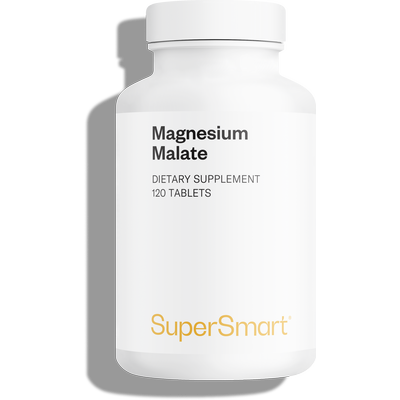
 Discover Magnesium Malate, a supplement that provides magnesium in the form of malate, combined with malic acid.
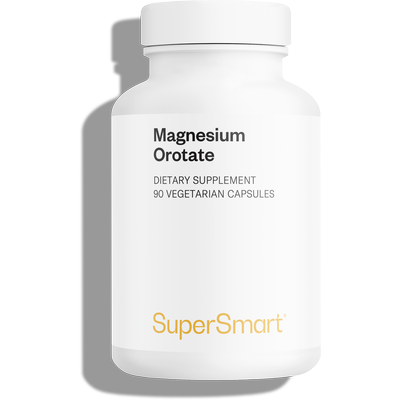
Discover Magnesium Orotate, which provides 500mg of magnesium orotate per vegetarian capsule, equivalent to 35mg of elemental magnesium.
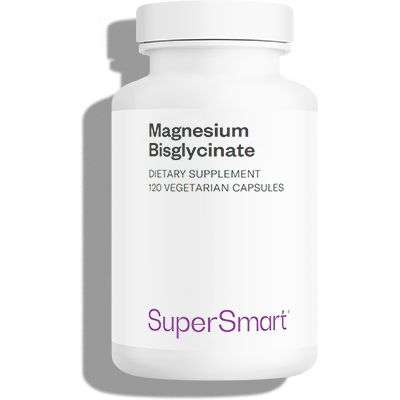
Discover Magnesium Bisglycinate, a patented TRAACS® bisglycinate from Albion® Minerals, 100% chelated and unbuffered.
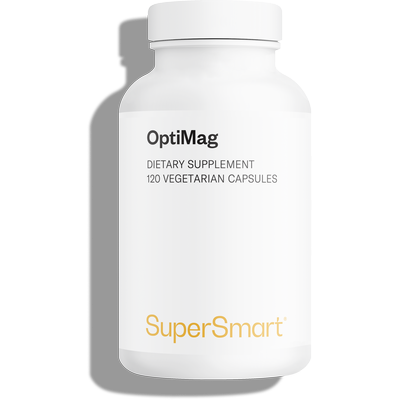
Discover the OptiMag dietary supplement, which combines eight forms of magnesium in a single formula.
Supplements are no substitute for a varied and balanced diet. Seek advice from a healthcare professional if you have kidney disease or are taking medication.
SUPERSMART’S ADVICE
References
- Règlement (UE) n° 432/2012 de la Commission du 16 mai 2012 établissant une liste des allégations de santé autorisées portant sur les denrées alimentaires. 🔗
- Galan P, Preziosi P, Durlach V, Valeix P, Ribas L, Bouzid D, Favier A, Hercberg S. Dietary magnesium intake in a French adult population. Magnes Res. 1997 Dec;10(4):321-8. PMID: 9513928. 🔗
- ANSES. Table de composition nutritionnelle des aliments Ciqual. 🔗
- Règlement (UE) n° 1169/2011 du Parlement européen et du Conseil du 25 octobre 2011 concernant l'information des consommateurs sur les denrées alimentaires (valeur nutritionnelle de référence : 375 mg/jour). 🔗
- Règlement (CE) n° 1924/2006 du Parlement européen et du Conseil du 20 décembre 2006 concernant les allégations nutritionnelles et de santé portant sur les denrées alimentaires (seuils « source de » et « riche en »). 🔗
- U.S. Department of Agriculture. FoodData Central. Beans, black, mature seeds, cooked, boiled, without salt. SR Legacy. FDC ID: 173735. 2019. 🔗
- Directive 2009/54/CE du Parlement européen et du Conseil du 18 juin 2009 relative à l'exploitation et à la mise dans le commerce des eaux minérales naturelles. 🔗
- Schuchardt JP, Hahn A. Intestinal Absorption and Factors Influencing Bioavailability of Magnesium-An Update. Curr Nutr Food Sci. 2017 Nov;13(4):260-278. PMID: 29123461. 🔗





4 Days
Prodotti eccezionali
Prodotti eccezionali! Consegna rapida e precisa
paola
14 Days
Heldere info
Heldere info
HanS.
14 Days
Snelle levering
Snelle levering
harrie
20 Days
Adequate info en hoge kwaliteit
Adequate info en hoge kwaliteit
HanS.
30 Days
Supplementen zijn goed.
Supplementen zijn goed. Zachte prijzen. Website met problemen ( altijd ) niet goed voor nieuwe klanten.
Gino RJ
39 Days
Alles op tijd geleverd.
Alles op tijd geleverd. De producten worden alsmaar duurder, terwijl mijn pensioen niet meer stijgt. Vandaar kan ik alsmaar minder vaak bestellen.
Wouters
1109 Days
Great service
Great service
Ryszard
1122 Days
Profesjonalna obsługa
Bardzo dobre i rzeczowe opisy. Profesjonalna obsługa.
PIEKOSZEWSKI Chris
1790 Days
Wszystko OK!
Wszystko poszło jak powinno 🙂
SITKIEWICZ Pawel
2577 Days
Szybko sprawnie bez problemów
Szybko sprawnie bez problemów
Marek
of experience
your money back
##montant## purchase