
Longevity: Calorie-Restriction Mimetics Under the Microscope
Calorie restriction has been studied for decades for its potential effects on longevity. A recent review published in "Nature Aging" provides an overview of the mechanisms involved and the compounds being studied to replicate certain of these effects.


A scientific review takes stock of calorie restriction mimetics
Published in 2026 in "Nature Aging", the review "Dietary restriction in ageing and longevity" summarises current knowledge on dietary restriction, its underlying biological mechanisms and its impact on markers of ageing (1).
In particular, the authors analyse the effects of calorie restriction in mammals. Special attention is also paid to ‘calorie restriction mimetics’, i.e. compounds capable of modulating certain biological pathways activated when energy intake is reduced (2).
Within the scientific literature on calorie restriction mimetics and longevity, several substances are regularly cited:
- resveratrol;
- spermidine;
- NAD+ precursors, such as NR and NMN.
Other molecules are also attracting growing interest in research into cellular ageing:
- fisetin;
- quercetin;
- apigenin.
These compounds are being studied in particular for their potential interaction with several biological processes associated with calorie restriction:
- cellular energy management;
- autophagy;
- NAD+ metabolism;
- sirtuins;
- metabolic homeostasis;
- oxidative stress;
- chronic inflammation;
- cell senescence.
Let us now review these various ‘mimetics’ and their respective effects.
The main compounds studied in research into calorie restriction mimetics and longevity
Resveratrol
Resveratrol is a polyphenol found naturally in certain plants. It is found in particular in grape skins, berries and peanuts.
It is often cited as one of the most well-known calorie restriction mimetics, as it has been extensively studied for its potential interaction with several biological pathways associated with cellular ageing (3). In particular, it is linked to research on sirtuins,AMPK, oxidative stress,low-grade inflammation andmetabolic homeostasis.
Spermidine
Spermidine is a polyamine found naturally in the body, but also in certain foods such as wheat germ, soya, mushrooms, certain mature cheeses and pulses.
It is attracting significant scientific interest in the field of longevity due to its link with autophagy, as well as with cellular stability, mitochondrial metabolism and protection against oxidative damage (4).
NAD+ precursors
NAD+ is a coenzyme essential for proper cellular function. It plays a role in numerous reactions linked to energy production and DNA repair (5).
However, NAD+ synthesis declines with age. Fortunately, it is possible to support its production by using NAD+ precursors, such as nicotinamide riboside (NR) and nicotinamide mononucleotide (NMN), which are available as supplements (6).
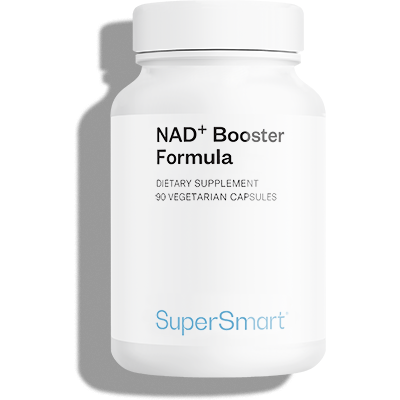
 NAD+ Booster Formula combines the 3 best NAD+ ‘booster’ nutrients, including NR.
Fisetin
Fisetin is a flavonol found in certain plants, particularly strawberries, apples, persimmons and onions.
It is one of the compounds most closely watched by longevity experts, who are particularly interested in its antioxidant activity, its potential influence on low-grade chronic inflammation and its interactions with senescent cells (7).
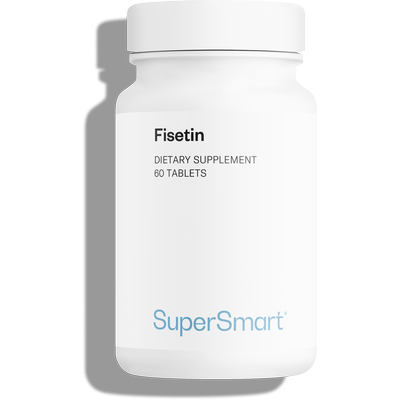
Discover Fisetin 500 mg, a high-potency fisetin supplement, naturally extracted from the species Rhus succedanea.
Quercetin
Quercetin is a flavonoid that is fairly widespread in the plant kingdom. It is found in particular in onions, capers, apples, berries, tea and certain leafy vegetables.
At the heart of research into polyphenols, it is thought to have a certain ability to modulate several pathways involved in cellular protection, the inflammatory response and metabolic balance (8).
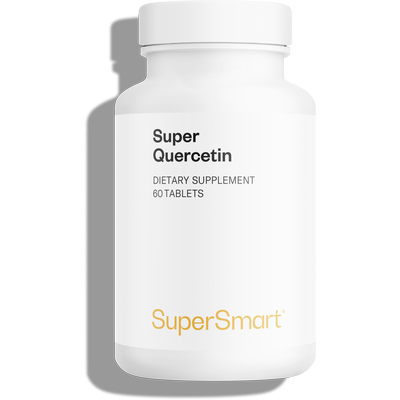
This substance is the key ingredient in Super Quercetin, an anhydrous quercetin supplement that is 170 per cent more readily absorbed than conventional forms.
Apigenin
Apigenin is another flavonoid found in several edible and medicinal plants, including parsley, celery, chamomile, oregano and certain citrus fruits.
It is attracting growing interest in the field of cellular longevity, particularly in relation to oxidative stress, sirtuin activity, mitochondrial function and NAD+ metabolism (9).
Liposomal Apigenin encapsulates apigenin within liposomes – tiny fat-based vesicles – to protect it during digestion and thereby enhance its absorption.
How do these compounds aim to replicate certain effects of calorie restriction?
AMPK and cellular energy management
AMPK is an enzyme that can be likened to a cellular ‘energy sensor’. Its role is to detect changes in the level of available energy. When energy resources diminish, such as during fasting or calorie restriction, AMPK helps to redirect metabolism towards energy-saving and energy-producing functions (10).
It thus encourages the use of energy reserves and curbs certain energy-consuming pathways, such as the excessive synthesis of lipids or proteins. This adaptation enables the cell to better manage periods of reduced nutritional availability.
Resveratrol is one of the compounds most frequently associated with AMPK in scientific research (11). Other polyphenols, such as quercetin, fisetin and apigenin, are also regularly cited.
Autophagy and cellular recycling
Autophagy is a natural mechanism of cellular recycling. It enables the cell to break down and reuse certain damaged components, such as misfolded proteins or organelles that have become less functional. It is therefore essential for maintaining proper cellular function, as it helps to limit the accumulation of biological waste (12).
Calorie restriction appears to stimulate this very process. When energy intake decreases, the cell optimises its internal resources and thus mobilises its self-cleansing capabilities more effectively.
Whilst spermidine is very often highlighted in research on autophagy, resveratrol, fisetin and other flavonoids are also thought to play a role (13).
NAD+, sirtuins and cellular homeostasis
NAD+ plays a key role in cellular metabolism. It is involved in cellular energy production, as well as in certain functions related to DNA repair, the stress response and the maintenance of cellular homeostasis.
Sirtuins are enzymes that are highly dependent on NAD+. They help cells adapt to nutritional and energy fluctuations. They are therefore thought to be involved in regulating metabolism, genome stability and mitochondrial function (14).
It has been observed that calorie restriction leads to changes in the NAD+/sirtuin pathways. This is why NAD+ precursors, such as NR and NMN, are attracting particular interest (15).Apigenin is also attracting researchers’ attention for its potential ability to inhibit the enzyme CD38, which is responsible for breaking down NAD+ (16). Resveratrol, for its part, has historically been associated with research into sirtuins (17).
Oxidative stress, chronic inflammation and cellular ageing
Cellular ageing is often accompanied by increased oxidative stress, low-grade chronic inflammation and a gradual accumulation of senescent cells (18–19).
Oxidative stress refers to an imbalance between the production of free radicals and the body’s antioxidant capacity. In the long term, it can contribute to damage to cellular structures (lipids, proteins, DNA, etc.).
Chronic low-grade inflammation refers to a silent, persistent inflammatory response that often develops with age and/or accompanies certain chronic diseases. Over time, it tends to deteriorate the cellular environment and compromise the proper functioning of tissues.
Finally, cellular senescence is a state in which certain cells cease to divide but remain metabolically active. Over time, their accumulation can alter the tissue microenvironment, disrupt repair mechanisms and contribute to the gradual decline of certain biological functions.
In this field, fisetin and quercetin play a central role, alongside resveratrol, apigenin and other polyphenols associated with research into cellular ageing (20–21).
Key takeaways from the review
The review published in "Nature Aging" serves above all as a reminder that the presumed benefits of calorie restriction are based on a set of highly complex biological mechanisms: cellular energy management, autophagy, AMPK, NAD+, sirtuins, oxidative stress, chronic inflammation, senescence…
Whilst no single compound currently appears capable of replicating all the biological effects associated with calorie restriction on its own, research is continuing to better understand their potential contribution to longevity and cellular ageing.
SUPERSMART ADVICE

References
- Schmauck-Medina, T., Lautrup, S., Di Francesco, A. et al. Dietary restriction in aging and longevity. Nat Aging 6, 485–505 (2026). https://doi.org/10.1038/s43587-026-01091-5
- Chaudhary S, Chaudhary MR, Jena MK, Rath PK, Mishra BP, Paital B, Vyas A, Sahoo DK, Singh P, Mehdi MM. Calorie restriction mimetics against aging and inflammation. Biogerontology. 2025 Jun 24;26(4):126. doi: 10.1007/s10522-025-10269-0. PMID: 40553215.
- Chung JH, Manganiello V, Dyck JR. Resveratrol as a calorie restriction mimetic: therapeutic implications. Trends Cell Biol. 2012 Oct;22(10):546-54. doi: 10.1016/j.tcb.2012.07.004. Epub 2012 Aug 10. PMID: 22885100; PMCID: PMC3462230.
- Singh S, Kumar R, Garg G, Singh AK, Verma AK, Bissoyi A, Rizvi SI. Spermidine, a caloric restriction mimetic, provides neuroprotection against normal and D-galactose-induced oxidative stress and apoptosis through activation of autophagy in male rats during aging. Biogerontology. 2021 Feb;22(1):35-47. doi: 10.1007/s10522-020-09900-z. Epub 2020 Sep 26. PMID: 32979155. 2 Aug 10. PMID: 22885100; PMCID: PMC3462230.
- Covarrubias AJ, Perrone R, Grozio A, Verdin E. NAD+ metabolism and its roles in cellular processes during ageing. Nat Rev Mol Cell Biol. 2021 Feb;22(2):119-141. doi: 10.1038/s41580-020-00313-x. Epub 2020 Dec 22. PMID: 33353981; PMCID: PMC7963035.
- Alegre GFS, Pastore GM. NAD+ Precursors Nicotinamide Mononucleotide (NMN) and Nicotinamide Riboside (NR): Potential Dietary Contribution to Health. Curr Nutr Rep. 2023 Sep;12(3):445-464. doi: 10.1007/s13668-023-00475-y. Epub 2023 Jun 5. PMID: 37273100; PMCID: PMC10240123.
- Singh S, Garg G, Singh AK, Bissoyi A, Rizvi SI. Fisetin, a potential caloric restriction mimetic, attenuates senescence biomarkers in rat erythrocytes. Biochem Cell Biol. 2019 Aug;97(4):480-487. doi: 10.1139/bcb-2018-0159. Epub 2019 Jan 9. PMID: 30624963.
- Zhou S, Qingman X, Zhang W, Zhang D, Liu S. Quercetin as a Multi-Target Natural Therapeutic in Aging-Related Diseases: Systemic Molecular and Cellular Mechanisms. Phytother Res. 2025 Oct;39(10):4821-4869. doi: 10.1002/ptr.70078. Epub 2025 Sep 13. PMID: 40944361.
- Salehi B, Venditti A, Sharifi-Rad M, Kręgiel D, Sharifi-Rad J, Durazzo A, Lucarini M, Santini A, Souto EB, Novellino E, Antolak H, Azzini E, Setzer WN, Martins N. The Therapeutic Potential of Apigenin. Int J Mol Sci. 2019 Mar 15;20(6):1305. doi: 10.3390/ijms20061305. PMID: 30875872; PMCID: PMC6472148.
- Cantó C, Auwerx J. Calorie restriction: is AMPK a key sensor and effector? Physiology (Bethesda). 2011 Aug;26(4):214-24. doi: 10.1152/physiol.00010.2011. PMID: 21841070; PMCID: PMC3627048.
- Pineda-Ramírez N, Alquisiras-Burgos I, Ortiz-Plata A, Ruiz-Tachiquín ME, Espinoza-Rojo M, Aguilera P. Resveratrol Activates Neuronal Autophagy Through AMPK in the Ischemic Brain. Mol Neurobiol. 2020 Feb;57(2):1055-1069. doi: 10.1007/s12035-019-01803-6. Epub 2019 Oct 30. PMID: 31667715.
- Khandia R, Dadar M, Munjal A, Dhama K, Karthik K, Tiwari R, Yatoo MI, Iqbal HMN, Singh KP, Joshi SK, Chaicumpa W. A Comprehensive Review of Autophagy and Its Various Roles in Infectious, Non-Infectious, and Lifestyle Diseases: Current Knowledge and Prospects for Disease Prevention, Novel Drug Design, and Therapy. Cells. 2019 Jul 3;8(7):674. doi: 10.3390/cells8070674. PMID: 31277291; PMCID: PMC6678135.
- Madeo F, Bauer MA, Carmona-Gutierrez D, Kroemer G. Spermidine: a physiological autophagy inducer acting as an anti-aging vitamin in humans? Autophagy. 2019 Jan;15(1):165-168. doi: 10.1080/15548627.2018.1530929. Epub 2018 Oct 11. PMID: 30306826; PMCID: PMC6287690.
- Ji Z, Liu GH, Qu J. Mitochondrial sirtuins, key regulators of aging. Life Med. 2025 Jun 9;4(4):lnaf019. doi: 10.1093/lifemedi/lnaf019. PMID: 40799515; PMCID: PMC12342567.
- Wang YJ, Paneni F, Stein S, Matter CM. Modulating Sirtuin Biology and Nicotinamide Adenine Diphosphate Metabolism in Cardiovascular Disease-From Bench to Bedside. Front Physiol. 2021 Oct 12;12:755060. doi: 10.3389/fphys.2021.755060. PMID: 34712151; PMCID: PMC8546231.
- Ogura Y, Kitada M, Xu J, Monno I, Koya D. CD38 inhibition by apigenin ameliorates mitochondrial oxidative stress through restoration of the intracellular NAD+/NADH ratio and Sirt3 activity in renal tubular cells in diabetic rats. Aging (Albany NY). 2020 Jun 7;12(12):11325-11336. doi: 10.18632/aging.103410. Epub 2020 Jun 7. PMID: 32507768; PMCID: PMC7343471.
- Mohar DS, Malik S. The Sirtuin System: The Holy Grail of Resveratrol? J Clin Exp Cardiolog. 2012 Nov;3(11):216. doi: 10.4172/2155-9880.1000216. PMID: 23560248; PMCID: PMC3613783.
- Reddy VP. Oxidative Stress in Health and Disease. Biomedicines. 2023 Oct 29;11(11):2925. doi: 10.3390/biomedicines11112925. PMID: 38001926; PMCID: PMC10669448.
- Bartlett DB, Firth CM, Phillips AC, Moss P, Baylis D, Syddall H, Sayer AA, Cooper C, Lord JM. The age-related increase in low-grade systemic inflammation (Inflammaging) is not driven by cytomegalovirus infection. Aging Cell. 2012 Oct;11(5):912-5. doi: 10.1111/j.1474-9726.2012.00849.x. Epub 2012 Jul 12. PMID: 22708923.
- Ajoolabady A, Pratico D, Bahijri S, Tuomilehto J, Uversky VN, Ren J. Hallmarks of cellular senescence: biology, mechanisms, regulations. Exp Mol Med. 2025 Jul;57(7):1482-1491. doi: 10.1038/s12276-025-01480-7. Epub 2025 Jul 10. PMID: 40634753; PMCID: PMC12322015.
- Yousefzadeh MJ, Zhu Y, McGowan SJ, Angelini L, Fuhrmann-Stroissnigg H, Xu M, Ling YY, Melos KI, Pirtskhalava T, Inman CL, McGuckian C, Wade EA, Kato JI, Grassi D, Wentworth M, Burd CE, Arriaga EA, Ladiges WL, Tchkonia T, Kirkland JL, Robbins PD, Niedernhofer LJ. Fisetin is a senotherapeutic that extends health and lifespan. EBioMedicine. 2018 Oct;36:18-28. doi: 10.1016/j.ebiom.2018.09.015. Epub 2018 Sep 29. PMID: 30279143; PMCID: PMC6197652.
- Deepika, Maurya PK. Health Benefits of Quercetin in Age-Related Diseases. Molecules. 2022 Apr 13;27(8):2498. doi: 10.3390/molecules27082498. PMID: 35458696; PMCID: PMC9032170.
Keywords




21 Hours
Adequate info en hoge kwaliteit
Adequate info en hoge kwaliteit
HanS.
10 Days
Supplementen zijn goed.
Supplementen zijn goed. Zachte prijzen. Website met problemen ( altijd ) niet goed voor nieuwe klanten.
Gino RJ
20 Days
Alles op tijd geleverd.
Alles op tijd geleverd. De producten worden alsmaar duurder, terwijl mijn pensioen niet meer stijgt. Vandaar kan ik alsmaar minder vaak bestellen.
Wouters
1090 Days
Great service
Great service
Ryszard
1102 Days
Profesjonalna obsługa
Bardzo dobre i rzeczowe opisy. Profesjonalna obsługa.
PIEKOSZEWSKI Chris
1771 Days
Wszystko OK!
Wszystko poszło jak powinno 🙂
SITKIEWICZ Pawel
2557 Days
Szybko sprawnie bez problemów
Szybko sprawnie bez problemów
Marek
of experience
your money back
##montant## purchase