
Lactobacillus probiotics: the complete guide to balancing your gut microbiota
Gasseri, rhamnosus, reuteri, acidophilus… The Lactobacillus family comprises probiotics with different characteristics. Find out how to choose the strains best suited to your needs.
- ✓Lactobacillus, or lactobacilli, are lactic acid bacteria found in the gut and intimate flora.
- ✓Their biological effects depend not only on the species but also on the strain.
- ✓Lactobacillus gasseri has been extensively studied in relation to metabolism and body composition.
- ✓Lactobacillus rhamnosus GG (LGG) is one of the best-documented strains in terms of digestive comfort and the gut barrier.
- ✓Lactobacillus reuteri is the subject of research in several areas, including lipid metabolism.
- ✓CFU, viability and protection against gastric acidity are key quality criteria.

- 01.What is the Lactobacillus genus and what role does it play in the body?›
- 02.Strain guide: which Lactobacillus probiotic should you choose to suit your needs?›
- 03.Why is our gut flora so severely lacking in lactobacilli?›
- 04.Key criteria for choosing high-quality probiotics›
- 05.How and when should you take your probiotics?›
- 06.FAQs on Lactobacillus probiotics›
What is the Lactobacillus genus and what role does it play in the body?
Definition of Lactobacillus (lactobacilli)
The FAO and WHO define probiotics as ‘live microorganisms which, when administered in adequate amounts, confer a health benefit on the host’ (1). These are mainly bacteria, and more rarely yeasts.
Among the best-known are Lactobacillus, or lactobacilli. These lactic acid bacteria occur naturally within various human microbiomes, notably the gut, mouth and genital tract. However, not all of them qualify as probiotics: only certain strains possess the required properties.
A brief taxonomic note: the scientific classification underwent a major change in 2020. The former genus Lactobacillus was reorganised into 25 genera, including Lacticaseibacillus, Lactiplantibacillus and Limosilactobacillus (2).
This is why Lactobacillus rhamnosus may now be referred to as Lacticaseibacillus rhamnosus, L. plantarum as Lactiplantibacillus plantarum and L. reuteri as Limosilactobacillus reuteri. However, the term ‘Lactobacillus’ remains in frequent use.
Lactic acid production and interaction with the mucosa
Lactobacilli take their name from a key characteristic: they ferment certain carbohydrates and produce lactic acid.
This production helps to acidify their environment. Depending on the species and strain, they may also produce various metabolites and bacteriocins, small peptides capable of interacting with other microorganisms (3).
Another important property is that certain strains possess surface proteins that promote their adhesion to intestinal cells or mucus. This ability varies greatly from one strain to another and is one of the criteria considered when selecting a probiotic (4).
The importance of lactobacilli for the gut flora and the intimate microbiota
In the gut, lactobacilli modulate the balance of the microbiota via various mechanisms. By locally lowering the pH, lactic acid production creates an environment less conducive to the growth of certain pathogens.
Adhesion to mucus and intestinal cells, meanwhile, facilitates their temporary retention and their interactions with the intestinal barrier. It may also compete with certain undesirable bacteria for access to mucosal adhesion sites (4).
Lactobacilli also play an important role in the vaginal microbiota. The lactic acid they produce helps maintain a naturally acidic pH and may limit the growth or virulence of certain yeasts, notably Candida albicans (5).
These functions explain why certain lactobacilli are currently being studied for their potential to support the gut and intimate flora. However, their benefits depend closely on the specific strain in question.
Strain guide: which Lactobacillus probiotic should you choose to suit your needs?
The choice of a Lactobacillus probiotic should always be based on the specific need you wish to address.
To make sense of this, a brief look at taxonomy is necessary. Within the Lactobacillus genus, there are different species (gasseri, rhamnosus, reuteri, etc.), which are themselves divided into strains, representing a more precise level of identification.
This distinction is essential: two strains of the same species do not necessarily possess the same properties. The effects of probiotics are, in fact, largely strain-dependent. In other words, the results obtained with a specific strain cannot automatically be extrapolated to the whole species (6).
| Intended benefit | Target lactobacillus | Distinctive feature | SuperSmart option |
|---|---|---|---|
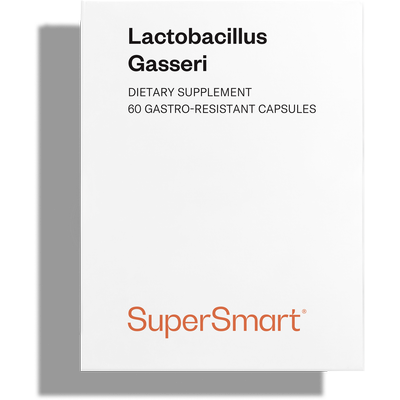
| Microbiota balance / metabolic axis | L. gasseri | Promising effect on reducing waist circumference | Lactobacillus gasseri |
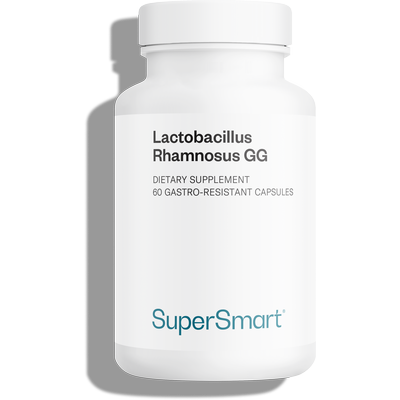
| Digestive comfort / irregular bowel movements | L. rhamnosus GG | Well-documented LGG strain | Lactobacillus rhamnosus GG |
| Microbiota balance / lipid axis | L. reuteri | Certain strains studied for their effect on cholesterol metabolism | Lactobacillus reuteri |
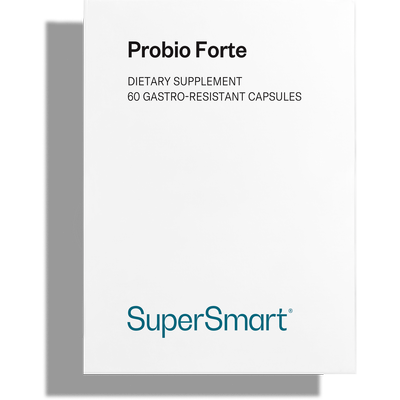
| Broad support for the microbiota | L. acidophilus + L. casei + L. plantarum | Synergistic combination of several lactobacilli | Probio Forte |
Lactobacillus gasseri: an ally for metabolic balance
A natural inhabitant of the human digestive tract, Lactobacillus gasseri is one of the most extensively studied lactobacilli in the context of weight management.
In a study involving 210 Japanese adults with significant abdominal adiposity, 12 weeks’ consumption of a fermented milk product containing L. gasseri was associated with a reduction in visceral fat, as well as in body weight, BMI, waist circumference and hip circumference, compared with the control group (7).
These findings support the potential of L. gasseri for improving body composition. However, the results remain specific to the strain and the conditions studied.
 Lactobacillus gasseri provides 12 billion CFU per daily dose and is supplied in enteric-coated capsules to protect the microorganisms as they pass through the stomach.
Lactobacillus rhamnosus GG: supporting the intestinal barrier and immunity
Among the strains of lactobacilli, Lactobacillus rhamnosus GG — often abbreviated to LGG — is the subject of a particularly extensive body of scientific literature.
Research focuses in particular on the gut barrier, interactions with the microbiota and the modulation of the immune response.
LGG may, in particular, influence the production of certain cytokines, which are signalling molecules involved in communication between immune cells (8). Clinical trials have also investigated its potential benefits in relation to respiratory infections (9).
Courses of antibiotic treatment are another well-documented context. A meta-analysis of 12 randomised trials involving 1,499 participants linked LGG to a reduced risk of antibiotic-associated diarrhoea, which was particularly marked in children (10).
For further information on this topic, please also see our guide on digestive imbalances.
Lactobacillus rhamnosus GG provides 10 billion CFU per day and contains inulin, a prebiotic fibre that ‘feeds’ the good bacteria.
Lactobacillus reuteri: cardiovascular health and gut flora balance
Found in particular in the human gastrointestinal tract, Lactobacillus reuteri may interact with lipid metabolism.
In a randomised, double-blind trial conducted among adults with hypercholesterolaemia, a favourable change in several parameters, including LDL cholesterol, was observed compared with placebo after 9 weeks of supplementation (11).
One of the mechanisms at work is thought to involve the hydrolase activity of bile salts, which may influence the intestinal absorption of cholesterol.
Another distinctive feature is that certain strains of L. reuteri can produce reuterin, a compound with antimicrobial activity. Experimental studies suggest, in particular, that it may inhibit Clostridioides difficile, a bacterium implicated in certain forms of antibiotic-associated diarrhoea (12).
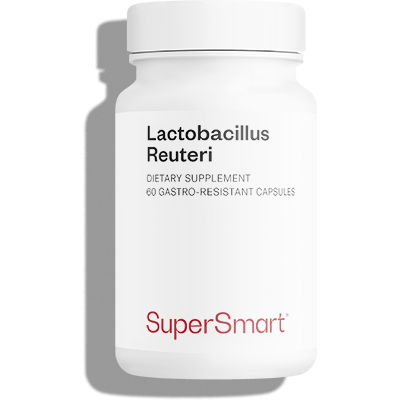
Found in Lactobacillus Reuteri, with an excellent dosage of 5 billion CFU per day.
Lactobacillus acidophilus, casei and plantarum: synergy for nutrient absorption and digestive wellbeing
For a more comprehensive approach to microbiota balance, other lactobacilli are also worth considering:
- Lactobacillus acidophilus is one of the longest-established probiotics. Certain strains have been evaluated in particular for their effects on digestive comfort and for reducing the duration and/or frequency of diarrhoea (13).
- Lactobacillus casei is found in certain fermented foods. Current areas of research include the regulation of bowel transit, antibiotic-associated diarrhoea and interactions with the immune system. In particular, a network meta-analysis identified favourable outcomes with certain L. casei-based interventions in the context of antibiotic-associated diarrhoea (14).
- Lactobacillus plantarum is the subject of a particularly extensive body of clinical literature. A systematic review covering 135 studies reports, particularly findings on gastrointestinal comfort, with a reduction in abdominal pain observed in the meta-analysis (15).
Combining several species allows for a diverse range of lactobacilli to be provided and makes the most of the complementary nature of their properties.
Probio Forte combines Bifidobacterium lactis, Lactobacillus acidophilus, Lactobacillus casei, Lactobacillus plantarum and Lactococcus lactis in a single formula.
Studies at a glance
These results relate to the specific strains and conditions assessed in each study and cannot be generalised to the species as a whole.
Why is our gut flora so severely lacking in lactobacilli?
The microbiota is not static. Diet, medication, stress, age and the environment are all factors that can affect its composition and balance.
Ultra-processed food: less fibre to nourish the microbiota
Diet is one of the main factors influencing the gut microbiota. Fibre and other plant-derived compounds provide bacteria with substrates that support their growth and activity. Conversely, a diet low in plant-based foods and high in ultra-processed products reduces the diversity of nutrients available to the microbiota (16).
Fermented foods also provide an additional source of microorganisms, although consuming them alone does not guarantee a more diverse gut microbiota (17).
Stress: when the gut-brain axis comes into play
The digestive and nervous systems are in constant communication via the gut-brain axis. Stress hormones, immune responses and changes in digestive motility could therefore also affect bacterial populations.
Research has, in particular, linked chronic stress to changes in the composition of the microbiota. However, the extent and nature of these effects vary considerably from one individual to another (18).
Antibiotics: a direct impact on the gut ecosystem
Although essential for combating certain bacterial infections, antibiotics can sometimes upset the balance of the gut flora by attacking harmless commensal microorganisms.
Depending on the specific antibiotic and the duration of treatment, this state of imbalance, or dysbiosis, may persist after treatment has ended. In particular, some studies have reported a reduction in bacterial diversity, as well as a decrease in Lactobacillus and Bifidobacterium following certain courses of antibiotic therapy (19).
Recovery then varies greatly from person to person. Whilst probiotic supplementation cannot claim to automatically ‘restore’ the microbiota, it can nevertheless provide valuable support to a weakened gut flora.
If your gut balance has been disrupted, you may wish to find out more about the benefits and how to take a course of probiotics.
Key criteria for choosing high-quality probiotics
Ensure a guaranteed CFU count
CFU, or colony-forming units, indicate the quantity of viable microorganisms present in a dose. A key criterion: to produce the desired effects, a probiotic must provide a sufficient quantity of bacteria that are still alive at the time of consumption (20).
The mention of a guaranteed dosage is therefore a genuine indicator of quality, provided you check at what stage this quantity is guaranteed: at the time of manufacture or until the end of the shelf life. SuperSmart guarantees the viability of the CFU until the product’s expiry date, a requirement that is rare on the market.
Beyond the dosage, the claimed benefits must also be based on sound and substantiated data, in accordance with the EFSA’s framework for the evaluation of health claims (21).
Freeze-drying to preserve bacteria over time
As a probiotic is based on living organisms, its stability during storage is a major concern.
Freeze-drying involves removing water at low temperatures to place the bacteria in a state of low metabolic activity, thereby limiting their degradation over time (22).
It is used in particular for the strains in the Probio Forte formula.
Gastro-resistance: the secret to optimal bioavailability
Even when perfectly preserved, the bacteria must still survive the digestive tract. Before reaching the intestine, they must overcome several obstacles: gastric acidity, digestive enzymes, bile salts… Their resistance to these hostile conditions varies greatly depending on the strain (23).
Gastro-resistant capsules are specifically designed to protect them from the acidic environment of the stomach. Their delayed-release mechanism delays the opening of the capsule so that the bacteria are released further down the digestive tract (24).
SuperSmart uses this type of formulation for all the probiotics mentioned above.
How and when should you take your probiotics?
There is no universal rule that applies to all strains. It is therefore important to follow the dosage and storage instructions specific to the chosen product.
Some probiotics are best taken on an empty stomach, whilst others are best taken before a meal. The choice depends in particular on the formulation and the resistance of the microorganisms. For example, Lactobacillus Rhamnosus GG is recommended at a dose of two capsules a day, 30 minutes before eating, whilst Probio Forte is best taken on an empty stomach.
Consistency is also important. Ingested probiotics do not necessarily establish themselves permanently in the microbiota. Their presence is generally temporary (25).
A course of treatment should therefore be planned according to the strain, the objective and the duration under consideration. To find out more, discover whether it is appropriate to take probiotics on a continuous basis.
If you are undergoing medical treatment, are pregnant, breastfeeding or have a compromised immune system, seek advice from a healthcare professional before taking any supplements.
FAQs on Lactobacillus probiotics
Can several strains of Lactobacillus be combined?
Yes. Multi-strain formulations allow several microorganisms with different and complementary effects to be supplied simultaneously. Probio Forte therefore combines L. acidophilus, L. casei and L. plantarum with Bifidobacterium lactis and Lactococcus lactis.
How long should a course of lactobacilli last?
The duration depends on the product and the circumstances. As a general rule, clinical trials are based on courses of lactobacilli lasting from a few weeks to several months. It is therefore best to follow the recommended duration for the chosen formula.
Do Lactobacillus probiotics contain lactose?
Not necessarily. A lactic acid bacterium is not the same as lactose. The term ‘lactic’ refers to its ability to produce lactic acid through fermentation. A supplement can therefore contain lactobacilli whilst still being lactose-free. If in doubt, check the ingredients list for the product in question.
Which Lactobacillus strain should you choose for digestive comfort?
L. rhamnosus GG is one of the most well-documented strains in relation to bowel function, particularly in situations where this is under strain.
Which Lactobacillus should you choose for metabolic balance?
Lactobacillus gasseri is among the most extensively studied in this field, particularly regarding body composition and the reduction of visceral fat. However, these results remain strain-dependent.
Which Lactobacillus should you choose for vaginal flora?
For the vaginal flora, certain strains of L. rhamnosus, L. acidophilus or L. salivarius may help create a vaginal environment less conducive to unwanted microorganisms (26). Our targeted Vaginal Health formula combines these three species. You can also find SuperSmart’s solutions dedicated to urinary comfort and the flora.
SUPERSMART ADVICE

References
- FAO/WHO. Health and Nutritional Properties of Probiotics in Food including Powder Milk with Live Lactic Acid Bacteria. Report of a Joint FAO/WHO Expert Consultation, Córdoba, Argentina, 2001. 🔗
- Zheng J, Wittouck S, Salvetti E, et al. A taxonomic note on the genus Lactobacillus: Description of 23 novel genera, emended description of the genus Lactobacillus Beijerinck 1901, and union of Lactobacillaceae and Leuconostocaceae. Int J Syst Evol Microbiol. 2020;70(4):2782-2858. PMID: 32293557. 🔗
- Gao Z, Daliri EBM, Wang J, et al. Inhibitory Effect of Lactic Acid Bacteria on Foodborne Pathogens: A Review. J Food Prot. 2019;82(3):441-453. PMID: 30794461. 🔗
- Van Tassell ML, Miller MJ. Lactobacillus adhesion to mucus. Nutrients. 2011;3(5):613-636. PMID: 22254114. 🔗
- Jang SJ, Lee K, Kwon B, You HJ, Ko G. Vaginal lactobacilli inhibit growth and hyphae formation of Candida albicans. Sci Rep. 2019;9:8121. PMID: 31148560. 🔗
- McFarland LV, Evans CT, Goldstein EJC. Strain-Specificity and Disease-Specificity of Probiotic Efficacy: A Systematic Review and Meta-Analysis. Front Med (Lausanne). 2018;5:124. PMID: 29868585. 🔗
- Kadooka Y, Sato M, Ogawa A, et al. Effect of Lactobacillus gasseri SBT2055 in fermented milk on abdominal adiposity in adults in a randomised controlled trial. Br J Nutr. 2013;110(9):1696-1703. PMID: 23614897. 🔗
- Fong FLY, Shah NP, Kirjavainen P, El-Nezami H. Mechanism of Action of Probiotic Bacteria on Intestinal and Systemic Immunities and Antigen-Presenting Cells. Int Rev Immunol. 2016;35(3):179-188. PMID: 26606641. 🔗
- Liu S, Hu P, Du X, Zhou T, Pei X. Lactobacillus rhamnosus GG supplementation for preventing respiratory infections in children: a meta-analysis of randomized, placebo-controlled trials. Indian Pediatr. 2013;50(4):377-381. PMID: 23665598. 🔗
- Szajewska H, Kołodziej M. Systematic review with meta-analysis: Lactobacillus rhamnosus GG in the prevention of antibiotic-associated diarrhoea in children and adults. Aliment Pharmacol Ther. 2015;42(10):1149-1157. PMID: 26365389. 🔗
- Jones ML, Martoni CJ, Prakash S. Cholesterol lowering and inhibition of sterol absorption by Lactobacillus reuteri NCIMB 30242: a randomized controlled trial. Eur J Clin Nutr. 2012;66(11):1234-1241. PMID: 22990854. 🔗
- Engevik MA, Danhof HA, Shrestha R, et al. Reuterin disrupts Clostridioides difficile metabolism and pathogenicity through reactive oxygen species generation. Gut Microbes. 2020. PMID: 32804011. 🔗
- Cheng H, Ma Y, Liu X, et al. A Systematic Review and Meta-Analysis: Lactobacillus acidophilus for Treating Acute Gastroenteritis in Children. Nutrients. 2022;14(3):682. PMID: 35277042. 🔗
- Ma Y, Yang JY, Peng X, et al. Which probiotic has the best effect on preventing Clostridium difficile-associated diarrhea? A systematic review and network meta-analysis. J Dig Dis. 2020;21(2):69-80. PMID: 31875427. 🔗
- The Health Benefits of Probiotic Lactiplantibacillus plantarum: A Systematic Review and Meta-Analysis. Probiotics Antimicrob Proteins. 2024. PMID: 38816672. 🔗
- Segura Munoz RR, et al. Effect of ultra-processed diet on gut microbiota and thus its role in neurodegenerative diseases. Nutrition. 2020. PMID: 31837645. 🔗
- Wastyk HC, Fragiadakis GK, Perelman D, et al. Gut-microbiota-targeted diets modulate human immune status. Cell. 2021;184(16):4137-4153.e14. PMID: 34256014. 🔗
- Foster JA, Rinaman L, Cryan JF. Stress & the gut-brain axis: Regulation by the microbiome. Neurobiol Stress. 2017;7:124-136. PMID: 29276734. 🔗
- Elvers KT, Wilson VJ, Hammond A, et al. Antibiotic-induced changes in the human gut microbiota for the most commonly prescribed antibiotics in primary care in the UK: a systematic review. BMJ Open. 2020;10. PMID: 32958481. 🔗
- A critical evaluation of the factors affecting the survival and persistence of beneficial bacteria in healthy adults. Benef Microbes. 2021. PMID: 34323162. 🔗
- European Food Safety Authority (EFSA). Health claims under Article 13. 🔗
- Wang A, Zhong Q. Drying of probiotics to enhance the viability during preparation, storage, food application, and digestion: A review. Compr Rev Food Sci Food Saf. 2024;23(1). PMID: 38284583. 🔗
- Bezkorovainy A. Probiotics: determinants of survival and growth in the gut. Am J Clin Nutr. 2001;73(2 Suppl):399S-405S. PMID: 11157348. 🔗
- Cook MT, Tzortzis G, Charalampopoulos D, Khutoryanskiy VV. Microencapsulation of probiotics for gastrointestinal delivery. J Control Release. 2012;162(1):56-67. PMID: 22698940. 🔗
- Derrien M, van Hylckama Vlieg JET. Fate, activity, and impact of ingested bacteria within the human gut microbiota. Trends Microbiol. 2015;23(6):354-366. PMID: 25840765. 🔗
- Petrova MI, Lievens E, Malik S, Imholz N, Lebeer S. Lactobacillus species as biomarkers and agents that can promote various aspects of vaginal health. Front Physiol. 2015;6:81. PMID: 25859220. 🔗
Keywords





6 Days
sin problemas en la entrega
sin problemas en la entrega complementos punteros poniendo siempre el foco en la salud humana nos lo merecemos de pie a cabeza para una salud larga y duradera
sosa robaina
31 Days
Prodotti eccezionali
Prodotti eccezionali! Consegna rapida e precisa
paola
42 Days
Heldere info
Heldere info
HanS.
42 Days
Snelle levering
Snelle levering
harrie
47 Days
Adequate info en hoge kwaliteit
Adequate info en hoge kwaliteit
HanS.
57 Days
Supplementen zijn goed.
Supplementen zijn goed. Zachte prijzen. Website met problemen ( altijd ) niet goed voor nieuwe klanten.
Gino RJ
67 Days
Alles op tijd geleverd.
Alles op tijd geleverd. De producten worden alsmaar duurder, terwijl mijn pensioen niet meer stijgt. Vandaar kan ik alsmaar minder vaak bestellen.
Wouters
1137 Days
Great service
Great service
Ryszard
1149 Days
Profesjonalna obsługa
Bardzo dobre i rzeczowe opisy. Profesjonalna obsługa.
PIEKOSZEWSKI Chris
1818 Days
Wszystko OK!
Wszystko poszło jak powinno 🙂
SITKIEWICZ Pawel
2604 Days
Szybko sprawnie bez problemów
Szybko sprawnie bez problemów
Marek
of experience
your money back
##montant## purchase