
Probiotics and the gut: understanding and optimising your microbiota
Probiotics and the gut have a complex relationship. Far from being simply ‘good bacteria’, these microorganisms interact with a unique ecosystem: the microbiota. Find out how to better understand and maintain it.
- ✓The gut microbiota comprises between 1,000 and 100,000 billion microorganisms, mainly concentrated in the colon.
- ✓Probiotics do not establish a long-term presence in the gut, which is why it is beneficial to take them regularly or repeat courses as needed.
- ✓The properties of probiotics depend closely on the strains used.
- ✓CFU dosage, freeze-drying and gastro-resistant coating are key criteria for choosing the right supplement.
- ✓Prebiotics, such as inulin and FOS, act as ‘food’ for certain gut bacteria and optimise their colonisation and activity.


- 01.What is the gut microbiota and why should we support it? ›
- 02.How do probiotics affect the gut? ›
- 03.Scientific criteria for choosing probiotics ›
- 04.Which targeted probiotics are best for your digestive comfort? ›
- 05.Beyond the gut: the microbiota’s new frontiers ›
- 06.FAQs on probiotics and the gut ›
What is the gut microbiota and why should we support it?
The gut microbiota refers to the collection of microorganisms that inhabit your digestive tract. It consists mainly of bacteria, but also includes viruses, fungi and non-pathogenic parasites known as ‘commensals’ (1). Mainly located in the small intestine and the colon, this flora becomes denser as it moves through the digestive tract, reaching its peak in the colon. Inserm estimates that it comprises between 1,000 and 100,000 billion organisms (2).
It is now well established that the gut microbiota plays a role in numerous physiological functions. For example, it is involved in the breakdown of dietary compounds such as fibre, the production of certain metabolites and vitamins, and the maintenance of the integrity of the intestinal barrier (3). Current scientific research also highlights its ongoing interactions with the nervous and immune systems (4–5).
A complex ecosystem of bacteria and yeasts
Your microbiota constitutes an extremely diverse ecosystem. Modern sequencing techniques have enabled the identification of nearly a thousand different species, of which nearly 95% are bacteria.
These belong to four major groups, two of which are by far the most prevalent: Firmicutes (which includes the genera Faecalibacterium, Lactobacillus and Clostridium) and Bacteroidetes (Bacteroides and Prevotella) (6). In addition to these, and in smaller quantities, there are Actinobacteria, which include, amongst others, Bifidobacterium. Proteobacteria, which include enterobacteria such as Escherichia coli, remain in the minority in healthy individuals.
Much like a fingerprint, the composition of the gut microbiota is unique to each individual. Each person is thought to harbour around 160 distinct species, including a core group of 15 to 20 species present in all individuals, which carries out its main functions.
This diversity begins to develop from birth and then evolves under the influence of numerous factors: age, diet, medication, physical activity, environmental stressors (7)... The microbiota is therefore not a static community, but a dynamic ecosystem that is constantly adapting.
Microbial diversity is a useful indicator of the richness of this ecosystem and may contribute to its resilience, but it does not in itself define a ‘healthy’ microbiota: its composition, balance and metabolic activity are just as crucial.
Physiological signs of an imbalance in the gut flora
When the composition or functioning of the microbiota deviates from a balance that is beneficial to its host, this is referred to as dysbiosis (8). However, this concept remains difficult to define: there is no universal ratio of ‘good’ to ‘bad’ bacteria that, on its own, would allow this diagnosis to be made.
Many factors can disrupt your gut ecosystem: gastrointestinal infection, recent use of antibiotics, chronic stress, a change in diet or a change in lifestyle (9).
Imbalances in the microbiota are frequently associated with bloating, flatulence, a feeling of heaviness after meals or bowel irregularities (10). These symptoms remain, however, non-specific and are not sufficient to categorically conclude that dysbiosis is present. Once any potential medical causes have been ruled out, you can then seek to physiologically support the balance of your gut flora, with a view to promoting better digestive comfort.
How do probiotics affect the gut?
Probiotics are live microorganisms which, when administered in adequate quantities, confer a health benefit on the host (11). Depending on the strain, they may interact with microorganisms already present, produce various metabolites, influence the intestinal environment, or communicate with cells of the mucosa and the immune system.
The principle of transient colonisation of the mucosa
Contrary to a widely held belief, gut probiotics do not establish a permanent presence in your microbiota. Their presence is transient: they pass through your digestive tract before being gradually eliminated.
A study involving 30 adults illustrates this phenomenon: after two weeks of supplementation, several of the strains consumed remained detectable in the stools approximately 3 to 6 days after stopping the treatment – although there were significant individual variations. In some participants, a strain of Bifidobacterium longum was still detected after 15 days or more (12).
This brief stay does not prevent probiotics from interacting with the gut environment. However, due to their temporary persistence, regular intake or repeated courses of treatment are still recommended to maintain their beneficial effects over the long term.
Specific strains: Lactobacillus, Bifidobacterium and Saccharomyces
Among the lactobacilli, the species Lactobacillus acidophilus, Lactiplantibacillus plantarum and Lacticaseibacillus rhamnosus produce lactic acid from carbohydrates. By acidifying the environment, they create conditions that are unfavourable to pathogens (13). The L. rhamnosus GG strain, which has been extensively documented, has been the subject of hundreds of studies describing its beneficial effects on the regulation of bowel function and intestinal permeability (14–15).
 Lactobacillus rhamnosus GG is based on the precisely identified strain ATCC 53103.
Bifidobacteria, on the other hand, are particularly abundant in early life. Certain species, such as Bifidobacterium longum, B. bifidum and B. animalis subsp. lactis are involved in the fermentation of carbohydrates that reach the colon. Their metabolism produces, in particular, acetate and lactate, which can in turn be utilised by other gut bacteria (16).
Saccharomyces boulardii differs from the others in that it is a probiotic yeast. It has been the subject of numerous clinical trials, particularly in relation to certain types of diarrhoea, including those associated with antibiotic use (17).
To find out more about each family, see our article on the benefits of probiotics.
Scientific criteria for choosing probiotics
Are you looking for a high-quality probiotic? There are several criteria worth considering: protection of the bacteria against gastric acidity, an appropriate CFU dosage, and the possible presence of synergistic compounds such as prebiotics.
Gastric survival: the need for gastro-resistant capsules (DR Caps™)
Before reaching your gut, probiotics must overcome a major obstacle: the highly acidic environment of your stomach, which has a pH of around 2 on an empty stomach (18). This acidity can compromise the survival of certain bacteria during the digestive process. Without adequate protection, some of the ingested microorganisms may therefore fail to reach the gut in a viable form.
It is precisely to limit their exposure to this hostile environment that delayed-release, gastro-resistant capsules have been developed. DR Caps™ technology delays the breakdown of the capsule shell to better protect the probiotics as they pass through the stomach and delay their release until further along the digestive tract.
Probio Forte combines 5 probiotic strains in a single DR Caps™ capsule, providing a total of 8 billion CFU per capsule.
Colony-forming unit (CFU) content and freeze-drying
The concentration of probiotics is measured in CFU (Colony-Forming Units), which corresponds to the number of live microorganisms capable of multiplying. In practice, dietary supplements generally offer dosages of several billion CFU per dose.
To choose the right probiotic supplement, bear these four points in mind:
- strength: ideally, aim for between 5 and 30 billion CFU per dose, depending on the strains and the desired outcome;
- freeze-drying: this low-temperature dehydration technique stabilises the microorganisms and preserves their viability during storage;
- strain identification: opt for microorganisms that are precisely identified down to the strain level, for example Lacticaseibacillus rhamnosus GG (ATCC 53103), as the properties observed in one strain do not necessarily apply to the entire species;
- regulatory compliance: the claimed benefits must comply with the European framework for health claims established by the European Food Safety Authority (EFSA) (19).
The synergistic action of prebiotics (inulin, FOS)
Prebiotics mainly comprise fibres and fermentable compounds that are not digested. They reach the colon, where they act, in a sense, as ‘food’ for the beneficial bacteria of the microbiota (20).
Their fermentation is thought to promote the growth and activity of these bacteria, particularly the synthesis of short-chain fatty acids such as butyrate, which is a major source of energy for colon cells and helps maintain the intestinal barrier (21).
Among the best known are inulin, fructo-oligosaccharides (FOS) and galacto-oligosaccharides (GOS).
Combining probiotics and prebiotics in so-called ‘synbiotic’ formulations thus allows living microorganisms to be combined with substrates from which they can derive benefit.
Which probiotics are best for your digestive comfort?
The choice of a probiotic depends mainly on the nature of your symptoms and your health goals.
Formulations for promoting bowel movement
Certain probiotic strains are more commonly recommended for temporary loose stools, particularly whilst travelling or during medication. Saccharomyces boulardii and Lactobacillus rhamnosus GG are among the most extensively studied in this context (22).
An interesting feature: S. boulardii is a probiotic yeast, not a bacterium. It is therefore not affected by antibacterial antibiotics, which is why it is useful as a supplement to antibiotic treatment.
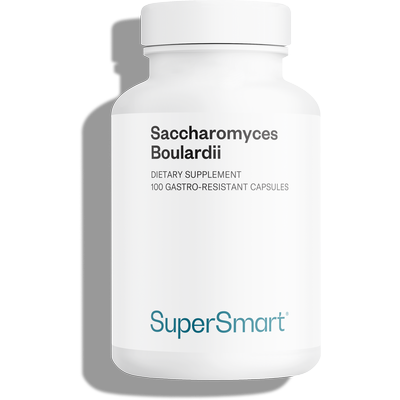
Saccharomyces boulardii provides 20 billion CFU per daily dose, in the form of enteric-coated capsules.
To find out more about this targeted approach, see our guide on the 3 probiotics to take for an overactive bowel.
Solutions for sluggish bowel movements
Conversely, slow bowel movements may benefit from certain probiotic strains within the Bifidobacterium and Lactobacillus genera. The data are particularly promising for certain strains of Bifidobacterium lactis, which have been linked in several trials to an increase in bowel movement frequency (23).
Our in-depth article will help you determine which probiotics to consider if you have sluggish bowel movements. A diet rich in fibre, good hydration and regular physical activity remain essential alongside this (24).
Broad-spectrum blends for overall balance
For versatile support of gut balance, multi-strain formulations are a particularly attractive option. By combining several species, they capitalise on the diversity and complementary nature of the microorganisms provided and cover several sections of the digestive tract simultaneously.
Probio Forte exemplifies this approach by combining five complementary species, including Bifidobacterium lactis and Lactobacillus acidophilus, for a total of 8 billion microorganisms per DR Caps™ enteric-coated capsule.
Colon Friendly, meanwhile, features a combination of four microorganisms — Saccharomyces boulardii, B. longum infantis, B. longum longum and Lactobacillus acidophilus — in a formula specifically designed to support colon health.
Full Spectrum Probiotic takes this concept of diversity even further with 20 probiotic strains and 36 billion CFU per daily dose.
To optimise your digestive comfort according to your needs, explore the full range of probiotics or the digestion category. If you have specific gut sensitivities, also check out our guide to soothing probiotics for irritable bowel syndrome.
Beyond the gut: new frontiers in the microbiome
Research into the microbiota now extends far beyond digestive comfort alone. Certain strains are attracting growing interest in the fields of metabolism and weight management, whilst psychobiotics are exploring the close links between the gut and the brain (25–26).
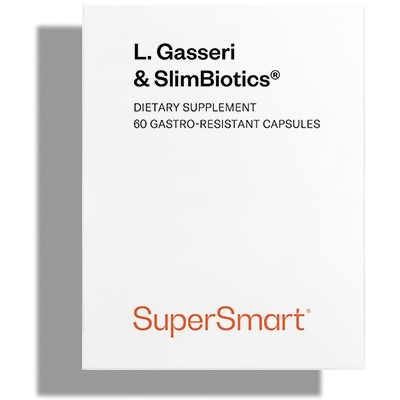
If you’re following a weight-loss programme, consider Lactobacillus gasseri and its enhanced version, L. gasseri & SlimBiotics®.
Lactoxira is based on eight probiotic strains evaluated for their effects on mood disorders.
Researchers are even venturing into more unexpected fields, such as eye health, with the emergence of postbiotics (formulated from non-living microorganisms and/or their components) (27).
Vision PostBiotic utilises the postbiotic strain Lacticaseibacillus paracasei KW3110, inactivated by gentle heat treatment and studied for its effects on eye strain.
FAQ on probiotics and the gut
Can probiotics be taken continuously throughout the year?
Whilst long-term use of probiotics is generally well tolerated, continuous supplementation is not always necessary. Most regimens involve courses lasting from several weeks to a few months, which can be repeated depending on your specific concerns: digestive stress, seasonal changes, etc.
A good strategy is also to vary the strains from one course to the next, depending on how your needs change and the specific properties you’re looking for. Our dedicated article will help you determine the right frequency for taking your probiotics.
When is the best time of day to take your probiotics?
Recommendations vary depending on the strains and their formulation. However, some evidence suggests that taking them in the morning on an empty stomach (30 minutes before breakfast) or in the evening at bedtime (2 hours after dinner) may optimise the survival of the bacteria and their delivery to the gut. If you are taking antibiotics, leave a 2-hour gap between taking the medication and taking the supplements.
Encapsulated in enteric-coated capsules, the microorganisms are given extra protection as they pass through the stomach. In all cases, follow the manufacturer’s instructions and opt for a glass of water at room temperature rather than a very hot drink.
What is the difference between a prebiotic and a probiotic?
Probiotics are live microorganisms (bacteria or yeasts), whilst prebiotics are fermentable compounds that serve as a substrate for them. To put it simply: probiotics provide the ‘inhabitants’, whilst prebiotics provide them with ‘food’. Both play a complementary role as part of an overall strategy to support the gut microbiota.
Why is it essential to use enteric-coated capsules?
The hydrochloric acid in the stomach can destroy a significant proportion of probiotic bacteria ingested in an unprotected form. Delayed-release, enteric-coated capsules, such as those using DR Caps™ technology, delay the breakdown of their coating to limit the microorganisms’ exposure to this hostile environment. They therefore help to preserve more viable CFU until they reach the gut.
This article is intended for informational and educational purposes. Food supplements are not a substitute for a varied and balanced diet or a healthy lifestyle. In the event of persistent discomfort, it is recommended that you seek advice from a healthcare professional.
SUPERSMART ADVICE
References
- Ma Y, Wang L, Hu H, Shieh AR, Li E, He D, He L, Liu Z, Paing TM, Chen X, Cao Y. Composition and Function of Gut Microbiome: From Basic Omics to Precision Medicine. Genes (Basel). 2026 Jan 22;17(1):116. doi: 10.3390/genes17010116. PMID: 41595535; PMCID: PMC12840750. 🔗
- Inserm. Microbiote intestinal (flore intestinale) : une piste sérieuse pour comprendre l’origine de nombreuses maladies. Dossier réalisé en collaboration avec Dominique Gauguier, Michel Neunlist, Harry Sokol et Laurence Zitvogel. Publié le 18 octobre 2021. 🔗
- Jandhyala SM, Talukdar R, Subramanyam C, Vuyyuru H, Sasikala M, Nageshwar Reddy D. Role of the normal gut microbiota. World J Gastroenterol. 2015 Aug 7;21(29):8787-803. doi: 10.3748/wjg.v21.i29.8787. PMID: 26269668; PMCID: PMC4528021. 🔗
- Zhu X, Han Y, Du J, Liu R, Jin K, Yi W. Microbiota-gut-brain axis and the central nervous system. Oncotarget. 2017 May 10;8(32):53829-53838. doi: 10.18632/oncotarget.17754. PMID: 28881854; PMCID: PMC5581153. 🔗
- Belkaid Y, Hand TW. Role of the microbiota in immunity and inflammation. Cell. 2014 Mar 27;157(1):121-41. doi: 10.1016/j.cell.2014.03.011. PMID: 24679531; PMCID: PMC4056765. 🔗
- Magne F, Gotteland M, Gauthier L, Zazueta A, Pesoa S, Navarrete P, Balamurugan R. The Firmicutes/Bacteroidetes Ratio: A Relevant Marker of Gut Dysbiosis in Obese Patients? Nutrients. 2020 May 19;12(5):1474. doi: 10.3390/nu12051474. PMID: 32438689; PMCID: PMC7285218. 🔗
- Quercia S, Candela M, Giuliani C, Turroni S, Luiselli D, Rampelli S, Brigidi P, Franceschi C, Bacalini MG, Garagnani P, Pirazzini C. From lifetime to evolution: timescales of human gut microbiota adaptation. Front Microbiol. 2014 Nov 4;5:587. doi: 10.3389/fmicb.2014.00587. PMID: 25408692; PMCID: PMC4219431. 🔗
- Shen Y, Fan N, Ma SX, Cheng X, Yang X, Wang G. Gut Microbiota Dysbiosis: Pathogenesis, Diseases, Prevention, and Therapy. MedComm (2020). 2025 Apr 18;6(5):e70168. doi: 10.1002/mco2.70168. PMID: 40255918; PMCID: PMC12006732. 🔗
- Hrncir T. Gut Microbiota Dysbiosis: Triggers, Consequences, Diagnostic and Therapeutic Options. Microorganisms. 2022 Mar 7;10(3):578. doi: 10.3390/microorganisms10030578. PMID: 35336153; PMCID: PMC8954387. 🔗
- Carías Domínguez AM, de Jesús Rosa Salazar D, Stefanolo JP, Cruz Serrano MC, Casas IC, Zuluaga Peña JR. Intestinal Dysbiosis: Exploring Definition, Associated Symptoms, and Perspectives for a Comprehensive Understanding - a Scoping Review. Probiotics Antimicrob Proteins. 2025 Feb;17(1):440-449. doi: 10.1007/s12602-024-10353-w. Epub 2024 Sep 5. PMID: 39235661; PMCID: PMC11832579. 🔗
- Reid G, Gadir AA, Dhir R. Probiotics: Reiterating What They Are and What They Are Not. Front Microbiol. 2019 Mar 12;10:424. doi: 10.3389/fmicb.2019.00424. PMID: 30930863; PMCID: PMC6425910. 🔗
- Tremblay A, Auger J, Alyousif Z, Calero SEC, Mathieu O, Rivero-Mendoza D, Elmaoui A, Dahl WJ, Tompkins TA. Total Transit Time and Probiotic Persistence in Healthy Adults: A Pilot Study. J Neurogastroenterol Motil. 2023 Apr 30;29(2):218-228. doi: 10.5056/jnm22031. PMID: 37019866; PMCID: PMC10083121. 🔗
- Colautti A, Orecchia E, Comi G, Iacumin L. Lactobacilli, a Weapon to Counteract Pathogens through the Inhibition of Their Virulence Factors. J Bacteriol. 2022 Nov 15;204(11):e0027222. doi: 10.1128/jb.00272-22. Epub 2022 Oct 26. PMID: 36286515; PMCID: PMC9664955. 🔗
- Sanklecha M, Verma L, Pai U, Mishra S, Maqsood S, Birla A. Lactobacillus rhamnosus GG Evaluation in Acute Diarrhea (LEAD): An Observational Study. Cureus. 2022 Apr 29;14(4):e24594. doi: 10.7759/cureus.24594. PMID: 35506120; PMCID: PMC9053112. 🔗
- Capurso L. Thirty Years of Lactobacillus rhamnosus GG: A Review. J Clin Gastroenterol. 2019 Mar;53 Suppl 1:S1-S41. doi: 10.1097/MCG.0000000000001170. PMID: 30741841. 🔗
- Falony G, Vlachou A, Verbrugghe K, De Vuyst L. Cross-feeding between Bifidobacterium longum BB536 and acetate-converting, butyrate-producing colon bacteria during growth on oligofructose. Appl Environ Microbiol. 2006 Dec;72(12):7835-41. doi: 10.1128/AEM.01296-06. Epub 2006 Oct 20. PMID: 17056678; PMCID: PMC1694233. 🔗
- Spatz M, Wang Y, Lapiere A, Da Costa G, Michaudel C, Danne C, Michel ML, Langella P, Sokol H, Richard ML. Saccharomyces boulardii CNCM I-745 supplementation during and after antibiotic treatment positively influences the bacterial gut microbiota. Front Med (Lausanne). 2023 Aug 4;10:1087715. doi: 10.3389/fmed.2023.1087715. PMID: 37601783; PMCID: PMC10436532. 🔗
- Ciorba MA. A gastroenterologist's guide to probiotics. Clin Gastroenterol Hepatol. 2012 Sep;10(9):960-8. doi: 10.1016/j.cgh.2012.03.024. Epub 2012 Apr 10. PMID: 22504002; PMCID: PMC3424311. 🔗
- European Food Safety Authority (EFSA). Allégations nutritionnelles et allégations de santé. EFSA. 🔗
- Davani-Davari D, Negahdaripour M, Karimzadeh I, Seifan M, Mohkam M, Masoumi SJ, Berenjian A, Ghasemi Y. Prebiotics: Definition, Types, Sources, Mechanisms, and Clinical Applications. Foods. 2019 Mar 9;8(3):92. doi: 10.3390/foods8030092. PMID: 30857316; PMCID: PMC6463098. 🔗
- Canani RB, Costanzo MD, Leone L, Pedata M, Meli R, Calignano A. Potential beneficial effects of butyrate in intestinal and extraintestinal diseases. World J Gastroenterol. 2011 Mar 28;17(12):1519-28. doi: 10.3748/wjg.v17.i12.1519. PMID: 21472114; PMCID: PMC3070119. 🔗
- Guarino A, Guandalini S, Lo Vecchio A. Probiotics for Prevention and Treatment of Diarrhea. J Clin Gastroenterol. 2015 Nov-Dec;49 Suppl 1:S37-45. doi: 10.1097/MCG.0000000000000349. PMID: 26447963. 🔗
- Dimidi E, Christodoulides S, Fragkos KC, Scott SM, Whelan K. The effect of probiotics on functional constipation in adults: a systematic review and meta-analysis of randomized controlled trials. Am J Clin Nutr. 2014 Oct;100(4):1075-84. doi: 10.3945/ajcn.114.089151. Epub 2014 Aug 6. PMID: 25099542. 🔗
- Diaz S, Bittar K, Hashmi MF, et al. Constipation. [Updated 2023 Nov 12]. In: StatPearls [Internet]. Treasure Island (FL): StatPearls Publishing; 2026 Jan-. Available from: NCBI Bookshelf. 🔗
- Miyoshi M, Ogawa A, Higurashi S, Kadooka Y. Anti-obesity effect of Lactobacillus gasseri SBT2055 accompanied by inhibition of pro-inflammatory gene expression in the visceral adipose tissue in diet-induced obese mice. Eur J Nutr. 2014;53(2):599-606. doi: 10.1007/s00394-013-0568-9. Epub 2013 Aug 6. PMID: 23917447. 🔗
- Del Toro-Barbosa M, Hurtado-Romero A, Garcia-Amezquita LE, García-Cayuela T. Psychobiotics: Mechanisms of Action, Evaluation Methods and Effectiveness in Applications with Food Products. Nutrients. 2020 Dec 19;12(12):3896. doi: 10.3390/nu12123896. PMID: 33352789; PMCID: PMC7767237. 🔗
- Chen Q, Li XJ, Xie W, Su ZA, Qin GM, Yu CH. Postbiotics: emerging therapeutic approach in diabetic retinopathy. Front Microbiol. 2024 Mar 4;15:1359949. doi: 10.3389/fmicb.2024.1359949. PMID: 38500583; PMCID: PMC10946205. 🔗
Keywords


5 Days
Adequate info en hoge kwaliteit
Adequate info en hoge kwaliteit
HanS.
15 Days
Supplementen zijn goed.
Supplementen zijn goed. Zachte prijzen. Website met problemen ( altijd ) niet goed voor nieuwe klanten.
Gino RJ
25 Days
Alles op tijd geleverd.
Alles op tijd geleverd. De producten worden alsmaar duurder, terwijl mijn pensioen niet meer stijgt. Vandaar kan ik alsmaar minder vaak bestellen.
Wouters
1095 Days
Great service
Great service
Ryszard
1107 Days
Profesjonalna obsługa
Bardzo dobre i rzeczowe opisy. Profesjonalna obsługa.
PIEKOSZEWSKI Chris
1775 Days
Wszystko OK!
Wszystko poszło jak powinno 🙂
SITKIEWICZ Pawel
2562 Days
Szybko sprawnie bez problemów
Szybko sprawnie bez problemów
Marek
of experience
your money back
##montant## purchase