
B vitamins: side effects, risks and precautions for use
Essential for energy metabolism and the nervous system, B vitamins are generally well tolerated, including when taken as supplements. However, when taken in high doses or in combination, they can cause certain side effects.
- ✓The eight B vitamins are generally well tolerated when consumed at the recommended doses, either through diet or as supplements.
- ✓Vitamin B3 in the form of nicotinic acid can cause a ‘flush’: redness, warmth, tingling and itching.
- ✓Excessive and prolonged intake of vitamin B6 can disrupt nerve sensitivity and cause tingling or numbness.
- ✓High intakes of vitamin B9 can correct anaemia caused by a B12 deficiency and thus delay its diagnosis, without preventing any potential neurological disorders from developing.
- ✓To avoid excessive intake, check the amounts of B vitamins in all your supplements and seek advice if you are undergoing medical treatment.


How does the body absorb and eliminate B vitamins?
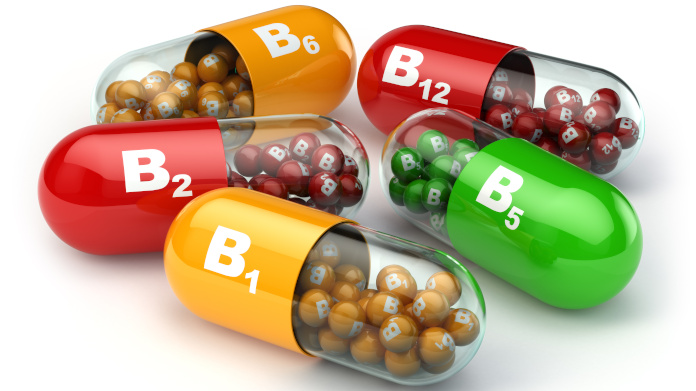
The term ‘B complex’ refers to a group of eight vitamins:
- thiamine (B1);
- riboflavin (B2);
- niacin (B3);
- pantothenic acid (B5);
- vitamin B6;
- biotin (B8);
- folate (B9);
- cobalamin (B12).
These are found naturally in food, particularly in:
- wholemeal cereals and pulses;
- vegetables;
- eggs and dairy products;
- meat and fish;
- brewer’s yeast.
Depending on the vitamin in question, they contribute to normal energy metabolism, the normal functioning of the nervous system and/or the reduction of tiredness and fatigue (1).
After digestion, B vitamins are absorbed in the gut. They are known as water-soluble vitamins because they dissolve in water: any excess that the body does not use is then excreted in the urine.
This excretion generally limits their accumulation. However, it does not mean that any amount can be consumed without caution:
- Vitamin B12 is a notable exception, as the body can store significant reserves of it, mainly in the liver.
- Very high and prolonged intakes of vitamin B6, on the other hand, can gradually disrupt nerve function.
When taken at the recommended doses, vitamin B-based food supplements are generally well tolerated.
The main precaution is to avoid duplication: if you are taking a B-complex, a multivitamin and another fortified product at the same time, check the daily amounts stated on their labels.
What side effects can B vitamins cause?
An adverse reaction following the intake of a supplement does not necessarily indicate an overdose. It may also depend on the dose, the associated ingredients, the time of day it is taken, or individual sensitivity.
Gastrointestinal disturbances
Nausea, abdominal discomfort or diarrhoea may occur with certain supplements, particularly at high doses. Extremely high intakes of vitamin B5, in particular, can cause digestive problems.
Where the instructions for use allow, taking the supplement with a meal may improve digestive tolerance.
However, if you experience severe or persistent symptoms, you should stop taking the product and seek professional advice.
Skin reactions
In rare cases, itching or a rash may indicate sensitivity to an ingredient.
These reactions differ from the ‘flush’ caused by nicotinic acid, a form of vitamin B3.
The ‘flush’ results from a temporary dilation of the small blood vessels in the skin: it mainly causes redness, a sensation of warmth and tingling, often shortly after taking the supplement, without necessarily indicating an allergy.
Bright yellow urine following the intake of riboflavin, on the other hand, is generally nothing to worry about. This colour simply reflects the excretion of some of the vitamin B2.
Any impact on energy levels and sleep?
Contributing to normal energy metabolism does not mean acting as a stimulant. There is no evidence that a B-vitamin complex systematically disrupts sleep.
If you feel that taking it late in the day makes it harder to fall asleep, take the supplement earlier in the day, provided the instructions allow this.
Also check whether the formula contains caffeine or stimulating plant extracts.
What are the symptoms of a vitamin B12 overdose?
There are no specific symptoms considered characteristic of a vitamin B12 overdose.
It has a low toxic potential and no upper safe limit has been established (2–3).
This does not mean that very high doses are necessary or more effective. Supplementation must always be tailored to individual needs and adhere to the recommended dosage.
Risks of overdose: which B vitamins require the most caution?
Note: an upper safe limit corresponds to the maximum amount that can be consumed daily, over a long period, without any expected risk to health. It is neither a recommended dose nor a threshold above which an adverse effect occurs immediately.
Depending on the vitamin, this limit takes into account all sources of intake or only those forms present in supplements and fortified foods (3).
Vitamin B3: how can you minimise skin flushing?
Niacin is the general name given to vitamin B3.
In food supplements, it is typically supplied in the form of nicotinic acid or nicotinamide. Both forms fulfil the nutritional role of vitamin B3, but do not have the same tolerance profile at high doses.
Nicotinic acid can promote the release of substances that temporarily dilate the small blood vessels beneath the skin.
This reaction causes redness, a sensation of warmth, tingling or itching, often on the face and upper body: this is known as a flush.
It usually subsides after a while and does not necessarily indicate an allergy (4).
The upper limits recommended for adults reflect this difference in tolerance:
- 10 mg per day for free, rapidly available nicotinic acid;
- 900 mg per day for nicotinamide, which does not usually cause this reaction (3).
To release nicotinic acid more gradually and minimise the flush, some supplements provide vitamin B3 in the form of inositol hexanicotinate (which combines six molecules of nicotinic acid with one molecule of inositol).
However, it has not been demonstrated that this completely prevents flushing, particularly at high doses (5).
As with any concentrated supplement, it is important to follow the recommended dosage and avoid combining it with other products containing high doses of vitamin B3.
 Discover Inositol Hexanicotinate, a concentrated formula providing vitamin B3 in the form of inositol hexanicotinate.
Vitamin B6: the risk of peripheral neuropathy
When vitamin B6 is taken in excessively high doses over a long period, it can disrupt the functioning of certain nerves.
This condition, known as peripheral neuropathy, can manifest as tingling, a burning sensation or numbness in the hands and feet. More rarely, difficulties with balance or coordination may occur.
In adults, the upper safe limit is set at 12 mg per day, taking into account dietary intake and supplements (6).
This limit applies to prolonged daily intake: exceeding it on an occasional basis does not automatically cause symptoms.
If you experience unusual tingling or numbness, stop taking any supplements containing vitamin B6 and seek advice from a healthcare professional.
Vitamin B9: why should you also check your vitamin B12 levels?
A deficiency in vitamin B9 or vitamin B12 can disrupt the formation of red blood cells and cause anaemia.
In someone with a B12 deficiency, a high dose of folic acid can correct this anaemia and make the deficiency harder to detect. However, the B12 deficiency persists and may continue to affect the nervous system (7).
In adults, the upper safe limit is set at 1,000 µg per day for vitamin B9 from food supplements or fortified foods, particularly in the form of folic acid or certain forms of 5-MTHF.
Folate naturally present in food is not subject to this limit (3–7).
Before taking a high dose of vitamin B9 or continuing supplementation for a prolonged period, it is therefore advisable to also check your vitamin B12 status with a healthcare professional.
Summary of the possible effects and safety limits of B vitamins
The absence of an upper limit generally indicates that the available data do not allow a precise threshold to be set.
| Vitamin | Possible effect or point to monitor in the event of high intake | Upper limit for adults |
|---|---|---|
| B1, thiamine | No specific adverse effect identified for setting a limit | Not defined; insufficient data |
| B2, riboflavin | Bright yellow urine, generally not serious | Not defined; insufficient data |
| B3, niacin | Flushing with nicotinic acid; other effects possible at very high doses | 10 mg/day of free nicotinic acid; 900 mg/day of nicotinamide |
| B5, pantothenic acid | Possible digestive disturbances at extremely high doses | Not defined; insufficient data |
| B6 | Nervous system disorders, such as tingling or numbness, in the event of prolonged excess | 12 mg/day, including diet and supplements |
| B8, biotin | May affect the results of certain laboratory tests at high doses | Not defined; insufficient data |
| B9, folate | May make a vitamin B12 deficiency more difficult to detect | 1,000 µg/day for forms added to food or in supplements; natural folates excluded |
| B12, cobalamin | No clearly defined adverse effects associated with high intake | Not defined |
Precautions for use: how to take a B-vitamin complex safely?
A course of B vitamins is generally well tolerated provided the recommended dosage is followed.
A few precautions can help prevent excessive intake:
- check the amount per daily dose, not per tablet;
- avoid taking several B-complex supplements, multivitamins or ‘energy’ products at the same time;
- Do not continue taking a high dose without professional advice;
- if you have a sensitive digestive system, take the supplement with a meal if the package leaflet permits.
Persistent tiredness does not necessarily indicate a B vitamin deficiency. Poor sleep quality, a magnesium deficiency, anaemia, a thyroid disorder or excess iron may also be factors.
Seek advice before taking any supplements whilst pregnant or breastfeeding, or if you are on regular medication or have kidney or liver disease:
- Metformin and certain medicines that permanently reduce stomach acidity may lead to a decrease in vitamin B12 levels; monitoring may therefore be advisable, but do not stop your treatment on your own initiative (2).
- Folic acid may interact with methotrexate and certain anti-epileptic drugs (7): the use of these in combination should be discussed with a healthcare professional.
- Finally, high doses of biotin may skew certain test results, particularly those relating to the thyroid or heart: always inform the laboratory that you are taking it (8).
How do you choose a B-vitamin complex with the right dosage?
The benefit of a supplement does not lie in taking a very high dose: above all, check the daily amounts, the forms used and the risk of interaction with other products.
So-called coenzyme forms are biologically active forms. However, this does not mean that they are always better absorbed or more effective.
A complex combines several vitamins with complementary functions, but their presence in the same formula does not necessarily justify a high dosage of each.
Discover Coenzymated B Vitamins, a complex combining all eight B vitamins in various forms, including several coenzyme forms.
To avoid duplication, check that a multivitamin is not being taken alongside another B-complex supplement.
Particular care is needed when a single supplement provides around 12 mg of vitamin B6 or more, as the upper limit of 12 mg per day also takes dietary intake into account.
Discover Daily 3®, a multivitamin formula that contains, amongst other things, all eight B vitamins.
You may also wish to consider other supplements designed to support the body’s health.
A supplement is no substitute for a varied diet and does not replace the need to investigate the cause of a persistent symptom.
The aim is not to take ‘more’, but to choose a suitable formula, dose and duration of use (9).
SUPERSMART ADVICE



References
- Commission européenne. Règlement (UE) nº 432/2012 établissant la liste des allégations de santé autorisées portant sur les denrées alimentaires.🔗
- National Institutes of Health, Office of Dietary Supplements. Vitamin B12 - Health Professional Fact Sheet.🔗
- EFSA. Overview on Tolerable Upper Intake Levels, version 11, août 2025.🔗
- Kamanna VS, Ganji SH, Kashyap ML. The mechanism and mitigation of niacin-induced flushing. Int J Clin Pract. 2009 Sep;63(9):1369-77. doi: 10.1111/j.1742-1241.2009.02099.x. PMID: 19691622; PMCID: PMC2779993.🔗
- EFSA. Inositol hexanicotinate as a source of niacin added for nutritional purposes in food supplements. EFSA Journal. 2009;7(4):949.🔗
- EFSA NDA Panel. Scientific opinion on the tolerable upper intake level for vitamin B6. EFSA Journal. 2023;21(5):8006.🔗
- EFSA NDA Panel. Scientific opinion on the tolerable upper intake level for folate. EFSA Journal. 2023;21(11):8353.🔗
- U.S. Food and Drug Administration. Testing for Biotin Interference in In Vitro Diagnostic Devices. 2020.🔗
- Anses. Les compléments alimentaires, nécessité d’une consommation éclairée.🔗




4 Hours
Productos de muy buena calidad
Productos de muy buena calidad
JIMENEZ GARRIDO Teresa
2 Days
Buena
Buenas, pero han subido bastante los precios
PASTOR MONTELL Jose Vicente
40 Days
Prodotti eccezionali
Prodotti eccezionali! Consegna rapida e precisa
paola
51 Days
Heldere info
Heldere info
HanS.
51 Days
Snelle levering
Snelle levering
harrie
56 Days
Adequate info en hoge kwaliteit
Adequate info en hoge kwaliteit
HanS.
66 Days
Supplementen zijn goed.
Supplementen zijn goed. Zachte prijzen. Website met problemen ( altijd ) niet goed voor nieuwe klanten.
Gino RJ
76 Days
Alles op tijd geleverd.
Alles op tijd geleverd. De producten worden alsmaar duurder, terwijl mijn pensioen niet meer stijgt. Vandaar kan ik alsmaar minder vaak bestellen.
Wouters
1146 Days
Great service
Great service
Ryszard
1158 Days
Profesjonalna obsługa
Bardzo dobre i rzeczowe opisy. Profesjonalna obsługa.
PIEKOSZEWSKI Chris
1826 Days
Wszystko OK!
Wszystko poszło jak powinno 🙂
SITKIEWICZ Pawel
2613 Days
Szybko sprawnie bez problemów
Szybko sprawnie bez problemów
Marek
of experience
your money back
##montant## purchase