

Complete your selection
What are the benefits of this dietary supplement for high cortisol levels?
3 active ingredients to help regulate cortisol and stress
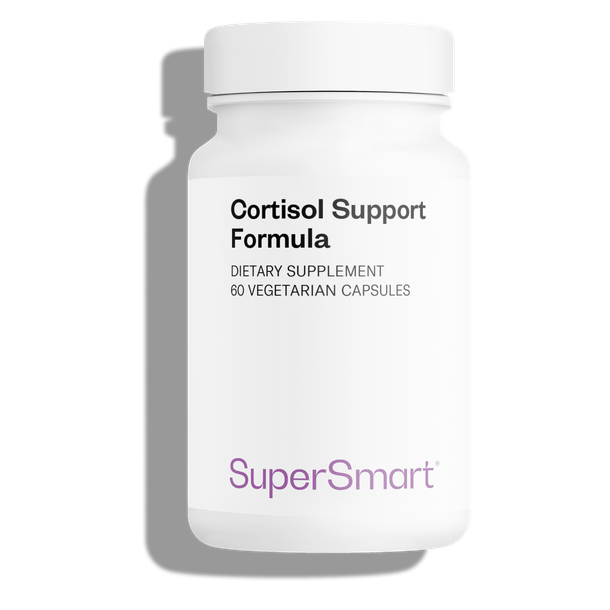
Cortisol Support Formula is an anti-stress dietary supplement specifically formulated to help regulate cortisol levels.
This formula combines 3 key active ingredients that have been the subject of clinical studies:
- Shoden® ashwagandha to modulate the HPA axis and the stress response;
- Lactium® to promote relaxation and support the neurobiological response to stress;
- phosphatidylserine to support the neuroendocrine response and cortisol feedback mechanisms.
This combination therefore targets three complementary benefits related to the management of high cortisol levels and stress:
Acting on the HPA axis to reduce excess cortisol
Shoden® is a purified, highly concentrated extract of ashwagandha, produced using a proprietary process and standardised to contain 35% withanolide glycosides, the bioactive compounds characteristic of ashwagandha.
Ashwagandha is an adaptogenic herb that helps the body cope with stress and contributes to maintaining emotional balance.
In situations of chronic stress, this extract may help to reduce overactivation of the HPA axis (Hypothalamic-Pituitary-Adrenal axis, the body’s main hormonal stress response system), in particular by lowering CRH and ACTH (two hormones of the HPA axis), which appears to limit excessive cortisol production.
Two placebo-controlled clinical trials have directly assessed the effect of Shoden® on cortisol:
- an initial study conducted in 2019 on adults experiencing mild stress observed a reduction of approximately 23% in morning cortisol levels after 60 days of supplementation (1);
- a second study conducted in 2024 on adults with high levels of stress, anxiety and morning cortisol reported that taking 120mg of Shoden® daily for 60 days (the dosage provided by Cortisol Support Formula) resulted in a 67% reduction in morning cortisol, compared with 2.2% in the placebo group (2).
Alleviating the stress response via the GABAergic pathway
Lactium® is a milk protein hydrolysate containing alpha-casozepine, a bioactive peptide studied for its potential relaxing properties.
Its mechanism of action is thought to be linked to modulation of the GABAergic system: alpha-casozepine can bind to GABA-A receptors, the activation of which helps to reduce neuronal excitability.
This mechanism is thought to promote a state of relaxation and help moderate the body’s response to stress.
Lactium® is backed by robust clinical evidence: nine clinical studies have been conducted involving more than 500 adults, including:
- a study conducted under experimental stress conditions, in which taking Lactium® was associated with a significant reduction in plasma cortisol (3);
- another placebo-controlled clinical study, in which supplementation with 150mg of Lactium® per day for 30 days – the dosage provided by Cortisol Support Formula – was associated with a reduction in several stress-related symptoms (digestive problems, emotional and relationship difficulties) in women experiencing such issues (4).
Shoden® may also contribute to this benefit through its potential effects on the GABAergic and serotonergic systems, which are involved in the stress response.
Restoring the body’s natural cortisol-regulating mechanisms
Phosphatidylserine is a phospholipid naturally present in cell membranes, where it contributes to their stability and fluidity.
It is particularly abundant in neurons.
Studied for its potential ability to modulate the neuroendocrine response to stress, it may particularly influence the activity of glucocorticoid receptors—a family of hormones to which cortisol belongs—and thus strengthen the negative feedback regulation of cortisol.
Through this action, the body would more effectively curb the release of ACTH and, consequently, the production of cortisol by the adrenal glands.
Studies in humans also suggest that phosphatidylserine supplementation may attenuate the ACTH and/or cortisol response to stress (5–7).
5 key benefits and reasons to buy our anti-stress dietary supplement
Our Cortisol Support Formula dietary supplement stands out for 5 key benefits:
- a formula specifically designed to address high cortisol levels and stress: it offers a targeted approach to stress management, with a particular focus on regulating cortisol and normalising the body’s physiological response, rather than simply masking the symptoms;
- 3 active ingredients clinically studied in humans and selected for their specific benefits: the formula combines Shoden® and Lactium®, two patented active ingredients backed by robust clinical evidence, with phosphatidylserine, an innovative choice still rarely included in formulas specifically targeting cortisol management, despite its proven benefits in regulating the HPA axis;
- a complementary approach to the hormonal and neurobiological mechanisms of stress: Shoden® ashwagandha has been studied in particular for its effect on the HPA axis; Lactium® for its potential effects on relaxation and the neurobiological mechanisms of stress; and phosphatidylserine for its role in the neuroendocrine response and the negative feedback regulation of cortisol;
- dosages derived directly from clinical studies: the 120mg of Ashwagandha Shoden® and 150mg of Lactium® provided daily correspond to clinically evaluated dosages, as determined in studies on cortisol and the stress response;
- a streamlined formula: the dietary supplement minimises unnecessary ingredients and contains only acacia gum and rice flour as excipients, in a vegetable-based hypromellose capsule (a derivative of cellulose, a plant fibre).
What is the composition of this dietary supplement, which is ideal for regulating high cortisol levels?
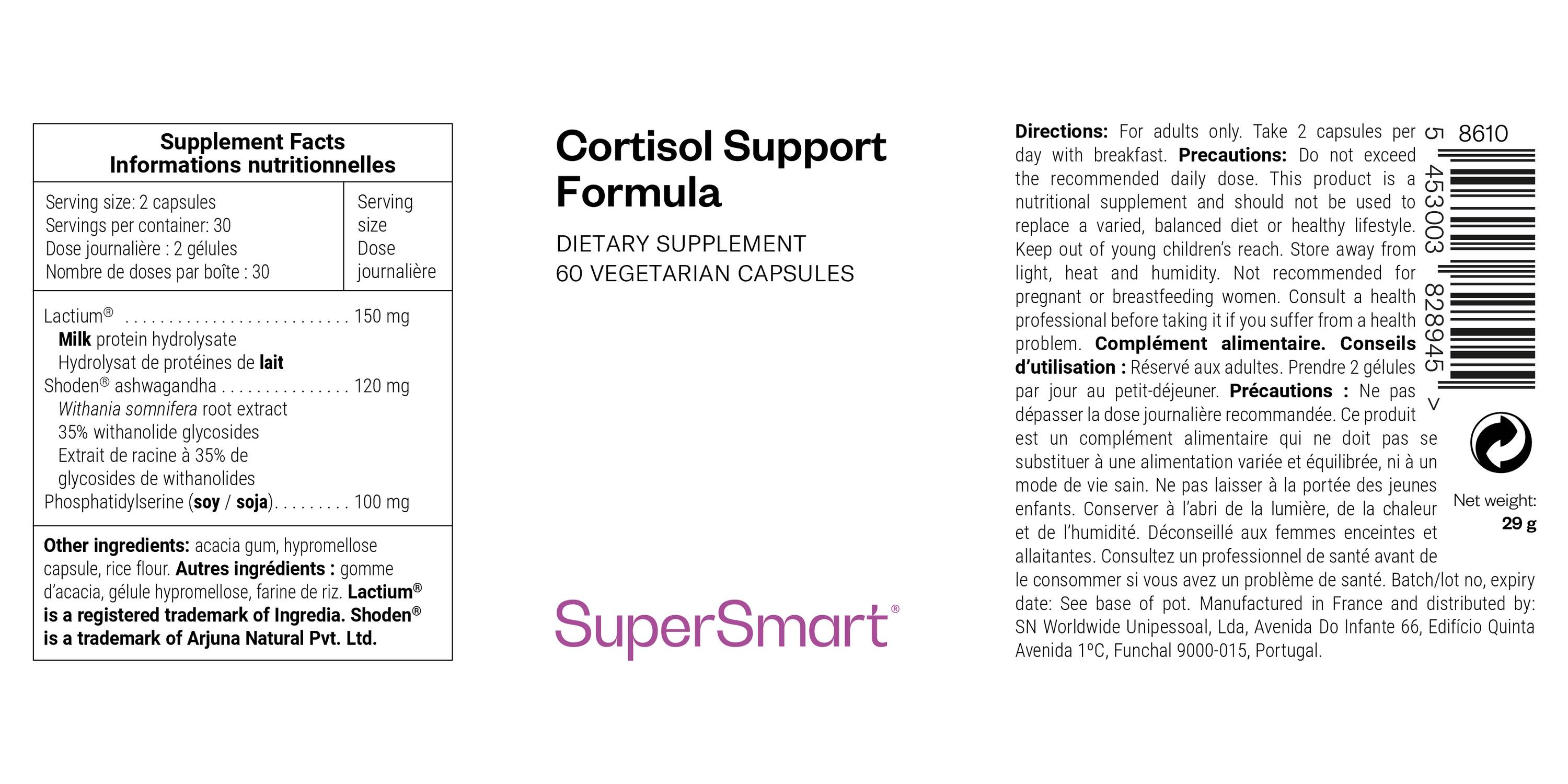
| Daily dose: 2 capsules Number of doses per pack: 30 |
Daily dose |
| Lactium® (milk protein hydrolysate) | 150mg |
| Ashwagandha Shoden® (root extract containing 35% withanolide glycosides) | 120mg |
| Phosphatidylserine (from soya) | 100mg |
| Other ingredients: acacia gum, hypromellose capsule, rice flour. Lactium® is a registered trademark of Ingredia. Shoden® is a trade mark of Arjuna Natural Pvt. Ltd. |
|
What is cortisol and what are the risks of having too high a level?
Cortisol: definition and regulation
Cortisol is a glucocorticoid hormone synthesised from cholesterol by the adrenal cortex, located in the adrenal glands above the kidneys.
It belongs to the family of steroid hormones and can freely cross cell membranes to bind to intracellular receptors.
Cortisol production is regulated by the hypothalamic-pituitary-adrenal (HPA) axis.
Stress signals trigger the release of corticotropin-releasing hormone (CRH) by the hypothalamus, leading to the secretion of adrenocorticotropic hormone (ACTH) by the pituitary gland, followed by the synthesis of cortisol.
Cortisol rhythm and stress response
Cortisol follows a tightly regulated circadian rhythm, peaking early in the morning to promote wakefulness, then gradually decreasing throughout the day until it reaches low levels during the night.
It is released in response to various stressors to help the body adapt to them:
- physical: exercise, illness;
- psychological: emotional stress;
- metabolic: fasting, hypoglycaemia.
Cortisol also exerts negative feedback on the hypothalamus and pituitary gland, reducing the secretion of CRH and ACTH in order to maintain hormonal balance under normal physiological conditions.
How can cortisol levels become chronically elevated?
Several factors and mechanisms can contribute to maintaining high cortisol levels:
- persistent exposure to stress signals: repeated psychological stress (work-related pressure, anxiety, etc.), insufficient recovery and certain lifestyle factors can lead to continuous activation of the HPA axis, preventing cortisol levels from returning to their baseline;
- a reduction in sensitivity to negative feedback: chronic exposure to cortisol can reduce the sensitivity of glucocorticoid receptors in the brain, weakening the negative feedback loop and allowing cortisol production to remain elevated;
- factors disrupting the circadian rhythm: lack of sleep, exposure to light late in the evening, night work and irregular schedules can disrupt the natural cortisol rhythm, often leading to abnormally high levels in the evening;
- metabolic and inflammatory factors: chronic inflammation, unstable blood sugar levels and an unbalanced diet can stimulate cortisol production and maintain activation of the HPA axis over time;
- dysregulation of the neuroendocrine system: over time, prolonged activation of the HPA axis can gradually disrupt the system, which is then unable to properly shut down the stress response.
What are the consequences of chronically elevated cortisol levels?
Chronically high cortisol levels can have several effects on the body:
- poorer quality sleep and recovery: abnormally high cortisol levels in the evening can disrupt the hormone’s natural rhythm and be associated with poorer sleep quality and inadequate recovery;
- metabolic disturbances and an accumulation of abdominal fat: persistently high cortisol levels can lead to increased blood sugar levels, reduced insulin sensitivity and fat storage, particularly in the abdominal area;
- effects on cognitive function and mood: excessive exposure to cortisol can affect certain regions of the brain, such as the hippocampus, and may be linked to memory problems, anxiety, irritability or depressive symptoms;
- immune and inflammatory disturbances: prolonged elevated cortisol levels weaken the immune system whilst, paradoxically, promoting low-grade chronic inflammation;
- a reduced capacity for resilience to stress: prolonged over-activation of the HPA axis can gradually disrupt the stress response, making the body less able to cope with future episodes of stress and increasing the risk of burnout.
Who is it for?
Cortisol Support Formula is particularly suitable for:
- people experiencing chronic or repeated stress: prolonged or repeated stressful situations can place sustained strain on the physiological stress response;
- people with high cortisol levels, particularly in stressful situations: various factors can disrupt cortisol regulation and its physiological rhythm, including chronic stress;
- people who find it difficult to recover after periods of intense stress: inadequate recovery may be accompanied by reduced physiological and emotional resilience to stress;
- people looking for a targeted anti-stress dietary supplement: Cortisol Support Formula focuses specifically on cortisol management and the physiological stress response.
High cortisol levels: what are the causes and possible imbalances?
Chronic stress and lifestyle
Elevated cortisol levels may be associated with various factors that can disrupt the physiological balance of this hormone.
Chronic stress, lack of sleep, irregular schedules, and certain metabolic and inflammatory factors can, in particular, contribute to disrupting the physiological rhythm of cortisol, as explained earlier.
High cortisol levels are not always linked to stress
High cortisol levels can also have other causes, such as taking certain corticosteroid medicines or, more rarely, certain endocrine disorders affecting the adrenal glands or the pituitary gland.
A significant, persistent or unexplained rise in cortisol levels therefore requires medical advice in order to investigate the cause.
What is the recommended dosage for this anti-stress formula?
Each daily dose of Cortisol Support Formula provides 120mg of Shoden® ashwagandha, 150mg of Lactium® and 100mg of phosphatidylserine.
Adults are advised to take 2 capsules a day, with breakfast.
One box provides a 30-day supply.
Which synergistic dietary supplements should be taken with Cortisol Support Formula?
Which form of magnesium should you take to combat stress?
Magnesium contributes to the normal functioning of the nervous system and to normal psychological functions.
It also helps reduce fatigue, making it a useful complementary approach during periods of prolonged stress.
 Would you like to buy magnesium bisglycinate? Discover Magnesium Bisglycinate, which provides 300mg of elemental magnesium per day in the form of TRAACS® bisglycinate.
Would you prefer to combine several forms of magnesium? Discover OptiMag, which combines 8 synergistic forms of magnesium and covers 100% of the recommended daily intake.
Omega-3: what are the benefits for the brain?
Omega-3s are fatty acids that are a key component of cell membranes.
DHA contributes to normal brain function and is particularly abundant in neuronal membranes, offering a complementary approach to that of Cortisol Support Formula, which focuses more on the physiological response to stress and cortisol.
To complement your supplementation, you can purchase Super Omega 3, our formula providing both EPA and DHA.
Which dietary supplement is best for restful sleep?
Chronic stress can be accompanied by sleep disturbances, whilst cortisol normally follows a circadian rhythm characterised by low levels during the night.
When stress-related difficulties relate more specifically to waking up during the night and sleep quality, taking a dietary supplement that directly targets the continuity and depth of sleep can complement the management of the physiological response to stress.
In this case, alongside our cortisol management formula, discover Deep Sleep Complex, a melatonin-free formula specifically designed to promote continuous and restorative sleep.
Quality, purity and traceability
Cortisol Support Formula provides, per daily dose, 120mg of Shoden® ashwagandha, 150mg of Lactium® and 100mg of phosphatidylserine.
The formula notably includes Shoden®, a highly concentrated ashwagandha root extract standardised to 35% withanolide glycosides, as well as Lactium®, a milk protein hydrolysate rich in bioactive peptides.
These active ingredients have been selected to provide a targeted and scientifically substantiated formula, with clinically relevant dosages and complementary mechanisms in the physiological response to stress.
The composition is deliberately kept simple: apart from the three active ingredients, Cortisol Support Formula contains only acacia gum and rice flour, in a vegetable-based hypromellose capsule.
What is in Cortisol Support Formula
Any questions?
Our team of nutrition experts and scientists has the answers.
Certain active ingredients have been the subject of clinical studies examining their effect on cortisol and the physiological response to stress.
This is particularly true of ashwagandha: in a 60-day randomised, placebo-controlled trial involving adults with high levels of stress, anxiety and morning cortisol, 120mg per day of Shoden® ashwagandha significantly reduced morning cortisol levels compared with the placebo.
Cortisol Support Formula combines precisely 120mg of Shoden® ashwagandha with 150 mg of Lactium® and 100mg of phosphatidylserine, two other active ingredients that have been studied in humans for their effects on various aspects of the stress response and cortisol levels.
Chronic excess cortisol can promote the accumulation of visceral fat, i.e. around the organs in the abdominal cavity.
Cortisol can also affect appetite and eating behaviour, which helps to explain the links observed between chronic stress, cortisol and weight gain.
Regulating cortisol can therefore form part of a comprehensive weight management strategy, alongside effective stress management, sufficient sleep, a balanced diet and regular physical activity.
Yes: cortisol naturally plays a part in increasing the availability of glucose, in particular by stimulating its production by the liver.
This is a physiological response and is beneficial in the short term, particularly for providing the body with a rapid energy supply during times of stress.
However, when cortisol levels remain too high for a prolonged period, this effect on glucose metabolism can contribute to higher blood sugar levels and reduced insulin sensitivity.
The choice of a dietary supplement for stress depends first and foremost on individual needs and the active ingredients sought.
Magnesium is a classic option for supporting the normal functioning of the nervous system and psychological functions (see Magnesium Bisglycinate).
Saffron, meanwhile, has been extensively studied for its effects on mood, relaxation and reducing nervousness (see SaffronMag Relax Complex, which combines Affron® saffron, magnesium bisglycinate, L-theanine and vitamin B6).
When the focus is more specifically on managing stress and cortisol levels, Shoden® ashwagandha, Lactium® and phosphatidylserine have been studied for their ability to promote better adaptation of the body and a more balanced hormonal response: these are precisely the three active ingredients combined in Cortisol Support Formula.
Need help?
You may also like
of experience
your money back
##montant## purchase