
Omega-3 and aggression: what do 28 trials show?
Omega-3s are best known for their role in cardiovascular and brain health. But could they also influence certain behaviours? A meta-analysis has assessed their potential effects on aggressive behaviour.
- ✓A meta-analysis pooled 28 randomised trials involving 3,918 participants.
- ✓Omega-3 supplementation was associated with a modest, short-term reduction in aggressive behaviour.
- ✓A small statistical effect was observed on reactive and proactive aggression, particularly in self-report questionnaires.
- ✓The study populations, doses and assessment methods varied considerably between trials.
- ✓These results are not yet sufficient to recommend omega-3 as a treatment for aggressive behaviour.


Reactive or proactive aggression: what are we talking about?
In a recent meta-analysis (1), scientists investigated a possible link between omega-3 and aggressive behaviour, distinguishing between two forms of aggression:
- reactive aggression, which is an impulsive response to provocation or frustration;
- proactive aggression, which refers to a more planned behaviour, adopted with the aim of achieving a goal.
This distinction enabled them to examine the effects of omega-3 supplementation on these two types of behaviour separately.
What is the potential link between omega-3 and brain function?
EPA and DHA are long-chain omega-3 fatty acids found particularly in oily fish.
They form part of cell membranes, with DHA being particularly abundant in those of the brain.
Several mechanisms are being investigated to explain how these fatty acids might affect brain function:
- maintaining membrane fluidity and communication between nerve cells;
- modulating certain neurotransmitter systems involved in impulsivity and emotional regulation;
- the production of lipid mediators involved in regulating inflammatory processes (2);
- a possible influence on brain regions involved in attention and cognitive control (3).
The meta-analysis did not directly investigate these brain mechanisms. They therefore represent possible explanations, rather than proof of the cause of the observed results.
EPA and DHA are also available as dietary supplements, particularly in the form of fish oil.
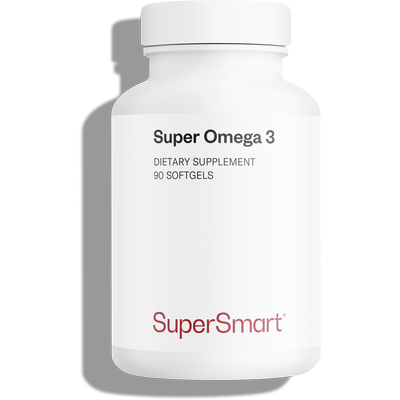
 Discover Super Omega 3, an omega-3 dietary supplement (EPA and DHA).
Omega-3 and aggression: a modest short-term effect
The meta-analysis brought together randomised trials comparing omega-3 supplementation with a control intervention and explicitly measuring aggressive behaviour.
In total, it included 28 trials, 35 independent samples and 3,918 children and adults; supplementation lasted an average of 16 weeks and provided an average of 1.18g of omega-3 per day.
However, the protocols varied considerably:
- The doses, the ratios of EPA to DHA, the formulations and the assessment methods varied between trials;
- some supplements also combined omega-3s with vitamins or minerals.
The amount of 1.18g per day therefore corresponds to an average of the doses studied, and not to a recommendation.
Whether the data were grouped by sample, by study or by laboratory, the researchers observed a statistically significant reduction in aggressive behaviour.
However, the average effect size was only g = 0.22, which corresponds to a small effect.
Further analyses also revealed a small statistical effect on reactive aggression and proactive aggression. These results remain preliminary, however, as they were derived from work carried out by a single laboratory.
When the researchers distinguished between the sources of assessment, the effect was evident in the self-report questionnaires completed by the participants, but not in the assessments carried out by those around them.
Furthermore, this comparison was based on a single questionnaire. No clear variations were observed according to age, gender, dose or duration of supplementation, although this does not necessarily demonstrate an identical effect in all individuals.
The study is based solely on randomised trials, and several statistical analyses yielded similar results. However, the protocols and results varied considerably from one trial to another.
The meta-analysis highlights a modest, short-term reduction in aggressive behaviour, which will need to be confirmed over longer periods.
It therefore does not provide sufficient evidence to recommend omega-3s as a treatment for aggression.
Beyond omega-3s: what other approaches are there for emotional balance?
To supplement your omega-3 intake, you could opt for a formula combining EPA and DHA. However, the available research does not allow us to determine whether one of these two fatty acids would be more effective than the other in this context.
Discover the Super Omega 3 dietary supplement, a fish oil-based formula providing EPA and DHA.
Other nutrients and plants are being studied in broader areas such as stress, nervousness and emotional balance, although no effect on aggression can be attributed to them.
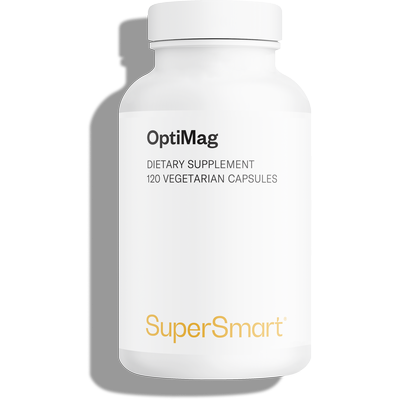
For example, magnesium contributes to the normal functioning of the nervous system and to normal psychological functions.
Discover OptiMag, a dietary supplement combining eight forms of magnesium.
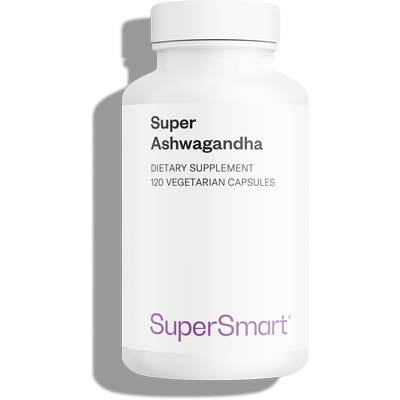
Ashwagandha, commonly described as an adaptogenic herb, has been studied in particular for its potential effects on perceived stress and anxiety (4).
Discover Super Ashwagandha, a formula based on ashwagandha root extract.
In more comprehensive formulations, passionflower and schisandra may be combined with other plant extracts and micronutrients.
Discover Stress Relief Formula, which combines passionflower, schisandra, magnesium and B vitamins, amongst other ingredients.
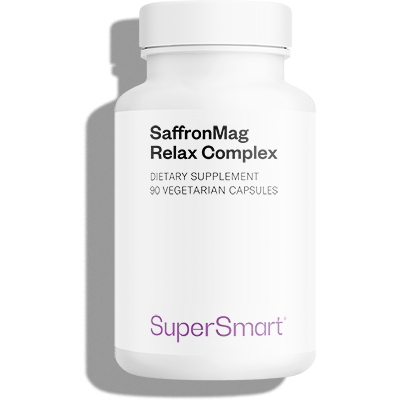
Saffron is also the subject of research into stress and mood. A placebo-controlled trial produced encouraging results in adults experiencing low mood, but these findings still need to be further substantiated (5).
Discover SaffronMag Relax Complex, which combines affron® saffron extract, magnesium bisglycinate, L-theanine and vitamin B6.
These supplements are based on different approaches and have not been directly evaluated in the meta-analysis presented.
Dietary supplements are no substitute for psychological support or medical care.
Although some trials have included children, the products mentioned are intended for adults. In children, during pregnancy or whilst breastfeeding, or whilst on medication, you should always seek advice from a healthcare professional.
SUPERSMART’S ADVICE

References
- Raine A, Brodrick L. Omega-3 supplementation reduces aggressive behavior: A meta-analytic review of randomized controlled trials. Aggress Violent Behav. 2024 Sep-Oct;78:101956. doi: 10.1016/j.avb.2024.101956. Epub 2024 May 16. PMID: 38911617; PMCID: PMC11192490. 🔗
- Dyall SC (2015) Long-chain omega-3 fatty acids and the brain: a review of the independent and shared effects of EPA, DPA and DHA. Front. Aging Neurosci. 7:52. doi: 10.3389/fnagi.2015.00052🔗
- McNamara RK, Able J, Jandacek R, Rider T, Tso P, Eliassen JC, Alfieri D, Weber W, Jarvis K, DelBello MP, Strakowski SM, Adler CM. Docosahexaenoic acid supplementation increases prefrontal cortex activation during sustained attention in healthy boys: a placebo-controlled, dose-ranging, functional magnetic resonance imaging study. Am J Clin Nutr. 2010 Apr;91(4):1060-7. doi: 10.3945/ajcn.2009.28549. Epub 2010 Feb 3. PMID: 20130094; PMCID: PMC2844685. 🔗
- Chandrasekhar K, Kapoor J, Anishetty S. A prospective, randomized double-blind, placebo-controlled study of safety and efficacy of a high-concentration full-spectrum extract of ashwagandha root in reducing stress and anxiety in adults. Indian J Psychol Med. 2012 Jul;34(3):255-62. doi: 10.4103/0253-7176.106022. PMID: 23439798; PMCID: PMC3573577. 🔗
- Kell G, Rao A, Beccaria G, Clayton P, Inarejos-García AM, Prodanov M. affron® a novel saffron extract (Crocus sativus L.) improves mood in healthy adults over 4 weeks in a double-blind, parallel, randomized, placebo-controlled clinical trial. Complement Ther Med. 2017 Aug;33:58-64. doi: 10.1016/j.ctim.2017.06.001. Epub 2017 Jun 13. PMID: 28735826. 🔗
Keywords





6 Days
sin problemas en la entrega
sin problemas en la entrega complementos punteros poniendo siempre el foco en la salud humana nos lo merecemos de pie a cabeza para una salud larga y duradera
sosa robaina
31 Days
Prodotti eccezionali
Prodotti eccezionali! Consegna rapida e precisa
paola
42 Days
Heldere info
Heldere info
HanS.
42 Days
Snelle levering
Snelle levering
harrie
47 Days
Adequate info en hoge kwaliteit
Adequate info en hoge kwaliteit
HanS.
57 Days
Supplementen zijn goed.
Supplementen zijn goed. Zachte prijzen. Website met problemen ( altijd ) niet goed voor nieuwe klanten.
Gino RJ
66 Days
Alles op tijd geleverd.
Alles op tijd geleverd. De producten worden alsmaar duurder, terwijl mijn pensioen niet meer stijgt. Vandaar kan ik alsmaar minder vaak bestellen.
Wouters
1136 Days
Great service
Great service
Ryszard
1149 Days
Profesjonalna obsługa
Bardzo dobre i rzeczowe opisy. Profesjonalna obsługa.
PIEKOSZEWSKI Chris
1817 Days
Wszystko OK!
Wszystko poszło jak powinno 🙂
SITKIEWICZ Pawel
2604 Days
Szybko sprawnie bez problemów
Szybko sprawnie bez problemów
Marek
of experience
your money back
##montant## purchase