
High cortisol: 5 natural ways to lower it
Cortisol, often referred to as the ‘stress hormone’, can remain elevated during periods of prolonged stress. This can lead to fatigue, nervousness and sleep disturbances. Here are 5 natural ways to help your body cope better with this situation.


How can you naturally lower high cortisol levels?
Cortisol is a hormone produced by the adrenal glands in response to stress.
When cortisol levels remain high for a long period, this can disrupt the body’s normal functioning (1).
Various symptoms may then appear, such as persistent fatigue, irritability, sleep disturbances or difficulty concentrating.
High cortisol levels can be influenced by various lifestyle factors, including lack of sleep, an unbalanced diet or poor stress management.
Fortunately, there are several strategies – to be combined as part of a holistic approach – that can help the body cope better with the demands of daily life:
- practising relaxation techniques;
- supporting the body with certain adaptogenic herbs;
- adjusting your diet to limit certain sources of physiological stress;
- prioritising certain nutrients involved in the stress response;
- ensuring a restful night’s sleep.
Practise relaxation techniques regularly
Cortisol is closely linked to the activation of the stress response and the HPA axis (hypothalamic-pituitary-adrenal axis), the main regulatory system for stress adaptation involving the brain and the adrenal glands.
When this axis is repeatedly stimulated, the body can remain in a prolonged state of alert (2).
Certain practices, such as cardiac coherence, controlled breathing, mindfulness meditation or muscle relaxation, can help to limit this prolonged activation and promote a return to calm in the nervous system.
Yoga and gentle physical activities also contribute to mental wellbeing and better recovery from stress.
Just a few minutes a day are often enough to establish a simple, sustainable routine that is beneficial for effective stress management.
Making the most of adaptogenic plants
Certain plants are traditionally used to help the body cope better with physical and psychological demands.
They are known as ‘adaptogens’ because they support the body’s natural ability to adapt to stress.
They can therefore support the body during periods of prolonged stress and promote greater resilience.
Ashwagandha
Ashwagandha is one of the most widely studied adaptogenic plants in the field of stress.
Several studies have examined its interaction with various physiological markers of the stress response, notably cortisol (3).
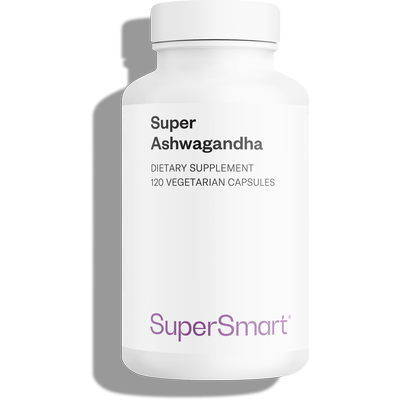
 Discover the Super Ashwagandha supplement, an organic Withania somnifera root extract that preserves the natural balance of its various constituents.
Rhodiola rosea
Rhodiola is traditionally used to help the body adapt to emotional stress and fatigue.
It is particularly valued in herbal medicine during periods of mental fatigue or overwork (4).
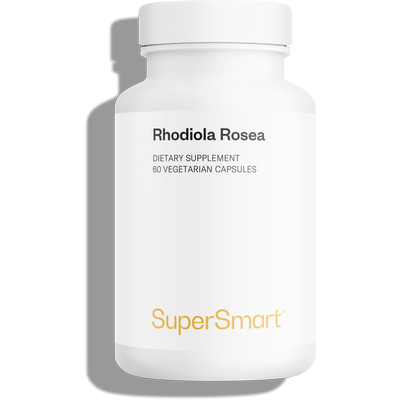
Discover the Rhodiola Rosea supplement, standardised to 5% rosavins and 1.8% salidrosides, the active compounds in rhodiola.
Some formulations also combine it with other adaptogenic herbs and nutrients studied for their role in helping the body adapt to stress.
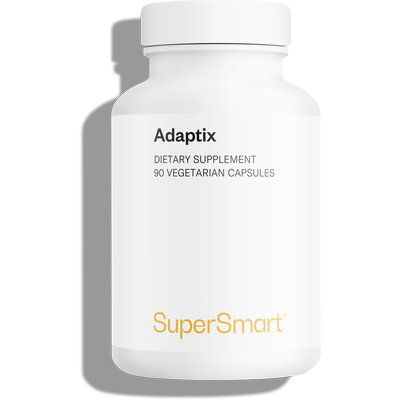
Discover Adaptix, a formula that combines rhodiola, ashwagandha, astragalus, schisandra, ginseng, reishi and goji berries, amongst others.
Adjusting your diet to reduce physiological stress
Diet influences many of the mechanisms involved in energy balance and the response to chronic stress.
The importance of maintaining stable blood sugar levels
Significant fluctuations in blood sugar levels can be accompanied by fatigue, irritability and nervousness.
Foods rich in rapidly absorbed sugars can lead to more pronounced fluctuations in blood sugar levels (5).
Conversely, meals containing protein and fibre help to slow down the absorption of carbohydrates and thus promote more stable energy levels throughout the day.
Adopting a few simple habits
Good habits to help maintain more stable energy levels on a daily basis include:
- opt for meals containing protein and fibre-rich foods;
- limit rapidly absorbed sugars;
- maintaining relatively regular mealtimes.
It is also advisable to limit excessive alcohol consumption.
For some people who are sensitive to stress or prone to nervousness, high caffeine intake can also exacerbate these symptoms. It is therefore best to moderate your intake (6–7).
Ensure an adequate intake of certain nutrients involved in the stress response
Prolonged periods of stress may be accompanied by increased requirements for certain micronutrients involved in the functioning of the nervous system. It is therefore important to ensure an adequate intake.
Magnesium: a key nutrient in cases of chronic stress and fatigue
Involved in numerous physiological processes, magnesium contributes to the normal functioning of the nervous system and to normal psychological function.
It also helps to reduce fatigue, which is frequently experienced during periods of prolonged stress (8).
In some people, dietary intake of magnesium may be insufficient. Supplementation may therefore be considered when dietary intake does not meet requirements.
Discover the OptiMag supplement, which combines 8 complementary forms of magnesium.
Omega-3 and high cortisol: how do they support brain balance?
Omega-3s are major components of cell membranes, particularly those of neurons.
DHA, in particular, contributes to normal brain function (9).
Discover the Super Omega 3 supplement, which provides EPA and DHA omega-3 fatty acids in a highly purified form.
L-theanine: natural support for relaxation
Naturally found in tea, L-theanine is the subject of extensive research into its interaction with certain mechanisms involved in relaxation and stress management (10).
It is often included in dietary supplements designed for people wishing to better manage periods of stress or high mental workload.
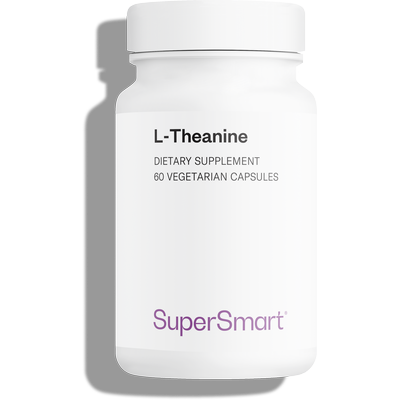
Discover the L-Theanine supplement, a 100% natural green tea extract providing 400 mg of L-theanine per day.
Phosphatidylserine: a phospholipid studied for its role in stress response and recovery
Phosphatidylserine is a phospholipid naturally present in cell membranes, particularly in the brain.
Studies have focused in particular on its interaction with the hypothalamic-pituitary-adrenal axis, which regulates cortisol secretion in response to stress, as well as with certain mechanisms involved in recovery following physical or mental exertion (11).
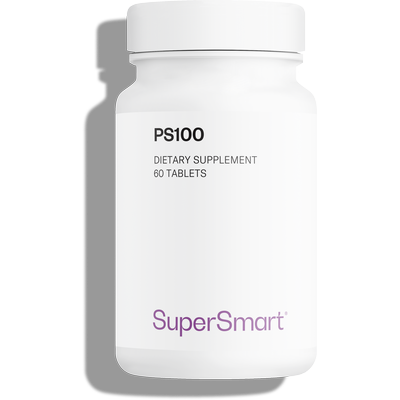
Discover the PS 100 supplement, which combines phosphatidylserine with DHA-type omega-3.
Saffron: an ingredient studied for its role in emotional wellbeing
Traditionally used to support emotional wellbeing, saffron is being studied for its interaction with certain mechanisms involved in regulating mood and the stress response, particularly those involving serotonin, dopamine or GABA.
Research is also exploring its potential influence on the hypothalamic-pituitary-adrenal axis (12).
Some formulations combine saffron with other nutrients and complementary ingredients to provide support during periods of stress and nervousness.
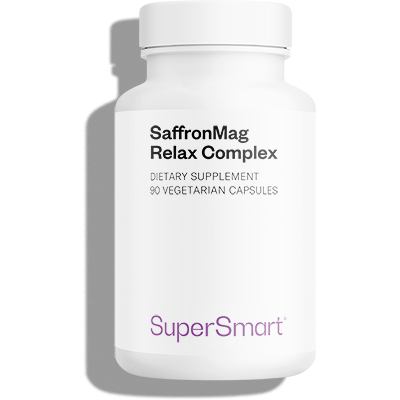
Discover the SaffronMag Relax Complex supplement, which combines saffron, magnesium and L-theanine, as well as vitamin B6, which contributes to the normal functioning of the nervous system.
Maintaining restful sleep
Cortisol naturally follows a circadian rhythm: it is higher in the morning to promote wakefulness, then gradually decreases throughout the day, reaching its lowest level in the evening.
When cortisol levels remain high in the evening, it can become more difficult to fall asleep. You may also experience waking up during the night or feeling tired upon waking.
However, stress and sleep have a two-way relationship (13). Poor sleep can contribute to an increase in perceived stress, whilst high stress levels can impair sleep quality.
Ensuring a restful night’s sleep is therefore a key factor in managing daily stress more effectively. To achieve this, it is advisable to:
- limit screen time before bed;
- maintain regular bedtimes and wake-up times;
- sleep in a quiet, dark environment;
- avoid stimulants in the evening (caffeine, alcohol, tobacco, etc.).
Some formulations combine several ingredients traditionally used or studied in the field of sleep and relaxation to support those wishing to improve the quality of their rest.
Discover the Deep Sleep Complex supplement, a formula that combines several ingredients studied in the field of sleep and relaxation.
High cortisol: when should you seek medical advice?
Cortisol is a hormone essential for the body to function properly, and it is normal for levels to rise occasionally in response to stress.
However, the symptoms of high cortisol levels alone are not sufficient to indicate a cortisol disorder.
Persistent fatigue, long-term sleep disturbances, significant nervousness, difficulty recovering, unexplained weight gain or loss, unusual or prolonged symptoms, or a significant impact on quality of life are all reasons to seek medical advice.
If in doubt, only a healthcare professional can assess whether there is a cortisol abnormality and recommend appropriate treatment.
Natural remedies are primarily intended to support the management of everyday stress and to bolster the physiological mechanisms involved in the stress response.
SUPERSMART ADVICE
References
- Russell G, Lightman S. The human stress response. Nat Rev Endocrinol. 2019 Sep;15(9):525-534. doi: 10.1038/s41574-019-0228-0. Epub 2019 Jun 27. PMID: 31249398.
- McEwen BS. Protective and damaging effects of stress mediators: central role of the brain. Dialogues Clin Neurosci. 2006;8(4):367-81. doi: 10.31887/DCNS.2006.8.4/bmcewen. PMID: 17290796; PMCID: PMC3181832.
- Lopresti AL, Smith SJ, Malvi H, Kodgule R. An investigation into the stress-relieving and pharmacological actions of an ashwagandha (Withania somnifera) extract: A randomized, double-blind, placebo-controlled study. Medicine (Baltimore). 2019 Sep;98(37):e17186. doi: 10.1097/MD.0000000000017186. PMID: 31517876; PMCID: PMC6750292.
- Amsterdam JD, Panossian AG. Rhodiola rosea L. as a putative botanical antidepressant. Phytomedicine. 2016 Jun 15;23(7):770-83. doi: 10.1016/j.phymed.2016.02.009. Epub 2016 Feb 24. PMID: 27013349.
- Mantantzis K, Schlaghecken F, Sünram-Lea SI, Maylor EA. Sugar rush or sugar crash? A meta-analysis of carbohydrate effects on mood. Neurosci Biobehav Rev. 2019 Jun;101:45-67. doi: 10.1016/j.neubiorev.2019.03.016. Epub 2019 Apr 3. PMID: 30951762.
- Koob GF, Colrain IM. Alcohol use disorder and sleep disturbances: a feed-forward allostatic framework. Neuropsychopharmacology. 2020 Jan;45(1):141-165. doi: 10.1038/s41386-019-0446-0. Epub 2019 Jun 24. PMID: 31234199; PMCID: PMC6879503.
- Nehlig A. Is caffeine a cognitive enhancer? J Alzheimers Dis. 2010;20 Suppl 1:S85-94. doi: 10.3233/JAD-2010-091315. PMID: 20182035.
- de Baaij JH, Hoenderop JG, Bindels RJ. Magnesium in man: implications for health and disease. Physiol Rev. 2015 Jan;95(1):1-46. doi: 10.1152/physrev.00012.2014. PMID: 25540137.
- Sinclair AJ. Update on Fatty Acids and the Brain. Nutrients. 2024 Dec 23;16(24):4416. doi: 10.3390/nu16244416. PMID: 39771036; PMCID: PMC11678669.
- Moshfeghinia R, Sanaei E, Mostafavi S, Assadian K, Sanaei A, Ayano G. The effects of L-theanine supplementation on the outcomes of patients with mental disorders: a systematic review. BMC Psychiatry. 2024 Dec 4;24(1):886. doi: 10.1186/s12888-024-06285-y. PMID: 39633316; PMCID: PMC11616108.
- Hellhammer J, Fries E, Buss C, Engert V, Tuch A, Rutenberg D, Hellhammer D. Effects of soy lecithin phosphatidic acid and phosphatidylserine complex (PAS) on the endocrine and psychological responses to mental stress. Stress. 2004 Jun;7(2):119-26. doi: 10.1080/10253890410001728379. PMID: 15512856.
- Jelodar G, Javid Z, Sahraian A, Jelodar S. Saffron improved depression and reduced homocysteine level in patients with major depression: A Randomized, double-blind study. Avicenna J Phytomed. 2018 Jan-Feb;8(1):43-50. PMID: 29387573; PMCID: PMC5787996.
- Hirotsu C, Tufik S, Andersen ML. Interactions between sleep, stress, and metabolism: From physiological to pathological conditions. Sleep Sci. 2015 Nov;8(3):143-52. doi: 10.1016/j.slsci.2015.09.002. Epub 2015 Sep 28. PMID: 26779321; PMCID: PMC4688585.
Keywords





4 Days
Heldere info
Heldere info
HanS.
4 Days
Snelle levering
Snelle levering
harrie
9 Days
Adequate info en hoge kwaliteit
Adequate info en hoge kwaliteit
HanS.
19 Days
Supplementen zijn goed.
Supplementen zijn goed. Zachte prijzen. Website met problemen ( altijd ) niet goed voor nieuwe klanten.
Gino RJ
28 Days
Alles op tijd geleverd.
Alles op tijd geleverd. De producten worden alsmaar duurder, terwijl mijn pensioen niet meer stijgt. Vandaar kan ik alsmaar minder vaak bestellen.
Wouters
1098 Days
Great service
Great service
Ryszard
1111 Days
Profesjonalna obsługa
Bardzo dobre i rzeczowe opisy. Profesjonalna obsługa.
PIEKOSZEWSKI Chris
1779 Days
Wszystko OK!
Wszystko poszło jak powinno 🙂
SITKIEWICZ Pawel
2566 Days
Szybko sprawnie bez problemów
Szybko sprawnie bez problemów
Marek
of experience
your money back
##montant## purchase