
What if your gut microbiota also contributed to your bone health?
Bone health depends particularly on diet, physical activity and hormones. A recent study also suggests a link with dietary habits that support a healthy microbiome. Find out what avenues the researchers have explored.
- ✓ A study involving 9,385 American adults compared their dietary habits with several indicators of bone health.
- ✓ The researchers assessed their diet using an index that favours the gut microbiota.
- ✓ Among those with a higher score, a history of fractures and osteoporosis were less common.
- ✓ The study did not analyse the composition of the microbiota and does not demonstrate a cause-and-effect relationship.

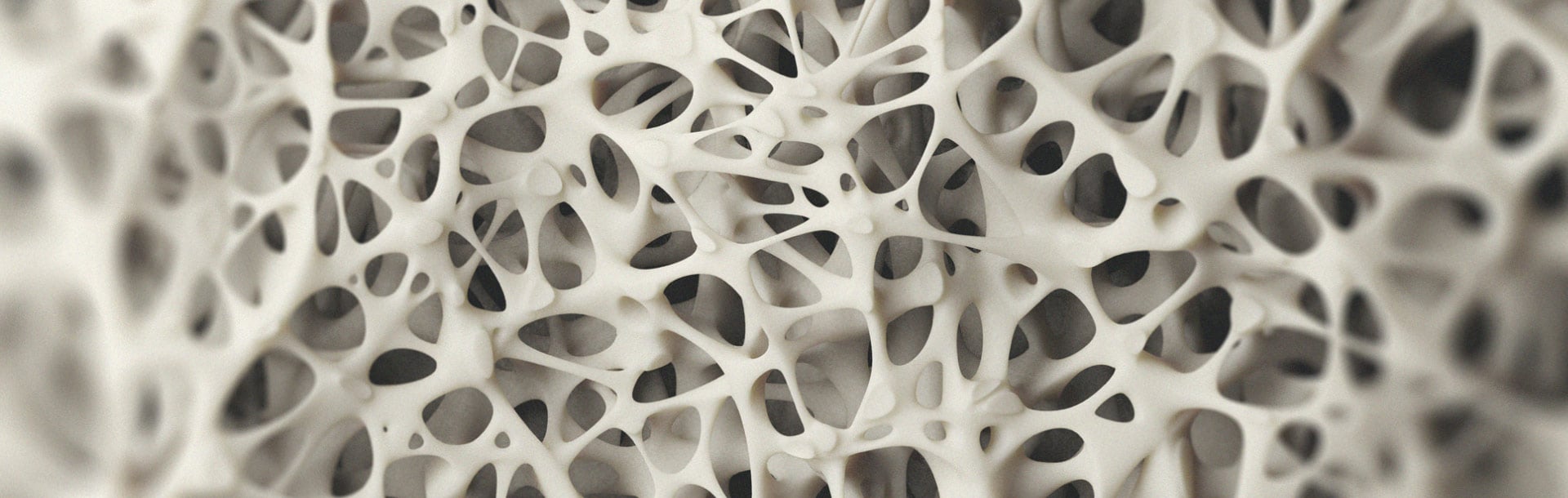
What is the potential link between the gut and bones?
Bones are constantly being renewed throughout our lives. Researchers are exploring the possibility that the gut microbiota plays a role in this renewal, as part of what is known as the gut-bone axis.
Several mechanisms are being studied: nutrient absorption, the production of short-chain fatty acids by certain gut bacteria, and the regulation of immune responses and inflammation.
However, these mechanisms were not measured in the study presented here.
They merely help to explain why a diet that supports the microbiota might also be associated with certain indicators of bone health.
Microbiota-friendly diet and bone health: what does the study reveal?
Published in December 2025, this study analysed data from 9,385 American adults aged 20 or over to examine the associations between their diet and several indicators of bone health (1).
Using two questionnaires, each covering the diet over the previous 24 hours, the researchers calculated a score ranging from 0 to 13.
A high score corresponded to a diet considered to be more beneficial to the gut microbiota.
This index particularly favoured the consumption of fibre-rich plant-based foods and fermented dairy products.
Conversely, red or processed meats and refined grains were among the unfavourable criteria.
The study therefore focused on diet, without directly analysing the composition of the gut microbiota.
The researchers then compared the dietary scores with participants’ reported history of fractures and osteoporosis status.
Osteoporosis was also identified on the basis of femoral neck bone density, measured by dual-energy X-ray absorptiometry (DXA).
Bone density was also measured at the lumbar spine.
Each additional point on the index was associated with:
- a relative statistical difference of -10% for a history of fractures;
- a relative statistical difference of -6% for osteoporosis;
- slightly higher bone mineral density at the femoral neck.
No significant association was observed with bone density in the lumbar spine.
Please note: the 10% and 6% differences correspond to relative statistical associations. They do not represent a reduction in individual risk and do not prove that a diet beneficial to the microbiota prevents fractures or osteoporosis.
In this study, a diet considered more beneficial to the microbiota was therefore associated with fewer previous fractures and a lower incidence of osteoporosis, as well as slightly higher bone density at the femoral neck.
However, the cross-sectional nature of the study does not allow us to determine which factor precedes or explains the observed associations.
Diet and certain medical histories were self-reported by the participants. However, their physical activity, health status or other habits may also have influenced the results.
These findings therefore open up a new avenue of research, without proving that a diet beneficial to the microbiota prevents fractures or osteoporosis.
How can you support your gut microbiota and bone health on a daily basis?
Diet is one of the factors that influence the composition and activity of the gut microbiota.
When dietary habits change, the bacterial populations present in the gut may also change (2).
A varied, high-fibre diet, including vegetables, fruit, pulses and whole grains, provides different types of fibre, thereby promoting the growth of certain bacterial populations.
Certain fermented foods contain live microorganisms that may also contribute to greater microbiota diversity, which in turn is associated with a reduction in certain inflammatory markers in healthy adults (3).
These clinical findings support the idea of looking after one’s microbiota through diet, although they do not, on their own, demonstrate an effect on bone health.
Certain probiotic strains are, in fact, being studied for their potential effects on bone health, but these effects cannot be generalised to all probiotics.
 Discover the Full Spectrum Probiotic dietary supplement, a broad-spectrum formula combining 20 strains of microorganisms, for optimal effects on the gut flora.
To look after your bones, it remains essential to ensure an adequate intake of protein, calcium, magnesium and vitamins D and K, as these nutrients help maintain normal bone structure (4–6).
Vitamin D also plays a role in the normal absorption and utilisation of calcium, which the body uses to maintain normal bones.
Discover the Super Bone Formula dietary supplement, which combines vitamin D3, vitamin K2, magnesium and Tabashir bamboo extract.
Regular physical activity combining weight-bearing exercises and muscle-strengthening exercises also helps to maintain bone density and muscle strength.
Clinical trials have, in particular, observed beneficial effects on bone density with tailored programmes of resistance and impact exercises (7).
A dietary supplement is no substitute for a balanced diet, physical activity or screening for osteoporosis where indicated. A fracture, loss of height or spinal pain warrants medical advice. If you are taking anticoagulant medication, seek advice from a healthcare professional before taking a supplement containing vitamin K.
SUPERSMART ADVICE
References
- Hidayat K, Wei H, Wang LL, Rizzoli R, Du HZ, Li DM, Li ZN, Qin LQ. Associations between dietary index for gut microbiota and bone health outcomes. Osteoporos Int. 2026 Jan;37(1):213-222. doi: 10.1007/s00198-025-07772-y. Epub 2025 Dec 11. PMID: 41379325. 🔗
- Ghosh TS, Rampelli S, Jeffery IB, Santoro A, Neto M, Capri M, Giampieri E, Jennings A, Candela M, Turroni S, Zoetendal EG, Hermes GDA, Elodie C, Meunier N, Brugere CM, Pujos-Guillot E, Berendsen AM, De Groot LCPGM, Feskins EJM, Kaluza J, Pietruszka B, Bielak MJ, Comte B, Maijo-Ferre M, Nicoletti C, De Vos WM, Fairweather-Tait S, Cassidy A, Brigidi P, Franceschi C, O'Toole PW. Mediterranean diet intervention alters the gut microbiome in older people reducing frailty and improving health status: the NU-AGE 1-year dietary intervention across five European countries. Gut. 2020 Jul;69(7):1218-1228. doi: 10.1136/gutjnl-2019-319654. Epub 2020 Feb 17. PMID: 32066625; PMCID: PMC7306987. 🔗
- Wastyk HC, Fragiadakis GK, Perelman D, Dahan D, Merrill BD, Yu FB, Topf M, Gonzalez CG, Van Treuren W, Han S, Robinson JL, Elias JE, Sonnenburg ED, Gardner CD, Sonnenburg JL. Gut-microbiota-targeted diets modulate human immune status. Cell. 2021 Aug 5;184(16):4137-4153.e14. doi: 10.1016/j.cell.2021.06.019. Epub 2021 Jul 12. PMID: 34256014; PMCID: PMC9020749. 🔗
- Shams-White MM, Chung M, Du M, Fu Z, Insogna KL, Karlsen MC, LeBoff MS, Shapses SA, Sackey J, Wallace TC, Weaver CM. Dietary protein and bone health: a systematic review and meta-analysis from the National Osteoporosis Foundation. Am J Clin Nutr. 2017 Jun;105(6):1528-1543. doi: 10.3945/ajcn.116.145110. Epub 2017 Apr 12. PMID: 28404575. 🔗
- Weaver CM, Alexander DD, Boushey CJ, Dawson-Hughes B, Lappe JM, LeBoff MS, Liu S, Looker AC, Wallace TC, Wang DD. Calcium plus vitamin D supplementation and risk of fractures: an updated meta-analysis from the National Osteoporosis Foundation. Osteoporos Int. 2016 Jan;27(1):367-76. doi: 10.1007/s00198-015-3386-5. Epub 2015 Oct 28. Erratum in: Osteoporos Int. 2016 Aug;27(8):2643-2646. doi: 10.1007/s00198-016-3699-z. PMID: 26510847; PMCID: PMC4715837. 🔗
- Groenendijk I, van Delft M, Versloot P, van Loon LJC, de Groot LCPGM. Impact of magnesium on bone health in older adults: A systematic review and meta-analysis. Bone. 2022 Jan;154:116233. doi: 10.1016/j.bone.2021.116233. Epub 2021 Oct 16. PMID: 34666201. 🔗
- Watson SL, Weeks BK, Weis LJ, Harding AT, Horan SA, Beck BR. High-Intensity Resistance and Impact Training Improves Bone Mineral Density and Physical Function in Postmenopausal Women With Osteopenia and Osteoporosis: The LIFTMOR Randomized Controlled Trial. J Bone Miner Res. 2018 Feb;33(2):211-220. doi: 10.1002/jbmr.3284. Epub 2017 Oct 4. Erratum in: J Bone Miner Res. 2019 Mar;34(3):572. doi: 10.1002/jbmr.3659. PMID: 28975661. 🔗
Keywords


3 Days
Entrega rapida y efectiva
Entrega rapida y efectiva
SANTOLAYA RUIZ CLAVIJO Maria
46 Days
Prodotti eccezionali
Prodotti eccezionali! Consegna rapida e precisa
paola
56 Days
Heldere info
Heldere info
HanS.
56 Days
Snelle levering
Snelle levering
harrie
62 Days
Adequate info en hoge kwaliteit
Adequate info en hoge kwaliteit
HanS.
72 Days
Supplementen zijn goed.
Supplementen zijn goed. Zachte prijzen. Website met problemen ( altijd ) niet goed voor nieuwe klanten.
Gino RJ
81 Days
Alles op tijd geleverd.
Alles op tijd geleverd. De producten worden alsmaar duurder, terwijl mijn pensioen niet meer stijgt. Vandaar kan ik alsmaar minder vaak bestellen.
Wouters
1151 Days
Great service
Great service
Ryszard
1164 Days
Profesjonalna obsługa
Bardzo dobre i rzeczowe opisy. Profesjonalna obsługa.
PIEKOSZEWSKI Chris
1832 Days
Wszystko OK!
Wszystko poszło jak powinno 🙂
SITKIEWICZ Pawel
2619 Days
Szybko sprawnie bez problemów
Szybko sprawnie bez problemów
Marek
of experience
your money back
##montant## purchase