


Complete your selection
Blond psyllium husks (Plantago ovata) contain tiny fibrous structures that can absorb several times their weight in water.
They are composed almost exclusively of hemicellulose which acts like a sponge in the gut, gives consistency to stools, stimulates peristalsis and facilitates intestinal transit. The fibre swells on contact with water, producing a viscous liquid with multiple benefits.
Psyllium has been used for thousands of years in Europe, Asia and North Africa for helping to ease both constipation and diarrhoea.
In 1998, the US Food and Drug Administration (FDA) recognised that soluble fibre from psyllium husk may “reduce the risk of heart disease when included as pert of a diet low in saturated fat and cholesterol”. Commission E, meanwhile, recognises the properties of blond psyllium for improving constipation and problems relating to intestinal transit.
What are the properties and health benefits of psyllium fibre?
Dietary fibre is a non-digestible plant constituent with beneficial properties for intestinal transit. But not all sources of dietary fibre are the same: the soluble fibre from psyllium husk has high water-retention capacity which softens stools and improves the frequency of bowel movements (2).
Psyllium’s effects on absorbing cholesterol and carbohydrates can be explained by the ability of soluble fibre to swell and form a gel which traps certain compounds such as glucose. Fibre can also bind bile and mineral salts which tends to slow down cholesterol absorption in the gut, and thus reduce blood cholesterol levels.
The slight increase in fermentation in the bowel also leads to the production of short-chain fatty acids such as acetate or butyrate. This increase leads to greater absorption of water and mineral salts and has a positive effect on intestinal motility and bowel function. That’s why psyllium is said to be an intestinal transit regulator.
What’s the difference between blond and brown psyllium?
Blond psyllium is native to India, while brown (or black) psyllium is primarily grown in the Mediterranean region. Recognised for centuries, these two species have the same botanical origin but blond psyllium is considered to be superior to brown.
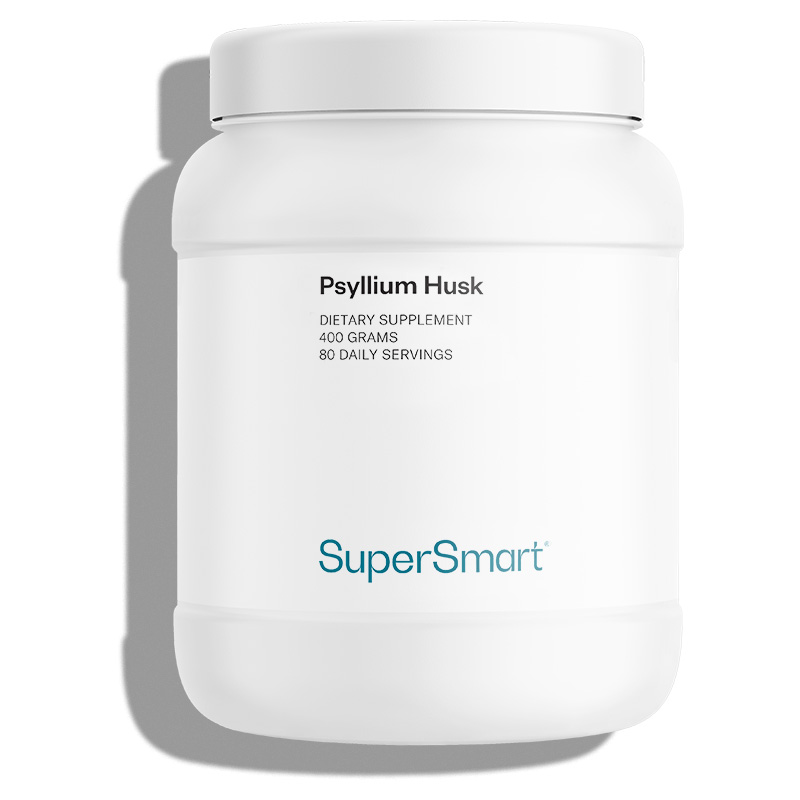
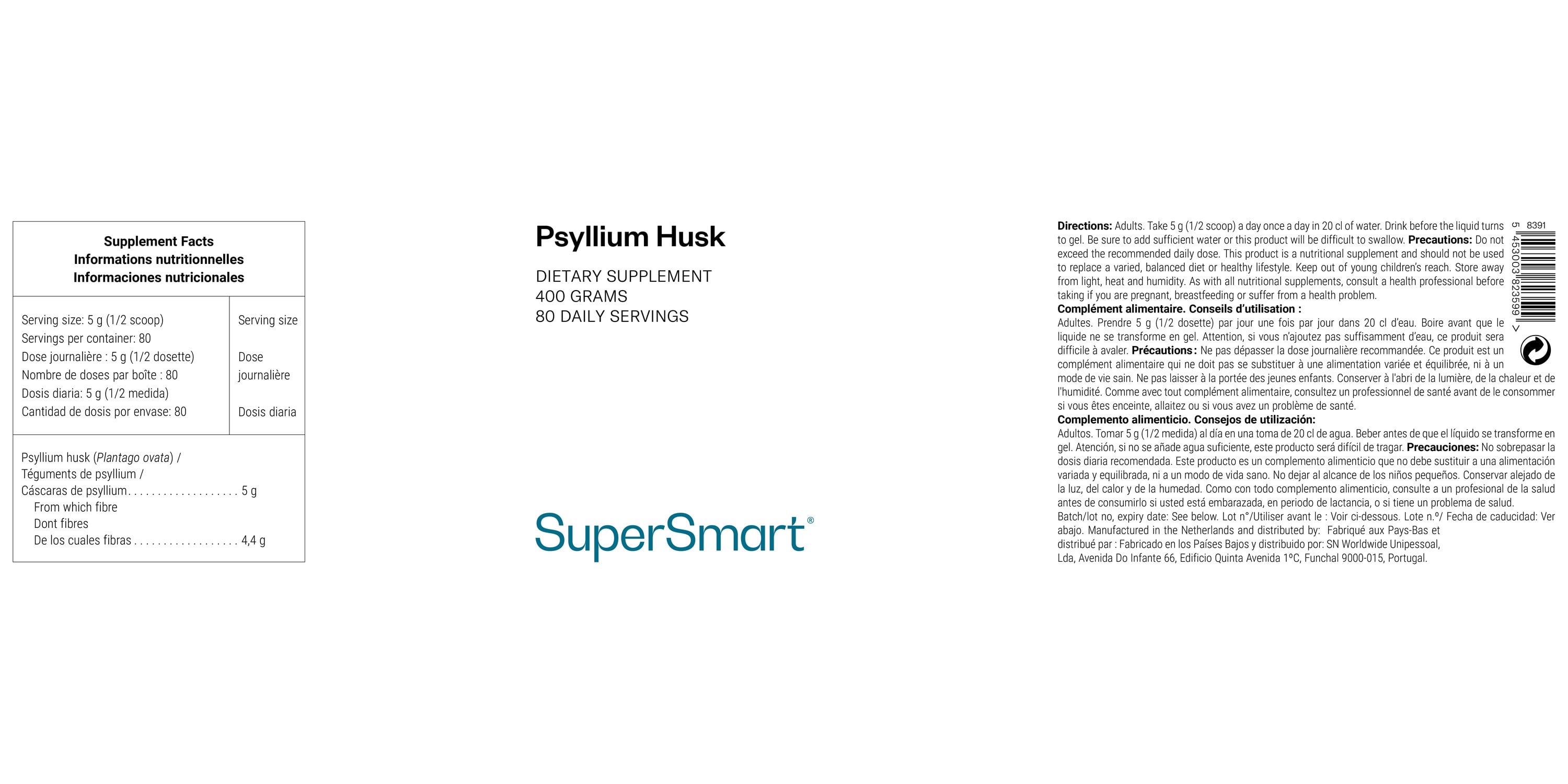
What is in Psyllium Husk
Any questions?
Our team of nutrition experts and scientists has the answers.
Unlike most other laxatives and digestion-modulators, psyllium does not irritate mucous membranes or cause uncomfortable fermentation.
Nevertheless, in order to gain maximum benefit from its properties and prevent any risk of digestive tract obstruction, it's important to take it with plenty of water (around 500ml) which should absorb it before it reaches the gut (3).
If this measure is followed, psyllium will not cause any significant side effects at the doses recommended.
Psyllium Seed Husk has a clear advantage over seeds that you have to soak for hours: all you have to do is mix it with water or juice and drink it straightaway. The recommended dose is 5g, once a day, to start with, then up to 3 times a day if your transit problems persist.
Given psyllium husk's low cost and multiple benefits, it's just good sense to take at least 5g a day. To combat bloating and flatulence, it may be helpful to combine it with Charcoal 400mg, a supplement containing activated charcoal.
Psyllium is both exceptionally rich in soluble fibre and very low in calories. Other foods, though lower in soluble fibre, have a similar profile:
- Pulses (12g à 17g de fibres per portion)
- Wheat bran (10g per portion)
- Raspberries (4g à 6g per portion)
- Artichokes (5g per portion)
- Prunes (5g per portion)
- Pears (5g per portion)
- Peas (5g per portion)
- Blackberries (4g per portion)
- Pumpkin (4g per portion)
- Cooked spinach (4g per portion).
Barely a century ago, the Western diet contained plenty of fibre. Unfortunately, the industrialisation of food, the growth in hypermarkets and the widespread refining of flour have significantly reduced our fibre consumption: it's now thought to be between 15g and 22g a day whereas the minimum recommended amount is 30g for adults (1).
may 17 2026
Since the product is like flour, lumps remain that are hard to dissolve before you can drink it!
 Translated by SuperSmart
may 2 2026
The scoop is not suitable for the dose. It says 3/4 of a scoop (20g) and a dose is only 1/4, which corresponds to 5g to start with and should be adjusted according to tolerance. Be careful not to start with 20g because it can cause an intestinal blockage if you don't drink enough (about 300/500 ml of water).
Otherwise, the product is great for gluten-free bread.
Translated by SuperSmart
february 27 2026
Magnificent. For my husband, it's the only thing that works. He has a sphincter at the top of his intestine that doesn't work well, and with this, he manages to go to the bathroom every day.
Translated by SuperSmart
october 13 2025
Excellent products, I recommend
Translated by SuperSmart
august 11 2025
Great, it's helping me
Translated by SuperSmart
Need help?
of experience
your money back
##montant## purchase





Hello Mrs. RIGOULOT,
Thank you for taking the time to write and share your experience.
Have a nice day,
Valérie - Supersmart